

 In my widely read blog and academic essay offering a new definition of patriarchy, I argued that patriarchy is a system of male dominance that arose at the intersection of the control of female sexuality, private property, and war. In it, bracketed the question of how patriarchy began. Today I want to share some thoughts provoked by a short paragraph in Harald Haarmann’s ground-breaking Roots of Ancient Greek Civilization. Haarmann briefly mentions (but does not discuss) the hypothesis that patriarchy arose among the steppe pastoralists as a result of conflicts over grazing lands. As these conflicts became increasingly violent, patriarchal warriors assumed clan leadership in order to protect animal herds, grazing lands, and the women and children of the clan. Continue reading “Is This How Patriarchy Began? by Carol P Christ”
Category: Feminism and Religion
Internal Strife – External Conflict by Oxana Poberejnaia
 As Po said in “Kung Fu Panda”: “I’m gonna get myself some Inner Peace… Inner piece of what?”
This basically lays out a path of spiritual work for most of us. We aim for peace, yet somehow we feel that we must do something in order to achieve it – rather than just be peaceful.
 Another joke that captures this paradox perfectly is:
“My son started doing meditation. Well, that’s something. At least he’s not sitting around doing nothing.”
Sitting around doing nothing seems to be the worst sin in our society. Buddhism is quite radical in this regard. The path to Enlightenment leads through sitting around and doing nothing. Anything and everything else that we do to keep ourselves busy is determined by society, hence impermanent, hence not the truth. Continue reading “Internal Strife – External Conflict by Oxana Poberejnaia”
Shariah is not a Law by Esther Nelson

I will never forget the day Nasr Abu Zaid (1943-2010), an Islamic Studies scholar and teacher extraordinaire, told me, “Shariah is not a law.” In spite of his assertion, many people—both Muslims and non-Muslims—are convinced that Shariah is synonymous with archaic legal rulings that are at odds with democracy and modernity.
What is Shariah, then, if not a law? When we see or hear the word Shariah, the word “Law” almost always follows. Shariah literally means a path—a well-trodden path such as animals use on their way to a watering hole. Shariah, then, can be understood as something that when embraced has potential to give life and sustenance.
Muslims believe that the Qur’an was revealed to Prophet Muhammad by the angel Gabriel circa 600 C.E. That revelation—Muslims believe it to be God’s actual speech—took place over a period of approximately twenty-one years. The Qur’an contains Shariah (path) in the form of information, narrative, and poetry. Since Shariah is essentially a path that leads to life, the critical question centers on how Shariah can be appropriated, leading us to the water that sustains.
On Our Beit Midrash: Kavannah, Writing and Study by Ivy Helman
 Kavannah is a Jewish concept meaning intention or motivation, perhaps most associated with Hasidism. Hassidism teaches that prayer and the fulfillment of mitzvot connects one more with the Holy One if the right state of mind is cultivated before participating in said activity. While going through the motions (prayer, mitzvot, etc.) is important and still technically fulfills the mitzvot, it is not as spiritually beneficial to the individual as is doing those tasks with kavannah. Praying and fulfilling mitzvot within a certain mental space more fully connects you to the divine. Judaism is not alone regarding this religious insight. Clearly there is something to it.
Hasidic teachers often inspire and encourage their adherents to find a way to enter into the right mood before starting prayers or performing mitzvot. What works for you may not work for me and vice versa. The same is often not the case within community. Continue reading “On Our Beit Midrash: Kavannah, Writing and Study by Ivy Helman”
Mulling over Movies: Moana, Pt. 1 by Elise M. Edwards
 I love going to outdoor movie screenings. Sitting outdoors on a summer evening with good company brings me joy. Last week, I went to an screening of Moana, the Disney movie about a teenager who goes on a quest through the Pacific Ocean with the demi-god Maui. Moana goes on this journey to help her people. The movie came out last year, but I didn’t see it. I have to admit that I wasn’t even interested in it until Simone Biles performed a dance to one of Moana’s songs on Dancing with the Stars. It was then that I realized that the movie has an empowering message. I asked my friend Natalie, who is also a feminist religion scholar, about Moana. She has three young daughters, so I trusted her to be more current than I am. Her enthusiastic response sold me, as did her remark, “There’s not even a love story in it!”
Ah, Disney princesses and their love stories! I’m old enough that I didn’t grow up with the Disney culture that children in the past few decades have, but I haven’t been immune to the Disney princess phenomenon. I childhood pre-dated DVDs and digital downloads, but I still knew and cherished the Disney characterizations of Snow White, Cinderella, and Sleeping Beauty. These young women were kind and virtuous and beautiful (according to Eurocentric standards), but their stories culminate with marriage to a charming prince. It’s also problematic that so often, the villains in these movies were older women—wicked stepmothers or evil witches—who were motivated by jealousy and hate.
Continue reading “Mulling over Movies: Moana, Pt. 1 by Elise M. Edwards”
Breaking Down the Concept of Arranged Marriages by Vibha Shetiya
 One of the first things my American friends and family ask me when they learn I used to be married to an Indian man is: was it an arranged marriage? I understand the intrigue, the bewilderment and even horror that the phrase “arranged marriage” can conjure up in unfamiliar Western minds. Images of forcing women to marry strangers encountered upon the street or child betrothals or women being dragged to the wedding site to be married off to mustachioed men are likely to flash before one’s eyes. While such incidents may have occurred from time to time, and in the past, as with child marriages, the long-established concept of “arranged marriage” is very different and not as frightening as may seem.
Traditionally speaking, proposals materialized through word-of-mouth – family and friends recommended a good alliance, or a parent would approach someone directly or indirectly to ask for a daughter or son’s hand in marriage. Even then, personal histories were well researched into, before both parties decided to “see” each other. Marriages in India continue to be alliances between families, and so it is important to check into family background – what are the parents’ and siblings’ occupations? How much does the prospective groom earn? After all, he may be the sole earning member of his family and may not be able to provide for his own family once he starts one. Is there a history of crime or mental illness? This investigation makes perfect sense in a society that is community and family-oriented, and wherein joint family situations are still the norm, especially in smaller towns and villages. It is thus imperative that everyone try and get along. “Arranged marriage” is certainly not synonymous with an “Oh-let’s-just-get-rid-of-our-daughter” arrangement.
Continue reading “Breaking Down the Concept of Arranged Marriages by Vibha Shetiya”
Do All Religions Teach Love and Justice? Or Do Some Religions Teach Domination? by Carol P. Christ
 Recently at a discussion of Goddess and God in the World, Judith Plaskow and I were asked if the dialogue across religious difference we embody and advocate in our book is a “liberal thing.” Can it, the questioner wondered, occur with those who do not have a liberal view of religion and religious meaning?
I answered that Judith and I identified two principles that made our dialogue possible. The first and most important is that we share the conviction that individuals and communities always interpret their texts and traditions from particular standpoints, deciding with aspects of text or tradition they will make central and which they will criticize or ignore.
For example, those who advocate Lev. 18:22’s injunction that “you shall not lie with a male as with a woman” (NRSV) generally expand its meaning to include female as well as male homosexuality. They ignore the fact that extending this text to a prohibition of lesbianism is an “interpretation” not found in the original Hebrew. At the same time, they ignore other provisions in the text–including that it condones slavery under certain conditions as the notorious letter to Dr. Laura “Why Can’t I Own a Canadian?” attests. Continue reading “Do All Religions Teach Love and Justice? Or Do Some Religions Teach Domination? by Carol P. Christ”
Recalling the Courage of Shamima Shaikh by Vanessa Rivera de la Fuente
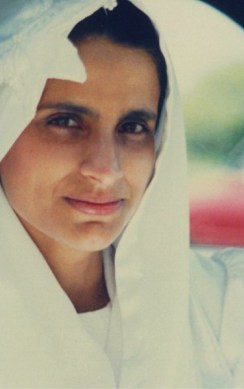
Shamima Shaikh’s name may be unfamiliar for you and many who are not deeply informed about Islam and gender issues in South Africa or who tend to identify Muslim women and/or activism for women’s rights in Islam with the Arab region. Why should you know about her? Because Shamima Shaikh was one of the most notable Muslim anti-apartheid activists and advocates for the rights of Muslim women in her country—a prominent feminist, journalist, radio producer, movement builder, trailblazer, and fearless activist.
This year—2017—marks the 20th anniversary of her death, and I think it’s a special occasion to recall her brave legacy, not only because twenty is a special number. In the context of violence against women in South Africa and worldwide—in particular the violence against and exclusion of Muslim women in Syria, Palestine, Yemen, and Saudi Arabia—as well as the gendered Islamophobia that targets our sisters in Europe, claiming the courage and spirit of resistance of Shamima Shaikh as part of our ethos as women living in a patriarchal world that hates us is absolutely necessary. Continue reading “Recalling the Courage of Shamima Shaikh by Vanessa Rivera de la Fuente”
Earth Dreaming, Water Dreaming: How Elemental Dreams Offer Healing for the Earth and Us by Jill Hammer

I once dreamed I was giving a lecture on a spiritual philosophy called magmatheism. The literal meaning, I thought when I awoke, would be something like “belief in the divinity of molten rock.” I had the sense this dream was trying to tell me something about what I had come to believe and know. When I asked my friends what they thought magmatheism was, they gave answers that delighted and intrigued me.
One said: “the belief that God/Goddess dwells below the ground and every once in a while erupts out gloriously.”
Another said: “By studying the ways in which rock is liquid, we can understand the oneness of all things… Our separation is an illusion. We are part of the whole.”
A third said: “Honoring the magnetic pull to earth.”
A fourth said: “The unmanifest that creates the foundation of all life.”
The dream told me something real about the power of dreaming. It let me know that a life physically and spiritually connected to the earth—the life I was trying to live and to encourage others to live—did not only occur when I was awake, but when I was asleep. The dream told me that the earth was speaking to me in my dreams. As dream tender Stephen Aizenstat writes, “Dream images are not representations of our personal nature only, but are also informed by the subjective inner natures of the things and creatures out there in the world. (Aizenstat, S. Dream Tending: Awakening to the Healing Power of Dreams. New Orleans, LA: Spring Journal, Inc. (2011), pp. 149-150).
The Mountain Mother: Reading the Language of the Goddess in the Symbols of Ancient Crete by Carol P. Christ
 Before he told the story of how his people received the sacred pipe, Black Elk said:
So I know that it is a good thing I am going to do; and because no good thing can be done by any man alone, I will first make an offering and send a voice to the Spirit of the World, that it may help me to be true. See, I fill this sacred pipe with the bark of the red willow; but before we smoke it, you must see how it is made and what it means. These four ribbons hanging here on the stem are the four quarters of the universe. The black one is for the west where the thunder beings live to send us rain; the white one for the north, whence comes the great white cleansing wind; the red one for the east, whence springs the light and where the morning star lives to give men wisdom; the yellow for the south, whence come the summer and the power to grow.
But these four spirits are only one Spirit after all, and this eagle feather here is for that One, which is like a father, and also it is for the thoughts of men that should rise high as eagles do. Is not the sky a father and the earth a mother, and are not all living things with feet or wings or roots their children? And this hide upon the mouthpiece here, which should be bison hide, is for the earth, from whence we came and at whose breast we suck as babies all our lives, along with all the animals and birds and trees and grasses. And because it means all this, and more than any man can understand, the pipe is holy. [italics added]
In this passage Black Elk illustrates the multivalency of symbols: the sacred pipe does not have a single meaning, but many meanings, in fact, more meanings than anyone can understand. Continue reading “The Mountain Mother: Reading the Language of the Goddess in the Symbols of Ancient Crete by Carol P. Christ”

