This Is How Liberal Democracy Dies: Will We Let It? by Carol P. Christ

“This is apparently how liberal democracy dies. It vanishes very quickly with an Executive Order.”– Ska Keller

In a powerful yet softly-spoken speech to the European Parliament, Green Party Germany Representative Ska Keller explained that rights and liberties we we take “for granted” and consider “natural,” “normal,” and “guaranteed” can be taken from us in an instant.  The America we took for granted, an America built on respect for immigrants and religious freedom, has vanished before our eyes. With the stroke of a pen, the President of the United States revoked it.

carol-green-party-2017
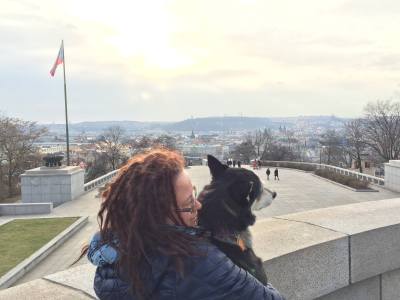
Carol telling the Green Party Greece the US President is a malignant narcissist.

Like many others, I am in a state of shock. Has the dream of liberal democracy died in America? Will we be able to repair and reinstate it? Ska Keller reminds us that freedom can never be taken for granted, but must be fought for and defended every day. Thousands of Americans have taken to the streets and are flooding the phone lines of congress trying to do just that. Will we succeed? At this point the outcome is unknown. In recent days, I often feel frozen in place, waiting for the next piece of horrible news, taking heart from stories of resistance, and hoping against hope that the tide will turn. Continue reading “This Is How Liberal Democracy Dies: Will We Let It? by Carol P. Christ”

Feminists of Faith, It Is Time to Light Our Lamps by Laura Shannon

3500
Banner at JFK Protests Photo by Andrew Kelly/Reuters

Last Saturday morning I boarded a plane at London’s Heathrow Airport. During the ten-hour flight to Miami, I got up several times to ease my back and stretch my legs, observing my fellow passengers with interest and curiosity. I chatted with a Brazilian woman who has lived for 20 years in Switzerland, on her way back to Manaus for a few weeks to help her mother through an operation. I observed the tender care with which a well-dressed woman my age assisted an elegant older lady I took to be her mother, both in neatly pinned headscarves. I enjoyed the mixture of different accents and language I overheard as I strolled around the cabin, flowing like the gentle murmuring of a brook. Here were passengers from India, from Asia, from Africa, from numerous European countries, of all ethnicities, nationalities, religions and colours. This is the melting-pot planet I love to live on.

That flight left at 9 am. If it had departed a few hours later, very likely some of those travellers would have been prevented from boarding or removed from the plane, as happened all over the world after Trump signed his executive order banning travellers from seven Muslim-majority countries – Iran, Iraq, Libya, Somalia, Sudan, Yemen and Syria – from entering the United States. The ban applies even to valid visa holders, workers with green cards, dual nationals and legal residents as well as refugees who had gone through the arduous 2-year vetting process and had already been approved. Continue reading “Feminists of Faith, It Is Time to Light Our Lamps by Laura Shannon”

Women Made of Fire by Vanessa Rivera de la Fuente

 climbing-mountains-with-children_webThis was going to be a post about my new life in South Africa; to say what it means for me the return to this country full of wonderful things to do, after an intense and grievous experience in 2015 that pushed me towards a totally introspective period in my life; I was willing to tell you how I managed to put myself together, come back, go out there to face my fears, gather the courage to speak my truth, look for clearance and healing in the same place and with the same people where I was wounded.

But that will be in the next post. Let me talk about my country.

I come from Chile, a country in the southern south of the world, poor in resources and rich in poets. I am Chilean by birth, and I took my first steps on shaking ground. I have survived 3 earthquakes, countless floods, a tsunami and a dictatorship.

I survived to be stronger, more faithful, more free and unbeatably resilient.

During the past 12 days, I have seen, as a distant and impotent witness, my country burning, overwhelmed by fire, in the greatest catastrophe of its kind in the history of the nation.

The fire has advanced more than 700 kilometers away from the first point of ignition, swallowing whole villages, with their houses, public buildings, animals and agricultural land.

I’ve spent these days with tight lips and enclosed in my thoughts, reading news on the Internet, thinking about my family, receiving audios that my sister records for me. My brother was injured protecting his house from the fire, my family is in the area of greatest catastrophe, currently declared “Area Zero.” My concern is huge because the fire is advancing over the city and the assistance seems to go three steps back … I believe in the power of prayer, but I also know the ferocity of nature because as a Chilean I am always expecting to deal with it. Continue reading “Women Made of Fire by Vanessa Rivera de la Fuente”

“Girl . . . You’re Gonna Make It” by Carol P. Christ

https://vimeo.com/82884853

Why did this song,* this program, this woman mean so much to Oprah and  Michelle, to you, to me?

Because Mary Tyler Moore was one of our first role models of cheerful independent womanhood.

Why does this song still bring tears to my eyes?

Because I had never learned that a girl could make it on her own.

Because I feared that I couldn’t and hoped that I would.

And guess what, I did.

Lots of us did.

With help from our friends.

Mary showed us that too.

The Mary Tyler Moore Show was broadcast on Saturday nights.

Many of us were home alone, watching faithfully.

We do not forget.

*The above version of the song is from the first season, the words “you’re gonna make it after all” were changed to “you’re gonna make it on your own” in season two.

***

a-serpentine-path-amazon-coverGoddess and God in the World final cover designBe among the first to order A Serpentine Path, Carol P. Christ’s moving memoir of transformation. Carol’s other new book written with Judith Plaskow is Goddess and God in the World: Conversations in Embodied Theology.

Carol is a leading feminist theologian and historian of religion who wrote the first Goddess feminist theology, Rebirth of the Goddess as with Judith Plaskow co-edited the path-breaking Womanspirit Rising and Weaving the Visions.

Join Carol on a Goddess Pilgrimage to Crete in 2017. Save $200.


A Serpentine Path: The Dance Is About To Begin by Carol P. Christ

carol-p-christ-photo-michael-bakasEntering the archaeological site of Kato Zakros, which includes a Sacred Center and part of a town on a small hill above it, I felt too tired to continue with the others. As we passed a stone bench to the north and west of the open court, I lay down and closed my eyes. I don’t know if I actually slept, but when I opened my eyes, I was in a trance.

I could see the air vibrating, and as I looked up the hill, I could almost see women walking up and down the stepped paths. My eyes were fixed on the path where women I could not quite see with my eyes went about their daily tasks. After a while Cathleen joined me. “I don’t want to talk,” I said, “but if you sit quietly beside me, you will see women walking in the village. She sat down and said nothing, but smiled broadly and nodded when I asked her if she could see what I saw.

After a while, I moved and sat facing the Central Court. I could still see the vibrations of the air, and as I looked across the court, I felt a sense of anticipation. “The dance is about to begin,” I told Cathleen when she joined me a few minutes later. She nodded. It was an hour before sunset, and the ancient stones were bathed in the last light of day. Jana and Patricia were talking in the central shrine room, while the others leaned over the ancient cistern watching turtles and turtle babies dive into the water and emerge again. “The dance is about to begin,” I said again.

kato-zakros-central-court

Cathleen exclaimed, “I see the path of the dance rising up in the court. It looks like the Processional Paths we saw at Knossos, Phaistos, and Malia. Do you see it?” Though I did not “see” it, I was moved to the court, where I could “feel” it. I raised my arms, bent at the elbows, and slowly wove my way back and forth across the court, following a snakelike path I could feel with my feet. As I neared the center of the court, I almost lost my footing. Turning to face Cathleen, I gazed at her solemnly, sending energy through my palms. Cathleen raised her arms in greeting. I turned again, continuing to trace the snakelike path, back and forth, across the court. When I reached the south end of the court, I turned again to greet Cathleen and Robin who was sitting next to her. “The path you followed was exactly the path I saw,” Cathleen cried out with astonishment. “You were meant to stop at the center.” “It was an ancient path,” I said solemnly. 

Jana and Patricia, who must have been watching, entered from the northwest entrance to the court. Jana was leading, arms upraised, tracing another path, walking with the same slow rhythm in which I had been led. I turned and slowly walked towards Jana until I could sense the energy flowing between our palms, then we softly touched our upraised hands. Carol, Patricia, Cathleen, and Robin formed a circle around us, and stood, arms upraised one in each of the four directions. Sensing that we were meant to share the blessing with the others, Jana and I turned, walking slowly towards the women standing in the north and south, feeling the energy, then touching their palms. Back to the center, we turned to the east and the west, completing the ceremony. As we turned to face each other again, I whispered to Jana, “We were called to this dance. It was an initiation.”

. . .

[A few days later] thinking of the snakelike path I had traced on the ancient stones, my eyes fixed on the gold snake bracelet on my right arm. I reviewed the many meanings the symbol of the snake held in ancient cultures. Goddess temples were used for storing grain, the harvest returned to She who presided over it. Snakes were guardians of the temples, eating the mice and rats that came to take the grain. The coiled snake and the snake biting its tail are symbols of wholeness. Snakes shedding their skins are images of rebirth and regeneration. Snakes hibernate under the earth and are reborn. But there was more: the rhythm of the snake in movement. I picked up a pen and wrote: “a serpentine path.”

These words described our initiation in the dance at Zakros: the serpentine path is the path of life, a snakelike, meandering path, winding in and out, up and down, with no beginning and no end, into the darkness, into the light. There is no goal, only the journey.

A cycle was coming to completion in my life. Through hard work and amazing grace, I found my way back to the Goddess, to myself. The mystery that was revealed to me as my mother died was unfolding in my life. Love had never abandoned me and never would. The Goddess would be with me at every turn in the path, and in that knowledge. I could give up control and open myself to life.

***

a-serpentine-path-amazon-coverThis is an excerpt from A Serpentine Path, Carol P. Christ’s newly released, moving memoir of transformation. Order it now in paperback or on Kindle. Carol’s other new book written with Judith Plaskow is Goddess and God in the World: Conversations in Embodied Theology. Carol also wrote the first Goddess feminist theology, Rebirth of the Goddess.

Join Carol on a Goddess Pilgrimage to Crete in 2017. Save $200.

Read two more the chapters in the book: Mysteries and Dionysian Rites.

Thanks to Judith Shaw for the cover art “Downward Serpent.”

If the paperback is unavailable on Amazon, you can order it from Barnes and Noble.


The Women’s March on Washington: I’ll Be There in Spirit by Carol P. Christ

womens-march-logoThe Women’s March on Washington has released its statement of vision and principles, and what a stunning testimony to intersectional feminism and collaboration it is! The statement is woman-centered, while at the same time addressing a multitude of issues that affect women’s lives: from access to abortion for all, to an equal rights amendment to the constitution, to the rights of  women as domestic and farm workers, to police reform, and so much more.

I was thrilled to read the list of women honored as foremothers to the march:

Bella Abzug*Corazon Aquino*Ella Baker*Grace Lee Boggs*Berta Caceres*Rachel Carson*Shirley Chisholm*Angela Davis*Miss Major Griffin Gracy*LaDonna Harris*Dorothy I. Height *bell hooks*Dolores Huerta*Marsha P. Johnson*Barbara Jordan*Yuri Kochiyama*Winona LaDuke*Audre Lorde*Wilma Mankiller*Diane Nash*Sylvia Rivera*Barbara Smith*Gloria Steinem*Hannah G. Solomon*Harriet Tubman*Edith Windsor*Malala Yousafza

Many of these women have inspired me, particularly (but not only): Bella Abzug, Rachel Carson, Shirley Chisholm, Malala Yousafza. I have taught books by or about many of them, including: Rachel Carson, bell hooks, Audre Lorde, Harriet Tubman, Barbara Smith.

I hope these names will be read at the beginning of the ceremonies, followed by an invitation to all present to speak, shout, or whisper—all at the same time–the names of all the women, known and unknown, who have inspired their own activism for women’s rights. In this way, no one’s name is left out. We have a similar ritual on the Goddess Pilgrimage to Crete, and it is incredibly powerful.

I first heard the Women’s March on Washington discussed at the meeting of the Feminist Liberation Theology Network held in conjunction with the meetings American Academy of Religion and Society of Biblical Literature ten days after the (so-called) election of Donald Trump. At that time a number of women asked if this march would be a white women’s march. Would women of color feel called or able to come? In the interim, women of color have become leaders of the Women’s March on Washington and it is definitely not “for white women only.” It was suggested that women of color might feel safer at local marches. These have been organized as well: learn about Sister Marches here. At the time of this writing 370 Sister Marches had been organized—in all 50 states and in more than 40 countries.

If, like me, you are feeling weary and despondent these days, the statement of the Women’s March on Washington may help to re-inspire your commitment to all women’s rights:

The Women’s March on Washington is a women-led movement bringing together people of all genders, ages, races, cultures, political affiliations and backgrounds in our nation’s capital on January 21, 2017, to affirm our shared humanity and pronounce our bold message of resistance and self-determination

Recognizing that women have intersecting identities and are therefore impacted by a multitude of social justice and human rights issues, we have outlined a representative vision for a government that is based on the principles of liberty and justice for all. As Dr. King said, “We cannot walk alone. And as we walk, we must make the pledge that we shall always march ahead. We cannot turn back.”

Our liberation is bound in each other’s. The Women’s March on Washington includes leaders of organizations and communities that have been building the foundation for social progress for generations. We welcome vibrant collaboration and honor the legacy of the movements before us – the suffragists and abolitionists, the Civil Rights Movement, the feminist movement, the American Indian Movement, Occupy Wall Street, Marriage Equality, Black Lives Matter, and more – by employing a decentralized, leader-full structure and focusing on an ambitious, fundamental and comprehensive agenda. Read more.

Learn more about the march. Readers of FAR might want to participate in the march with WATER (Women’s Alliance for Theology, Ethics, and Ritual). I’ll be there in spirit from Molivos, Lesbos, Greece.

***

a-serpentine-path-amazon-coverBe among the first to order A Serpentine Path, Carol P. Christ’s moving memoir of transformation. Carol’s other new book written with Judith Plaskow is Goddess and God in the World: Conversations in Embodied Theology. Carol also wrote the first Goddess feminist theology, Rebirth of the Goddess.

Join Carol on a Goddess Pilgrimage to Crete in 2017. Save $200.

Read two of the chapters in the book: Mysteries and Dionysian Rites.

Thanks to Judith Shaw for the cover art “Downward Serpent.”


A Gift Offered in Faith and Love by Elise M. Edwards

elise-edwards“The day begins with the sun and ends with the moon and stars; what you do in between is your gift to the world.” – Reyna Craig

The new year has begun, and many of us take this marking of time as an occasion to set intentions, goals, plans, or resolutions for the year ahead.  For us feminists, the year ahead holds clear challenges.  We know that the bodies, spirits, minds, hearts, and souls of women, racial and ethnic “minorities,” and all sorts of vulnerable people will be attacked.  We know that the protections secured under the law for these bodies, spirits, minds, hearts, and souls have been eroded and continue to be dismantled in the name of… well, what exactly? Justice? Life? Religion?

We’ve seen voting rights eroded in the name of democratic ideals.  We’ve seen challenges to bodily autonomy in the name of life.  We’ve seen state-sanctioned murder in the name of law and order.  We’ve seen a rise in religious intolerance in the name of religious liberty.  Our work in this age must be to continue to expand our collective understandings of these ideals.  This is the gift we offer to the world.

Continue reading “A Gift Offered in Faith and Love by Elise M. Edwards”

As It Might Have Been: Ancestor Stories in the Dreamtime by Carol P. Christ

carol-p-christ-photo-michael-bakasIn the middle of the night in waking sleep, I asked my great-great grandmother Annie Corliss to tell me the story of how she met and married James Inglis. This story came through me in a place I have come to call the Dreamtime. The Aboriginal term feels right. As I understand it, this is not a place where the dead speak to the living but rather a space where boundaries blur as the ancestors speak in us.

Annie Corliss’s Story: As It Might Have Been

My mother decided to come to America after my father died. My brother Hudson was 7 and my brother Hugh was a baby. I was 13. Mother had a little money, and she said we would have a better life in America. We left Ireland on a boat that took us to Liverpool. There we boarded the big ship Continent that took us to America. The trip took about 6 weeks. While we were at sea, first Hudson, and then Hugh died. Their bodies were wrapped in the blankets that had covered them in the filthy cabins on the ship. The priest said a few words of blessing, and they were dumped into the cold angry sea. Every day, another body was thrown overboard, sometimes two. So much grief, so many tears in the night. After Hudson died, Mother wouldn’t let go of Hugh, so afraid was she of losing him. After he died, she would not stop crying. I kept telling her she still had me. She didn’t care anymore. “America is cursed,” she kept repeating. (1) Continue reading “As It Might Have Been: Ancestor Stories in the Dreamtime by Carol P. Christ”

The Importance of Religion for Eco-Feminism by Ivy Helman

untitled.png“Why is religion important to ecofeminism?”  A student, in the Master’s course I teach at Charles University, asked this as we began the class session dedicated to the topic.  Given the overwhelming presence of atheism in the Czech Republic, I wasn’t too surprised by the inquiry.  Nonetheless, the idea has been at the back of my mind ever since: what does religion have to do with ending patriarchy and bolstering the health of the planet?  While I may take the connection as obvious, it is clearly not for many feminists out there.  Here is how I understand it.

First, it is true: many of our inherited religious traditions have been and still are considerably patriarchal.  Because of that, some feminists outright reject religion.  In fact, some feminists even consider religion dangerous and threatening, as it is often utilized to contradict many feminist aims.  Yet, there are many, many feminists who find, within their given or chosen tradition, non-patriarchal elements that can be recovered, remembered and/or (re)created.   Religious feminists work tirelessly to transform religions in life-sustaining and post-patriarchal ways not just for themselves but also for those women and men who belong to the same communities.   Continue reading “The Importance of Religion for Eco-Feminism by Ivy Helman”

Exe(o)rcising the Spirit by Natalie Weaver

Natalie editedWhy bother? It’s a legitimate question.  My oldest son, almost 12, announced that he is depressed.  He’s got good reasons for it, so I don’t try to talk him out of it.  My youngest, almost 8, told me yesterday that life was simpler when he was in my belly.  Now, he says school is torture.  They won’t just teach something and move on.  They have to do “activities,” he says, he’s onto the racket that is known as busy work.

I spoke with an aunt, a cancer survivor, whose progress is steadily monitored.  Life, it seems, has become about watching and waiting rather than living.  There’s not so much to look forward to, she says wistfully, once you get to a certain age.  My friend called in distress.  Not one area of life – not work, not kids, not household, not romance – was untouched by significant stress. She said that she could understand how people are okay with their kids moving out.  There is a time, she observed baldly, when it will be alright to die.  She said, I’m tired.

What do we do with fatigue that becomes soul deep?  In my own case, I used to move it around from one place to another, focusing on what I could do as a remedy for the things I could not change.  What I have come to realize, though, is that we run out of storage space eventually.  There’s no place to hide from this – this question – of meaning or meaninglessness.  When I try to assess and work out what’s on my mind, that is, when I feel the fatigue of meaning, I realize that I am dealing with something spiritual in nature.

It’s plain as day, of course, when you give it a second’s thought.  But, at first blush, it is not always immediately self-evident that the angry person mouthing “bitch” at me in the crowded parking lot or my frustration at my kids not responding to my third request, were and are, at the root, theological problems.  Such things were and are, the things that push the self toward the precipice of spiritual demise.

Why bother, I wonder, when the handsome and seemingly happy couple in line in front of me to see Santa with their little boy turns to me hostilely and threatens me should my own eager child accidentally bump into them again.  As I stand on, dazed, still looking at them with something of a smiling admiration on my face, trying to understand what I have just heard, I am yelled down for the look on my face.  What is this world, I wonder, while my own joy begins to shift into an anger that I am now tasked with suppressing and rationalizing?

The more I recognize myself in this place, especially as a woman, the more I understand that traditional theology, and specifically traditional Christian doctrine of God, has more or less failed to help me here.  It has failed to provide me, specifically as a woman, an adequate way of dealing with the inevitable fatigue of a life lived long enough.  What do I mean by this?  I find that I have internalized a distorted sense of value and more importantly a distorted sense of self in relationship to others.

In particular, the idea of servanthood, even service as leadership, can be an infectious and distorting delusion whereby one inclines oneself simply to be taken advantage of by others.  This happens in family life, work, and even in volunteerism (especially at the Church).  Likewise, the insistence on joy, hope, resurrection, loving the neighbor, the new day yet to come – these can become woefully burdensome, even to the very young, because such spiritual dispositions stifle the capacity to experience–honestly and without self-critique–anger, fear, boredom, and disappointment.

As a woman, I find myself to be particularly susceptible to spiritual instruction about service, docility, duty, and self-gift, in ways that I increasingly come to understand are not genuinely relationally intelligent or spiritually wholesome: they are gendered norms for desirable social being.  Of course, I know all this stuff as theory.  I have for two decades.  But, now, now I know it for myself, in my skin, and that is a heavy transition in the soul.

I’m not sure I agree that religion the opiate of the masses, but I do agree that one of the foremost reasons people create religion as a framework for interpreting life is that they are confronted with the profound task of meaning-making out of what often seems to be the unfathomable reach of meaninglessness.  Theology is a response to that, as is worship.  The older or perhaps wiser or perhaps more reckless I get, the more I understand that is incumbent on each of us to be able to think theologically in ways that are authentic and true to our own experiences and insights.

It is perhaps for these reasons that I have been expanding my own capacity for prayer and ritual by participating in alternative spaces of worship, like the sweat lodge, as well as creating my own, as I have been over the past several on New Year’s Eves, with the invention of a symbolic meal, a structured memorial for the deceased, readings, and a fire ritual at midnight.  I feel at times like a syncretistic pagan wannabe, but I set those self-critiques aside in the knowledge that I am exe(o)rcising the spirit.

That phrase, “exe(o)rcising the spirit,” feels laden, and I have yet to unpack its full import, but I know it means both ridding myself of what does not work and claiming the authority to honor what does in ways that are sacramental and meaningful to me and to those in my community of intimates.

Perhaps the best way that I alternatively theologize is through creative writing, through the beckonings of theopoesis, where I find I can speak without the impositions of structure in the quasi-grammarless realm of experiential knowing.  It is here that I have discovered freedom to disagree and complain as well as to integrate and praise in a voice that talks to God in earnest, as though God were listening.  In preparation, for a solstice sweat, this is what I had to say.

These sides are not

sharp antagonisms

that bring to points

their points of view

but a pond’s surface

under moonlight,

swirling like mercury,

beneath which minnows,

fluid, do

their works of

harmonious disruption.


So, let my prayer be not

please,

for, I fear

I have been

an ungrateful guest.

Sojourning pilgrim,

refugee,

all this life, all will be,

a lesson in how to say

thank you.

Natalie Kertes Weaver, Ph.D.is Chair and Professor of Religious Studies at Ursuline College in Pepper Pike, Ohio. Natalie’s academic books includeMarriage and Family: A Christian Theological Foundation (Anselm, 2009); Christian Thought and Practice: A Primer (Anselm, 2012); and The Theology of Suffering and Death: An Introduction for Caregivers (Routledge, 2013)Natalie’s most recent book is Made in the Image of God: Intersex and the Revisioning of Theological Anthropology (Wipf & Stock, 2014).  Natalie has also authored two art books: Interior Design: Rooms of a Half-Life and Baby’s First Latin.  Natalie’s areas of interest and expertise include: feminist theology; theology of suffering; theology of the family; religion and violence; and (inter)sex and theology.  Natalie is a married mother of two sons, Valentine and Nathan.  For pleasure, Natalie studies classical Hebrew, poetry, piano, and voice.