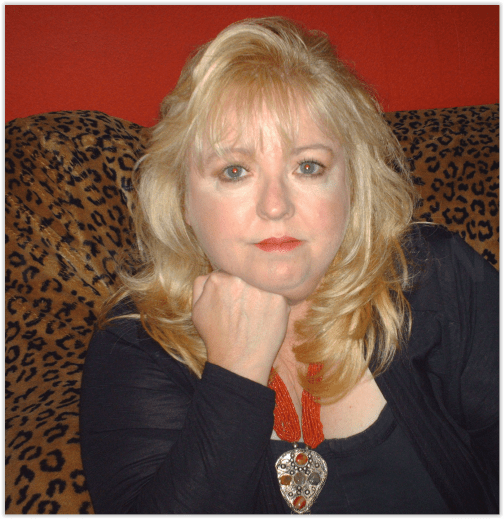
Ode to Seeds by Janet Maika’i Rudolph

“In this is all that is.” 

Julian of Norwich (while purportedly holding a seed in her hand) – 14th century

“Even if I knew that the world would end tomorrow,

I would plant an apple tree today.”

Martin Luther

Have you ever had bedbugs or lice? If not, you’re lucky. If so, you understand just how hard they are to get rid of. Why is that? Because they are essentially seeds with legs.

Seeds need to be able to travel in order to be successful spreaders of life. For example, when an acorn falls from an oak tree, it probably can’t germinate right where it falls. The mama tree has already taken up all the earth/soil space as well as the water sources for its own roots. And the mama tree’s own leafy branches will block out access to the sun. So the innate goal of the seed is to move to find a more friendly space. Evolution has created all sorts of ways for seeds to use motion in the service of finding their own place to germinate. In the case of the acorn, there are squirrels. Because they are a food source, many of the acorns get taken to dens under the earth. Many of those are not eaten. Either they are forgotten or the squirrel in question meets another demise. An acorn that is nestled in a den under the earth, can have a potentially perfect environment to sprout far from its origins.

Continue reading “Ode to Seeds by Janet Maika’i Rudolph”

The Legacy of Carol P. Christ: Meeting the Windigo

Towards the end of Braiding Sweetgrass, mother, biologist, and member of the Citizen Potawami Nation Robin Wall Kimmerer sets out at the end of winter to visit a forest area near her home that she considers hers not in name but in virtue of her love and care for it. On arriving, she discovers that the forest is no more, having been clear-cut by the owner. The wildflowers and the plants she has harvested over the years have sprouted up, but Kimmerer knows that without the forest cover they will be burned by the sun and their places taken by brambles.

Kimmerer is overcome by anger and despair, her feelings for the land she loves merging with her knowledge that not only her forest, but the earth itself is being treated as nothing more than a product by so many—without second thought for all that is lost.

Continue reading “The Legacy of Carol P. Christ: Meeting the Windigo”

Carol P. Christ: Weaver of Visions by Beth Bartlett

Author’s Note: Today’s post is the 4000th FAR blog post!  I first became aware of the Feminism and Religion blog when participating in a symposium honoring the life and work of Carol P. Christ in October 2021. I was inspired to write a piece on Christ’s contribution to ecofeminism, that was posted in the FAR blog a year ago today. I wanted to post another piece on Christ on the anniversary of that first post. I’m delighted that it is the 4000th, and so fitting that it is written in honor of Carol Christ, who was such an important part of the FAR blog.

A while ago, a friend asked me what spiritual reading I’d been doing lately. I told him that I’d been revisiting classics from the past. When he asked me who specifically, the first name I mentioned was Carol Christ. Even though he was a minister, he had never heard of her. Sadly, I suspect the same would be true for the vast majority of ministers, priests, rabbis, theologians, and other religious leaders. Yet, I can think of no one who has had a greater influence on my religious and spiritual thought and beliefs.

Continue reading “Carol P. Christ: Weaver of Visions by Beth Bartlett”

Goddess Pilgrimage to Crete – Reborn! by Laura Shannon

Thirty years ago, Carol P. Christ founded her Goddess Pilgrimage to Crete, which she wrote about in her book A Serpentine Path: Mysteries of the Goddess (original 1995 title Odyssey with the Goddess) and in numerous posts on this site over the years. She led over 40 groups of women Pilgrims to encounter the history and sacred sites of the peaceful, egalitarian civilisation of Bronze Age Crete. 

Here, the Goddess-honouring culture of Old Europe survived the longest, when patriarchal Indo-Europeans were taking over in the ‘Kurgan waves’ Marija Gimbutas has described. The sophisticated artworks of ‘Minoan’ Crete show women in positions of honour and authority, and do not depict violence, slavery, or war. People celebrated at ceremonial centres, made offerings at cave and mountain shrines, and worshipped the Goddess in sacred trees and stones.

Snake Goddess, Knossos, Crete, ca. 1600 BCE [photo: Heraklion Archaeological Museum]

As many readers know, before Carol passed away, she asked me to take on the leadership of her Goddess Pilgrimage, and to serve as her literary executor and the director of her Ariadne Institute for the Study of Myth and Ritual. Deeply moved by her trust in me, and guided by very clear dreams I received around the time of her death, I accepted Carol’s request. In October 2022, after a three-year delay due to the pandemic, the Goddess Pilgrimage to Crete was reborn. 

Continue reading “Goddess Pilgrimage to Crete – Reborn! by Laura Shannon”

Legacy of Carol P. Christ:“Ursula Niebuhr, Ursula Niebuhr”: Unacknowledged Co-author of Great Works of Theology?

This was originally posted on August 26, 2019. It fits in with our new project of Unsung Heroines.

A few days ago while watching the movie The Wife, I kept hearing the words “Ursula Niebuhr, Ursula Niebuhr,” in my mind. I knew the reason was Ursula’s unacknowledged collaboration on the work of Reinhold Niebuhr, which I discovered while writing an earlier blog on uncredited co-authors.

I had not been particularly interested in seeing The Wife because I assumed it was the familiar story of the woman who gives up her career interests when she marries. Want to become a rabbi? Marry one. Want to become an artist? Live with him and become his muse. This is a very old story, and for me, not a very interesting one.

Continue reading “Legacy of Carol P. Christ:“Ursula Niebuhr, Ursula Niebuhr”: Unacknowledged Co-author of Great Works of Theology?”

Willful Women, Feminist Killjoys, and Jesus: Reflections on Sara Ahmed’s Living a Feminist Life by Liz Cooledge Jenkins

I’ve been thinking about willful women and feminist killjoys—two main guiding images in feminist scholar Sara Ahmed’s book Living a Feminist Life (Duke University Press 2017).

The idea of the willful woman (or willful girl, or willful person) is something I can easily get behind. The way I understand it, it has to do with women getting in touch with our own wills and being willing to speak and act and live out of our wills. Particularly if these wills turn out to exist in opposition to the things other people might will for us.

It’s about learning to stand up for ourselves, learning to affirm our full humanity in a world that often expects…less. It’s a way of consciously, intentionally being willing to be called “willful” as a negative thing—as in, stubborn, selfish, antagonistic, difficult—because the affirmation of our own wills is worth it.

I like all of this and find it helpful. Be willful. Expect pushback and penalties for it. Be willful anyway.

Continue reading “Willful Women, Feminist Killjoys, and Jesus: Reflections on Sara Ahmed’s Living a Feminist Life by Liz Cooledge Jenkins”

The Problem of Jehosheba: Reading One Biblical Character in Two Different Feminist Ways by Jill Hammer

Tucked away in II Kings 11 is the story of a mother-daughter feud that is personal, political, and ultimately fatal. Jehu, a charismatic military commander, is anointed by Elisha as the next king of the northern kingdom of Israel. Jehu kills the previous king of Israel, Jehoram, and also Jehoram’s mother Jezebel (yes, that Jezebel—the famous/infamous queen). As part of his violent rise to power, Jehu also kills Ahaziah, king of the southern kingdom of Judah. Ahaziah’s death should mean that Athaliah (Atalya), who is queen mother of Judah as well as the daughter of Jezebel, cedes power to a new king and a new queen mother. Instead, according to the Book of Kings, Athaliah has the rest of the king’s sons and grandsons murdered, and seizes the throne for herself. 

All seems lost for the Judean line, except that Jehosheba (Yehosheva), wife of the high priest Jehoiada and sister of the murdered King Ahaziah, saves one of Ahaziah’s sons, along with the child’s wetnurse, and hides them both in the Temple. Jehosehba keeps the boy, Joash, and his nurse in the Temple until he is six years old. At that time, Jehosheba’s husband, the high priest, anoints Joash king, stages a coup, and executes Athaliah as a usurper. Jehosheba’s action saves the Davidic line. The collection of Jewish legends known as Otzar Midrashim lists Jehosheba as one of the righteous women of the Jewish people.

Continue reading “The Problem of Jehosheba: Reading One Biblical Character in Two Different Feminist Ways by Jill Hammer”

Legacy of Carol P. Christ: His Terror

Moderator’s Note: This was originally posted on March 25, 2019. AND the issues are still with us and as vivid as ever.

The first two parts of Susan Griffin’s Woman and Nature, “MATTER” and “SEPARATION,” are written in the authoritative voice of western philosophy and science that declares matter to be dead and the body an impediment to thought, and proceeds to separate the mind from the body. All of this, Griffin suggests, is based in the fear of death.

As Griffin notes, in this equation woman is identified with the body and her voice is silenced. Re-reading these parts of Woman and Nature for the umpteenth time for a class I am teaching felt even more painful than it had before. I was reliving parts of my own story.

I was brought up in the tract home suburbs of post-war Los Angeles in a world of women. Both of my grandmothers played central roles in my upbringing, introducing me to nature and the spirit of life they experienced as we explored trails the Los Angeles County arboretum before it was fenced or when we frolicked in the waves and picked up sand dollars at the seashore south of San Francisco. When I was ten years old my family moved to a new neighborhood that was almost entirely made up of families like ours with small children, fathers who worked, and mothers who stayed home.

Continue reading “Legacy of Carol P. Christ: His Terror”

Witches’ New Year: She is Everywhere by Caryn MacGrandle

Samhain, the Witches ‘New Year’ was a busy time for me. I did a workshop at a local large artist facility Lowe Mill Arts in Huntsville, Alabama. I watched and participated in a releasing burning ceremony the next night at the same artist site. There is so much we are needing to release especially with where we are in the world right now. 

And then the following night, I was in charge of a Fire Circle at the Witches Ball at Mill Kat Healing Arts Center where I host my weekly circles.

I admit to some trepidation hosting the very public Fire Circle. I live in the deep south of Alabama most definitely not known for its open mindedness. A friend told me that she shared the Witches Ball event on her facebook page and received the comment, ‘that is how they indoctrinate you.’

Oh my.

But we are not in a time to be deterred by fear. I have been called to share this magic. And people need it.

Continue reading “Witches’ New Year: She is Everywhere by Caryn MacGrandle”

Biblical Poetry – Trees by Janet Maika’i Rudolph

Image from an Egyptian tomb ca. 1314-1200 BCE. Isis is giving nourishment in the form of fruit and drink,

In many cultures of the world, including our own, trees are considered the ancestors of humanity – own our ancestors.

Trees are connected with great goddesses throughout antiquity. We see this in the bible where, as I’ve noted before, the Tree of Life is Eve’s tree for the word Eve means life. It is, in essence, the Tree of Eve. Goddesses in trees feeding humans were common themes in ancient Middle Eastern art. The tree was Hers to give freely of as she wished.  

Anthropologist and religious scholar, Mircea Eliade writes extensively about the associations of trees ancestral connection to humans. He calls them both mystical and mythical.[1] His examples include the Miao groups of Southern China and Southeast Asia who “worship the bamboo as their ancestor.” He also notes Australian tribes who view the mimosa as their progenitor. And there is a tribe from Madagascar, called Antaivandrika which means “people of the tree,” who considered themselves descended from the banana tree.

Continue reading “Biblical Poetry – Trees by Janet Maika’i Rudolph”