The Way of the Mystic

Those of us in the Northern Hemisphere are coming out of a long pandemic winter and entering a new season of waxing light, hope, and growth. Yet these continue to be turbulent times. Even with the progress of the Covid vaccine, none of us truly knows when life will ever return to “normal.”

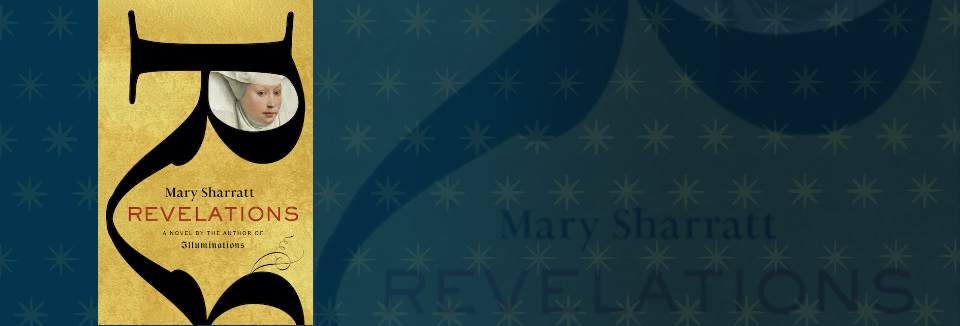
Like us today, the medieval mystics Julian of Norwich and Margery Kempe, the heroines of my new novel REVELATIONS, which will be published on April 27, lived in a time of pandemic and social upheaval, yet both women bore witness to the divine promise that ultimately all shall be well.

During a near-death experience, Julian received a series of divine visions and spent the next forty years unpacking them in her luminous theology of an unconditionally loving God who is both Mother and Father. Julian offered radical counsel to Margery Kempe, a failed businesswoman and mother of fourteen, who was haunted by her own visceral mystic experience. With Julian’s blessing, Margery walked away from a soul-destroying marriage and became a globe-trotting pilgrim-preacher and rabble rouser. Though these two women might seem like polar opposites—Julian, the enclosed anchoress, and free-roving Margery experiencing her visions in the full stream of worldly life—they complement each other. Together their lives and work form a Via Feminina, a distinctly female path to the divine.

The women mystics have always fascinated me. I identify very powerfully with Hildegard of Bingen, the heroine of my previous novel ILLUMINATIONS, as well as with Margery and Julian as spiritual women facing the roadblock of an institutional, male-dominated religion that side-lined them precisely because they were women. But instead of letting this beat them down, they found within their own hearts a vision of the divine that mirrored their female experience. I believe it’s no mere coincidence that both Hildegard and Julian dared to create a theology of the Feminine Divine, of God the Mother. All three women seized their power and their voice to write about their encounters with the sacred, preserving their revelations to inspire us today.

In our modern world, when many traditional religious institutions are crumbling, we can follow in these women’s footsteps and seek the divine—however we perceive the divine—within the sanctuary of our own hearts. This is the birthright no one can take from us, our eternal refuge. This is the Way of the Mystic.
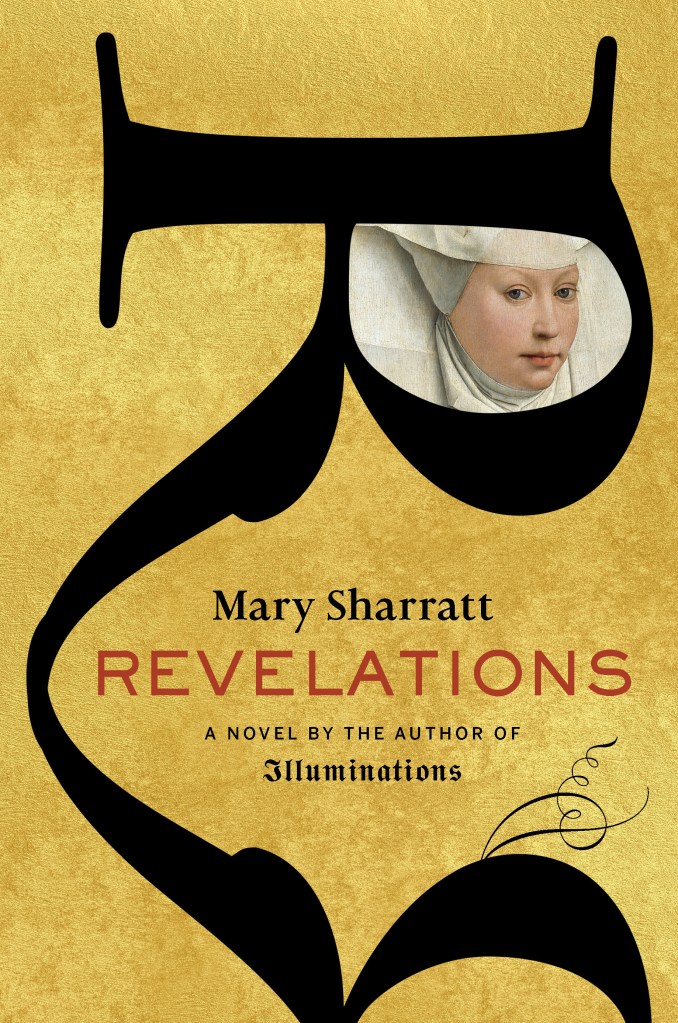
Learn more about Margery and Julian as I discuss these mystics in a series of free virtual events.

My virtual tour kicks off with a very special Literature Lover’s event, sponsored by Valley Bookseller and Excelsior Bay Books in Minnesota. You can watch the video above. I am in conversation with acclaimed author, Elissa Elliot .

For a deep dive into Julian of Norwich’s spirituality, I am teaming up with Christine Valters Paintner of Abbey of the Arts to offer a Virtual Mini-Retreat on May 13, Julian’s Feast Day. You can learn more and register here.

To stretch body and mind in a creative virtual retreat that combines Yoga, women’s spirituality, and writing women back into history, please join me and Stephanie Renee dos Santos for SHEStories + Saraswati Flow on May 15 – 16.

REVELATIONS may be pre-ordered through any of the links below. As a midlist author, I am profoundly grateful for every single purchase.

PRE-ORDER HARDCOVER & EBOOK: Amazon | Barnes & Noble | Bookshop.org | Indiebound | Hudson | Powell’s | Target |

PRE-ORDER AUDIOBOOK: Amazon / Audible | Kobo

Read an EXCERPT.

Mary Sharratt is on a mission to write women back into history. Her acclaimed novel Illuminations, drawn from the dramatic life of Hildegard von Bingen, is published by Mariner. Her new novel Revelationsabout the globe-trotting mystic and rabble-rouser, Margery Kempe, will be published on April 27. Visit her website.
Reflections on Miriam’s Cup by Rabbi Jill Hammer


For many years, I’ve had a Miriam’s Cup on my Passover seder table, next to the Cup of Elijah. Our cup of Elijah is a kiddush cup belonging to my great-grandfather Joseph Frankel and inscribed with his name. Our cup of Miriam was created by a ceramic artist and bears the word “Miriam” at its base. The Cup of Elijah, filled with wine, is an old tradition—a cup on the seder table for the prophet Elijah, who according to legend visits every Passover seder. The cup of Miriam, filled with water, is a custom only a few decades old, honoring the prophetess Miriam, who watched over the infant Moses, danced in celebration at the crossing of the Sea, and who according to a famous ancient tale had a well of water that followed her through the wilderness.

According to scholar Annette Boeckler, the custom of the Cup of Miriam began at a Shabbat table in Boston in 1989, made its way to the post-Sabbath Havdalah ceremony, and eventually found its way to the seder table. The custom was intended to honor the prophetess Miriam as well as the contributions of women to the Exodus and to Jewish life. Many of the heroes early in the book of Exodus are women, yet their stories are not part of the seder. The Miriam’s Cup at the seder is a way to give the participants an opportunity to include those stories. Continue reading “Reflections on Miriam’s Cup by Rabbi Jill Hammer”

Aren’t We All Divine Children? by Janet MaiKa’i Rudolph


Consider the following four birth stories:

  1. A high priestess became pregnant in a manner that was forbidden in her society. She gave birth to a baby boy. Fearing for her child’s life, she fashioned a basket of rushes and cast him into a river. He was retrieved by a man named Akki whose name means “the drawer of water.” Akki raised the boy.
  2. A son was born to a young princess who had been forced to keep her pregnancy a secret because it was forbidden. When her son was born, she placed him in a basket and floated him down the river. He was found and raised by foster parents. He grew up to become a noted warrior, speaker and eventually a king. 
  3. A young boy accidentally ingested some drops of star-studded wisdom from the cauldron of a goddess and, in this manner, was suddenly awakened to divine knowledge. The goddess grew furious that her divine wisdom was stolen. Desperate to escape her life-threatening wrath, a wild chase ensued. The boy turned himself into a rabbit, but the goddess turned herself into a dog to chase him down. The boy turned himself into a fish to swim away but the goddess became an otter to continue the chase. The boy then turned himself into a bird, but the goddess became a hawk. Finally, the boy turned himself into a seed and hid in a large pile of grain. The goddess turned herself into a hen and ate up all the grain including the boy-as-seed. In this manner she found herself pregnant. She planned to kill the baby when he was born, but when she saw him, he was so beautiful that she fell in love and she could not bring herself to do so. The goddess sewed the baby into a leather sack and threw him into the river. He was retrieved by a man named Elphin who renamed and raised him.
  4. A woman of the priestly caste of her tribe gave birth to a baby boy. At the time, all boys born to her tribe were under a decree of death. To save her son’s life, she created a basket of reeds and floated him down the river. He was found by a royal princess who retrieved him from the water, gave him a new name and raised him to adulthood.

Continue reading “Aren’t We All Divine Children? by Janet MaiKa’i Rudolph”

High Desert Sojourn by Sara Wright

I longed to re-visit
the desert – my first
journey left me
with a longing for
wide open spaces,
a blue sky dome,
a bowl of stars at night,
so to return 25 years later
was to complete
an unfinished story.
Now I could live among
the stately rock
stark white columns,
conical reptilian hills,
pink and purple sands,
ragged weeds,
Cactus People,
thorns and stickers,
delicate yellow flowers,
under a moon that rarely slept?

Some nights I missed the dark.
I always missed the Bear
I dismissed the longings
in my body,
Things were different here.

Maybe I could escape
the grief of dying trees,
stripped mountains,
a shrinking wilderness
too many gunmen
the loss of dreams?

That first November
I heard a haunting –
Crane calls
as they touched
down at nightfall.
My bones sang.
How I longed
to meet the bird
whose voice
sent lightening chills
through every nerve.

Continue reading “High Desert Sojourn by Sara Wright”

What’s Done Is Really Done by Barbara Ardinger

This is an encore performance of a satire I wrote in November 2019, when I thought Trump’s sociopathic behavior was at its height. Little did I know. Little did we know. Only a year later, following the 2020 election, we watched him lie and deny, spread conspiracy theories, and finally encourage his true believers to invade the Capital and “stop the steal.” It’s good to see that President Biden is a normal person who knows what presidential behavior and work really are. A small example: right after the inauguration, we watched him signing executive orders. Did he use a Sharpie? No. Biden used (and still uses) a normal pen to sign his name. And he doesn’t wave an illegible signature at the TV cameras.

Two brief notes: In his novel Metamorphosis, Franz Kafka does not say the protagonist is turned into a cockroach. He’s an ungeheures Ungeziefer, i.e., a “monstrous vermin.” But if you want to see Trump as a roach, that’s fine. Note also that Trump’s answers are spoken by Dogberry in Shakespeare’s Much Ado About Nothing. Dogberry, Messina’s police constable, is probably the stupidest character Shakespeare created. And so, here’s the encore. Enjoy! (And let’s squash that bug!) Continue reading “What’s Done Is Really Done by Barbara Ardinger”

What If We Begin from the Hypothesis that Ancient Crete Was Matriarchal, Matrifocal, and Matrilineal? by Carol P. Christ

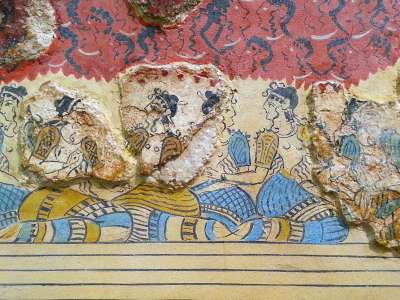
If we begin from the hypothesis ancient Crete was matriarchal, matrifocal, and matrilineal, what would we expect to be the central focus of the its religion?* Harriet Boyd Hawes and her colleague Blanche E. Williams presented an incipiently feminist, woman-centered, analysis of the religion of ancient Crete in Gournia, the book describing their excavation of a Minoan village at the beginning of the twentieth century. Boyd Hawes argued that the archaeological evidence showed not only the pre-eminence of the Goddess, a conclusion with which Williams agreed, but also the strength and independence of women in a culture she defined as matriarchal and matrilineal, centered around the Mother family. If ancient Crete was matrilineal, matrifocal, and matriarchal, we should expect to find evidence that women were not only strong and independent, but also that they had leadership roles in religion and culture. Williams noted the presence of priestesses. The miniature frescoes from Knossos show a group of older women sitting in the place of honor and a group of women performing a ritual dance. Where evidence concerning leadership roles is lacking, it should not be assumed that leadership must have been in the hands of men.
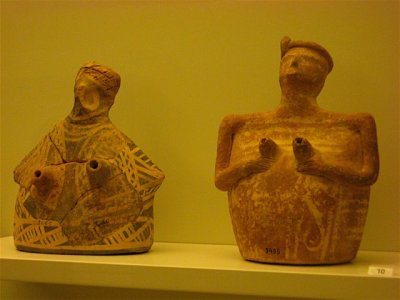
We should not be surprised to find the Goddess or mother earth to be at the center of rituals and ceremonies in ancient Crete. However, to say that the Goddess is central begs the question of what we mean when we say Goddess. In the west, deity is understood to be transcendent of the world, imaged as a dominant male other, and as the judge of the living and the dead. Citing the Oxford English Dictionary, archaeologist Colin Renfrew bases his discussion of Minoan religion on the idea of divine transcendence. But if we accept Marija Gimbutas’ insight that the Goddess represents the powers of birth, death, and regeneration in all forms of life, a different picture emerges. The Goddess is immanent in, rather than transcendent of the world. She is the enlivening force in human beings and all of nature. She is not the judge of the living and the dead, for the dead are returned to her body. Unlike later Greek deities, the Goddesses of Old Europe and ancient Crete are not generally portrayed as idealized human beings. Though they often have eyes, breasts, and sacred triangles, they also have beaks and wings, are shaped like mountains, and decorated with flowing lines symbolizing rivers or streams. These hybrid forms suggest that all of life is in the image of divinity and that humans are not higher, better, or separate from other life forms. Hybrid images celebrate the connection of all beings in the web of life and call human beings to participate in and enjoy this world, not to seek to escape or rise above it. A religion centered around gratitude for life in this world is very different from one that centers around fear and judgment and a longing for life after death. Jacquetta Hawkes’ insight that the religion of ancient Crete celebrated “the grace of life” is exactly right.

Is the Old European or Minoan Goddess one or many? Monotheists have insisted that there can be only one God, yet polytheists revere a plurality of images, while animists celebrate the spirits of (perceived) living beings such as rivers and trees, mountains and caves. The terms monotheism and polytheism are not neutral. Both were developed by monotheists: monotheism describes the correct beliefs of the self; polytheism, the false beliefs of the other. I find theologian and liturgist Marcia Falk’s distinction between exclusive and inclusive monotheism helpful in resolving the question of the one and the many. According to Falk, inclusive monotheism is an intuition of the unity of being within the diversity of the world: celebrating the unity of being, it welcomes a plurality of images to represent diversity and difference in the world. From this point of view, the boundaries between monotheism and polytheism are porous. When Gimbutas spoke of the powers of birth, death, and regeneration in all of life, she was referring to the unity of being underlying the diversity of life forms, including plants, animals, and human beings. Similarly, when indigenous peoples speak of mother earth as the giver of all and all beings as relatives, they recognize that all life is sustained by a single source. The fact that ancient Cretans imaged divinity in different ways and with different characteristics does not require the conclusion that they worshipped many discrete deities as some archaeologists argue: I suggest that they intuited a unity of being while celebrating the diversity of life. This appears to have been the conclusion of Williams who wrote of “the prominence of a goddess under various aspects.”

If matrilineal, matrifocal, and matriarchal cultures tend to view the earth as a great and giving mother, we can expect this insight to be expressed in rituals and ceremonies. Gratitude is the appropriate response to gifts freely given. I suggest that gratitude for the gift and gifts of life was not only a focus, but the central focus, of religion in ancient Crete. If this is so, we should expect to find rituals celebrating the gift of life in the birth of babies, the coming-of-age of girls, as well as in as well as in death rituals honoring the ancestors. We can also expect to find rituals honoring the mother line and expressing gratitude for the wisdom of ancestors. Many of these rituals would have taken place in the matrilineal House as archaeologist Jan Driessen suggests. Rituals for the ancestors might also have taken place in cemeteries. We should also expect to find rituals expressing gratitude for the food that sustains life, for example, in offerings of first fruits to mother earth and in the pouring of libations that are absorbed back into her body. If, women invented agriculture, and if as Gimbutas argued, Old European religion celebrated the processes of birth, death, and regeneration in all of life, we should find rituals focused on planting, harvesting, and storing seeds. Some of these rituals might have taken place in the matrilineal Houses, while others surely took place in nature and in the fields. If pottery-making and weaving were understood to be mysteries of transformation involving birth, death, and regeneration, we might find evidence of rituals associated with these activities in the Houses or in workshops. It is known that rites in ancient Crete involved trees, mountains, and caves, as well as water sources. We must ask if and how such ceremonies expressed gratitude to the mother earth, the source of life, and the cycles of birth, death, and regeneration.

*These musings are part of an early draft of the methodological prologue to an essay I have been asked to write on Religion in a Minoan Village to be published in the archaeological report on recent excavations at Gournia. In the preceding part of the prologue, I discuss the theories about matriarchal, matrifocal, and matrilineal cultures of Harriet Boyd Hawes, Blanche E. Williams, Marija Gimbutas, Heide Goettner-Abendroth, and others.

Carol P. Christ is an internationally known feminist and ecofeminist writer, activist, and educator who lives in Heraklion, Crete. Carol’s recent book is Goddess and God in the World: Conversations in Embodied Theology. Carol has been leading Goddess Pilgrimage to Crete for over twenty years: join her in Crete. Carol’s photo by Michael Honneger.

Listen to Carol’s a-mazing interview with Mary Hynes on CBC’s Tapestry recorded in conjunction with her keynote address to the Parliament of World’s Religions.

The Last Chemo by Carol P. Christ

When I went to the hospital for chemo on Thursday, the doctor told me it would be my last one. That was a surprise. I thought I would have at least one more. But it was a good surprise, because I had felt more tired than usual after my most recent treatment. Apparently, I had started to feel a bit better when my cancer became inactive, but chemo is cumulative, and it caught up with me.

I slept well on Thursday night. On Friday morning I felt great relief and joy thinking that my chemo was ending. I called a number of friends to tell them the good news. I suspected that I might feel very tired for a few weeks from the last dose of chemo. But after that, all of the symptoms caused by the chemo would begin to lessen—including numbness in my right foot, instability, lack of energy, shortness of breath, anemia, and hair loss.

By the mid-afternoon the tiredness set in again. This time I did not get the few good days that I have attributed to a prescribed dose of cortisone to counter the effects of the chemo. Even though I predicted that the last chemo would make me very tired, there is a part of me that wants this all to be over—and now! 

But in truth it will not be. Not for months. Continue reading “The Last Chemo by Carol P. Christ”

The Via Feminina: Revisioning the Heroine’s Journey by Mary Sharratt

Campbell’s Hero’s Journey

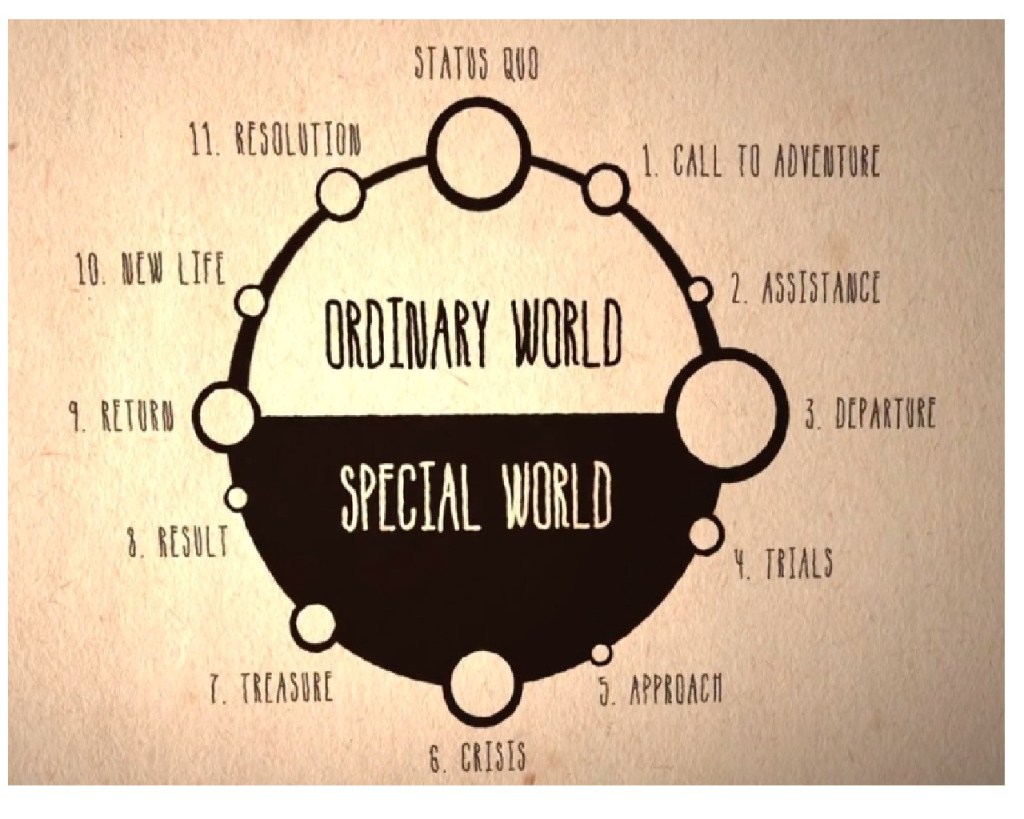
Joseph Campbell’s monomyth, the Hero’s Journey, is outlined in his 1949 book, The Hero with a Thousand Faces. Drawn from his studies of comparative mythology and Jungian psychology, the Hero’s Journey has become a foundation myth of modern culture. The hero, generally young and vigorous, sets off into the unknown to battle antagonistic forces and returns transformed, a hero and guide to his people.

As Campbell writes in The Hero with a Thousand Faces:

A hero ventures forth from the world of common day into a region of supernatural wonder: fabulous forces are there encountered and a decisive victory is won: the hero comes back from this mysterious adventure with the power to bestow boons on his fellow man.

The Hero’s Journey has served as the go-to template for Hollywood screenwriters and bestselling novelists. We see this mythic pattern of the conquering male hero played over and over again in popular culture. Think Luke Skywalker in the original 1977 Star Wars—or any protagonist in a George Lucas or Steven Spielberg movie. Creative writing teachers encourage their students to pattern their story arcs on the Hero’s Journey to give a sense of archetypal depth and resonance. But this technique has been overused to the point of becoming a cliché. A deeply sexist cliché. Continue reading “The Via Feminina: Revisioning the Heroine’s Journey by Mary Sharratt”

Confessions of a White Feminist by Marcia Mount Shoop

Last week I had a vivid and visceral dream.  I woke from it feeling body sensations as if I had just had the experience I dreamt about. 

In my dream I am pregnant—or I am supposed to be pregnant. But I look down at my belly and there is no movement. Nothing. And my belly isn’t very big. I think the baby must have died. Then I feel movement—the feelings of a baby turning over and moving inside me. And I can see right through my skin, like an ultrasound image. 

I can see the baby positioning herself to engage the birth canal. She actually uses her hands to click her head into engagement. I realize she is face up and that this will be a painful delivery. I know that she is a girl. Then I see a reflection of myself in the mirror and see that my belly is still high and that the baby has decided to wait. She is not ready to be born. 

Continue reading “Confessions of a White Feminist by Marcia Mount Shoop”

About Bridgerton: A Different Feminist Perspective by Christine Irving


First of all, I’m grateful to Bridgerton for providing several spirited conversations between my friends and me, not to mention the POVs penned recently in these pages.  It was fun to take part in exchanges that did not highlight or veer off into either politics or the COVID-19 epidemic.

What first drew me to Bridgerton was the fun of it – the blatant over the top spoofery and satire so like the Commedia dell’arte it so brilliantly imitates.  The Commedia got away with its mockery of society because it disguised it beneath a froth of opulent, frippery, and coarse buffoonery that distracted the rich (but not the poor) from its real message about the foolishness and vanity of the ruling class.  So does Bridgerton, but in this case, the culture being satirized and unveiled is ours.  Unlike those earlier dramatists, in our age we fortunately and so far, at least in this country, still enjoy much greater leeway in making mockery.  “Huzzah!” I say. Continue reading “About Bridgerton: A Different Feminist Perspective by Christine Irving”