This is the 3rd in a series of Biblical poetry where I am “translating” verses of the Bible. You can read the first two here: Biblical Poetry and Biblical Poetry, Part 2.
One of my primary purposes of doing this work is to strip away patriarchal veneers that have been layered upon original teachings. I reach into ancient pagan knowledge in order to reclaim what I believe to have been lost.
Below is each verse in 3 versions. First is the King James Version (KJV) for familiarity, the second is Jeff Benner’s Mechanical Translation (Benner) which uses a consistent translation for each word. I use his translations to get a better sense of how the words originally fit together.[i]
Part of discovering my love for teaching and moving through my anxiety involved reconsidering my “ideals” of teaching, which were numerous and high minded.
I always wanted to be a teacher. Sure, I had other career dreams as a child too. I wanted to be a model, because I wanted to be pretty like a model. I wanted to be a flying missionary to please my father—you see, it was not quite enough just to do missions. I also needed “save” (pun intended) people with my daring airplane recuses. And in moments of practical mindedness, I thought I should definitely be a “cleaning lady” (aka a housekeeper), because I was very good at cleaning, which was a way of life and survival in my home. But “teacher” was a persistent calling, so I followed in my teacher-mother’s footsteps AND tried to satisfy paternal aggrandizement by becoming a professor.
It occurred to me recently that I have actually been teaching now for nine years. I’ve also discovered in the last few years that I like teaching. And no, I didn’t always know this. I always wanted to like teaching; and sometimes I was sure that I did indeed like teaching. But non-teaching associated trauma during my early career and my social anxiety also sometimes made (and makes) the process excruciating. (Neo-liberal and late-capitalist academic practice, politics and policy don’t help either.) Part of discovering my love for teaching and moving through my anxiety involved reconsidering my “ideals” of teaching, which were numerous and high minded.
Sigmund Freud (1856–1939), well-known Austrian neurologist and founder of psychoanalysis, “…said once to Marie Bonaparte: ‘The great question that has never been answered, and which I have not yet been able to answer, despite my thirty years of research into the feminine soul is, ‘What does a woman want?’” (“Was will das Weib?”) ― Sigmund Freud: Life and Work (Hogarth Press, 1953) by Ernest Jones.
I don’t believe Freud ever answered the question posed here satisfactorily. Women’s desire—even today—hovers in the taboo category. After all, in our hierarchal, patriarchal society women’s wants/desires are mediated through social structures and institutions that favor men. It’s easy to overlook since we all are spawned and then swim in those patriarchal waters.
Last month, I wrote about a new project I have been playing with which is to re-write biblical verses as spiritual poetry rather than follow along with stricter translations (although truth be told, my translations have never been strict). My main goal is to strip away the layers of patriarchy that grew up around universal, earth-based, mystical lessons. In my last blogpost I wrote about why I translate El (god in English versions) as All-Potential Powers. You can read it here: https://feminismandreligion.com/2021/04/15/biblical-poetry-by-janet-maikai-rudolph/
YHVH, the sacred 4 letter tetragrammaton, is always translated as LORD in the bible. It is truly a wondrous name with many layers of meaning which the English one-word term LORD doesn’t capture. I find that the English translations of these two words – LORD and god – are dull and without sacred energetic aspects. In ancient times, the words used to depict divinity in general, and YHVH specifically, were meant to be intoned and chanted.
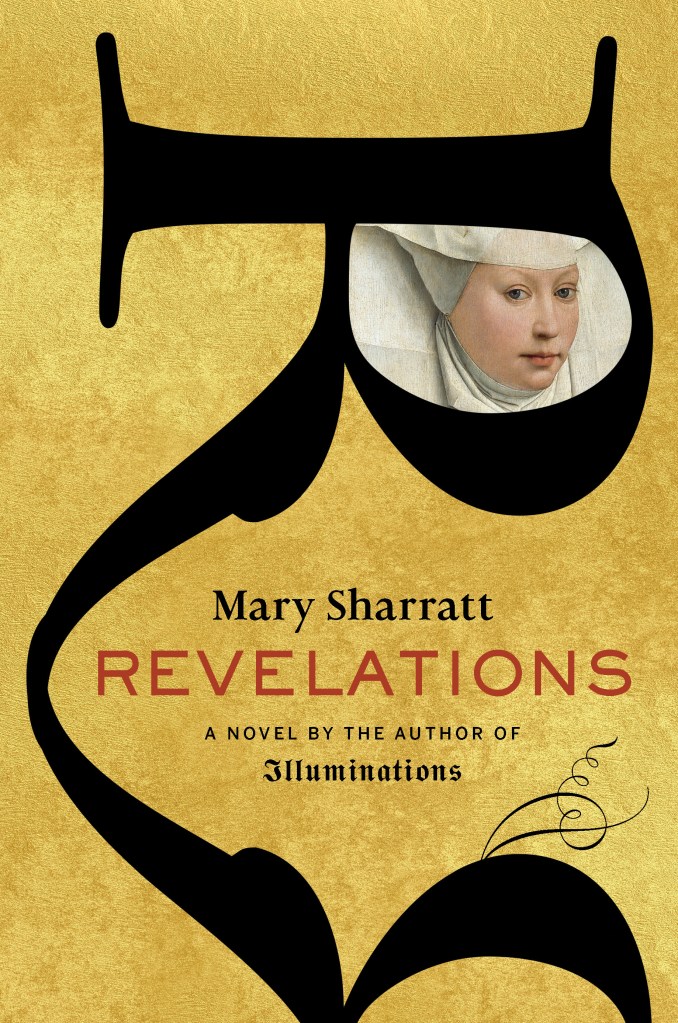
My new novel REVELATIONS is drawn from the lives of two medieval mystics who changed history—Julian of Norwich and Margery Kempe, two very different women whose paths converged and who, I believe, have much to teach us today.
Women’s spiritual experience is a theme that keeps coming up in my novels. Perhaps some of you have read my novel ILLUMINATIONS, about the visionary abbess, composer and polymath, Hildegard von Bingen.
As a spiritual person myself, I’ve always found it frustrating how women have been side-lined and marginalized in every established religion in the world. Yet from time out of mind, mystic and visionary women of all faith traditions have offered radical resistance. They have subverted institutional patriarchal religion from within and found their own direct path to the divine by plunging into the deep mysteries of the soul on a path of inner revelation. Julian of Norwich called God Mother and devoted her life to writing about the Motherhood of God. Similarly, Hildegard of Bingen wrote about her visions of the Feminine Divine. This isn’t a modern feminist interpretation. It’s right there in the original texts.
Like us today, Julian of Norwich and Margery Kempe lived in a time of pandemic and social upheaval, yet both women bore witness to the divine promise that ultimately all shall be well.
Like many of you, I was anxious and angry during most of the Trump administration years. I watched MSNBC avidly, hoping against hope that a) he could be stopped or b) he would be impeached. Now that he is gone, it would be nice to be able to take a “breather” (I wasn’t breathing regularly during the Trump years), a break from thinking about US politics all the time, but sadly, the political situation in the United States continues to require attention.
President Biden has pleasantly surprised me with his progressive domestic agenda and his decision to remove troops from the heretofore endless war in Afghanistan. Nonetheless, he has proposed an increase in the military budget. Dwight David Eisenhower, who warned of the increasing power of “the military-industrial complex” as he left office, must be turning over in his grave.
Most worrying of all is the fact that so many Americans voted for Donald Trump, believe that the election was stolen from him, and support white supremacy, while the Republican party refuses to deviate from the Trumpian worldview.
As if it could not be any worse, police killings of innocent black men by white officers and mass killings by young white men with easy access to automatic weapons are proliferating. Moreover, Republican-inspired voting restriction legislation is once again threatening the foundations of our democracy. Continue reading “Feeling Weary about US Politics by Carol P. Christ”
Those of us in the Northern Hemisphere are coming out of a long pandemic winter and entering a new season of waxing light, hope, and growth. Yet these continue to be turbulent times. Even with the progress of the Covid vaccine, none of us truly knows when life will ever return to “normal.”
Like us today, the medieval mystics Julian of Norwich and Margery Kempe, the heroines of my new novel REVELATIONS, which will be published on April 27, lived in a time of pandemic and social upheaval, yet both women bore witness to the divine promise that ultimately all shall be well.
During a near-death experience, Julian received a series of divine visions and spent the next forty years unpacking them in her luminous theology of an unconditionally loving God who is both Mother and Father. Julian offered radical counsel to Margery Kempe, a failed businesswoman and mother of fourteen, who was haunted by her own visceral mystic experience. With Julian’s blessing, Margery walked away from a soul-destroying marriage and became a globe-trotting pilgrim-preacher and rabble rouser. Though these two women might seem like polar opposites—Julian, the enclosed anchoress, and free-roving Margery experiencing her visions in the full stream of worldly life—they complement each other. Together their lives and work form a Via Feminina, a distinctly female path to the divine.
The women mystics have always fascinated me. I identify very powerfully with Hildegard of Bingen, the heroine of my previous novel ILLUMINATIONS, as well as with Margery and Julian as spiritual women facing the roadblock of an institutional, male-dominated religion that side-lined them precisely because they were women. But instead of letting this beat them down, they found within their own hearts a vision of the divine that mirrored their female experience. I believe it’s no mere coincidence that both Hildegard and Julian dared to create a theology of the Feminine Divine, of God the Mother. All three women seized their power and their voice to write about their encounters with the sacred, preserving their revelations to inspire us today.
In our modern world, when many traditional religious institutions are crumbling, we can follow in these women’s footsteps and seek the divine—however we perceive the divine—within the sanctuary of our own hearts. This is the birthright no one can take from us, our eternal refuge. This is the Way of the Mystic.
Learn more about Margery and Julian as I discuss these mystics in a series of free virtual events.
My virtual tour kicks off with a very special Literature Lover’s event, sponsored by Valley Bookseller and Excelsior Bay Books in Minnesota. You can watch the video above. I am in conversation with acclaimed author, Elissa Elliot .
For a deep dive into Julian of Norwich’s spirituality, I am teaming up with Christine Valters Paintner of Abbey of the Arts to offer a Virtual Mini-Retreat on May 13, Julian’s Feast Day. You can learn more and register here.
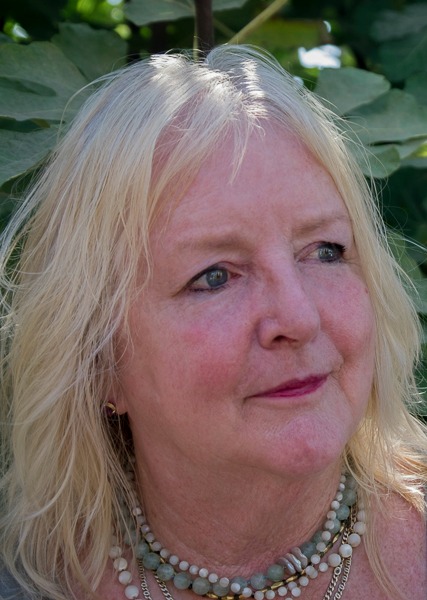
Mary Sharratt is on a mission to write women back into history. Her acclaimed novel Illuminations, drawn from the dramatic life of Hildegard von Bingen, is published by Mariner.Her new novelRevelations, about the globe-trotting mystic and rabble-rouser, Margery Kempe, will be published on April 27. Visit her website.
For many years, I’ve had a Miriam’s Cup on my Passover seder table, next to the Cup of Elijah. Our cup of Elijah is a kiddush cup belonging to my great-grandfather Joseph Frankel and inscribed with his name. Our cup of Miriam was created by a ceramic artist and bears the word “Miriam” at its base. The Cup of Elijah, filled with wine, is an old tradition—a cup on the seder table for the prophet Elijah, who according to legend visits every Passover seder. The cup of Miriam, filled with water, is a custom only a few decades old, honoring the prophetess Miriam, who watched over the infant Moses, danced in celebration at the crossing of the Sea, and who according to a famous ancient tale had a well of water that followed her through the wilderness.
According to scholar Annette Boeckler, the custom of the Cup of Miriam began at a Shabbat table in Boston in 1989, made its way to the post-Sabbath Havdalah ceremony, and eventually found its way to the seder table. The custom was intended to honor the prophetess Miriam as well as the contributions of women to the Exodus and to Jewish life. Many of the heroes early in the book of Exodus are women, yet their stories are not part of the seder. The Miriam’s Cup at the seder is a way to give the participants an opportunity to include those stories. Continue reading “Reflections on Miriam’s Cup by Rabbi Jill Hammer”
A high priestess became pregnant in a manner that was forbidden in her society. She gave birth to a baby boy. Fearing for her child’s life, she fashioned a basket of rushes and cast him into a river. He was retrieved by a man named Akki whose name means “the drawer of water.” Akki raised the boy.
A son was born to a young princess who had been forced to keep her pregnancy a secret because it was forbidden. When her son was born, she placed him in a basket and floated him down the river. He was found and raised by foster parents. He grew up to become a noted warrior, speaker and eventually a king.
A young boy accidentally ingested some drops of star-studded wisdom from the cauldron of a goddess and, in this manner, was suddenly awakened to divine knowledge. The goddess grew furious that her divine wisdom was stolen. Desperate to escape her life-threatening wrath, a wild chase ensued. The boy turned himself into a rabbit, but the goddess turned herself into a dog to chase him down. The boy turned himself into a fish to swim away but the goddess became an otter to continue the chase. The boy then turned himself into a bird, but the goddess became a hawk. Finally, the boy turned himself into a seed and hid in a large pile of grain. The goddess turned herself into a hen and ate up all the grain including the boy-as-seed. In this manner she found herself pregnant. She planned to kill the baby when he was born, but when she saw him, he was so beautiful that she fell in love and she could not bring herself to do so. The goddess sewed the baby into a leather sack and threw him into the river. He was retrieved by a man named Elphin who renamed and raised him.
A woman of the priestly caste of her tribe gave birth to a baby boy. At the time, all boys born to her tribe were under a decree of death. To save her son’s life, she created a basket of reeds and floated him down the river. He was found by a royal princess who retrieved him from the water, gave him a new name and raised him to adulthood.
I longed to re-visit
the desert – my first
journey left me
with a longing for
wide open spaces,
a blue sky dome,
a bowl of stars at night,
so to return 25 years later
was to complete
an unfinished story.
Now I could live among
the stately rock
stark white columns,
conical reptilian hills,
pink and purple sands,
ragged weeds,
Cactus People,
thorns and stickers,
delicate yellow flowers,
under a moon that rarely slept?
Some nights I missed the dark.
I always missed the Bear
I dismissed the longings
in my body,
Things were different here.
Maybe I could escape
the grief of dying trees,
stripped mountains,
a shrinking wilderness
too many gunmen
the loss of dreams?
That first November
I heard a haunting –
Crane calls
as they touched
down at nightfall.
My bones sang.
How I longed
to meet the bird
whose voice
sent lightening chills
through every nerve.