The Feast of Santo Tomas by Sara Wright

This morning I went up to the village plaza in Abiquiu to watch the dancers parade around the church with their saint who is also honored at this village festival held every year at the end of November.

This is one of the two Native American festivals that is honored each year by the genizaros who are mixed Spanish and American Indian people who embrace and practice the Catholicism that was once forced upon them.

This eclectic community is made up of descendants of Native American slaves. Those captured in warfare were brought here, converted to Catholicism, taught Spanish and held in servitude by New Mexican families. The young women and female children endured the usual atrocities perpetuated on captive females including rape at the hands of their captors. Some New Mexican male genizaros gained their freedom by serving as soldiers to defend frontier villages like Abiquiu from Indian raids. By the late 1700s, genizaros comprised one-third of the population of New Mexico. Ultimately these non – tribal peoples were assimilated into New Mexican culture.

The dances are beautiful to witness with the smallest female children dressed in predominantly white regalia some wearing a rainbow of ribbons, the young girls were dressed in red and white and had red circles of war paint inscribed on their cheeks, some of the older women also wore red, many carried turkey or eagle feathers in their hands. Most wore face paint.

Continue reading “The Feast of Santo Tomas by Sara Wright”

Celibacy Is the Lynch-Pin of Male Dominance according to Matilda Joslyn Gage by Carol P. Christ

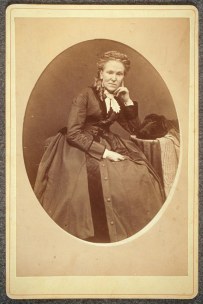
Matilda Joslyn Gage

Matilda Joslyn Gage was an activist in the nineteenth century struggle for women’s rights equal to Susan B. Anthony, and a writer and theorist equal to Elizabeth Cady Stanton. That she is not remembered is due in large part to Susan B. Anthony’s efforts to write her out of history.

Matilda Joslyn Gage was also a scholar of women’s history unrivaled in her time. In Woman Church, and State, Gage argued that “the most grievous wrong ever inflicted upon women was in the Christian teaching that she was not created equal with man.” (page 1) From this it follows that feminists must never lose sight of the role Christian teachings have played and continue to play in the unequal treatment of women.

According to Gage, women’s position in church and state did not improve in the Christian era. To the contrary it declined! Gage proved this thesis in chapters titled: The Matriarchate, Celibacy, Canon Law, Marquette, Witchcraft, Wives, Polygamy, Woman and Work, and The Church of Today. Continue reading “Celibacy Is the Lynch-Pin of Male Dominance according to Matilda Joslyn Gage by Carol P. Christ”

Archy and Mehitabel by Barbara Ardinger

Archy the Cockroach and Mehitabel the Cat were introduced to the world in 1916 by Don Marquis, a columnist for the New York Evening Sun. Marquis was more than a mere columnist; he was a social commentator and satirist admired by nearly every famous writer of the first quarter of the 20th century. Franklin P. Adams, for example, said Marquis was “far closer to Mark Twain than anybody I know” (see note).

As the story goes, Marquis said he came into his office one morning to find a big cockroach jumping about on his typewriter keys. The cockroach kept climbing up the metal frame and hurling itself headfirst onto a key, one slow letter after another. He couldn’t use the shift lock (except one time when he hit it accidentally and produced an entire uppercase column), so his writing is lowercase. After about an hour, Marquis reported, the cockroach fell to the floor, exhausted after typing just one page. He never could manage punctuation, and he also had trouble with the carriage return—how many of us remember how those old typewriters worked?—but he somehow hit it every time. (My grandfather had an old typewriter like this. The keys were very stiff. I felt like my little fingers were gonna break when I tried to type.)


In his previous life, Archy was a free verse poet. As he explains to Marquis,

expression is the need of my soul

i was once a vers libre bard

but i died and my soul went into the body of a cockroach

it has given me a new outlook upon life

i see things from the under side now

Continue reading “Archy and Mehitabel by Barbara Ardinger”

The Caves Beneath My Roots or Psychological Spelunking by Darla Graves Palmer

I’ve spent much of the past four years – since returning to the state of my birth after more than forty years’ intentional absence – trying to understand and make peace with a particular slice of southern culture that I avoided most of my adult life. Part of that process was a deep dive into my family roots which led me to also consider the caverns further below those roots. If landscape contributes to shaping our human nature, what might that mean for my family?

Here in the Missouri Ozarks, my roots extend a hundred and fifty years deep; my ancestors on both sides of my family are buried in the karst of the Ozark Plateau, and their bones have leached into the thousands of caves that honeycomb the area, mixing with the limestone and other minerals through the abundance of flowing water. I grew up being cautioned to watch out for sinkholes, often a sign that there was a cave system below.

Continue reading “The Caves Beneath My Roots or Psychological Spelunking by Darla Graves Palmer”

The Holy of Holies and the Umbilical Cord: The Evolution of a Ritual Object by Jill Hammer

In the Jewish calendar, we’re just past the holiday season—the High Holidays, the harvest festival of Sukkot, and the concluding festival of Simchat Torah when the last verses of the Torah are read and the first verses are started again. The Torah readings for these holidays speak often of the offerings once made on the altar in the Tabernacle in celebration of these festivals.  Particularly on Yom Kippur, the readings mention the kodesh kodashim: the holy of holies. This enclosed sacred space contained, according to legend: the tablets of the Commandments inside an ark, topped by two cherubim that held up an empty space between them—an empty space understood to be the amplified presence of an invisible God.  As I think back over my powerful summer, which was largely spent with Jewish priestesses on various retreats and adventures (in Connecticut, Mississippi, California, Costa Rica, England and Scotland), I am thinking about a unique ritual object we use, and realizing that in its own way, it is a kind of Holy of Holies.

Continue reading “The Holy of Holies and the Umbilical Cord: The Evolution of a Ritual Object by Jill Hammer”

The Pomegranate by Sara Wright

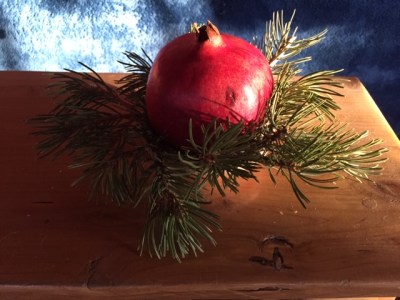
It is mid November and shiny crimson Pomegranates catch the discerning eye in food markets; even Walmart carries them!

Why do these beautiful and very ancient fruits appear during this dark time of the year?

One answer to this question is that in the northern hemisphere the fruit of this deciduous shrub ripens anywhere from September to February. The reverse is true in the southern hemisphere when the fruits ripen during March, April and May. It is important to remember that in the southern hemisphere the seasons are reversed, so in both northern and southern parts of the globe these fruits appear in the fall, during the darkest months of the year.

Pomegranates are native from Iran to northern India and have been cultivated throughout the Middle East, Asia and the Mediterranean region for millennia. (Today they are also grown in California and Arizona, so they no longer need to be imported). The shrub was domesticated as early as the 5th millennium BC. Pomegranates were the first trees to be domesticated in the Mediterranean.

Continue reading “The Pomegranate by Sara Wright”

Susan B. Anthony’s Bargain with the Devil by Carol P. Christ

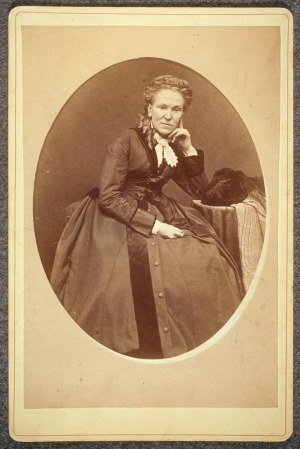
Matilda Joslyn Gage


[T]he most grievous wrong ever inflicted on woman has been in the Christian teaching that she was not created equal to man, and the consequent denial of her rightful place in Church and State. –Matilda Joslyn Gage, Woman, Church, and State, 1893, page 1

I do not approve of their [referring to Gage and Stanton] system of fighting the religious dogmas of people I am trying to convert to my doctrine of equal rights to women. –Susan B. Anthony to Olympia Brown, following the disputed merger of the radical National Women’s Suffrage Association with the conservative American Women’s Suffrage Association in 1889

Most readers of Feminism and Religion know that Susan B. Anthony and Elizabeth Cady Stanton were leaders in the nineteenth century struggle for women’s rights. Fewer will know that Matilda Joslyn Gage was widely understood to be Stanton’s equal as a theorist and Anthony’s equal as an organizer. The fact that Gage’s contributions have been lost to history can be attributed to Susan B. Anthony’s bargain with the devil.

If Anthony’s bargain had affected only the reputation of Matilda Joslyn Gage, that would be bad enough. But Anthony’s decision to merge the NWSA with the AWSA signaled that the women’s rights movement would cease and desist from its policy of naming and indicting Christian dogma as the source and cause of women’s subordination in the law in Christian countries. This decision meant that feminists would no longer have a clear understanding of the forces they were reckoning with. Continue reading “Susan B. Anthony’s Bargain with the Devil by Carol P. Christ”

Endings, Beginnings, and Dreamings by Carol P. Christ

my dream home in Molivos

Fifteen years ago, I bought my dream home in Molivos, Lesbos, one of the most stunning villages in the world. Over the next two years I renovated a listed Neoclassical house that had been neglected for over thirty years, restoring it to its original beauty. One of my friends who visited exclaimed that it looked like a movie set. Someone else said that the final result was “more Greek than Greek.” I thought this would be my forever home. But, as I have discussed in an earlier blog, I came to feel isolated in a small village.

Two years ago, I followed my heart to Crete, renting a lovely apartment in Heraklion, followed by a house near the sea. Then back to Lesbos, travel to the US and Canada, and Crete again after Christmas. I would have been happy to move back to the apartment I had rented the previous year, but this time I would bring my little dog. The apartment under my friend’s house outside Heraklion seemed like a good compromise, but the drive to Heraklion proved treacherous and parking difficult. Continue reading “Endings, Beginnings, and Dreamings by Carol P. Christ”

The Fierce Initiation of Menopause by Mary Sharratt

Modern Western culture despises aging. Aging women are held in particular contempt. Menopause is meant to be something embarrassing and uncomfortable. The pharma industry peddles hormones and other drugs meant to mask our symptoms. Few women see menopause as something to even talk about, let alone celebrate. But some women are reclaiming the dignity and transformation of menopause as a passage to power. Author and herbalist Susun Weed portrays menopause as a spiritual awakening. She likens the fierce waves of heat traveling upward to our brains to the Eastern concept of a Kundalini awakening that ultimately leads to enlightenment and spiritual liberation. Whether or not you agree with this, you will not make it through menopause without some kind of radical change taking place inside you.

I’ve experienced menopause as an initiation by fire. Having chosen not to have children, menopause has proved the most intense and radical embodied experience and transformation I’ve undergone since menarche and puberty. When a hot flash seizes me, I can no longer continue my train of monkey-mind thinking or be an efficient worker bee of global capitalism. All my old ingrained thought patterns are interrupted and come to a halt as I’m forced to focus on the embodied experience of burning up from within. What if this internal fire is literally burning through old ways of thinking and being that no longer serve me? Maybe we’re supposed to be rattled and disturbed so we can change. It’s even called The Change. So many tired old patterns are falling away from me, because I can’t keep up with them anymore. There’s this profound deepening. A sense of what truly matters.

I resist change so much. I long to remain in the comfortable old rut of the familiar, but menopause makes that impossible. It’s a take-no-prisoners wake up call to the reality of passing time and impermanence. It forces me to reexamine my values, where I truly want to spend the remaining time I have on earth. I’ve always been spiritual, but menopause has deepened my commitment to daily spiritual practice. It’s also taught me to embrace my own fierceness. To say what I mean and mean what I say. Menopausal women might find themselves losing the superficial prettiness of youth. We can no longer pass as objectified eye candy in male-stream culture. With our wrinkles and gray hair, we become something scary but also powerful. Crones and witches. We truly do become wise women if we answer the spiritual call of menopause. If we resist the lure of male-stream medicine to brainwash us into reframing this profound transformation and path of power into a disease that must be treated with hormones and face lifts. While some women benefit from hormone therapy and allopathic medicine, I’m against the generic medicalization of the natural processes in women’s lives.

Pregnant women give birth to new souls. Menopausal women give birth to their wiser selves. Like motherhood, menopause sidelines us on the relentless march towards capitalist achievement and forces us to reexamine our true priorities. We live in a 24/7 culture that expects us to be switched on and working at maximum efficiency every day of the year, as if the cycles of the seasons, sun, and moon didn’t exist. Menopause is an invitation to live in harmony with the tides and seasons of our lives. To claim our time and attention and take our lives back.

If older women truly knew how fierce and powerful we were, we could change the world.

Readers might also want to check out my essay: “Life Begins at 42: Saint Hildegard’s Guide to Becoming a Midlife Powerfrau.” 


Mary Sharratt is on a mission to write women back into history. Her most recent novel Ecstasy is about the composer Alma Schindler Mahler. If you enjoyed this article, sign up for Mary’s newsletter or visit her website.

 

Let’s Talk About Shame by Janet Maika’i Rudolph

Disclaimer/Trigger Warning: This post includes content about rape, sexual assault, domestic abuse, violence.

The recent, meaningful discussions on this forum about how so many of us feel broken due to our own personal histories have fortified and inspired me. I’ve marveled as women have spoken up so honestly and even brutally about the effects of trauma, rape, cold and dismissive mothers, abusing fathers and so on.

Some of you know my own story. I am a survivor of my father’s childhood abuse and then a rape at knifepoint in my early twenties. I carry a deep and abiding sense of shame. This feeling has always flummoxed me. Why should I feel shame when I didn’t do anything to create my own abuse? Shouldn’t my father have felt the shame? The rapist? Why did I get saddled with it? I was the victim (and survivor), not the perpetrator. But shame is indeed the feeling I carry and I’m not alone. Why is this feeling so pervasive? I don’t have all the answers, but I do have some clues about where to look.

Continue reading “Let’s Talk About Shame by Janet Maika’i Rudolph”