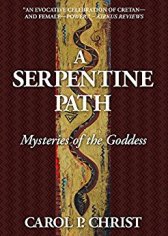
FAR Press Publishes A Serpentine Path: Mysteries of the Goddess by Carol P. Christ

carol-p-christ-photo-michael-bakasThis is a great day for me as I announce the publication of A Serpentine Path: Mysteries of the Goddess. It is the first —but certainly not the last—book from the new FAR Press, directed by Gina Messina and Xochitl Alvizo, two of the founders of www.feminismandreligion.com. The release of my book is the fruit of friendship and collaboration that has been nourished in the blog community. I hope you will join with us in celebrating our joint venture by ordering the book, telling your friends about it, sharing it Facebook and Twitter (links below), reviewing it on Amazon, and letting Gina and Xochitl know if you can review in a magazine, journal, or blog.

Here is an excerpt from the preface to whet your appetite.

*

A Serpentine Path is a story that begins in despair and ends in rebirth and regeneration. It depicts a turning point in my life, a psychological and spiritual breakthrough that opened me to living the rest of my life in grace and joy. Though I am tempted to say it was a journey from darkness to light, that would be inaccurate, for mine was a journey into the darkness and out again. The path of life is never straight or narrow, and the circle of light and darkness is never-ending.

When I began the journey described in A Serpentine Path, I did not feel loved, I did not want to live, I could not write, and I believed the Goddess had betrayed my faith. As I completed the book, I knew I was loved, I wanted to live, I was writing, and I understood that the Goddess had never abandoned me. Though my life has had its ups and downs since then—as all lives do—I have never forgotten that I am loved, I have wanted to live, I have not stopped writing, and I feel the Goddess ever-present in my body, in my breath, and in my connections with the living and the dead. Though my story is deeply personal, my struggles with love and death, trust and control, are widely shared.

A story of finding the Goddess, A Serpentine Path is part of a growing genre that is developing as women explain to themselves and others why they left the patriarchal religions of their origins for a more nourishing spiritual vision that affirms both women and the earth. A Serpentine Path documents the first of the Goddess Pilgrimages to Crete I have been leading twice a year since then. For the women who have traveled with me, it will evoke many memories. For those who have dreamed of a pilgrimage to the Goddess, it offers an opportunity to imagine the journey. I now know a great deal more about ancient Crete, the folklore and customs of traditional Crete, and the rocks, trees and plants of Crete, than I did when I began. But I learned the mystery on my first pilgrimage. Because we are all deeply connected to each other, I know that the path to the mystery I discovered is not mine alone.


a-serpentine-path-amazon-coverBe among the first to order A Serpentine Path, Carol P. Christ’s moving memoir of transformation. Carol’s other new book written with Judith Plaskow is Goddess and God in the World: Conversations in Embodied Theology. Carol also wrote the first Goddess feminist theology, Rebirth of the Goddess.

Join Carol on a Goddess Pilgrimage to Crete in 2017. Save $200.

Read two of the chapters in the book: Mysteries and Dionysian Rites.

Thanks to Judith Shaw for the cover art “Downward Serpent”

Don’t Treat Religious Women Like Second Class Feminists by Gina Messina, Jennifer Zobair, and Amy Levin

ff-editors-001It seems like every few weeks another young, female celebrity proudly and publicly declares she is not a feminist: Shailene Woodley. Katy Perry. Kelly Clarkson. Kendall Jenner. These women often justify their refusal to claim feminism by explaining they do not hate men—speaking to the most intractable and yawn-worthy of the mischaracterizations of feminism—or by insisting they do not personally face inequality.
Nevermind that compelling movie roles for women dry up decades before those for men, or that recently 37-year-old Maggie Gyllenhaal was deemed “too old” to play the love interest of a 55-year-old man. (Thank you, Amy Schumer, for the Last F**kable Day Skit!). Even if we accept these young stars’ claims that they don’t face any discrimination, feminists wonder where the concern is for other, less privileged women.

This question is both frustrating and justifiable. On the one hand, who cares what a reality television star thinks of feminism? On the other, these women tremendous power to influence young women. For them to dismissively say, “I have rights, so who needs feminism,” both dishonors the sacrifices of our foremothers and ignores the reality that women’s rights are still in play.

They are still in play for women seeking equal pay for equal work, for those who want paid maternity leave, and for those who seek access to reproductive health. They are still in play for women of color and for LGBT women.

And they are still in play for women of faith.

Gender continues to be a serious issue in patriarchal religious traditions, and women continue to be denied particular roles because of their genitalia and/or gender expression. However, while mainstream feminists practically beg young celebrities to adopt the “feminist” label, women of faith are mocked for actually claiming a feminist identity and working within our traditions to combat sexism. While mainstream feminism seems desperate to have in its fold a 19-year-old reality television star who is famous in no small part because her older sister’s sex tape went viral, mainstream feminism rejects empowered women of faith.

So why have we become second-class feminists?

We understand the appearance of a disconnect between our faith and our feminism. We acknowledge that our religious traditions suffer from sexist interpretations. We understand why some feminists leave our faiths, and we have been tempted to do the same. But even if every Jewish, Christian and Muslim feminist abandoned her tradition, there would still be many women who stay, women for whom that decision has religious jurisprudential consequences. They will still be subject to Halakhah, Canon law and fatwas. They will still face exclusion from leadership roles. They will still endure pressure from community members who accept women’s lesser status based on the teachings of unenlightened rabbis, priests, and imams.

We acknowledge and concern ourselves with these real world impacts of our faiths. But we also recognize our faiths’ foundational messages for what they are and the ways they’ve been misconstrued. In other words, we refuse to let our traditions be defined by sexist interpretations.

This refusal takes many forms. Jewish, Christian, and Muslim feminist scholars are working within the framework of existing translations of the Torah, Bible, and Qur’an, producing new translations of those texts, and, in some cases, questioning the authenticity and divinity of verses that appear irredeemably sexist. At the same time, female activists are committing radical acts of worship that address longstanding sexism. Anat Hoffman was arrested and strip searched for her activism seeking legal recognition for Jewish women to pray out loud with traditionally male religious garb at the Western Wall in Jerusalem. Kate Kelly was excommunicated after founding the movement Ordain Women and calling for women to take on leadership roles within the Mormon Church. Amina Wadud endured international condemnations and threats of violence when she became the first woman to lead a mixed-gender Muslim prayer in the U.S.

These are dedicated, tenacious women who refuse to abdicate their religions to sexist interpretations. This is what courage looks like. This is what feminism looks like.

And yet, while mainstream feminists pine for young stars to pay lip service to feminism, women of faith who are actually doing brave and difficult work are routinely told they cannot be “true” feminists.

We recognize that many people think it is only a feminist act to leave patriarchal traditions. We contend that it can also be a feminist act to stay, and we look forward to the day when doing so puts neither our faith nor our feminism in question.
___

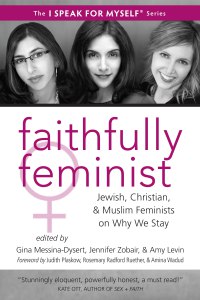
final-cover-faithfully-feministThis piece was co-authored by Jennifer Zobair, Gina-Messina-Dysert, and Amy Levin, the co-editors of Faithfully Feminist: Jewish, Christian, and Muslim Feminists on Why We Stay.

Ancestor Connection in Williamsburg, Brooklyn by Carol P. Christ

carol-p-christ-photo-michael-bakasIn early December 2016 I visited central Williamsburg in Brooklyn, New York, where my 2x great-grandparents Thomas and Anna Maria Christ and their son George and his family, including my father’s father Irving John, lived for over fifty years. I had compiled a list of all the known addresses of the family in Williamsburg from census and death records. The family lived in a several block square area surrounding Most Holy Trinity Roman Catholic Church on Montrose Street for all that time.

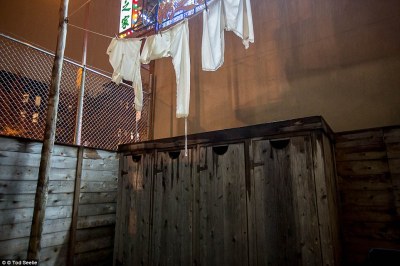
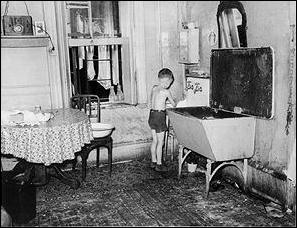
Most of the buildings at the addresses where the family lived had been torn down and replaced with housing projects in the mid-twentieth century. Some of the remaining ones are being torn down today, as this area of Williamsburg is being gentrified. Still, enough of the old buildings remain to give a sense of what the neighborhood was like in the 1800s. Continue reading “Ancestor Connection in Williamsburg, Brooklyn by Carol P. Christ”

The Elusive Patriarchy by Oxana Poberejnaia

oxanaThe sense of separate personal identity is elusive. It is difficult to observe, find and bring to the surface of consciousness where, according to Buddhist beliefs, it dissipates naturally, like a bubble of foam popping. In the same way patriarchy is entrenched in so many different ways and on so many different levels in society that it is as difficult to reach out to it and weed it.

tharavadamonkThere is a Sutta in Theravadin Canon called “Khemaka Sutta” (About Khemaka). The main character in the Sutta, Buddhist monk Khemaka explains his understanding of the “lingering residual ‘I am’ conceit, an ‘I am’ desire, an ‘I am’ obsession.” Khemaka says that it is as difficult to capture and wash away as the remaining scents in clothes that have been washed over and over again.

In Western psychology, there is a notion of catharsis: allowing one self to experience previously repressed emotions. For instance, ancient Greek tragedies like Oedipus are seen as these psychological journeys for the audience. The spectators initially refuse to admit they have certain forbidden impulses. However, through empathising with the protagonist they unwittingly allow themselves to experience those. Healing happens as a result.

Continue reading “The Elusive Patriarchy by Oxana Poberejnaia”

First Time But *Definitely* Not the Last by Vibha Shetiya

vibpicLike many others, I too have been thinking of this election the past month or so. A lot has been said about the repercussions a Trump presidency will have on immigrants, women, the LGBTQ community, non-Whites…the list is endless. But in this post, I would like to talk about personal matters, and what it meant for a first-time voter like me to vote in the US elections. I have been living in the United States for over seventeen years, but only recently – in April this year – did I apply for citizenship.

I’ll be honest. I didn’t know much about Hillary Clinton or American politics. But the good thing that has come out of this cycle is that it has made me want to learn more about governance, elected representatives and what they are doing (or not) for the people they claim to represent. It has made me want to learn about why people hate Hillary so much. I don’t understand the refrain, “She’s a liar”; why she has been singled out for so much hatred when clearly the opposition isn’t exactly a paragon of virtue.

Despite being relatively apolitical prior to this election season, however, there was one thing I was really excited about – the fact that, for the first time in American history, a woman was running for president as a candidate of a major party, that too with a good chance of winning. Now, of course, being from India I was cautious about what this could actually mean for the ordinary American woman. After all, did Prime Minister Indira Gandhi’s rise to power necessarily create a dent in the patriarchal nature of Indian culture and society? Continue reading “First Time But *Definitely* Not the Last by Vibha Shetiya”

The Refugee Crisis: Through the Eyes of the Children: Review by Carol P. Christ

Carol P. Christ by Michael Bakas high resoultionThe Refugee Crisis: Through the Eyes of the Children by Robert and Robin Jones. Santa Barbara, CA: Blue Point Books, 2016. $19.95.  Website: http://www.throughtheeyesofthechildren.com

Arriving in Molivos, Lesbos for a summer break, Robert and Robin Jones quickly became caught up in the refugee crisis engulfing the island that had been their second home for over forty years. Initially Robin and Robert provided water to weary refugees walking along the roads of Lesbos, grateful to have arrived in Europe. Soon, Robin, an artist who holds a certificate in art instruction, began providing marking pens and paper to recently arrived refugee children awaiting transport to processing centers at the other end of the island.

The children’s drawings are the centerpiece of this moving book, while Robin’s photographs and Robert’s words set them in the context of one of the many humanitarian crises of our time. “According to the United Nations High Commissioner for Refugees (UNHCR), 1,000,573 refugees and migrants arrived in Europe from the Middle East and North Africa during 2015. Of these, some 850,000 landed on the Greek islands. Of these, 49 per cent were Syrian, 21 per cent Afghan and eight per cent Iraqi.” 573, 625 arrived in the island of Lesbos between January 2015 and February 2016. Continue reading “The Refugee Crisis: Through the Eyes of the Children: Review by Carol P. Christ”

Supporting Embodiment: Societal and Jewish Views on Body Modification by Ivy Helman

me-hugging-treeEmbodiment is a feminist principle which has, as its basis, two fundamental criteria.  First, humans require their bodies to live.  We must acknowledge that our existence is tied to our bodies.  This fact grounds us in this world.  Here, and not in some other-worldly place, we live out our lives.  We are dependent on our bodies and what the world provides for our survival.  In other words, humans are inseparable and interconnected to this world.  Humans are not above nature as the Western hierarchical dualist mindset would suggest.

Second, embodiment challenges the hierarchical dualistic notion that the mind and body are separable by connecting the mind to the body.  Humans do not exist because they think, as Descartes once said.  Rather, humans exist because of a complex system of interactions between body and mind. Without the body, the mind fails and vice versa.  The link between the mind and the body has led many feminist theorists to reject any sort of existence beyond this physical life.  That is a topic for another time. Continue reading “Supporting Embodiment: Societal and Jewish Views on Body Modification by Ivy Helman”

Moving Forward and into a New Season by Elise M. Edwards

elise-edwardsIt’s only been a month and I am still reeling from the US presidential election.  I feel like I’m just beginning to emerge from the sense of loss and futility that has cloaked me.  But I am beginning to move forward.

I don’t feel better.  I’m still confused and discouraged about why people voted for Donald Trump.  I’m very concerned about his cabinet picks and his proposed policies.  But I am actively seeking a path forward and a path of resistance.  I’m finding support in my spiritual practices and communities.

In the Christian calendar, we are in the season of Advent.  Advent carries profound symbolism, and this year it is especially poignant for me.  The word advent bears meanings of arrival, birth, and emergence.  It’s the beginning of the Christian year, which is patterned on the life of Christ, but the year does not begin Jesus’ birth.  That celebration is observed at Christmas, four weeks into the church year.  The weeks preceding Christmas are a time of preparation and reflection on the need for the Incarnation.  The Incarnation of God in the Christ Child may be a distinctly Christian doctrine, but I believe the need for it–even the idea of it–is found in other spiritual and religious teachings.

Continue reading “Moving Forward and into a New Season by Elise M. Edwards”

Black Sheep by Carol P. Christ

black-lambAt Thanksgiving and the solstice holidays many of us are reminded that we are the “black sheep” of our families.  In my case this means that I am too “assertive,” too “aggressive,” too “demanding,” too “political,” too “willing to upset my father,” too “opinionated,” too “feminist,” and so on.

“In the English language, black sheep is an idiom used to describe an odd or disreputable member of a group, especially within a family. The term stems from the genetic effect in sheep whereby a recessive gene occasionally manifests in the birth of a sheep with black rather than white coloring; these sheep stand out in the flock [emphasis added] and their wool was traditionally considered less valuable.” (Wikepedia, “Black Sheep”)

Continue reading “Black Sheep by Carol P. Christ”

For Strong Women… by Marie Cartier

MarieCartierforKCETa-thumb-300x448-72405This month I had planned to write a long column of finding joy in the midst of pain, or rather enjoying what you can still enjoy. I know you all will be reading this the day after Thanksgiving…I want to be grateful and I am… for so much. I want you to find what you are grateful for and hold onto it.

But, I am also scared and desperately raging and deeply upset that Standing Rock and the protesters there were recently hosed with freezing water, hit with rubber bullets and assaulted… 

I am not even going to hotlink here the things that I am deeply and grievously upset by regarding Trump’s new “President-elect” status. As a confirmed and unapologetic sex predator, he will never be my President. I embrace the social media hashtag #NotMyPresident.

I am stunned by the fact that Hillary has closing in on 2 million more popular votes than him. I am #StillWithHer. I am grateful that she is considered the #ThePeoplesPresident.

But here we are with Trump in place, set to be inaugurated in January. I am doing everything I can to Flip the Electoral College. If you want more information about the electoral college and an opinion on why it isn’t working right now you can start here. If you want to know how to write letters and or call the electors to see if they can be persuaded to change their minds you can start here.

I am trying, in the midst of this time, as we approach the holidays to be grateful. I am a strong woman. I have been nurtured by strong women in the feminist movement. And that is what I want to give you, FAR family, this Thanksgiving—a poem for strong women. This is by one of my favorite writers, Marge Piercy. Continue reading “For Strong Women… by Marie Cartier”