But…They’re Just Animals by Esther Nelson

esther-nelsonWhen I teach my Human Spirituality course to college students, I include a section on factory farming.  Merriam-Webster defines factory farming as “a large industrialized farm; especially: a farm on which large numbers of livestock are raised indoors in conditions intended to maximize production at minimal cost.”

This sterile definition does not reflect the barbaric conditions in which chickens, pigs, cows, and sheep are raised in order to “maximize production at minimal cost.”  For example, chickens are kept in cages with slanted floors, their beaks removed without anesthesia, and artificial lights kept on most of the day in order to increase egg production.  Sows are kept immobile in metal cages, unable to nurse their young except through the slats of those metal cages.  Male calves are taken away from their mothers at birth and placed in small cages to become veal after a few months.  Male chicks, having no “value” in a factory farm setting, are placed on a conveyor belt that leads to being “ground up” alive.  I’ve only scratched the surface of the horrors. Continue reading “But…They’re Just Animals by Esther Nelson”
The Right to Choose is the Right to Our Lives by Marie Cartier

MarieCartierforKCETa-thumb-300x448-72405Friday, January 22nd marks the 43rd anniversary of the Roe v. Wade decision of 1973 which provided all women nationwide, for the first time, the right to get a legal abortion for any reason–the right to choose. There are celebrations, and actions for visibility planned throughout the nation. Some of them are listed on the Planned Parenthood website.
On this anniversary,  the stakes for women’s access to legal abortion are higher than ever. Politicians threaten to further restrict access and the U.S. Supreme Court soon will  hear the biggest abortion case in decades. What was life was like for women before legal abortion–and what could it again become? Politicians threaten to continue to take women’s health backwards. Continue reading “The Right to Choose is the Right to Our Lives by Marie Cartier”

Islamophobia is Gender Violence and a Feminist Issue

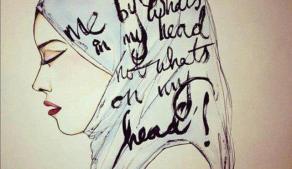
The case of Larycia Hawkins, an African-American Christian, Associate Professor of political science at Wheaton College in the United States, who published a photo on Christmas day on Facebook wearing a headscarf in solidarity with Muslim women victims of Islamophobia, has raised a significant controversy about whether non-muslim women wearing the hiyab is useful for Muslim women and our feminists struggle in Islam or not. Beyond the debate about veils, the heated discussion that followed reminds us that Islamophobic violence against Muslim women is a gender matter that must be addressed not only by Islamic feminists, but also by all decolonial feminists.

According to Itzea Goicolea Amiano, a Spanish researcher, in her work “Feminismo y Piedad” (“Feminism and Piety”):

Gender Islamophobia is a term that refers to the xenophobic and Islamophobic attitudes mixed with sexist and misogynist discourses that oppress, discriminate and targets with a negative preference for Muslim women more than muslim men …

Continue reading “Islamophobia is Gender Violence and a Feminist Issue”

Fear and Loathing in Discussions of Female Power in the Academy by Carol P. Christ

Carol Molivos by Andrea Sarris 2No matter how carefully developed they are, theories of female power in pre-patriarchal societies are dismissed in academic circles as “romantic fantasies” of a “golden age” based in “emotional longings” with “no basis in fact.” I was reminded of this while reviewing three books about the Goddess last week.

In one of the books, the co-authors, who define themselves as feminists, summarily dismiss theories about the origins of Goddess worship in pre-patriarchal prehistory. In another, the author traces the origin of certain Goddess stories and symbols found in recent folklore back to the beginnings of agriculture. Inexplicably, she stops there, not even mentioning the theory that women invented agriculture. Considering that possibility might have suggested that the symbols and stories the she was investigating were developed by women as part of rituals connected to the agricultural cycle. To ask these questions would have raised a further one: the question of female power in prehistory. And this it seems is a question that cannot be asked. This question was addressed in the third (very scholarly) book, which I fear will simply be ignored. Continue reading “Fear and Loathing in Discussions of Female Power in the Academy by Carol P. Christ”

Wisdom Fiction (Part 2) by Elise M. Edwards

Elise Edwards“There are years that ask questions and years that answer.” from Their Eyes Were Watching God by Zora Neale Hurston

In my previous two posts, I’ve discussed the wisdom that can be found in black women’s literature. Continuing this series, I’m sharing a statement from the most well-known novel written by Zora Neale Hurston. Hurston was an American novelist, folklorist, anthropologist, and cultural critic whose work was first published in the 1920s-1940s. Their Eyes Were Watching God was published in 1937 and has since been reissued and adapted into film.

“There are years that ask questions and years that answer.” This quote is one that has circled around my mind every New Year and every birthday for many years. These times of year are when I’m likely to reflect on the previous year and wonder what has come from it.

Continue reading “Wisdom Fiction (Part 2) by Elise M. Edwards”

Four Tips for New Students in Seminary By Grace Yia-Hei Kao

Yesterday, the institution at which I work hosted an Orientation for some 50 new students who will begin their graduate theological education imminently. I was asked to provide an informal talk to a smaller group of them about student success. What follows below are the revised and expanded tips I made for how to get the most out of their degree programs, which may or may not have ready application outside of the seminary context (or graduate school in religion) for which they were designed.

Continue reading “Four Tips for New Students in Seminary By Grace Yia-Hei Kao”

On Planning: Reflections on Control and Hope by Ivy Helman

20151004_161012We plan so many areas of our lives. We make big complex plans, like family get-togethers, vacations, business trips, conferences, large events, etc. We also plan weekly, daily and monthly smaller tasks. Some examples are doctors appoints, day trips, sports schedules, weekly dinner menus and perhaps even the clothes we are want to wear for a job interview or the first day of school.

Many plans happen without a hitch and then there are those plans that don’t. Usually we attribute a plan falling through to something unexpected like an illness leading to cancelling vacation or because of some mistake on our part like when we burnt dinner because we forgot we had food in the oven (which has never happened to me!). All of this is assuming we have some level of control over our plans, our lives and, even, our destiny. But how much control do we really have, and likewise, how much control do others have over our lives?

I’m not so sure there is any sort of easy answer to this question. However, if I were to offer my view, I would say it’s a mixed bag. There are so many parts of our lives we have no control over even if we’d like to think we do. We can’t control where and when we were born. It is debatable if we have some control or not over the ways in which our lives are affected by patriarchy, capitalism, racism, classism and the like. We can’t control whether others drive drunk. We can’t control thunderstorms, tornados or earthquakes. Continue reading “On Planning: Reflections on Control and Hope by Ivy Helman”

To Know Her Is to Love Her by Joyce Zonana

“As my mother passed from this life, she was surrounded by a great matrix of love. As she died I began to understand that I too am surrounded by love and always have been. This knowledge is a great mystery.”— Carol P. Christ, A Serpentine Path: Mysteries of the Goddess (forthcoming, FAR Press, 2016)
Joyce Zonana head shot

It has taken me 66 years—my entire life—to learn to love my mother, and, even more importantly, to accept her love for me.

When I was younger, I could not distinguish that love from control, and I felt smothered by her constant attention, care, and what I took to be criticism. I felt overwhelmed, stifled. I resisted, fighting to assert my autonomy and freedom, my difference. Our relationship become one of painful, sometimes ugly conflict, extending well beyond my adolescence and into my adulthood. For too many years, it was almost impossible for me to be in the same room with her.

Today, I happily sit on the floor at her feet, holding her hand, basking in the glow of her love, offering what I can of my own. Continue reading “To Know Her Is to Love Her by Joyce Zonana”

The First Performance of Antigone: Phaenarete’s View by Stuart Dean

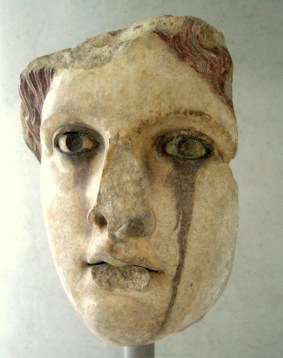
Fragment of an Ancient Greek Statue (Acropolis Museum, Athens)

The first performance of the play Antigone was in Athens around 440 BCE.  It is possible that Phaenarete, the mother of Socrates, was in the audience.  By then she was certainly practicing medicine and perhaps had been doing so for a decade or more.  Given the nature of her practice she would have had any number of connections that might have led to an invitation to attend (including from Sophocles himself, who was roughly the same age as she was and who is known to have been married and to have had children).

The much debated issue over whether Athenian women were even allowed to attend theatrical performances should not turn attention away from the fact that even if Phaenarete did not actually view the performance of Antigone she surely would have had a ‘view’ about it.  The basic elements of what today seems merely the myth on which it is based but which, for her, was effectively history (and thus concerned with what a woman actually said and did) would have been known to her quite apart from the play itself.  Phaenarete’s interest particularly in Antigone would have derived from its relationship of burial to the womb–literally and symbolically–and how that could readily be associated with her medical practice. Continue reading “The First Performance of Antigone: Phaenarete’s View by Stuart Dean”

In Dreamtime with the Ancestors by Carol P. Christ

Carol Molivos by Andrea Sarris 2The last few days I have been living in dreamtime with my Swedish ancestors, most especially with my great-great-grandmother Ingrid, about whom I have learned a great deal over the past year. Through a distant cousin Thomas Sievertsson, who has been researching the part of Sweden from which she came, I have discovered details about the kind of life she lived in the old country that few descendants of immigrants are lucky enough to know. Here are a few of them. Continue reading “In Dreamtime with the Ancestors by Carol P. Christ”