
Declaring a Theological State of Emergency: Trump’s Ignorance Must Not Be Ours by Mary E. Hunt

Mary HuntOn CNN’s State of the Union, Donald Trump reiterated his call to bar Muslim immigration to the U.S. and predicted that his fellow presidential candidates would soon come around to his position.

This prompts me to  declare a theological state of emergency. And I urge religious first responders to step forward.

His anti-Muslim rhetoric has caused Muslims to fear for their lives and well being—and it runs counter to the American Constitution on matters religious, although that does not seem to deter its adherents.

Because the content of these statements is focused on a specific world religion, I believe that scholars and activists of many religions need to step forward in concrete, educational ways.

Theologians must be among the first responders on this one. And we need to start at the beginning since Mr. Trump’s ignorance of the Muslim faith mirrors that of many Americans. “Islam” has become a code word for terrorism. In fact, it is the name of a monotheistic faith tradition based on the Qur’an which is practiced by more than 1.6 billion people, nearly a quarter of the world. Its practitioners are referred to as Muslims.

So our popular pedagogy must begin in order to right the wrongs of misinformation and demagoguery. Just as Christianity and Judaism have many expressions, so too with Islam. It is for Muslims to sort out their internal matters—but it is incumbent on global citizens to inform ourselves so as not to be cowed by the likes of Trump.

For example, a group of Muslims, including feminist journalist Asra Nomani, is calling for a new movement:

“We are Muslims who live in the 21st century. We stand for a respectful, merciful and inclusive interpretation of Islam. We are in a battle for the soul of Islam, and an Islamic renewal must defeat the ideology of Islamism, or politicized Islam, which seeks to create Islamic states, as well as an Islamic caliphate. We seek to reclaim the progressive spirit with which Islam was born in the 7th century to fast forward it into the 21st century. We support the Universal Declaration of Human Rights, which was adopted by United Nations member states in 1948.

We reject interpretations of Islam that call for any violence, social injustice and politicized Islam. Facing the threat of terrorism, intolerance, and social injustice in the name of Islam, we have reflected on how we can transform our communities based on three principles: peace, human rights and secular governance. We are announcing today the formation of an international initiative: the Muslim Reform Movement.”

Do Mr. Trump and the sector of the American public that agrees with him have any such information? I doubt it. Nor do they apparently have much experience with Muslim neighbors who live and work peacefully in virtually every part of the country.

Ignorance of religion is an acute problem in the United States. We have a lack of basic education about religion. Few school districts venture into the topic with their students. So it is not until tertiary education that most American young people have any formal instruction, if then, about religions other than their own. There must be a better way.

I propose that religious professionals, whether educators, pastoral people, or activists, become part of the solution by engaging in a massive, differentiated educational campaign to counter the negative narratives about Islam. This does not mean that anyone need convert to Islam. It is simply that in a democracy we owe one another a fair rendering of our faith traditions. That Mr. Trump’s remarks about Islam have caused such damage already, and could give license for more violence, add urgency to this task.

It is time for community forums where the basics of Islam can be explained in every part of the country. Radio shows, teleconferences, videos, social media posts, religious education classes, community group meetings might usefully focus on the basics of Islam. Simply to demystify the terms and show how ordinary Muslims go about their ordinary law-abiding lives would go a long way toward stemming the current tide.

I do not expect Muslims to educate the rest of us. But those who want to collaborate with other religious first responders are more than welcome. Among feminist colleagues, plans are afoot to launch some modest efforts, but we recognize and respect the need for safety and security for those who have been put in harm’s way by ignorant rhetoric and unconstitutional proposals.

It is non-Muslims who must bear the burden of this education about religion.

Not since the Nazi period has the specter of religiously-based oppression taken on such a heightened profile, with the potential for such devastating results. I believe it is a true emergency for which strong and constructive countermeasures are necessary.

The following is reprinted with permission from Religion Dispatches. Follow RD on Facebook or Twitter for daily updates.”
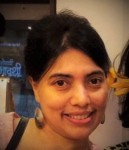
Mary E. Hunt, Ph.D., is a feminist theologian who is co-founder and co-director of the Women’s Alliance for Theology, Ethics and Ritual (WATER) in Silver Spring, Maryland, USA. A Roman Catholic active in the women-church movement, she lectures and writes on theology and ethics with particular attention to liberation issues.


Wifehood Redefined: The Twentieth Century Sita by Vibha Shetiya

VibahIn 2003, I picked up a collection of essays on little known Ramayanas. Buried within was a poem by Pathabhi Rama Reddy. Pathabhi, a rebel of Telugu literature, defied not just conventional rules of grammar but also those of popular thinking, best exemplified by his poem, “Sita,” the subject of this post.[1]
Rama’s harsh treatment of Sita in the Ramayana epic when he first doubts her purity, compelling her to undergo a trial-by-fire, and then banishing her despite the fact that she had proved her loyalty to him, has attracted criticism from all quarters – how could the “perfect man” behave so callously towards his own wife who had been Ravana’s helpless victim? The fluidity of the story has ensured a visibility for Sita, no doubt. Continue reading “Wifehood Redefined: The Twentieth Century Sita by Vibha Shetiya”

A-mazing Grace by Carol P. Christ

carol p. christ photo michael bakasA few days ago I received a message out of the blue on Facebook:
Thank you for your accepting my friend request. I am fighting to find my way out of depression during a life transition as I move into retirement from my years of work as an educator. I look forward to your book this spring. I have long called myself a Goddess feminist having struggled with patriarchal Christianity since my youth, but have felt abandoned by the Goddess for many years now. I’m not sure how I found you today. I stumbled onto a blog from you on your book while googling something else. Your words gave me a spark of hope. Laurel

In my blog I said that when I began to write A Serpentine Path, I felt abandoned by the Goddess. I wrote back, hoping that sharing what I had learned on my journey would be helpful.

The short answer is that the Goddess has never abandoned any of us. However, She does not have the power to make everything turn out as it could be or should be or we wish it would be. Hers is the power to inspire but not to control. If you have been unhappy, She is with you, She understands your pain, and She will be with you as you seek to find your way. I hope this doesn’t sound too preachy. It is from the heart of my experience. Take care of yourself.

I immediately received an answer back.

Thank you. Those were just the words I needed to hear with my heart. I am “too much in my head,” having spent a life in academia.

This interchange got me thinking about how we import toxic ideas from traditional theologies into what we believe are new religious worldviews. In this case the toxic idea is omnipotence—the idea that the Divine Power is in control of everything. It follows from this that the Divine Power can answer our prayers. If the Divine Power does not answer our prayers, there must be a reason. The reasons we give are many, including: because we are sinful and unworthy or because the ways of God are not our ways. We sometimes conclude, as Laurel and I did: the Divine Power simply does not care about me.

The prominence of magic in Wicca, the most widely known form of contemporary Goddess religion, can contribute to this feeling of abandonment. The Western occult or magical tradition teaches that there are practices, including rituals and spells, through which we can manifest our wills and achieve our deepest desires. In Goddess practice rituals and spells are directed to or through the Goddess. In this situation, it can feel logical to blame the Goddess when, after working very hard and doing every ritual and spell we can think of, our will or desire is not manifested. “Why me,” the child within us asks. “Why has the Goddess abandoned me?”

In the story I tell in A Serpentine Path, I felt precisely that. What I learned was that the Goddess had never abandoned me. She had been with me all along. Where I went astray was in believing that the world could become as I wanted it to be.

The world is made up of a multiplicity of wills, including my will and the will of the Goddess, but also the wills of every other individual, human and other than human, who has lived or is living now. If individuals, human and other than human, have the power to affect the world, then even the Divinity cannot have all the power. This means that Her power (and our power) is the power to influence the world, but not to determine or control it. This is one of the key metaphysical insights of process philosophy, but it is also an existential truth.

The Divine Power is not omnipotent. And neither am I. It may seem odd to put these two statements together. Yet they are mirror images: both ideas deny the reality that a multiplicity of wills have shaped and continue to shape the world we experience. The world really is not at my beck and call. Not even the Goddess gets that.

I would never have said that I believed that the world revolved around me. Stating it so baldly makes it clear how silly idea that idea is. For me “enlightenment” came when I realized—really understood—that the world is not “about me.” Once I gave up having to have what I thought I needed to have, I found, felt, and experienced love and beauty all around me. This truly is a-mazing grace. To feel love and beauty is not to deny suffering. Yet much of our suffering is caused by ideas about how life should be, as Laurel recognized, by living too much in the thoughts of our heads.

Email from Laurel Tangen-Foster, Ph.D.

Carol P. Christ is author or editor of eight books in Women and Religion and is one of the Foremothers of the Women’s Spirituality Movement. She leads the Goddess Pilgrimage to Crete in Spring and Fall. Photo of Carol by Michael Bakas.

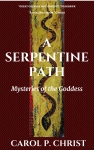
A Serpentine Path Cover with snakeskin backgroundA Serpentine Path: Mysteries of the Goddess will be published by Far Press in the spring of 2016. A journey from despair to the joy of life.
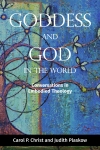

Goddess and God in the World: Conversations in Embodied Theology with Judith Plaskow will be published by Fortress Press in June 2016. Exploring the connections of theology and autobiography and alternatives to the transcendent, omnipotent male God.

Remembering to Be Thankful by John Erickson

Remembering to be thankful may just be a privileged illusion that individuals in positions of power get to write about in the December of each year to self-congratulate themselves about being actually able to be able to be thankful. It may just seem like people who write about being thankful are complaining or pontificating that being thankful is in itself a chore.

WEHO CA (June 7, 2015)©2015 Rebecca Dru Photography All Rights Reserved    www.rebeccadru.com
WEHO CA (June 7, 2015)©2015 Rebecca Dru Photography All Rights Reserved
http://www.rebeccadru.com

With the holidays just around the corner and the frazzled, crisp ping of anxiety, rush, and panic take over the air around us, it is easy to forget to stop and “smell the roses.”  In times where teaching positions continue to shrink and more universities switch to adjunct labor, fees and class costs continue to rise, or just simply life becomes a little more complicated, due to the nature of balancing life, activism, work, friendships, or relationships, remembering to remind myself to be thankful is another task, I find adding to the never-ending list of stuff I always seem I have to do.

However, remembering to be thankful, scheduling it into one’s daily schedule are vital to our success as new and emerging faculty or activists or just in general because being thankful reminds us that we have aspects of our lives that are worth being thankful for.  Remembering to be thankful proves that we are in some way, connected to a larger sense of life that, at times, grants our wishes, wants, or desires, brings us despair, and then allows us to get through it, or even makes us feel alive.

As I sit back and look at the personal and professional landscape around me I understand that I have a lot to be thankful for both consciously and unconsciously.  Most recently at AAR, I participated on a panel in response to Bernadette Barton’s Pray the Gay Away.  During the course of our panel, the conversation of chosen vs. biological families came up.   Most recently, my mentor and panel moderator, Dr. Marie Cartier, talked about the same topic here on FAR and the difficulties many of us experience in regards to our chosen families vs. our biological families.   With the holiday season all around us, and regardless of what or if, you celebrate it or not, it is quite hard to get away from it all without realizing who your “family” is and whether or not you’re close or connected with them can be traumatizing during these times where we’re taught or expected to be with them.

After our discussion on the panel and then at the hotel bar, people discussed the pains and traumas in relation to not having a biological family to go home to during the holidays.  Sitting there and listening to the conversations, I realized that, for once in my life, I had nothing to say. Continue reading “Remembering to Be Thankful by John Erickson”

Announcing A Serpentine Path: Mysteries of the Goddess by Carol P. Christ
carol p. christ photo michael bakas“The serpentine path is the path of life, a snakelike, meandering path, winding in and out, up and down, with no beginning and no end, into the darkness and into the light.”

As the year draws to a close, I am putting the finishing touches on A Serpentine Path: Mysteries of the Goddess. In the spring of 2016 it will be published by the Far Press, founded by Gina Messina-Dysert.  A Serpentine Path is the original title of the memoir of my journey from despair to the joy of life on the first Goddess Pilgrimage to Crete. It was published in 1995 as Odyssey with the Goddess, a title chosen by the publisher.

A Serpentine Path marked a turning point in my life and in my career as a writer. During the time described in my memoir I had fallen into a deep despair, sparked by the end of a marriage, the end of a love affair, and disappointment in my career. Hoping to make a fresh start, I moved to Greece. Not surprisingly, my despair followed me there. Nonetheless, as I would learn, I made the right decision, for as my Greek therapist was to tell me, I needed to learn to live in my body, not my head, and Greece was the place to learn that.

I was at a crossroads in my spiritual quest. I left Christianity for Goddess feminism, yet I felt the Goddess had abandoned me. I had a contract to write the first Goddess thealogy, but as I said in a speech at I gave at Harvard Divinity School just before I made the decision to move to Greece, I was not sure of the meaning of the symbol of the Goddess. Is Goddess a personal being who cares about the world? Or the name we give to the cycles of birth, death, and regeneration in nature? My inability to answer this question led my editors to return draft of my Goddess thealogy with the comment that something was missing. Continue reading “Announcing A Serpentine Path: Mysteries of the Goddess by Carol P. Christ”

My Terrible Transition Year and the Return of my Humanity by Xochitl Alvizo

Alvizo headshot smallI have called it, The Terrible Transition Year, this year of finishing dissertation, uprooting from home, moving cross-country, and starting a new full-time teaching job. Last year at this time I was in LA for a 7-8 week stay, away from home – which at the time was in Boston – writing dissertation nonstop. I spent the holidays apart from my family and shared in none of my traditional holiday celebrations as I intensely pushed forward to complete the dissertation. After (seemingly) endless edits back and forth with my advisor and second reader, I finished the dissertation just in time to successfully defended it in May.
During most of this dissertation-writing time, I never had the sense that there would be a successful end to it all. I wrote and submitted each chapter-draft always with the underlying fear that I would be told my work was unworthy, my logic lacking, and my thesis unsubstantiated. So I vividly remember the moment (I can actually still feel it) when I got definitive affirmation that my dissertation would reach a successful end. I remember the shock, the relief, and the physiological rush that coursed through my body as I read the words of approval that came in response to my last chapter. I remember my body shooting up off the chair and saying, “No!” as I read the email. It was a “No” of disbelief, as in “Can this really be?!” And it was. And only at that point did I believe my dissertation would be successful. Continue reading “My Terrible Transition Year and the Return of my Humanity by Xochitl Alvizo”

Xmas and Feminine Wisdom by Vanessa Rivera de la Fuente

Katherine-Skaggs-1029.ABUNDANCE-ANGELI am not fond of Christmas and these holidays are very difficult for me to deal with. This has nothing to do with me being a Muslim. I have been a Grinch before this. I do not like excessive noise or crowds of people. It bothers me especially the excess, the lack of meaning and loud claims for kindness and mercy to decorate our lives for few days. This year is proving particularly hard for me.

Experiences of 2015 have forced me to question the paradigms under which I had lived until now. Life is suing me for an extra effort of introspective, growth and openness and that can be painful at times. A few weeks ago, I was venting my sorrows and doubts to my mother. I told her that the last thing I wanted to do was install a Xmas tree. She looked at her own Xmas tree full of golden balls and said:

“You know why I like Christmas trees? You were born a week before Pinochet’s coup. That year, the Dictatorship forbade people to buy, sell or cut pines trees under punishment, which ruined our Xmas, since plastic ones were very expensive. I built a tree for you at home, made of brass and wood. The center was a broomstick and the branches of wire. I cut leaves from empty cans of milk. I lost a child before you came to my life. And you were born in a country that suddenly lost freedom. I could not deny you hope. The Christmas tree has been my way to convey hope. That was my present.”

Listening to my mother, Christmas took on new meaning for me, a sacred dimension. I understand the sacred as those things, memories and spaces that are vital for us, all of what gives our lives meaning, purpose, reason and inspiration. I come from a family of women where husbands, brothers and male cousins are scarce. Joy, mourning, religion, knowledge or strength have been developed and shared from womb to womb. Continue reading “Xmas and Feminine Wisdom by Vanessa Rivera de la Fuente”

Jewish Feminists and Progressives Protest the Man Who Could Become America’s Hitler by Carol P. Christ

carol p. christ photo michael bakasJust before I went out on Friday night in Lesbos, my friend and sister feminist theologian Judith Plaskow emailed me from New York: “Right now we’re headed down to the Plaza Hotel to attend and try to disrupt a Trump luncheon!” That night, a friend asked me how I felt about Donald Trump. I threw my hands in front of my face and said: “I’m really glad I am not an American anymore.” Of course I am an American, but sometimes I don’t want to be one.
The next morning, I received an update from Judith: “We were part of a small group from Jews for Racial and Economic Justice in New York City who got inside the Trump fundraising luncheon and disrupted it. We were interviewed afterwards by CBS news, AP, Reuters, and the Philadelphia Inquirer.” Continue reading “Jewish Feminists and Progressives Protest the Man Who Could Become America’s Hitler by Carol P. Christ”

Wisdom Fiction (Part 1) by Elise M. Edwards

Elise Edwards“I was born in a strange little country town that may be like all other country towns, but I do not know. It was the world I was born to. The world is such a place that you need special things to understand it. I do not think I am a fool, but I do not understand life. It is like I am always standing in the dark somewhere. It could be on the edge of a cliff by a deep ravine… Or on a flat piece of all the land in the world… and I would not know. I would not know whether to step stand still. Either one could be a danger… When I am alone. Some lives are like that. Depending on the kindness of everybody.”

-from “Feeling for Life “ in Some Soul to Keep by J. California Cooper

In my previous post, I wrote about the truths we learn from black women’s literary tradition and from listening to the stories of those we too often ignore. Continuing that reflection over the next few months, I’d like to share some of the lessons from J. California Cooper’s short stories. The quote above is taken from the opening paragraph of one of her works.

Continue reading “Wisdom Fiction (Part 1) by Elise M. Edwards”

Birth and Community by Sara Frykenberg

My daughter Hazel was born on a November afternoon. Just over two weeks old, my own individual role as mother is too young to comment on much here—I am thinking too much and too little about what it means, adjusting to my little one’s schedule, feeling like my boobs are going to fall off from my breastfeeding efforts, and loving in a new way. (It’s amazing how excited one can get about ‘poopy’ after baby has been struggling for days, isn’t it?)

But when I am lying in my bed, sometimes at night, I find myself amazed and grateful for the community it took to bring my daughter into being. I was pregnant but I also had a pregnant community. I labored with community; and what I am learning, is that my motherhood is also a function of community—something, for me, that would not have been possible without the many, many people who supported Hazel and me through the process of new birth. Continue reading “Birth and Community by Sara Frykenberg”