Xmas and Feminine Wisdom by Vanessa Rivera de la Fuente

Katherine-Skaggs-1029.ABUNDANCE-ANGELI am not fond of Christmas and these holidays are very difficult for me to deal with. This has nothing to do with me being a Muslim. I have been a Grinch before this. I do not like excessive noise or crowds of people. It bothers me especially the excess, the lack of meaning and loud claims for kindness and mercy to decorate our lives for few days. This year is proving particularly hard for me.

Experiences of 2015 have forced me to question the paradigms under which I had lived until now. Life is suing me for an extra effort of introspective, growth and openness and that can be painful at times. A few weeks ago, I was venting my sorrows and doubts to my mother. I told her that the last thing I wanted to do was install a Xmas tree. She looked at her own Xmas tree full of golden balls and said:

“You know why I like Christmas trees? You were born a week before Pinochet’s coup. That year, the Dictatorship forbade people to buy, sell or cut pines trees under punishment, which ruined our Xmas, since plastic ones were very expensive. I built a tree for you at home, made of brass and wood. The center was a broomstick and the branches of wire. I cut leaves from empty cans of milk. I lost a child before you came to my life. And you were born in a country that suddenly lost freedom. I could not deny you hope. The Christmas tree has been my way to convey hope. That was my present.”

Listening to my mother, Christmas took on new meaning for me, a sacred dimension. I understand the sacred as those things, memories and spaces that are vital for us, all of what gives our lives meaning, purpose, reason and inspiration. I come from a family of women where husbands, brothers and male cousins are scarce. Joy, mourning, religion, knowledge or strength have been developed and shared from womb to womb. Continue reading “Xmas and Feminine Wisdom by Vanessa Rivera de la Fuente”

Jewish Feminists and Progressives Protest the Man Who Could Become America’s Hitler by Carol P. Christ

carol p. christ photo michael bakasJust before I went out on Friday night in Lesbos, my friend and sister feminist theologian Judith Plaskow emailed me from New York: “Right now we’re headed down to the Plaza Hotel to attend and try to disrupt a Trump luncheon!” That night, a friend asked me how I felt about Donald Trump. I threw my hands in front of my face and said: “I’m really glad I am not an American anymore.” Of course I am an American, but sometimes I don’t want to be one.

The next morning, I received an update from Judith: “We were part of a small group from Jews for Racial and Economic Justice in New York City who got inside the Trump fundraising luncheon and disrupted it. We were interviewed afterwards by CBS news, AP, Reuters, and the Philadelphia Inquirer.” Continue reading “Jewish Feminists and Progressives Protest the Man Who Could Become America’s Hitler by Carol P. Christ”

Wisdom Fiction (Part 1) by Elise M. Edwards

Elise Edwards“I was born in a strange little country town that may be like all other country towns, but I do not know. It was the world I was born to. The world is such a place that you need special things to understand it. I do not think I am a fool, but I do not understand life. It is like I am always standing in the dark somewhere. It could be on the edge of a cliff by a deep ravine… Or on a flat piece of all the land in the world… and I would not know. I would not know whether to step stand still. Either one could be a danger… When I am alone. Some lives are like that. Depending on the kindness of everybody.”

-from “Feeling for Life “ in Some Soul to Keep by J. California Cooper

In my previous post, I wrote about the truths we learn from black women’s literary tradition and from listening to the stories of those we too often ignore. Continuing that reflection over the next few months, I’d like to share some of the lessons from J. California Cooper’s short stories. The quote above is taken from the opening paragraph of one of her works.

Continue reading “Wisdom Fiction (Part 1) by Elise M. Edwards”

Birth and Community by Sara Frykenberg

My daughter Hazel was born on a November afternoon. Just over two weeks old, my own individual role as mother is too young to comment on much here—I am thinking too much and too little about what it means, adjusting to my little one’s schedule, feeling like my boobs are going to fall off from my breastfeeding efforts, and loving in a new way. (It’s amazing how excited one can get about ‘poopy’ after baby has been struggling for days, isn’t it?)

But when I am lying in my bed, sometimes at night, I find myself amazed and grateful for the community it took to bring my daughter into being. I was pregnant but I also had a pregnant community. I labored with community; and what I am learning, is that my motherhood is also a function of community—something, for me, that would not have been possible without the many, many people who supported Hazel and me through the process of new birth. Continue reading “Birth and Community by Sara Frykenberg”

Birth, Death, and Regeneration: Why I Am Only a Kind of a Buddhist by Carol P. Christ

In a recent blog describing conversations with my friend Rita Gross, I said that I think of myself as a “kind of a Buddhist” because I have given up a great deal of the ego(tism) described by Buddhists. I also remarked that “I must be a Buddhist after all” because I accept my finitude and do not fear death. At the same time, I said that the idea of a relational world coheres with my experience and is more satisfying to me than the Buddhist theory of nondualism. When I speak of a relational world, I am referring to the worldview of process philosophy.

One of the central insights of Buddhism is the concept of “dependent origination.” This means that “no thing” exists in and of itself:  “all things” are related to and dependent upon “other things.” One of the key assumptions of western philosophy is that “things” exist in and of themselves: all things have an single, unchangeable “essence” or “nature.” Buddhism considers this assumption to be false: if all things are dependent on other things, then they cannot finally be separated from the web of dependence in which they exist. Buddhism insists, moreover, that the interdependent world is in flux. This means that what a thing-in-relationship is in one moment changes in the next.

Process philosophers, including Whitehead and Hartshorne, recognized that Buddhism affirms a central truth that western philosophy has denied: the truth that life is in flux and that no individual exists apart from or independent of others. Continue reading “Birth, Death, and Regeneration: Why I Am Only a Kind of a Buddhist by Carol P. Christ”

Artemis As Artemisia: Ancient Female Spirituality & Modern Medicine by Stuart Dean

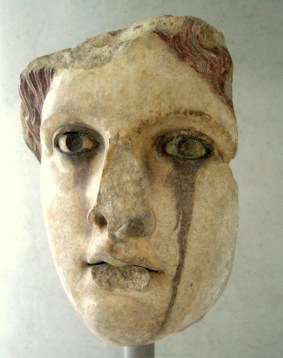
Detail of Artemis from a 5th century BCE Attic Vase
Detail of Artemis from a 5th century BCE Attic Vase  (Museum of Fine Arts (Boston))

The 2015 Nobel Prize for Medicine was awarded in part to a Chinese woman (Tu) for her identification and isolation to treat malaria of a chemical known as Artemisinin.  The name of that chemical derives from the fact that it is found in varying amounts in the ‘family’ (technically, genus) of plants known as Artemisia.  The name of that family derives from its association with the goddess Artemis.

Because Tu’s work began in China in the 1960s it is understandable that even if she knew this about Artemisia (a term I use to refer to any one plant or all of the plants of that family) it would not have been a ‘careerbuilder’ for her to point it out to those for whom she was working.  It was bad enough that she was a woman.  At that place and time, however, if she had said or done something that could be associated with Western culture her name might not even be known today.   

Nevertheless, because those awarding the Nobel Prize are free from discrimination or intimidation, it is startling that in the explanation provided for the award no mention is made of the Western legacy of Artemisia.  To begin with, the very fact that the Prize was being awarded to a woman for a plant named after a goddess should have elicited at a sense of uncanniness that arguably deserved mention.  Be that as it may, the failure to mention that Artemisia has a long history of being used medicinally in the West not only as an insect repellent but also to treat fever–a common symptom of malaria–is simply inexcusable. Continue reading “Artemis As Artemisia: Ancient Female Spirituality & Modern Medicine by Stuart Dean”

All Male Panels and Feminist Movement Building by Vanessa Rivera de la Fuente

All Male Panels and Movement BuildingMaking visible gender inequities in the accessibility, acquisition, and transmission of knowledge is essential to breaking ceilings and barriers that prevent women from full participation. This is especially critical in religion, an area in which Patriarchy has bashed women in a systematic, deliberate and cumulative way throughout history.

The current dominant discourses about Muslim women: idealization (sustained by religious patriarchy) and demonization (which corresponds to a Western vision) universalize their own particular way of seeing reality through privilege and representation of female otherness and don´t give women a voice or the chance to declare an epistemic space, meaning a symbolic place of discussion where our experiences with knowledge are relevant.

This is why initiatives like “Not More All Male Panels” and other similar are important. Who dominates knowledge, manages explanations and represents reality is important. If women are excluded, then it is as if women do not exist. The inclusion of women in knowledge serves two purposes: one is simply our presence in instances where knowledge is produced; the other, which my reflection is about, concerns appropriation of knowledge and spaces via movement building.

Panels, Ceilings and Walls

A few weeks ago I participated in a panel to discuss women and feminism in religion. One of my peers spoke to me about the perception of Islamic Feminism. To paraphrase my fellow panelist:

In ‪‎Islamic‬ ‪Feminism‬, your voice is ignored and disposable, because you lack all of what gives one authority in that field– You are a Latina, living in the South, with no formal education in Islam. You have no Arab/Asian name and you speaks Spanish. In a Feminist world that should be ‪‎Intersectional‬ and ‪Decolonial‬ by definition, you’re a woman racialized in contrast with you peers. If not, tell me in how many lists of Muslims Feminist your name is written.

That was hard to hear, but led me to think that the struggle against our lack of presence in matters of knowledge has not only to do with visibility, but also with access and representation. In this sense, I wonder: who is in charge of knowledge in Islamic Feminism? What are the possibilities for any Muslim woman to become a scholar? This is still something only privileged women seem to be able to do. Continue reading “All Male Panels and Feminist Movement Building by Vanessa Rivera de la Fuente”

Can You Imagine a Society of Peace? by Carol P. Christ

Carol Molivos by Andrea Sarris 2As war and the fruits of war, including hatred and the desire for vengeance, threaten our human community, I take this opportunity republish a vision of a Society of Peace. If we cannot imagine a Society of Peace, we will never be able to create one. Can you imagine that:

As a child, you would not have to fight with your sisters or brothers for your father’s or your mother’s attention. You would not have one mother but many as you would be raised in a large extended family. Both girls and boys would be equally loved and cherished by their mothers and grandmothers and by their uncles and great-uncles. Both girls and boys would know that they would always have a place in the maternal clan. As a boy or a girl you would never have to “separate from” or “reject” your mother in order to “prove yourself as an individual” or in order to “grow up.” You could grow up without severing the bond with the ones who first loved you and first cared for you.

You would be raised in a large family with sisters and brothers and cousins, all of whom you would consider your siblings. You would never feel lonely. You would not be taught to compete with your siblings. You would never be hit by or hit others, because violent behaviors would not be considered appropriate in families. Continue reading “Can You Imagine a Society of Peace? by Carol P. Christ”

On the Syrian Refugee Crisis: Unity not Fear by Gina Messina-Dysert

Gina Messina-Dysert profileIn the midst of the Syrian refugee crisis, our humanity is being tested and we are not fairing so well.  Twenty-six US senators have called to refuse entry for refugees in their states, presidential candidate and governor of my home state of Ohio, John Kasich included.

Speaker of the House Paul Ryan who claims to be deeply committed to Catholic social teaching, argues that we must “pause” in responding to Syrian refugees so there can be greater scrutiny.

Presidential candidate Mike Huckabee has also continued his deplorable speech and xenophobia saying “How come they never end up in the neighborhood where the limousine liberal lives? …Behind gated communities and with armed security around. Mrs. Clinton, you have suggested we take in 65,000 refugees. How many can we bring to your neighborhood in Chappaqua?” Continue reading “On the Syrian Refugee Crisis: Unity not Fear by Gina Messina-Dysert”

Friendships That Save Lives: For Rita M. Gross 1943-2015, by Carol P. Christ

Carol Eftalou - Michael HonnegerWhen Rita Gross visited me in Lesbos two summers ago, we spent many long hours discussing our lives and work. Rita and I met at the Conference of Women Theologians at Alverno College in June, 1971 when we were young women. We did not know it then, but our lives would continue to be intertwined through our common interests, first in the Women and Religion section of the American Academy of Religion, and then through our work on Goddesses and feminist theology.

When we met, Rita was a convert to Judaism working on her dissertation on Australian Aboriginal women’s religious lives, and I was a Christian about to begin a dissertation on Elie Wiesel’s stories that would lead me to express my own anger at God. Continue reading “Friendships That Save Lives: For Rita M. Gross 1943-2015, by Carol P. Christ”