For many years, I’ve had a Miriam’s Cup on my Passover seder table, next to the Cup of Elijah. Our cup of Elijah is a kiddush cup belonging to my great-grandfather Joseph Frankel and inscribed with his name. Our cup of Miriam was created by a ceramic artist and bears the word “Miriam” at its base. The Cup of Elijah, filled with wine, is an old tradition—a cup on the seder table for the prophet Elijah, who according to legend visits every Passover seder. The cup of Miriam, filled with water, is a custom only a few decades old, honoring the prophetess Miriam, who watched over the infant Moses, danced in celebration at the crossing of the Sea, and who according to a famous ancient tale had a well of water that followed her through the wilderness.
According to scholar Annette Boeckler, the custom of the Cup of Miriam began at a Shabbat table in Boston in 1989, made its way to the post-Sabbath Havdalah ceremony, and eventually found its way to the seder table. The custom was intended to honor the prophetess Miriam as well as the contributions of women to the Exodus and to Jewish life. Many of the heroes early in the book of Exodus are women, yet their stories are not part of the seder. The Miriam’s Cup at the seder is a way to give the participants an opportunity to include those stories. Continue reading “Reflections on Miriam’s Cup by Rabbi Jill Hammer”
Rabbit plays in tall grasses, dances in the moonlight, nibbles on nature’s greens, then freezes if danger is sensed. With a thump as a warning, rabbit hops away in a flash, disappearing down its rabbit hole.
The night before last I had a dream that has stayed with me. My dreams rise out of my body to teach and to comfort me so I pay close attention. I had recently written tributes for two men, Lynn Rogers, bear biologist, and Rupert Sheldrake, biologist and plant physicist. Both of these men mentored me like a “father” each encouraged me to believe in myself, celebrated my original thinking and told me to trust my intuition. Writing about these mentors reminded me of my own father with whom I had a most difficult relationship…
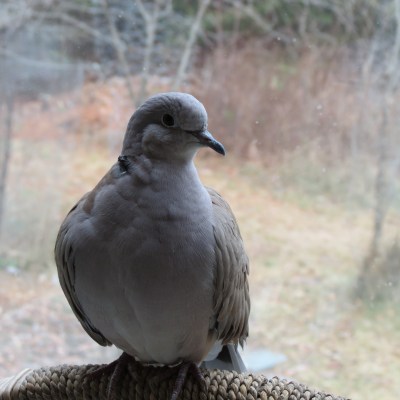
I am talking to my mother (she has been dead for 13 years) about having found someone who could help me with math and stuff I can’t do because of dyslexia. In this conversation my mother is not a personal figure (when she appears as herself it usually means that I am going to face some difficulty – As an impersonal ‘great mother’ figure she is very helpful). She replies that my fatherwantedto teach me all these things but he just couldn’t.So many problems were in the way. I choke up weeping over this knowing (and my tears carry over into waking) because I know that “my mother” is speaking the truth. I feel such heartbreak for both my dad and for me. Neither of us had a chance… as I awaken from this dream in the middle of the night Lily b., my dove, is bellowing.He is reiterating the truth of the dream.
A few days ago, a Greek friend told me she was going to bring holy water from a church so that we could bless my house. Ever since I moved to my new apartment in Heraklion, I have intended to do a house blessing, following rituals I learned from Z Budapest. But with unpacking and settling in interrupted by illness, I never got around to it. I did burn frankincense early on to clear out vibes left by the previous inhabitants of my space, but nothing more. I have slowly made the house a home, but I have been waiting for the renovations to be finished before doing a final blessing. As I still anticipate remodeling the kitchen island, I did not proceed.
Before my friend arrived, I incensed the house again, musing that now that I have finished my chemotherapy and am on the road to recovery, it is high time to clear out all the lingering feelings and memories of the time I was very ill. When my friend arrived bearing a small plastic bag filled with water from a church spring, she asked if she could water the plants on my balcony. I had watered them the day before, but I didn’t mention that.
Announcing that she loved to play with water, she doused the plants, then hosed the balcony tiles and sprayed the windows which were covered with dust following a recent dirty rain. As there are balconies surrounding all of my rooms, that completed the cleansing. Watering the plants signaled the renewal of life.
A high priestess became pregnant in a manner that was forbidden in her society. She gave birth to a baby boy. Fearing for her child’s life, she fashioned a basket of rushes and cast him into a river. He was retrieved by a man named Akki whose name means “the drawer of water.” Akki raised the boy.
A son was born to a young princess who had been forced to keep her pregnancy a secret because it was forbidden. When her son was born, she placed him in a basket and floated him down the river. He was found and raised by foster parents. He grew up to become a noted warrior, speaker and eventually a king.
A young boy accidentally ingested some drops of star-studded wisdom from the cauldron of a goddess and, in this manner, was suddenly awakened to divine knowledge. The goddess grew furious that her divine wisdom was stolen. Desperate to escape her life-threatening wrath, a wild chase ensued. The boy turned himself into a rabbit, but the goddess turned herself into a dog to chase him down. The boy turned himself into a fish to swim away but the goddess became an otter to continue the chase. The boy then turned himself into a bird, but the goddess became a hawk. Finally, the boy turned himself into a seed and hid in a large pile of grain. The goddess turned herself into a hen and ate up all the grain including the boy-as-seed. In this manner she found herself pregnant. She planned to kill the baby when he was born, but when she saw him, he was so beautiful that she fell in love and she could not bring herself to do so. The goddess sewed the baby into a leather sack and threw him into the river. He was retrieved by a man named Elphin who renamed and raised him.
A woman of the priestly caste of her tribe gave birth to a baby boy. At the time, all boys born to her tribe were under a decree of death. To save her son’s life, she created a basket of reeds and floated him down the river. He was found by a royal princess who retrieved him from the water, gave him a new name and raised him to adulthood.
This past year (2020) has been a year of tremendous upheaval and unwelcome change for most of us due in large part to the COVID-19 pandemic. It’s the second time in my life (first time I was in my 40s) where I’ve responded to stress with anorexic behavior—not consuming enough calories to sustain a healthy weight.
I longed to re-visit
the desert – my first
journey left me
with a longing for
wide open spaces,
a blue sky dome,
a bowl of stars at night,
so to return 25 years later
was to complete
an unfinished story.
Now I could live among
the stately rock
stark white columns,
conical reptilian hills,
pink and purple sands,
ragged weeds,
Cactus People,
thorns and stickers,
delicate yellow flowers,
under a moon that rarely slept?
Some nights I missed the dark.
I always missed the Bear
I dismissed the longings
in my body,
Things were different here.
Maybe I could escape
the grief of dying trees,
stripped mountains,
a shrinking wilderness
too many gunmen
the loss of dreams?
That first November
I heard a haunting –
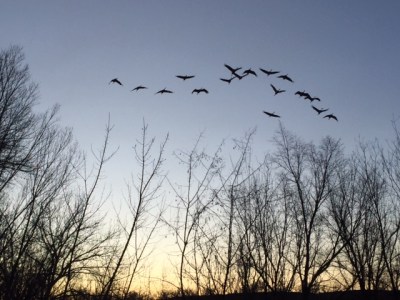
Crane calls
as they touched
down at nightfall.
My bones sang.
How I longed
to meet the bird
whose voice
sent lightening chills
through every nerve.
For the past two months, I have been exploring the religious elements of Star Trek: Discovery. Both seasons one and two have considerable religious elements. Of course that depends on how one exactly defines religion as well as how one interprets the actions of the characters. Season three is no different as the principle of connection becomes associated with religious rituals, behaviours, beliefs, and discussions.
By far, the most recognisably religious element of the season is the ritual bath that Adira participates in episode 4 in order to be able to commune (connect) with the symbiote. The ritual bath occurs in the sacred caves of Mak’ala. Adira, robed in white, enters the pool and spends considerable time learning to commune with the symbiote and its past hosts. After emerging from the pool of water, Adira is wrapped in a cloth that very much resembles a tallit.
I have long struggled with winter. I grew in Minnesota where winters were long and brutally cold. I remember hauling myself through hip-deep snowdrifts on my walk to elementary school and that was in the suburbs! The North of England, where I lived for nearly twenty years, has a much milder climate. But being so far north, I was plunged into infernal darkness from Halloween to Candlemas. It started getting dark at 3:30 in the afternoon and by 4:00 it was pitch dark. Remember those horror movies where it’s dark ALL THE TIME?? That’s Lancashire in midwinter. I felt I was trapped inside some brooding gothic novel.
Now that I’ve moved to the Silver Coast of Portugal, I get a lot more daylight in winter, but also storm winds and torrential rain. My Welsh pony was not impressed and her companion, a Lusitano gelding who came up from Southern Portugal, was so grumpy that he looked like he wanted to jump on the next horse trailer back to the Alentejo!
Yet no matter where I’ve lived geographically, I have always faced the same struggle. I find I just can’t get as much done in winter as I do in the summer. Winter’s short days and long nights seem to drain my energy and drive. While summer is expansive with so many sun-filled hours to fill, in winter everything seems to shrink to the size of a single candleflame. Every year I fought tooth and nail against that contraction. But winter always won.
This winter, curled up by the fireplace on a stormy night, I plunged into Katherine May’s highly recommended book, Wintering: The Power of Rest and Retreat in Difficult Times. In her book, she refers to winter not just as a season in the year, but any fallow or difficult period in our life when we must withdraw, lick our wounds, and replenish ourselves. Our personal winter might be an illness, a relationship break-up, the death of a loved one, a feeling of spiritual dryness, or a time of burnout when we just have to stop and rest.
In Nature, darkness and winter are absolutely necessary for life’s regeneration. May adds that our personal winters, though we would never seek them out, are likewise regenerating and ultimately healing if we can be present with them, as scary and painful as they seem, without seeing them as some personal failure we brought upon ourselves for not being strong enough to resist the natural cycles of death, dissolution, and fallowness.
We live in a culture deep in denial about winter and wintering, where we’re supposed to be “on” all the time, as if we existed in a perpetual summer, full of summer’s buzz, energy, and busy-ness. But if we try to doggedly maintain this level of intense activity during winter when all the elements, as well as our internal rhythms, are telling us to slow down and rest, we get ill, we get burn out, we get depressed.
“Plants and animals don’t fight the winter,” May reminds us. “They don’t pretend it’s not happening and attempt to carry on living the same lives they lived in summer. . . . They adapt.” She adds that once we stop fighting the winter, it can be a most blessed season of reflection and recuperation. In an age when even getting enough sleep and rest feels like a radical act, May teaches us to invite the winter in.
Artwork by Jessica Boehman
May’s book taught me the importance of welcoming the most wintery aspects of my own psyche, all the shadowy stuff I like to repress. Winter is a time of welcoming the shadows. No part of myself needs to be left out in the cold. Anger, doubt, sadness, and uncertainty are not flaws that need to be “fixed.” Just stay present with them in compassionate awareness.
Those of us in the Northern Hemisphere finds ourselves nearly at the threshold of the Spring Equinox. Yet we are still deep in the collective winter of the Covid pandemic, a winter that’s dragged on for over a year. All of us are hitting the pandemic wall. How much more of this can we take? It’s not so easy to rest and regenerate if you’re a mother working remotely while simultaneously trying to homeschool your kids. The pandemic has hit women and girls especially hard, as they carry the brunt of domestic tasks. Girls’ schoolwork is suffering as they take on more and more housework during lockdown. Family violence rates are soaring across the world. In this pandemic winter we meet not only our personal shadows, but the horrors that were lurking in the collective that we can no longer afford to ignore.
If we go through a personal or a collective winter, we need a refuge. A mature spirituality that meets us where we are, that’s robust enough to carry us through the Dark Night of the Soul. Spiritual bypassing and trite tropes like “everything happens for a reason” have no place here. A good litmus test for mature spirituality is to see how spiritual spokespeople from this tradition have responded to the pandemic. Unfortunately, I’ve heard several variations of “God/dess is punishing us for climate change.” While climate change is real and undoubtedly the biggest crisis we face today, I don’t think this punitive imagining of the divine is a helpful or enlightening paradigm for anyone. Life under Covid is hard enough without being told we’re being punished for our sins.
Mature spirituality gives us the courage us look deep into the darkness without flinching. Without seeing it as evil or as punishment but as the deep, compelling, beautiful mystery that surrounds the divine. The fertile darkness. May we all find rest and regeneration here.
Mary Sharratt is on a mission to write women back into history. Her acclaimed novel Illuminations, drawn from the dramatic life of Hildegard von Bingen, is published by Mariner.Her new novelRevelations, about the globe-trotting mystic and rabble-rouser, Margery Kempe, will be published in April 2021. Visit her website.




 A few days ago, a Greek friend told me she was going to bring holy water from a church so that we could bless my house. Ever since I moved to my new apartment in Heraklion, I have intended to do a house blessing, following rituals I learned from Z Budapest. But with unpacking and settling in interrupted by illness, I never got around to it. I did burn frankincense early on to clear out vibes left by the previous inhabitants of my space, but nothing more. I have slowly made the house a home, but I have been waiting for the renovations to be finished before doing a final blessing. As I still anticipate remodeling the kitchen island, I did not proceed.