“Welcome to Hollywood! What’s your dream?” the character Happy Man says in the opening scene of Pretty Woman, a movie that epitomizes mythic Los Angeles, a place where fairy tales come true. The Dark Goddess Los Angeles, with Her lure of wealth and transformation, Her persona of glamour and aspiration, where even a down-and-out sex worker can be saved by a lawyer with a fear of heights and “save him right back.” Los Angeles calls out a westward invocation of promise. But as much as She pledges, She deceives. Her thick air, dense with unseen harmful toxins, a costly nutrient. Her sinewy highways, the blood lines of her body, sites of daily catastrophe. Our pilgrimage is the slow crawl of passing car crashes on the opposite side of the freeway divider wall. Our mantra, That could have been me. That could have been me.
Spiderweb of Freeways
I’ve been hating LA for thirty-five years. Hating Her May Grey and Her June Gloom. Hating Her maze-like web of concrete highways, Her center-less-ness. Only in Los Angeles are the freeways archetypes, “Take The 2 to The 5 to The 110 to The 10.” I’ve never felt lonelier – alone in my apartment, alone in my car, alone in my thoughts. But over time, I’ve learned to love traversing Los Angeles’ arteries. I have had some of my most profound ideas, my most aha moments, while flowing through Her pulsing veins. The neither here-no-thereness of this city is pregnant with patient possibility. Anything can happen in Her spaciousness, Her waiting.
I moved to the mountains to move mountains, to find peace in the hidden crevices of an endangered planet. We pull out her hair, clumps at a time, self-harming her* in a myriad of new ways. Wildfires burn up our forests, floods destroy precious lowlands. Loggers strip the possibility of new life from the soil. Our childhood stories become our adult lives: The Giving Tree who gave it all. . . . The land doesn’t break; just dips and hides in private caves. I moved to the mountains so that the predators of my past wouldn’t find me. Their spirits crawl out from unvisited graves.
They slip past the disappearing forests of canopied evergreens that once shaded and protected Ki’s children. [Ki is short for Kin – more on what this word means in Part 3.]
This post was originally published on May 13th, 2013
By now it should be clear to feminists that when Barack Obama thinks about women, he does not view us as independent individuals, but rather as he said in his 2nd term inauguration address–to my consternation—as “our” mothers, wives, and daughters. Obama does not address us–he addresses the men he expects to make decisions for us. I almost wrote a blog on this egregious error in perception and judgment on the part of the President in January, but in order not to be seen as nit-picking, I held my tongue. The recent decision of the White House to continue to restrict the availability of the Plan B , brings this question to the fore again.
Plan B is a brand name for the “morning after pill.” If taken within 3 days of unprotected intercourse, it will prevent conception. There is now a much cheaper generic version as well.
The Torah portion for today’s blog is Kedoshim (Leviticus 19:1-20:27), which was read by Jewish communities yesterday, May 10, 2025. Among scholars, it is part of what is often referred to as the Holiness Code, Leviticus 17-26 (Note 1). Kedoshim covers all manner of topics: from what fabric to wear to how to treat one’s neighbor and from keeping Shabbat to when one can eat the fruit of newly planted trees. These, what I will call prescriptions, all fall under the general reasoning that one does these things so that one can be holy like the deity is holy. In a way, the Holiness Code then is an apt name for this section. But, what can we take from this parshah from a (eco)feminist point of view? To answer this question, I will be using the methodology I have laid out in a previous blog and ask three questions.
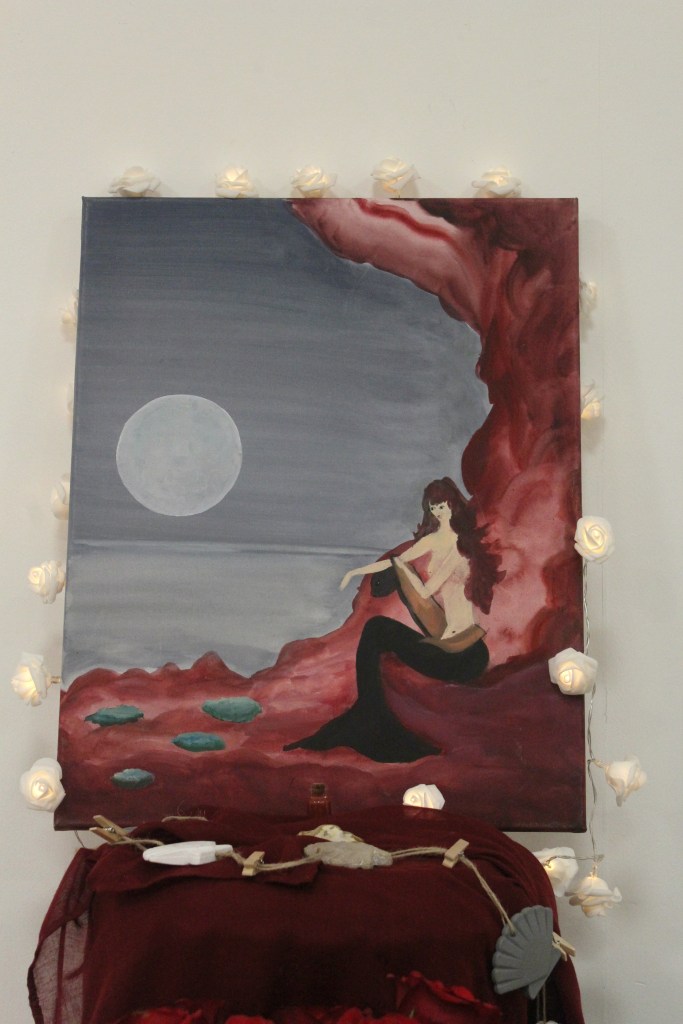
It was beautiful to read Carol P. Christ recent ‘from the archives’ post “Mermaid, Goddess Of The Sea,” especially because I’m in the middle of organising my first live Story-Dance workshop since several years, to move through one of my favourite stories of the Selkie-Seal Woman!
Stories of seal-women drift across the sea from the windswept coasts of Scotland to the icy shores of the Arctic. In the Scottish and Irish Highlands, Seal-women are known as selkies—shapeshifters who live as seals in the ocean, and who, when they shed their skins, walk as women on land. These selkie women dance beneath the moonlight, their laughter echoing across the waves as they rejoin their sisters in joyful reunion with the earth.
I recently attended an event in Salem, Virginia, put on by The Salem Choral Society titled “People Get Ready,” directed by S. Reed Carter IV. This popular group has sung on numerous occasions locally as well as performing at Carnegie Hall in New York City and the National Cathedral in Washington D.C. The choir (11 men and ~45 women) sang fourteen selections. The song arresting my attention was “People Get Ready.”
From Wikipedia: “‘People Get Ready’ is a 1965 single by the Impressions, the group’s best-known hit, reaching number three on the Billboard R&B chart. The gospel-influenced track was a Curtis Mayfield (1942–1999), American singer-songwriter, guitarist, and record producer. This particular composition displayed [his] growing sense of social and political awareness…. In 2021, Rolling Stone named this song the 122nd greatest song of all time. Martin Luther King Jr. named the song the unofficial anthem of the Civil Rights Movement and often used the song to get people marching or to calm and comfort them.”
I have been building houses. Reducing. Reusing. Recycling. Recreating. Birthing homes from giant cardboard boxes, old newspapers, twigs, twine, flour paste, and joy. Joy for it is vital for me to nourish my days with meaning that strengthens my commitment to being. To belonging. heART that is offered to and for community because community and housing are siblings. With the sale of each finished piece, both funds and awareness are raised for the New Canadians Center Peterborough. Here in my city. A city which offers the heart of welcome. Newcomers to this city, to any city, to any country, yearn for home. To find, to create, and to be: welcomed home.
Home and welcome are an intricately and finely woven fabric.
The heART of home, the heARTh itself, is welcome and warmth.
you whistled my name four notes chilled prickly skin needling truth we are forever bound you bird woman owl tree wounding wounding wounding we weep grief grief grief too deep half a million dead gunned down by Explosive Will I make no apology Return atrocity to those whose behaviors will one day destroy them too. What we do to nature we do to ourselves.
Context for Poem:
Yesterday I wrote an essay about the barred owl killings beginning with a personal story about my relationship with barred owls. I have known about this Federal Fish and Wildlife Organization’s proposal since 2023.
Hope is the thing with feathers . . . Emily Dickinson
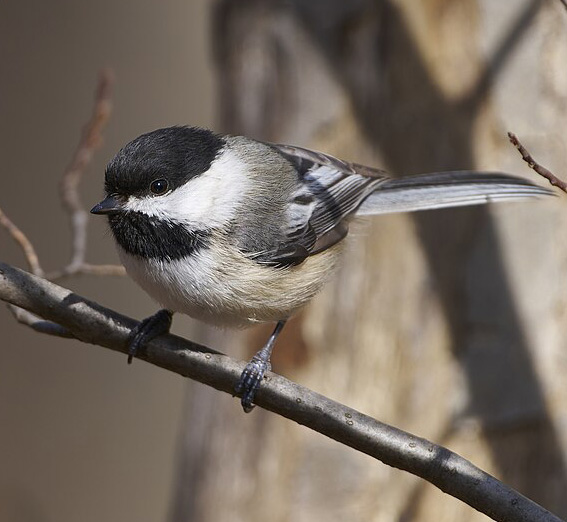
Chickadee
I awoke this morning to bird song, and for a moment I was lifted beyond the despair that has caught me in its grip — despair for the country, for the earth, for loved ones whose lives are increasingly tossed into the chaos, for the future The disappearance of persons into labyrinths of prisons in this country, Guantanamo, and the tortuous CECOT prison complex in El Salvador has broken what was left of my spirit. Then this morning I heard a report that the State Department has changed what it considers to be human rights abuses in order to align with recent Executive Orders, deleting critiques of such practices as retaining political prisoners without due process of law, restrictions on free and fair elections, violence against LGBTQ persons, threats against people with disabilities, restrictions on political participation, coercive medical or psychological practices, and extensive gender-based violence. Ostensibly these changes are to lift restrictions on sanctions toward other countries, but I fear they portend clearing the way for such abuses in the US as well.
My heart is heavy in ways I have not previously known, so I am grateful for that brief moment of delight in the early morning. Later in the day, I found myself wondering whether those who suffered and died in concentration camps, whose despair certainly was beyond comparison with my own, found any solace in the sight and sound of birds who flew freely over the walls of the camps in ways they could not. The daughter of survivors of Auschwitz, Toby Saltzman, recalled that her mother, who often suffered bouts of despair over the Holocaust, found her spirits lifted by the songs of birds. When Toby later visited Auschwitz, she was greeted by flocks of birds. Upon her return, she reflected, “I left Auschwitz feeling a surge of triumph that my parents survived, and gratitude to the birds that gave my mother spiritual sustenance and hope.” We are sorely in need of such sustenance in these times.




 Feminism and Religion