Painting the Virgen de la Caridad, Doing Intersectionality by Angela Yarber

angelaThe most recent Holy Woman Icon with a folk feminist twist that I’ve painted is the Virgen de la Caridad. Like Mary, Guadalupe, La Negrita, and the Virgin of Regla, she was commissioned by a bold and brilliant friend, a scholar who lives, teaches, and does the work of intersectional feminism on a daily basis. As with my beloved friend who taught me so much about Jane Addams last month, this dear friend has taught me so much about feminist understandings of Marian Spirituality and of the need for many secular scholars to keep a connection to their religious roots.

When we discussed her commission, she wanted to make sure that the Virgin of Caridad was the primary focus of the icon, but since she is also often associated with Oshun, she also wanted elements of this Yoruban goddess to shine through. I was thrilled with the opportunity to learn, research, grow, and paint. Little did I know what kind of important learning was in store. Continue reading “Painting the Virgen de la Caridad, Doing Intersectionality by Angela Yarber”

A Choir for Reproductive Freedom by Katey Zeh

choir-305352_1280

I was home watching the live stream of those gathered in front of the Supreme Court building to show their opposition to this law that has prevented so many women from accessing the abortion services they need. The speakers, many of them leaders in reproductive justice organizations, powerfully called out the many ways that this unjust law has targeted women of color, immigrant women, and poor women.

During one of the speeches, those gathered in support of this law began singing “Spirit of the Living God.” It was audible over even the most powerful voices speaking out against it. I began to get irritated. But as the song continued, I got angry–and then I got inspired. Continue reading “A Choir for Reproductive Freedom by Katey Zeh”

“Respect: Dualism Subversion and So Much More in Survival Reality Television,” by Ivy Helman.

20151004_161012In “Ecofeminism and Wilderness,” Linda Vance believes that Western society defines wilderness by “… the absence of humans, we are saying, in effect, that nature is at its best when utterly separated from the human world. The idea of wilderness is thus an extreme manifestation of the general Western conceptual rift between culture and nature,” (62).  Reality television shows, focusing on survival or living off the land, often reproduce this dualistic way of thinking.

At the same time they reproduce another of Vance’s concerns, “I would argue that wilderness recreation “re-creates” more than the self: it also recreates the history of the conquest of nature, the subjugation of indigenous peoples, the glorification of individualism, the triumph of human will over material reality, and the Protestant ideal of one-on-one contact with G-d. And as for the elements of physical challenge and risk, I think it goes without saying that they appeal most to those for whom day-to-day mobility is a given, and for whom danger isn’t always close at hand,” (71).  However, by presenting this dichotomy, many of the shows also subvert the ideal of untouched wilderness, challenge the notions of human abilities and highlight our lack of embeddedness and embodiment when it comes to survival situations. Continue reading ““Respect: Dualism Subversion and So Much More in Survival Reality Television,” by Ivy Helman.”

Rita Trumps the Donald by Esther Nelson

esther-nelsonThe phrase “politically correct,” words we hear over and over again these days, has a history. Some of that history, far from definitive, is captured here.

The following quote, taken from this blog, resonates with me:  “…maybe we should drop the phrase [politically correct] from our lexicon. Not because it doesn’t describe anything, but because it describes so many things that you can’t use it without worrying that people won’t understand what you’re talking about.” (I see it similarly to the word, God. I often find that in conversations about God, each participant has their own idea(s) about what God is or isn’t.)

Today, though, I’m interested in how Donald Trump uses the phrase “politically correct.”  When he says, “I’m so tired of this politically correct crap,” what is he saying?  What do we hear?  I agree with Colby Itkowitz (“The Washington Post,” 12/09/15) that the phrase “politically correct” is often “used as a put-down, a way to brush off the offended person as being overly sensitive. So while Trump is asserting his right to free speech, he is at the same time calling into question the listener’s right to complain about what he’s saying.” Continue reading “Rita Trumps the Donald by Esther Nelson”

Rewriting Religion: the radical poetry of Aemilia Bassano Lanier by Mary Sharratt

Sharratt_DarkLady-hi


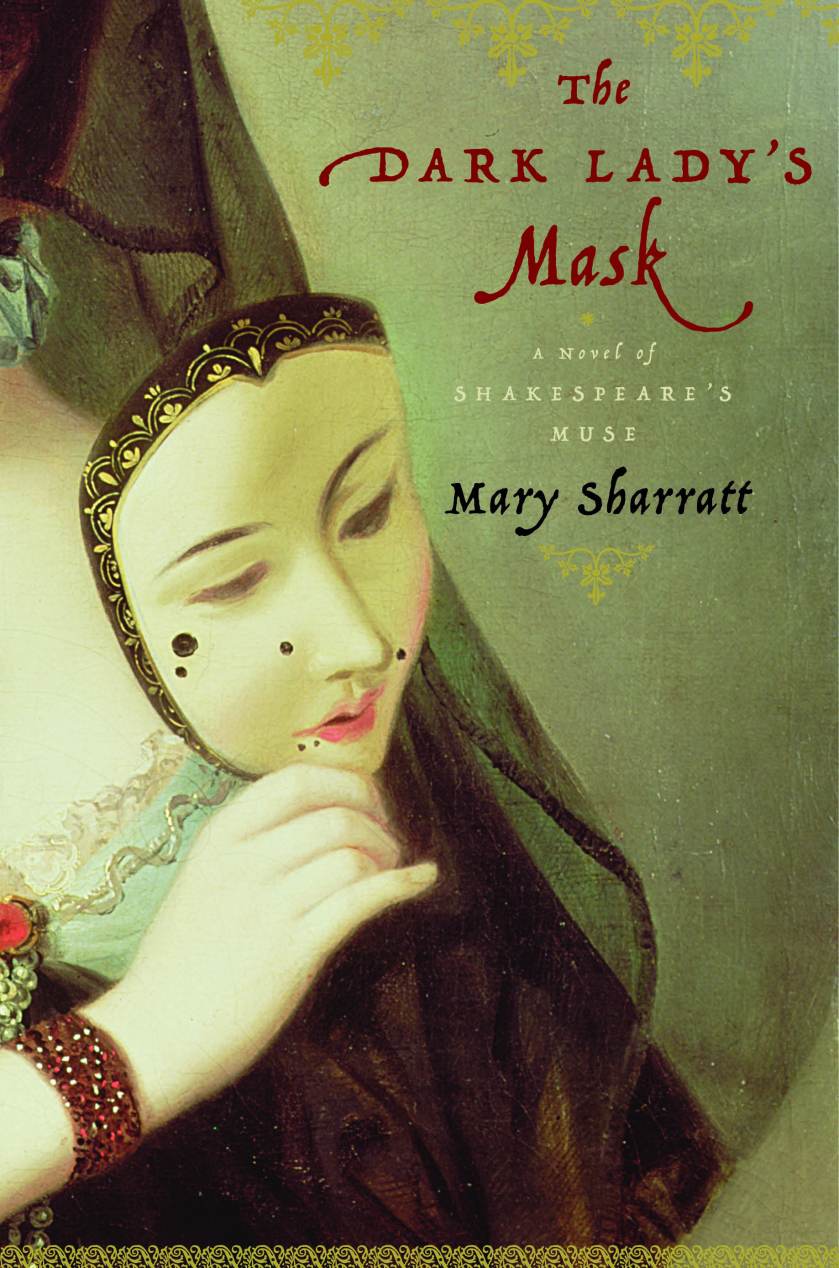
Aemilia Bassano Lanier (also spelled Lanyer) is the heroine of my new novel The Dark Lady’s Mask.  Born in 1569, she was the highly educated daughter of an Italian court musician—a man thought to have been a Marrano, a secret Jew living under the guise of a Christian convert. She may have also been the mysterious, musical Dark Lady of Shakespeare’s sonnets, although most academic scholars dispute this. What we do know for a fact and what really matters is that she was the first woman in England to pursue a career as a published poet.

In Italy women such as Isabella Andreini published plays and poetry on a wide variety of secular subjects, but in England Lanier effectively had only one option—to write devotional Protestant verse. Her English literary predecessors, Anne Locke and Mary Sidney, wrote poetic meditations on the Psalms.

But Lanier turned this tradition of women’s religious poetry on its head. Published in 1611, her Salve Deus Rex Judaeorum (Hail God, King of the Jews) is a radical, ground-breaking tour de force, a searing vindication of the rights of women—and of herself as a woman writer.

In this epic narrative poem, Lanier describes the passion of Christ from the viewpoint of the women in the Gospels. In comparing the sufferings of women in male-dominated culture to the sufferings of Christ, she upholds women as Christ’s true imitators.

Most significantly Salve Deus is dedicated and addressed exclusively to women, and is prefaced by nine praise poems dedicated to the royal and aristocratic women whose patronage Lanier sought. She also included a dedication in praise of all women.

Having thus established her female audience, Lanier attacks the theological roots of male domination, namely the blame attached to Eve—and by extension all women—for humanity’s fall from grace. In “Eve’s Apology in Defence of Women,” Lanier argues that the original sin was actually Adam’s for accepting the forbidden fruit. For he, unlike Eve, was fully aware of the consequences. Out of selfishness and desire for power, Adam let Eve take the fall.


If Eve did err, it was for knowledge sake,

The fruit being fair persuaded him to fall:

No subtle serpent’s falsehood did betray him,

If he would eat it, who had the power to stay him?


Not Eve, whose fault was only too much love.


Lanier contends that male culpability in crucifying Christ far exceeds Eve’s tragic misunderstanding. Therefore there is no moral or divine cause to justify women’s subjugation. Here Lanier explicitly champions women’s rights and freedoms:


Let us have our Liberty again,

And challenge to yourselves no Sovereignty,

You came not into the world without our pain,

Make that a bar against your cruelty;

Your fault being greater, why should you disdain

Our being your equals, free from tyranny?

If one weak woman simply did offend,

This sin of yours hath no excuse, nor end.  


Lanier’s poetry lays claim to women’s God-given call to rise up against male arrogance, just as the strong women of the Old Testament rose up against their oppressors. While wooing her highborn female patrons, Lanier uses the scriptures to assert a sense of social egalitarianism that foreshadows the Levellers and the Quaker religious movement that emerged a few decades after her poetry’s publication. “God makes both even, the cottage with the throne,” Lanier writes in her dedicatory poem to her former pupil, Lady Anne Clifford. (Clifford was herself a feminist firebrand who fought long and hard to regain her properties after her father disinherited her because of her sex. Anne Clifford was an ancestor of Vita Sackville West and the historical inspiration for Virginia Woolf’s novel, Orlando.)

Lanier’s book ends with “A Description of Cookham,” an elegiac ode to the country house where she lived for a time with Anne Clifford and her mother Margaret, who was Lanier’s greatest patron. Cookham was the blessed refuge where Lanier received both her spiritual epiphany and the confirmation of her vocation as a poet.


Farewell (sweet Cookham) where I first obtained

Grace from the Grace where perfect Grace remained,

And where the Muses gave their full consent,

I should have the power the virtuous to content.


Salve Deus Rex Judaeorum is a corpus of poetry celebrating female and divine goodness, penned by a poet who found her own sense of salvation in a community of women who supported her and believed in her.


Mary Sharratt’s book Illuminations: A Novel of Hildegard von Bingen, won the 2013 Nautilus Gold Award, Better Books for a Better World. Her forthcoming novel, The Dark Lady’s Maskwill be published by Houghton Mifflin Harcourt in April 2016. Visit Mary’s website.



A Place for Everyone at the Table by Carolyn Lee Boyd

carolynlboydWinter’s bone-chilling, relentless cold makes it the most treacherous season in the north when you don’t have a warm place to sleep or enough to eat. Poverty may look different in the city and the country, in various countries and continents, but it can be devastating to body, mind, and soul anywhere.

When I lived in New York City, no day went by that I wasn’t aware that people near me were hungry and homeless. When I moved to a more rural community, I found that, while small groups of volunteers ran food pantries and emergency assistance programs, many in my generally well-off town did not know that they had neighbors who were in need. While contributing to organizations that assist people around the globe is essential, clearly we must also consider what we, as human beings and especially as feminists with a focus on religion and spirituality, must do to support those who live within a few miles of us. Continue reading “A Place for Everyone at the Table by Carolyn Lee Boyd”

Fair and (Therefore) Lovely by Vibha Shetiya

VibahAccording to the Great Indian Cultural Lexicon, being light-skinned or “fair” translates to being “lovely.” A look at commercials that promise a make-over, courtesy of Fair and Lovely skin lightening cream will attest to this. [1] The definition, of course, applies to women, for that is where a woman’s identity begins and ends – within the realm of physical appearances. When the product first came out some three decades or so ago, it was mostly about being able to draw the attention of a (very often ordinary-looking) guy; the fairness/ beauty rule does not apply to men.[2] These days, things have “progressed”; the attention has shifted from the need to getting hitched to finding success in the workplace, as these messages scream out:

https://www.youtube.com/watch?v=kNU7QJXG2Tc

https://www.youtube.com/watch?v=L0_h31E9t30

https://www.youtube.com/watch?v=dGepwMtV7R8

The last one is especially cringe-worthy. The lengthy commercial, meant to be a public service message of sorts, targets women in villages and smaller towns, and goes into great detail about issues of women’s empowerment, about how they ought to think of a career now that they are done with college rather than go the usual marriage route. One of the young ladies, Manju, aspires to be a Collector, a high-ranking government official, a post usually limited to males. She works hard, and she also gets Fair and Lovely to work hard, as she happily lets us know. She eventually achieves her dream, all thanks to Fair and Lovely, of course. You decide what the audience is to get from this. Continue reading “Fair and (Therefore) Lovely by Vibha Shetiya”

“Seeking Harbor in Our Histories” – ASWM 2016 Conference

aswmThe Association for the Study of Women & Mythology (ASWM) will be hosting this year’s Conference, “Seeking Harbor in Our Histories: Lights in the Darkness” at the Boston Marriot Burlington Hotel on 1-2 April 2016.
ASWM conferences strive to support the scholarship, artistry, & practice of those who explore and engage the sacred feminine through study and creativity. Offering keynote presentations at this year’s conference are Dr. Elinor Gadon, Dr. Margaret Bruchac, and Dr. Lucia Ciavola Birnbaum.

On Friday night, there will be a plenary session and book-signing moderated by Miriam Robbins Dexter and Vicki Noble and featuring Max Dashu, Starr Goode, Mama Donna Henes, Donna Read, Genevieve Vaughan, Cristina Biaggi, Lydia Ruyle, Miranda Shaw, Elinor Gadon, and Susun Weed. They will be sharing stories from the anthology, Foremothers of the Women’s Spirituality Movement: Elders and Visionaries. FAR contributor Carol P. Christ has a chapter in the book.

FAR is excited to share that three of our contributors are on this year’s conference schedule!

Nancy Vedder-Shults will be joining the “Artists, Activists, & Scientists and the Lineage of the Goddess” panel with her presentation, Science and Divination: The Blurring Lines between the Secular and the Sacred. 

Jill Hammer will present The King and the Priestess: Mythic Motifs and Motives in the Tale of Judah and Tamar as part of the “Male-Female Relationships in the Hebrew Texts: Three Feminist Analyses” panel.

Kate Brunner will be participating in the “Women’s Spirituality, Transformative Scholarship and Personal Quest” panel with Rhiannon, Great Queen of the Mabinogi: Ancient Mythology in Modern Context. She will also be offering her meditative writing workshop, Becoming Branwen the Peaceweaver. 

In addition to the main conference, there will be a Matriarchal Studies Day seminar and celebration, in the same location the day before (31 Mar). Hosted by Vicki Noble and Lydia Ruyle, the program looks to be a great addition to the weekend. Dr. Heide Goettner-Abendroth, founder of Modern Matriarchal Studies will present via Skype. Other presenters will include Max Dashu, Polly Wood, Beverly Little Thunder, and Genevieve Vaughan, exploring woman-centered arts, themes of motherhood, and the gift economy. There will be a keynote presentation by Lucia Chiavola Birnbaum, and evening entertainment by folksinger, Julie Felix.

For registration information & more conference details, see the ASWM 2016 Conference blog.

Feminism & Religion Project contributors past, present, & future interested in connecting with FAR at the conference, are encouraged to get in touch with Kate Brunner at feminismandreligionblog@gmail.com. If there is enough interest, we may be able to organize meeting up for a meal together some time during the weekend.

The Nine Maidens by Deanne Quarrie

Deanne Quarrie, D.Min.

Many years ago, in the group of women I work with, we all had a marvelous epiphany. It was spontaneous combustion that fueled our collective desire to learn about the “Nine Maidens.” It was as though some unknown force was driving all of us to seek out and to know.

I would like to share what we collected:

“… My poetry, from the cauldron it was uttered. From the breath of nine maidens it was kindled….”
“… yg kynneir or peir pan leferit. O anadyl naw morwyngochyneuit.”
(Preiddeu Annwn or The Spoils of Annwyn from ‘Llyfr Taliesin’ 9th to 12th c. CE.)

Anadyl = breath
Naw= nine
Morwen= maiden

These lines are from the poem, the Spoils of Annwyn, where Arthur and seven knights raid the rotating island fortress of Caer Sidi in the Otherworld for possession of the Cauldron of the Head. Continue reading “The Nine Maidens by Deanne Quarrie”

On Turning 60, My Bucket List and Eschatology by Marie Cartier

Photo by Kimberly Esslinger

You will be reading this Feminism and Religion the day before I turn sixty.  For the past two decades I have had parties the night before I leave a decade—and “crossed over” at midnight, with the requisite amount of candles—forty, fifty and now sixty. I have everyone under the decade (in this case 60) on one side and those 60 and over on the other side and I will cross from my 50s to my 60s.   And so…I will also be doing that this year, the evening on which you read this. I will be crossing from one decade to the next.

I want to own all of the years of my life as deeply as possible.

And yet…there is and continues to grow now –“a bucket list.”

A bucket list seems to be analogous to the idea of heaven or “the end times.”

Eschatology is that part of theology concerned with the final events of history, or the ultimate destiny of humanity. Some of us who practice theology might call eschatology an examination of heaven—or rather, what we get if we do what we believe is right in God’s eyes.   Continue reading “On Turning 60, My Bucket List and Eschatology by Marie Cartier”