Art, Nature, and Spirit by Judith Shaw

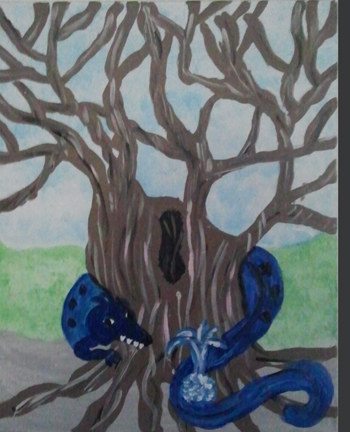
judith Shaw photoThe beauty and the power of the Earth are all around us.  Even in the poorest and most blighted urban environments trees, hollyhocks, sunflowers and other sturdy plants grow up through the concrete.  We are children of the Earth, of the Goddess, who in Her many forms, is the manifest symbol of the sacred Earth.

Most of us love the space we find ourselves in when spending time with nature –  hiking, walking, camping, birdwatching, swimming in the sea, riding a bike, working in our gardens – all activities that help us feel connected to this Earth we walk upon; that help us find an inner peaceful place.

Continue reading “Art, Nature, and Spirit by Judith Shaw”

Reclaiming the Feminist Beginnings of America’s Thanksgiving by Michele Stopera Freyhauf

Freyhauf, Feminism, Religion, Durham, Old Testament, Blogger, Bible, Gender, Violence, Ursuline, John CarrollFor those who are unaware of my research focus and methodology, I try to use history to reconstruct or reclaim the feminine voice through more of an exegetical lens rather than an eisegetical or ideological lens. When it comes to Thanksgiving, I have yet another opportunity to restore credit to or at least bring visibility back to a woman who fought for Thanksgiving to be recognized as a national holiday on the last Thursday of November. Her works, though plentiful and sometimes known only by title, are largely forgotten to history; Sarah Josepha Buell Hale (1788-1879) is responsible for Thanksgiving becoming a national holiday in the United States.

Certainly, I do not have to go into the disparity that befell women during the 1800’s when it came to education and overall fundamental rights – that is a history with which we are all well familiar. Hale was educated through her brother, Horatio Gates Buell, who shared his education while attending Dartmouth College and “seemed very unwilling that [Hale] should be deprived of all his collegiate advantages,” and through her husband, David Hale, a lawyer who helped her cultivate her writing skills in the evenings. They even established a small literary club with their friends that allowed her to write. Hale was left a widow at a very young age with five children, the oldest age 7. Hale, like so many women during that time period, had to find a way to support herself and her family.

Sarah Josepha Buell Hale

After authoring a book of poems with her sister-in-law, The Genius of Oblivion and Other Original Poems, Hale, in 1827, published her first novel called Northwood – a book published the same year as Uncle Tom’s Cabin that also challenged slavery. From fame gained through this novel, Hale obtained a job as an editor of a women’s magazine, Ladies Book (later Godey’s Ladies Book then American Ladies Magazine), where she worked for about 40 years. She wrote about half of the material contained in the magazines, as a means of helping to educated women. Hale helped to discover and promote such authors as Edger Allen Poe, Nathaniel Hawthorne, Harriet Beecher Stowe, Lydia Maria Child, Catherine Sedgwick, Lucretia Mott, Emma Willard, Susan B. Anthony, Henry David Longfellow, Ralph Waldo Emerson, and Oliver Wendell Holmes.

She is credited for helping to establish Vassar College for women and wrote the familiar child’s poem “Mary had a Little Lamb” in 1830 (Poems for Our Children, republished in Juvenile Miscellany), Traits of American Life, which contained the story of “The Thanksgiving of the Heart:”

Continue reading “Reclaiming the Feminist Beginnings of America’s Thanksgiving by Michele Stopera Freyhauf”

Are We Living in a Rape Culture? by Carol P. Christ


rape in the military rape in war rape in sports rape in the university rape in fraternities rape at parties rape on the way home rape in the car rape on the street rape in the park rape in the home rape on the couch rape on the bed rape on the floor rape in a closed room rape in the dark rape in the light rape in marriage rape on the job rape in the bible rape on tv rape in great works of art rape by a friend rape by a neighbor rape by a friend of the family rape by a member of the family rape by men with power rape by men without power rape by someone you know rape by someone you do not know rape as power rape as domination rape as humiliation rape as violation

.

.

.

silence Continue reading “Are We Living in a Rape Culture? by Carol P. Christ”

Scholars of Mythology by Barbara Ardinger 

Barbara ArdingerHere’s how my mind leaps around. I was mooning about and trying to figure out what I wanted to write for this blog when I picked up one of the books in the stack at the other end of the couch. I bought The Mythology of Eden by Arthur George and Elena George because I’d read the thoughtful review by Judith Laura, a Goddess scholar I know and respect.

In their introduction, the Georges present a paragraph by biblical scholar Millar Burrows that explains that myth is:

a symbolic, approximate expression of truth which the human mind cannot perceive sharply and completely, but can only glimpse vaguely, and therefore cannot adequately or accurately express. … It implies not falsehood, but truth; not primitive, naïve misunderstanding, but insight more profound than scientific description and logical analysis can ever achieve. The language of myth in this sense is consciously inadequate, being simply the nearest we can come to a formulation of what we can see very darkly. … The procedure is quite legitimate if [we] understand what is being done (p. xii). (Burrows’ book is An Outline of Biblical Theology, published in 1946.)

Mind leap: Wow, I said to myself, does this describe the revisionist fairy tales I write? I try to see through that dark glass more clearly and recast old ideas in new ways. (I hope this doesn’t sound too pretentious. I don’t mean it to.)

Mind leap: And, I further said to myself, we scholars who write for Feminism and Religion often write about myth, though we don’t always acknowledge that our religious stories are indeed myths. It’s like the old joke—“If I believe it, it’s religion. If you (or they) believe it, it’s myth.” Even though we sometimes call our myths the inerrant word of this god or that goddess, the stories in all of our holy books are our instructive myths. Read Burrows’ definition again. Continue reading “Scholars of Mythology by Barbara Ardinger “

One Small Red Leaf by Deanne Quarrie

Deanne QuarrieIt seems to me that the goal of most people is to be happy. We seek it ourselves and hope that those we love find it as well. Happy is an elusive state. At best it is hard to define – what is happy anyway?

As young adults we may seek happiness in alcohol and parties, perhaps even in drugs. We hope to find it in our careers and certainly in the unions we make and partners we choose. Happy is to be pleased, or glad, over a particular thing. The dictionary associates a state of happiness with contentment as well as with the experience of joy. And it also says that happiness is associated with good fortune or luck. Continue reading “One Small Red Leaf by Deanne Quarrie”

Ecofeminism is in the House (at the AAR) by Grace Yia-Hei Kao

Grace Yia-Hei KaoMy social media accounts have recently been ablaze with announcements of meetings, sessions, and receptions to attend for those of us who study or work in religion/theology in the U.S. Some 12,000-15,000 scholars and students will descend upon San Diego this weekend for the annual American Academy of Religion/Society of Biblical Literature (AAR/SBL) conference.

While as a theological and philosophical ethicist I attend this gathering every year regardless of venue or conference theme, I’m particularly excited about this year’s focus on climate change.

Sessions devoted to the topic include a panel on the release of the Public Religion Research Institute/AAR National Survey on Religion, Values, and Climate Change (Sat, 9-11:30am, CC-20D) presentations by the Intergovernmental Panel on Climate Change (IPCC) (Sat, 11:45-12:45, CC-20D), a talk by environmentalist Bil McKibben (Sat, 7:30-8:30pm, CC-20D),  the AAR Presidential Address by Laurie Zoloth (an eminent bioethics and Jewish Studies scholar; Sun 11:45-12:45,CC-20D), and remarks by former president Jimmy Carter on “The Role of Religion in Mediating Conflicts and Imagining Futures: The Cases of Climate Change and Equality for Women” (Mon, 4-5:30pm, CC-20) among others.

Ecofeminism

Beyond that, I’m especially excited about the number of sessions I see devoted to discussing ecofeminism–the scholarly and activist movement that takes seriously the interconnections between the oppression of women and the exploitation of nature. Let me enumerate a few of these (n.b. the following is a non-exhaustive list):

– On Friday, 1:30-3:30pm (CC-14A), the Women’s Lounge Roundtable will entail a pre-conference luncheon on “Ecofeminism and Earth Healing” featuring emerging scholars from Claremont Graduate University.

– On Sunday, 9-11:30am (CC-3), the Feminist Theory and Religious Reflection Group will feature a panel of papers on “ecological, epistemological, and ethical habitations.”

– On Sunday, 1-2:30pm (CC-30A), the Feminist Theory & Religious Reflection Group will sponsor another session tied to the conference theme: “Strategic Negotiations with Feminism on the Borders: Rhetoric in American Homiletics, ‘On the Move’ Ethics in Ecofeminism.”

– On Sunday, 3-4:30pm (CC-26), the Womanist Approaches to Religion and Society Group will convene a session entitled “Ecowomanism 101: A Roundtable Discussing Vital Themes and Trajectories.”

I’m looking forward to this conference and wish all AAR/SBL attendees an enriching and eventful time as well!

Climate change (Polar Bear on Melting Ice)

Grace Yia-Hei Kao is Associate Professor of Ethics and co-director of the Center for Sexuality, Gender, and Religion at Claremont School of TheologyShe is the author of Grounding Human Rights in a Pluralist World (Georgetown University Press, 2011), has a forthcoming co-edited anthology with Ilsup Ahn on Asian American Christian Ethics (Baylor University Press), and is working with Rebecca Todd Peters on anthology of women’s theological lives. Read more about her work on her website.

The God of Love by amina wadud

amina 2014 - croppedI admit I had the fortune of loving my father, the late Reverend Teasley, and feeling loved by him.  I also date my fascination with the divine back to my father.  There are many ways this fascination could have taken shape, but for me it led to the experience of religious diversity as an element of the global community of human beings that has never abated.

Like others, you might ask: if I feel so akin to diversity, why am I a devotee to only one of them: Islam? Some question this by way of offense to Islam. Others are genuinely curious. This curiosity takes two forms.  Either they are interested in my personal location within Islam, as in why are you Muslim? Or they are interested in why stop my quest for diversity and get stuck where I am clearly busy detangling the manifestations of Islam from their patriarchal moorings?

My answer is quite simple. Islamic thought brought me peace of mind, especially about the greater workings of the universe and my tiny, tiny part within it.  Islamic thought gave me the language to understand (a/my) reality.  Quite a handy facility if you think about how long humans have pondered the great existential questions: Who am I; Why am I here; and What is the purpose of life? Continue reading “The God of Love by amina wadud”

So You’re Going to the AAR/SBL Annual Meeting by Kecia Ali

Kecia Ali Bio pic officeTen thousand people descend on San Diego this weekend for the American Academy of Religion and Society of Biblical Literature joint Annual Meeting. We will present papers, interview and be interviewed, shop for books, and network busily. Many will feel overwhelmed, lost, and/or hungry – convention center food somehow always manages to be lousy and expensive.

I have attended nearly every AAR Annual Meeting since 1999. I have presented papers, spoken on panels, responded to sessions, led tables at pre-conference workshops, and presided at business meetings. I have served on program unit steering committees and chaired a Section. I have gone to editorial board breakfasts and AAR committee meetings.  I have had coffee with editors with whom I’ve gone on to publish books. I have served as a mentor at the Women’s Mentoring Lunch. Though I never used the Employment Center as a job candidate, I have put in cubicle time as part of two search committees.

In other words, I know something about the Annual Meeting. Continue reading “So You’re Going to the AAR/SBL Annual Meeting by Kecia Ali”

Belonging to the Land by Carol P. Christ

Carol Christ in LesbosI believe that we can restore our hope in a world that transcends race by building communities where self-esteem comes from not feeling superior to any group, but from one’s relationship to the land, to the people, to the place, wherever that may be.—bell hooks

In these words from her poignant memoir-reflection-analysis Belonging, bell hooks suggests that rather than creating identity by comparing ourselves to others, whether in the academy, in communities, or in the larger society, we would do better to root our identity in the land.

Hooks “left home” in rural Appalachia in order to pursue “higher” (why do we call it that?) education including a Ph.D. which enabled her to teach at prestigious universities in the urban north. Despite her considerable success as an academic and a black feminist, hooks suffered persistent depression in the cities where she taught. Eventually she diagnosed her dis-ease as a longing for the home she had left behind, specifically as a need to connect with the traditions of her ancestors, the mountains, and the land that had sustained them since the end of slavery. Continue reading “Belonging to the Land by Carol P. Christ”

Mark Driscoll and Toxic Christian Masculinity by Kate Davis

Kate DavisMars Hill Church in Seattle has been a large-scale experiment to shape the future of the Evangelical Movement, for good or ill. In recent months the controversy surrounding the Mars Hill founder, Mark Driscoll, gained national attention. Driscoll’s version of radical conservatism wherein he advocates a return to more conservative and traditional faith (with a particular emphasis on gender and gender roles), has long drawn criticism from more mainstream Evangelical factions, but it endeared him to many young Evangelicals.

Recently, Driscoll has been involved in a controversy regarding plagiarism within many of his books, resulting in a flurry of accusations against him (and against the leadership at Mars Hill), spanning everything from attempting to game the New York Times Bestsellers list to misuse of church funds to bullying his fellow pastors at Mars Hill into signing non-compete clauses (which would, ostensibly, prevent them from ministering at any church within 10 miles of Mars Hill in Seattle). Continue reading “Mark Driscoll and Toxic Christian Masculinity by Kate Davis”