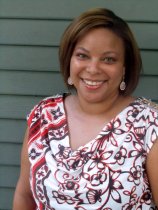
Why are We Drawn to the Black Madonna? by Judith Shaw

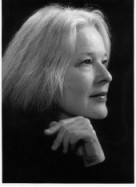
judith Shaw photoOnce the opportunity came my way to spend two weeks with my sister in Paris, I knew I had to visit the Black Madonnas at Chartres.  I had been to Chartres many years ago,  before I knew about the Black Madonnas scattered throughout Europe.  I felt the power of the site at that time, but had little understanding of where that power came from.

History of the Black Madonna 

Isis

The indigenous goddess worship of Europe, was influenced by Phoenician traders who introduced statues of dark skinned African and Middle Eastern goddesses such as Isis, Inanna, and others to the European continent from 1550BC to about 300BCE.  The worship of these goddesses continued  with The Roman invasion of Gaul (France) and other parts of Europe.

Once Christianity took hold in Europe, churches were built on top of sacred pagan sites. But old ways die hard; many of these dark skinned goddesses were incorporated into the newly built Christian churches.  Today there are more than 500 known Black Madonna statues and paintings throughout the world, the majority in France. Continue reading “Why are We Drawn to the Black Madonna? by Judith Shaw”

IN THE NEWS: A Feminism Survey in the U.K.

Over the course of a 24 hour period, a popular parenting website in the U.K., Netmums, recently conducted a survey with 1300 of their users to “find out what feminism means to both girls and women living in the UK in 2012.” The report of their findings has inspired another wave of  “feminism is dead” declarations. Nothing new there of course, it resonates with the same old hackneyed  stereotypes of what it means to be a feminist. Nonetheless, it reminds us of the continually needed conversation about how to make feminist activism and goals accessible and communicable to more people lest Netmums founder Siobhan Freegard’s statement go uncontested: “The study starkly shows modern women feel traditional Feminism is no longer working for them, as it’s aggressive, divisive and doesn’t take into account their personal circumstances.” Continue reading “IN THE NEWS: A Feminism Survey in the U.K.”

Sexist Responses to Women Writing About Religion by Sarah Sentilles

IN RESPONSE TO my recent memoir, Breaking Up with God: A Love Story, several reviewers came close to calling me stupid. Many suggested I didn’t know what I was talking about. As the title of the book suggests, I used the analogy of a romantic relationship gone wrong to describe my faith and its dissolution. These reviewers seemed to believe I understood my metaphorical romantic relationship with God to be a literal one. They wrote about me as if I actually thought God was my real boyfriend, as if I sat around waiting for God to take me to the prom and just couldn’t understand why my date never showed up. Silly girl. Continue reading “Sexist Responses to Women Writing About Religion by Sarah Sentilles”

Reading Plato’s Allegory of the Cave as Matricide and Theacide by Carol P. Christ

When I read Plato’s allegory of the cave as an undergraduate, I was told it had something to do with the idea that the “form” of a table is more “real” than the table itself. I must confess that I had no idea what this could possibly mean.

As a graduate student, I struggled with philosophical and theological ideas rooted in Platonism.  Rosemary Radford Ruether named the flawed worldview created by a “classical dualism” that separates mind from body, spirit from the world, rationality from emotion, and male from female.  Her ground-breaking essay “Mother Earth and the Megamachine” clarified the difficulties I was having.

Western philosophy, described by Alfred North Whitehead as a series of footnotes to Plato, had gotten off on the wrong foot. At its very beginnings, western philosophy had attempted to sever mind from the body and nature, alleging that “man’s true home” was not life in the body on planet earth. Continue reading “Reading Plato’s Allegory of the Cave as Matricide and Theacide by Carol P. Christ”

Freedom from Unjust Privilege by Kelly Brown Douglas

Freedom is about the elimination of systems and structures that privilege some and penalize others. 

Not too long ago, my son asked me how people who knew what it felt like to be denied justice, could deny others justice.  It did not make sense, he said, for various minority groups  to be at odds and not support  one another in the struggle for equal treatment.   I agreed with him.   But I also knew that solidarity amongst oppressed people was easier said than done.

Growing up, I always made friends with the kids who were teased, bullied and just did not seem to fit in because of who they were, or because of who they were not. I hung out with the kids who were bused into my middle-class black elementary school to achieve class diversity. I made friends with the boys who were called “sissies” because they did not like to play sports, and were not as “rough” as the other boys. I ate lunch with the girls who were teased because their hair was too short and their skin was too dark.  It seemed so easy then. But, really it wasn’t. I still wanted to fit in. So, while I did not tell the jokes, do the teasing, or call the names, I did stand silent when the jokes were told, the teasing was done and the names were called.  I hung out with the kids who were ridiculed and rejected, but I did not always stand up for them, especially when they were not there.  I did not know then that in my silence, I was claiming my privilege to be a part of the in crowd. Continue reading “Freedom from Unjust Privilege by Kelly Brown Douglas”

The Changing Face of Christ in the Catholic Church by Janice Poss

Yesterday, as I have done for the last six years, I attended another ordination, an ordination that as the others has been two thousand years in the making.  It was historic, it was Catholic; it was the new face of in persona Christi, the true ideal of Imago Dei.  It was also a retrieval of our roots, of the other side of God.  These ordinations make and bring God and Christ into integrated authentic wholeness and, therefore true holiness.

Yes, it was the ordination of two more women to the Catholic priesthood.  This movement is real and has been going on now since 2003. The changing face of God and Christ is in women, their determination in their discernment as a ‘priestly’ people in living out the Gospel messages with which we are all too familiar and need to be ‘lived’ to make them real and felt in our Church. Continue reading “The Changing Face of Christ in the Catholic Church by Janice Poss”

Hitting the Trifecta in Women’s Issues by Michele Stopera Freyhauf

One did not have to watch the debate between Barack Obama and Mitt Romney this past Tuesday to know that Romney hit the trifecta in the area of women’s issues.  It was all over social media within minutes of statements being made that marginalized or treated women as “less than.”

The issue of contraception and rape is still a topic of debate.  Church’s post signs to “Vote for Religious Freedom” and hand out voting guides that help you gauge the moral candidate.  Bulletin boards stating that “Obama believes in abortion and gay marriage – do you? vote Republican” appear by the highway.  This issue will not be settled during the election.

If people in power set an example of bullying and/or oppressive behavior, this behavior becomes acceptable.  If women are treated “less than,” then their dignity as well as their humanity is compromised.

An extreme example of this de-humanizing treatment of women in American society appeared October 13th in Cincinnati.com.  A story was published about a flyer found in the men’s restroom of a co-ed freshmen dorm at Miami University.  The title of this flyer – “Top Ten Ways to Get Away With Rape:” Continue reading “Hitting the Trifecta in Women’s Issues by Michele Stopera Freyhauf”

Social Engagement as Feminist Praxis in the lives of Patricia A. Reif & Rita Nakashima Brock By Teresa A. Yugar

Today our country and global community need religious leaders to utilize their theological education and feminist principles to model the formation of ally ships across ecumenical and interfaith perspectives, laying the foundation for a more just and peaceful society. While Reif and Nakashima Brock did not know each other, their feminist stance of commitment to social justice and praxis should give us pause.

In 2002, Claremont Graduate University and the Immaculate Heart Community collaborated and created an endowment to sponsor a Lectureship in honor of the memory of feminist teacher, scholar and activist, Dr. Patricia A. Reif. Each year the Dr. Patricia A. Reif committee invites cutting edge feminist scholars in religion to discuss the intersection of their research interests and its influence on their scholarship, activist work and teaching in the broader sense of the term, both inside and outside of the classroom. This year the Reverend Dr. Nakashima Brock is the select guest Lecturer to honor Reif’s life, memory, and legacy. Tammi Schneider, committee member and Dean of the School of Religion stated Nakashima Brock’s visit is timely because in three weeks the national U.S. presidential elections will define the trajectory of our country for, minimally, the next four years. Nakashima Brock’s involvement in the Occupy Movement on a local and national level extends from her feminist commitment and advocacy for the rights of the 99% of our country who are being squelched by U.S. policies that favor the elite 1% of our nation. For Nakashima Brock it is a moral imperative for persons of faith and goodwill to educate individuals and take a stand on policies, on a state and nation-wide level that safeguard the livelihoods of the majority poor of our country. For Nakashima Brock this means quality health care for all, living wages and decent jobs, free high quality public education through college, and an end to the prison-military-industrial complex. Continue reading “Social Engagement as Feminist Praxis in the lives of Patricia A. Reif & Rita Nakashima Brock By Teresa A. Yugar”

The Turtle Goddess from Myrtos in Ancient Crete by Carol P. Christ

“As we bless the Source of Life, so we are blessed.” Song by Faith Rogow

The strange and cheerful figure portrayed in this ancient Cretan vessel comes from the site known as Fournou Korifi near Myrtos, in Crete.  Dated before 2000 BCE, she was called the “Goddess of Myrtos” by the excavator, Peter Warren.  This little Goddess was found on an altar in a small room in the ritual area of a complex of small rooms on a hill above the sea that was home to up to 120 people.  The Goddess of Myrtos is a vessel holding a vessel.  In ritual libations, liquid would have been poured from the pitcher she holds onto an altar.


She is obviously female, with breasts and a sacred triangle. Continue reading “The Turtle Goddess from Myrtos in Ancient Crete by Carol P. Christ”

I’m Tired by Elise M. Edwards

Ms. Mentor warned me that October would be tough.

A few weeks ago, I was walking through the library, looking up books on women and pedagogy, when I saw a newer version of a book I’d seen on my sister’s bookshelf: Ms. Mentor’s Impeccable Advice for Women in Academia.  The newer version, appropriately titled Ms. Mentor’s New and Ever More Impeccable Advice for Women and Men in Academia, jumped into my stack of books and invited  me to take it home where I read it during the wee hours of the night instead of doing something more “productive.” I’ve always been a fan of advice columns, so I was delighted to find that this book features several advice letters organized in chapters on various topics about work and life in the academy.  On page 112, I came across a piece called “My Head is Exploding.” It spoke to me. Continue reading “I’m Tired by Elise M. Edwards”