Legacy of Carol P. Christ: A New Glossary for Crete: The Power of Naming and the Study of History

This was originally posted on Sept. 2, 2013

The words we use affect our thinking. In the case of ancient Crete the repetition of the terms “Palace,” “Palace of Knossos,” “King Minos,” “Minoan,” “Priest-King,” and “Prince of the Lilies” shape the way we understand history–even when we ourselves know these terms are incorrect. We must engage in “new naming.”

Ariadne. May have been a name of the Goddess of pre-patriarchal Crete. The ending “ne” signifies that Ariadne is not of Greek or Indo-European origin and thus predates the later Greek myths.

Ariadnian. The name I have given to the Old European pre-patriarchal culture of Crete, from arrival of the Neolithic settlers from Anatolia c.7000 BCE to the Mycenaean invasion c.1450 BCE. Arthur Evans named the Bronze Age (c.3000-1450 BCE) culture of Crete “Minoan” after King Minos of Greek mythology, son of Zeus and Europa, husband of Pasiphae, father of Ariadne, whose gift of the secret of the labyrinth to Theseus led to the downfall of her culture. Evans assumed that Minoan Crete was ruled by a King.

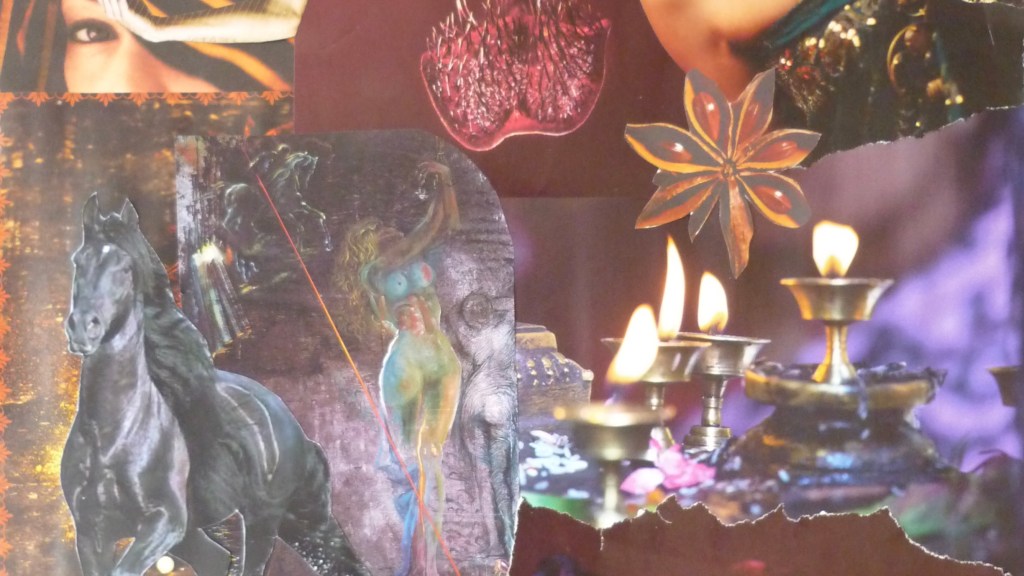
This image I call “Ariadne Dancing” could become the new “icon” of Ariadnian Crete.

minoan woman dancing
Continue reading “Legacy of Carol P. Christ: A New Glossary for Crete: The Power of Naming and the Study of History”

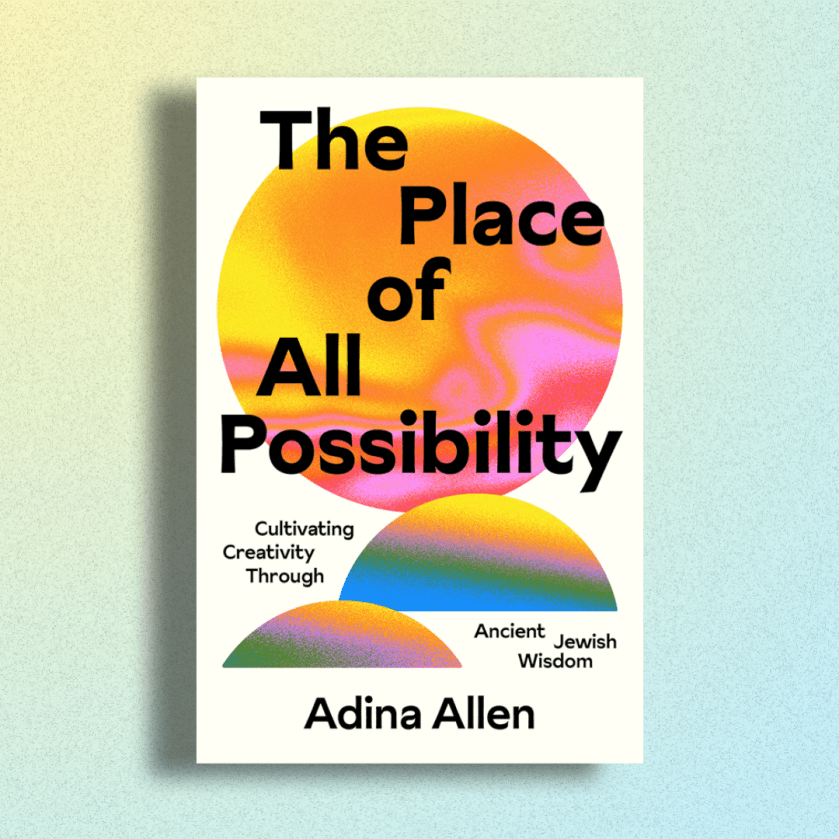
The Place of All Possibility: Cultivating Creativity Through Ancient Jewish Wisdom by Rabbi Adina Allen

In her book Pentimento, author and playwright Lillian Hellman describes a phenomenon that often occurs when we return to a piece of art we once worked on after much time has passed: “Old paint on a canvas, as it ages, sometimes becomes transparent. When that happens it is possible, in some pictures, to see the original lines: a tree will show through a woman’s dress, a child makes way for a dog, a large boat is no longer on an open sea.” Hellman speaks of the way the aging paint allows for older layers to show through, offering an opportunity to see, in her words, “what was there for me once, what is there for me now.”

Like the painting Hellman describes, Torah, too, is a work in process. Layers and layers of interpretation have been added to it over time, according to the needs, desires, fears, and longings of those who devoted their lives to making meaning out of these sacred words. Some layers add to the beauty and power of the overall piece, strokes and shapes that bring the picture more clearly and compellingly into focus. And some accrue like varnish, making the painting hard and impenetrable. Each one of us is invited into this process of excavation, of peeling back layers of what we have been taught or what we think we know, and seeing, as Hellman writes, what is there for us now. And each of us is called to our creativity — to bring our brush back to the canvas anew, reencountering and reworking the stories, ideas, and images that lie at the very foundation of who we are and who we could be.

Continue reading “The Place of All Possibility: Cultivating Creativity Through Ancient Jewish Wisdom by Rabbi Adina Allen”

The Awakened Woman: Remembering and Reigniting Our Sacred Dreams by Woman Writer Dr. Tererai Trent by Maria Dintino

Moderator’s Note: This piece is in co-operation with The Nasty Women Writers Project, a site dedicated to highlighting and amplifying the voices and visions of powerful women. The site was founded by sisters Theresa and Maria Dintino. To quote Theresa, “by doing this work we are expanding our own writer’s web for nourishment and support.” This was originally posted on their site on January 14, 2020. You can see more of their posts here. 

Breaking the Bronze Ceiling – Statues of Real Women in Public Spaces

I cannot imagine a woman more deserving than Dr. Tererai Trent, her likeness one of ten life-size bronze statues unveiled in New York City on Women’s Equality Day on August 26, 2019.

Australian global public artists and activists, Gillie and Marc Schattner, revealed the statues of these inspirational women on 6th Avenue (Avenue of the Americas) that glorious summer day! Their organization, Statues for Equality, is on a mission to achieve gender balance in public statues worldwide. In NYC prior to their unveiling, only 3% of the statues depicted females; this climbed to 10% on August 26.

Continue reading “The Awakened Woman: Remembering and Reigniting Our Sacred Dreams by Woman Writer Dr. Tererai Trent by Maria Dintino”

I Really Like My Dirty Feet by Caryn MacGrandle

Last night, I had a dream where a nicely dressed woman leaned towards me and said, ‘Come with me, I’ll show you how to do it.’   

“I’ll show you how to get those feet clean,” and she looked down at my dirty feet in disgust. 

And I knew what ‘it’ she was referring to.  She had a nice car and a big beautiful home and a well coiffed outfit.   She was one of my children’s friend’s parents, successful the way that mainstream society defines it.  

And my small self said, ‘sure, okay’.   

But then my Large self said ‘wait a minute.  Stop.  I like my dirty feet.’ 

They’re part of me, you see.  

Continue reading “I Really Like My Dirty Feet by Caryn MacGrandle”

Convivencia, poems by Annelinde Metzner

For this post, I’ve collected five of my poems from the past ten years up to the present, which are centered around the people and cultures of the Middle East. Like the region, the poems are filled with hope and unspeakable grief.

Ladino singer
Continue reading “Convivencia, poems by Annelinde Metzner”

Cerridwen’s Brew; the Psychedelic Priestesses and the Theft of Indigenous Wisdom by Kelle Ban Dea

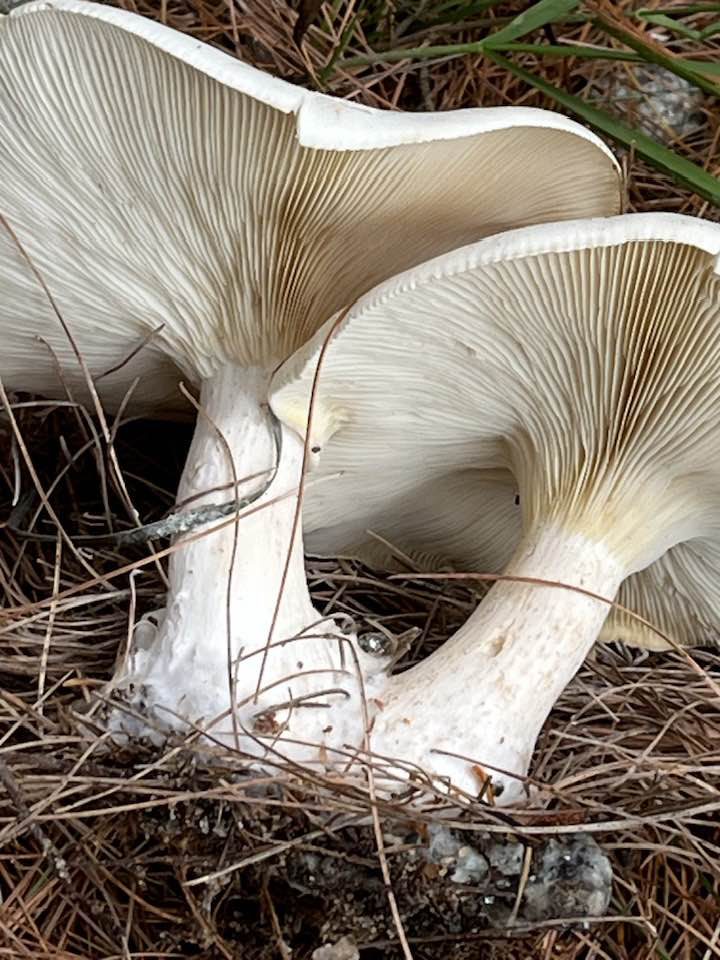
Katerina Shkribey, mushroom. Unsplash stock

Recently I wrote about how the story of Cerridwen and Taliesin is not a muse and hero tale but a tale of stealing from the goddess. Violating her priestesses and exploiting the land.

That is one reading of it. There is another though, which may have some grounding in historical fact and may be a warning to a particular issue gaining prominence today; the rise of the psychedelic industry.

Although neo-Druids, for whom this tale forms part of their core mythology, interpret the awen that Cerridwen brews in her cauldron as the ‘flowing spirit of inspiration,’ the original text makes it clear it is a potion. Cerridwen gathers ‘every kind of charm-bearing herb’ for the potion. Three drops of it turn the boy Gwion Bach into the shaman-bard Taliesin, but the rest is poison.

Continue reading “Cerridwen’s Brew; the Psychedelic Priestesses and the Theft of Indigenous Wisdom by Kelle Ban Dea”

Whose Land Am I Living On? by Sara Wright

I went into the dark woods today to look for mushrooms. Mycelial threads made visible. Golden chanterelles, lactarias, russulas, waxy caps, corals, spindly fingers burst out of rich moist earth. Not a ghost pipe in sight.

 The fungi know who they are and who they are attached to. I feel like a stranger in this land where everyone is related. I feel those connections but cannot name them. This network so mysterious as to be incomprehensible, a living being that stretches across the earth. What branch of fungi evolved here?

Continue reading “Whose Land Am I Living On? by Sara Wright”

Legacy of Carol P. Christ: GODDESS WITH US: IS A RELATIONAL GOD POWERFUL ENOUGH?

This was originally posted on Sept 2, 2013

Last week I wrote about Protestant Neo-Orthodoxy’s deification of male power as power over.  This week I want to ask why the relational Goddess or God* of process philosophy has not been more widely embraced, both generally and in feminist theologies.

Could it be that a relational God just isn’t powerful enough? Are some of us still hoping that an omnipotent God can and will intervene in history to set things right?  Do we believe an omnipotent God can save us from death?

Process philosophy provides an attractive alternative to the concept of divine power modeled on male power as domination.  According to leading process philosopher Charles Hartshorne, the power to coerce, power as power over and domination, is not the kind of power God has.

The concept of divine power as omnipotent (having all the power) leads to what Hartshorne called “the zero fallacy.”  If God has all the power and can dominate in all situations, then the power of individuals* other than God is reduced to zero.  In effect, this means that individuals other than God do not really exist, but at most are puppets whose strings are pulled by the divine power.

Continue reading “Legacy of Carol P. Christ: GODDESS WITH US: IS A RELATIONAL GOD POWERFUL ENOUGH?”

From the Archives: “Is the Divine the Unknowable Unknown? A Feminist Take.”

Author’s note: This blog was originally published on October 16, 2022. As we have just entered the month of Elul, I urge us to consider how the way we understand the divine influences the High Holy Days as well as our approaches to self-reflection, self-doubt, self-blame, wrong-doing and our behaviour in general.

I know it’s a little early, but l’shanah tovah.

I attended a number of High Holy Days services (online) over the past couple of weeks. In one of them, one of the rabbis said that the divine is the unknowable unknown. I cannot remember what the Rabbi said to contextualize or explain their train of thought; I think I was too intrigued by the idea that I got lost in my own thoughts. In fact, I have been thinking about the unknowable unknown ever since.  

As I write this, I’ve come to this conclusion: if the divine is present among us and the world around us, then there is much we can intuit. In addition, there is much that we can experience the more we interact with other humans and nature.  On the other hand, if the divine is understood as a detached, distant being of a completely different essence than humanity, of course, what can we really know about such a divinity?  How would we even know if that divinity even existed? We probably wouldn’t.  Here is the difference between a  feminist understanding of the divine as this-worldly and empowering and a patriarchal conception of a distant divinity wielding power-over. Yet, interestingly, even the most patriarchal image of the divine has insisted on being relatable to human beings. Nonetheless, how we imagine the divine does matter.

Continue reading “From the Archives: “Is the Divine the Unknowable Unknown? A Feminist Take.””

Sing Anyway by Dr. Jamie Marich

I often find myself sitting in conservative Catholic spaces. My brother is a Roman Catholic priest in the Dominican order and I remain in support of his vocation. Every time, before a Mass officially starts, I’m overcome with a sense of: “You belong here…and you don’t.”

The part of me that has always felt at home in a Catholic setting is that love of the ritual and ceremony, the smell of the incense, the familiarity of the chants and songs. It was a Catholic priest, the late Fr. Ciaran O’Donnell, who taught me how to play the guitar and got me started with the healing practice of songwriting. When I sink into these associations, I feel connected to my Croatian ancestors and our Catholic faith. And there’s the other part of me—the queer feminist and an advocate for other queer and transgender people to live the fullest, most open expressions of themselves in all spaces of life, especially faith-based spaces. As a survivor of several forms of sexual assault and as a trauma specialist who has guided countless other survivors in their healing process over the years, I can’t sit in a Catholic Church and not feel uneasy about the legacy of abuse and silencing survivors within the church. Between my queer identity and dedication to supporting survivors, I feel that I don’t belong.

Continue reading “Sing Anyway by Dr. Jamie Marich”