Ariadne and Me – The .5% by Arianne MacBean

When I travelled to Crete on a Goddess Pilgrimage last year, we were asked to introduce ourselves by our matrilineal lines. I am Arianne, daughter of Bernadette, granddaughter of Helen and a long line of women, known and unknown, stretching back to Africa. Many of the women in the group were able to intone long lists of names in their matrilineal lines. I was not able to go further than my Grandmother, Helen. No one in my mother’s large Polish family could remember my Great Grandmother’s name.

My journey toward Ariadne has been as circuitous as the labyrinth itself. In many ways, I have been searching for her since those first bedtime stories my father used to tell me as a child, when Theseus was the main character and Ariadne, merely a stop on his road. I longed for her, even then, to have her own heroine’s journey. I tried to imagine what that might look like but, without models, could not conjure anything beyond holding the red thread so others could triumph. Later, I began a more conscious search for Ariadne as I became curious about the connections between her choices, feelings, expressions and my own longings, betrayals, and outbursts. Since then, there have been moments when I let myself fantasize about being connected to her in some real way, beyond being named after her, or feeling and acting as she may have. In these fleeting moments when I imagine we are bonded, I am awash in an intense sense of belonging, something I never felt as an only child of divorced parents. But then in a flash, my mind takes a sharp turn, as in a labyrinth, and I negate those feelings with logic. You want to be connected to Her, so you are finding ways to make it true.

Continue reading “Ariadne and Me – The .5% by Arianne MacBean”

Legacy of Carol P. Christ: WOMEN ARTISTS AND RITUALISTS IN THE GREAT CAVES: THE BEGINNING OF THE END OF INDOLENT ASSUMPTIONS

This was originally posted October 21, 2013

In an earlier blog, I suggested that women might have blown red ocher around their hands to leave their marks in prehistoric caves.

At the time I thought this was a rather bold suggestion.

Had I been asked why I thought the images were made by women, I might have said that people have understood caves to be the womb of the Great Mother, the Source of All Life, from time immemorial. I might have added that those who performed rituals in the caves cannot have been performing simple “hunting magic,” but must also have been thanking the Source of Life for making life possible for them and for the great beasts they hunted.  Still I am not certain that I imagined women as the artists in the Paleolithic caves.

handprint peche merle cave
Continue reading “Legacy of Carol P. Christ: WOMEN ARTISTS AND RITUALISTS IN THE GREAT CAVES: THE BEGINNING OF THE END OF INDOLENT ASSUMPTIONS”

How we Began the Movement of Goddess Feminist Activist Spirituality in the 21st Century (Part 1) by Helen Hye-Sook Hwang

Mago is an East Asian/Korean word for the Cosmic Mother or the Creatrix. This piece is written as the first of a four-part essay. In this series I am surveying the past 9 years of The Mago Work (A collective effort to restore the consciousness of Mago, the Creatrix), which birthed the Movement of Goddess Feminist Activist Spirituality, while being shaped by the latter.

Continue reading “How we Began the Movement of Goddess Feminist Activist Spirituality in the 21st Century (Part 1) by Helen Hye-Sook Hwang”

Flowers — Gifts of Goddess by Judith Shaw


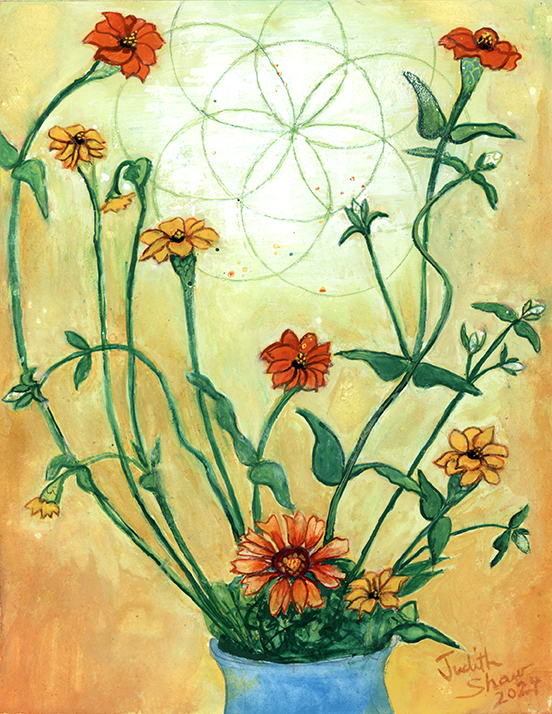
I was captivated by a bunch of wispy, weedy zinnia flowers on my dining-room table, with its bright blossoms sprinkled on the curling stems. The zinnias pulled me from my current obsession with sea goddesses into a different zone, into the Kingdom of Plants (Kingdom Plantae). The Plant Kingdom is an important part of Goddess manifest, having come into being long before the appearance of our human family. It’s no wonder that flowers and other members of the Plant Kingdom play an important part in the mythology of our ancestors worldwide. 

Zinnia Joy, gouache on paper by Judith Shaw
Continue reading “Flowers — Gifts of Goddess by Judith Shaw”

Legacy of Carol P. Christ: A New Glossary for Crete: The Power of Naming and the Study of History

This was originally posted on Sept. 2, 2013

The words we use affect our thinking. In the case of ancient Crete the repetition of the terms “Palace,” “Palace of Knossos,” “King Minos,” “Minoan,” “Priest-King,” and “Prince of the Lilies” shape the way we understand history–even when we ourselves know these terms are incorrect. We must engage in “new naming.”

Ariadne. May have been a name of the Goddess of pre-patriarchal Crete. The ending “ne” signifies that Ariadne is not of Greek or Indo-European origin and thus predates the later Greek myths.

Ariadnian. The name I have given to the Old European pre-patriarchal culture of Crete, from arrival of the Neolithic settlers from Anatolia c.7000 BCE to the Mycenaean invasion c.1450 BCE. Arthur Evans named the Bronze Age (c.3000-1450 BCE) culture of Crete “Minoan” after King Minos of Greek mythology, son of Zeus and Europa, husband of Pasiphae, father of Ariadne, whose gift of the secret of the labyrinth to Theseus led to the downfall of her culture. Evans assumed that Minoan Crete was ruled by a King.

This image I call “Ariadne Dancing” could become the new “icon” of Ariadnian Crete.

minoan woman dancing
Continue reading “Legacy of Carol P. Christ: A New Glossary for Crete: The Power of Naming and the Study of History”

Cerridwen’s Brew; the Psychedelic Priestesses and the Theft of Indigenous Wisdom by Kelle Ban Dea

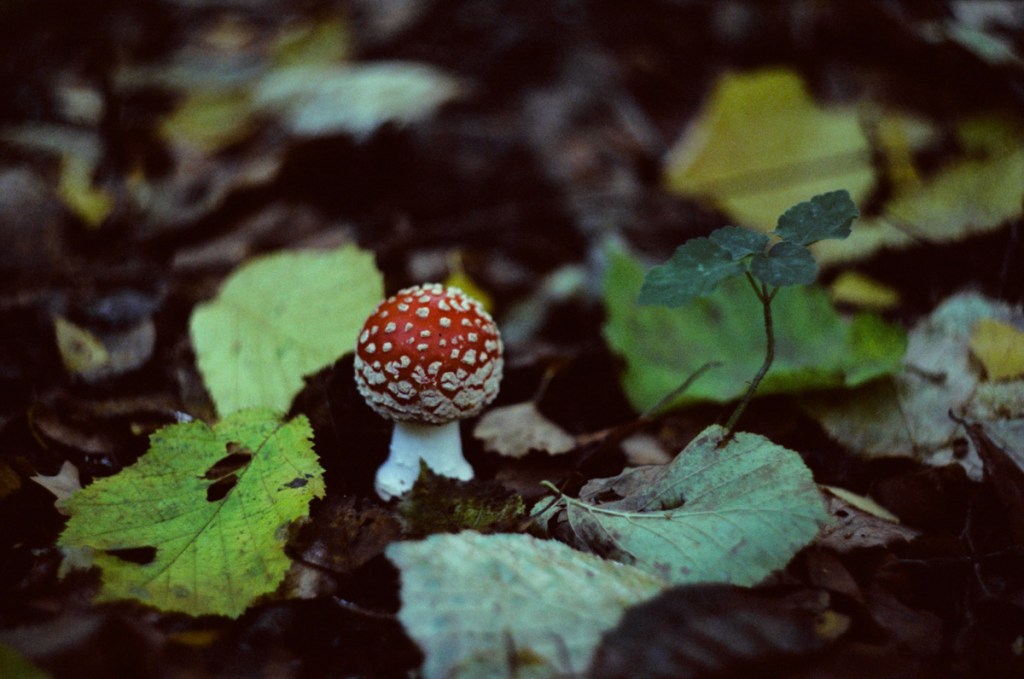
Katerina Shkribey, mushroom. Unsplash stock

Recently I wrote about how the story of Cerridwen and Taliesin is not a muse and hero tale but a tale of stealing from the goddess. Violating her priestesses and exploiting the land.

That is one reading of it. There is another though, which may have some grounding in historical fact and may be a warning to a particular issue gaining prominence today; the rise of the psychedelic industry.

Although neo-Druids, for whom this tale forms part of their core mythology, interpret the awen that Cerridwen brews in her cauldron as the ‘flowing spirit of inspiration,’ the original text makes it clear it is a potion. Cerridwen gathers ‘every kind of charm-bearing herb’ for the potion. Three drops of it turn the boy Gwion Bach into the shaman-bard Taliesin, but the rest is poison.

Continue reading “Cerridwen’s Brew; the Psychedelic Priestesses and the Theft of Indigenous Wisdom by Kelle Ban Dea”

Legacy of Carol P. Christ: GODDESS WITH US: IS A RELATIONAL GOD POWERFUL ENOUGH?

This was originally posted on Sept 2, 2013

Last week I wrote about Protestant Neo-Orthodoxy’s deification of male power as power over.  This week I want to ask why the relational Goddess or God* of process philosophy has not been more widely embraced, both generally and in feminist theologies.

Could it be that a relational God just isn’t powerful enough? Are some of us still hoping that an omnipotent God can and will intervene in history to set things right?  Do we believe an omnipotent God can save us from death?

Process philosophy provides an attractive alternative to the concept of divine power modeled on male power as domination.  According to leading process philosopher Charles Hartshorne, the power to coerce, power as power over and domination, is not the kind of power God has.

The concept of divine power as omnipotent (having all the power) leads to what Hartshorne called “the zero fallacy.”  If God has all the power and can dominate in all situations, then the power of individuals* other than God is reduced to zero.  In effect, this means that individuals other than God do not really exist, but at most are puppets whose strings are pulled by the divine power.

Continue reading “Legacy of Carol P. Christ: GODDESS WITH US: IS A RELATIONAL GOD POWERFUL ENOUGH?”

Cerridwen’s Cauldron; Stealing from Old Mother Universe by Kelle ban Dea

Catherine Kay Greenup, blue well
Unsplash stock

The story of how Cerridwen, the witch goddess, brews a magic potion full of awen (inspiration) which is then accidentally imbibed by the boy Gwion Bach, is well loved across the Western world, especially by neo-Druids. Gwion Bach is then reborn as Taliesin, the greatest bard in Britain. It is a typical heroes tale, with Cerridwen as the muse and initiatrix.

Or is it? This tale has always left a funny taste in my mouth, and when I recently read The Broken Cauldron by Lorna Smithers, I understood why. In the oldest version we have of this tale, Gwion Bach doesn’t accidentally taste the awen. He steals it.

Continue reading “Cerridwen’s Cauldron; Stealing from Old Mother Universe by Kelle ban Dea”

The Legend of Istehar by Jill Hammer

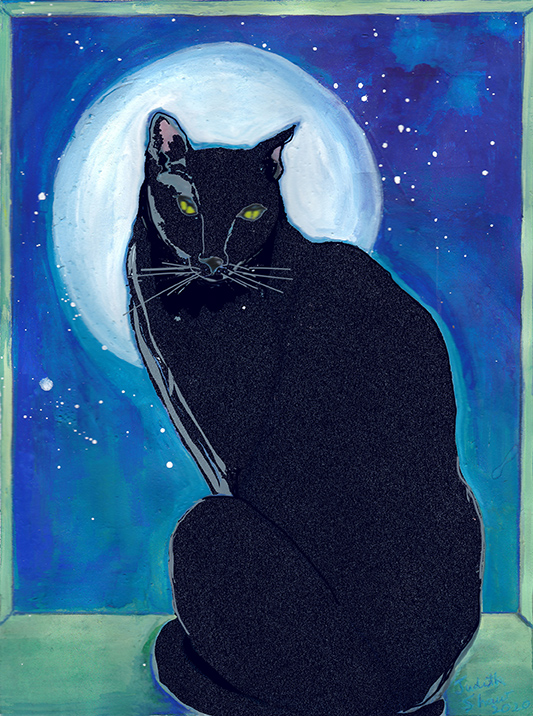
Blue supermoon 2024

This summer I had the opportunity to travel to Fire Island, New York, which is a long sand bar full of small beach towns with no cars. Fire Island’s been a haven not only for beachgoers but for queer folk for many decades. We stayed in the town of Cherry Grove with friends, and one night we went out to look at the supermoon/blue moon. The moon rose over the horizon, red and a little scary, a sight like none of us had ever seen. Not far from the moon was a star so bright it came out in the photographs. I wondered if that was the morning star.  Venus, in our current understanding. Inanna or Ishtar, among some of the ancients. And that made me think of Istehar.

Istehar, in Jewish legend, is a maiden who became one of the Pleiades. Her legend is unusual among Jewish legends because it reads like a Greek myth. It takes place during the time when some angels had descended to earth because they desired human women. One of these angels, Shemhazai, noticed a certain woman named Istehar, and desired her and wanted to be intimate with her.  Istehar wished to flee this angel, and so she said: “I won’t accept you as a lover until you give me your wings and teach me the Divine Name that allows you to fly to heaven.” The angel gave her his wings and taught her the Divine Name.  Istehar immediately uttered the Name and flew up to the sky, thus escaping the angel. God was impressed by her virtue and decided that she would be placed among the seven stars, in the constellation of the Pleiades, “that humans might never forget her.” (Legends of the Jews I:4:11).

Continue reading “The Legend of Istehar by Jill Hammer”

Atargatis, the Mermaid Goddess by Judith Shaw

Modern science has proven what ancient myth has long told us about our Earth — billions of years ago our world was a water world. It’s not surprising then to find water-based creation stories and goddess mermaids in the myths of our ancient ancestors. 

Continue reading “Atargatis, the Mermaid Goddess by Judith Shaw”