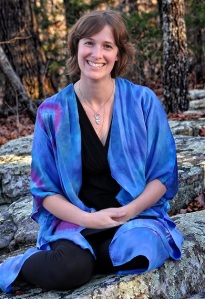
Painting Jephthah’s Daughter by Angela Yarber

angelaAnd Jephthah made a vow to the Lord, and said, “If you will give the Ammonites into my hand, then whoever comes out of the doors of my house to meet me, when I return victorious, shall be the Lord’s, to be offered up by me as a burnt offering…Then Jephthah came to his home at Mizpah; and there was his daughter coming out to meet him with hand drums and with dancing…he did to her according to the vow he had made…” (Judges 11:30, 34, 39)

When I was a little girl I used to make up routines to perform for my family.  From Tina Turner’s “What’s Love Got to Do With It” to Michael Jackson’s “Beat It” I can remember making up creative choreography and performing in front of the affirming audience that was my family.  Often times, my routines were accompanied by props, such as a hula hoop, roller skates, or an unwilling younger brother.  Whether I had props or not, there was always a big smile on my face as I twirled and leapt to the tunes on my family’s 8-track, record, or cassette player.  Half the fun was making up the routine and practicing until it was performance perfect.  The other half of the fun was the response on my family’s faces as I forced them to “watch me, watch me!” once again.  Despite the cheesiness of my routines and my silly props, they watched with delight, clapped, and encouraged me to dance all the more.  Such is the experience for many fortunate children: choreographing routines, drawing pictures, making up skits and plays, and practicing to make their parents proud. Continue reading “Painting Jephthah’s Daughter by Angela Yarber”

What is the Nature of the Hope that Can Trump Despair in the New Year? by Carol P. Christ

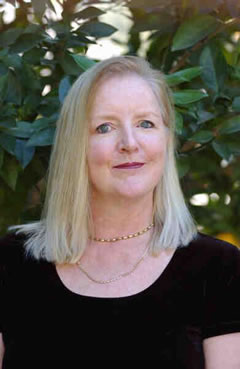
carol-christ“All hope abandon, ye who enter here.” These words posted on the gates of hell in Dante’s Inferno have an eerie resonance in our time. 

Marie Cartier recently posted a blog on children and hunger with facts so devastating I could not finish reading it. Earlier in the month Jassy Watson wrote about her deep feelings of grief on hearing Luisah Teish’s “Prayer for Disappearing Species.” Grief, despair, and sadness about the injustices in our world can be overwhelming.

A friend of mine has recently fallen into a deep depression. When I try to talk her out of it, she repeats that they are threatening to cut down the last remaining old growth forest in her home state of Oregon and that she can no longer eat fish because radioactivity released in the Fukishima nuclear plant disaster is reaching the seacoast of Oregon.

When I tell my friend she should not dwell only on these things and that she must remember that the world is still a beautiful place, she responds, “I do not want to give up my feelings. I know I must find a way to acknowledge my sadness and make a place for joy, but I don’t know how to do it.”

I have been in the grip of deep grief about the planet myself, not once but many times. But this happens less frequently than it used to.  When I think about the differences between how I once felt and how I feel now, I think the difference is that I have come to terms with and accepted the likelihood that “the world as we know it” is “going to hell in a handbasket”—as I put it.

I believe that the most likely conclusion of the choices human beings are making on planet earth today is massive environmental destruction leading to great suffering and probable extinction for human and many other species on planet earth. This is what I believe, but I also remind myself that I cannot know for sure. The earth and its species including human beings may have resources of resistance and survival, transformation and adaptation,that I do not know about and cannot imagine.

When I began to accept that the world I know and love (where spring follows winter, where birds sing, and where there is hope that injustice can be rectified) may not exist in the very near future, I had an astonishing insight. The death of the world I know and love will not mean the death of our planet or the end of the evolution of the universe.

Thinking about the disappearance of species and the death of human beings from starvation often feels too much to bear. None of this should be happening. Still, it can be strangely comforting to remind myself that the world I love is not the only possible world. There have been other worlds on this very planet—the time when the first cells were formed, the time of the dinosaurs, and many others. Evolution will continue on planet earth for several billion more years, and when our sun burns out, other suns will most likely still be shining in the universe.

This insight was followed by another. The reason for hope is not the conviction that we will be able to save the world we love. The reason for hope—and the reason to keep trying to save our world—is the deep knowing that it is right to try. Even if we cannot save the world we love for all time, we can savor the gift of life, and we can continue to try to create a world in which the gift of life is shared widely today and tomorrow.

I have written many times that we must learn to love a life that ends in death. I was speaking about accepting that each one of us will surely die. I do not fear death. Overcoming this fear has opened me to a greater and more clear-sighted love for life.

Can we learn to love life while accepting that the world we love may be dying? Can we continue to work to improve the conditions of life for individuals and species knowing that the world as we love it may not survive? Do we have any other choice?

For me the hope that can trump despair in our time begins in gratitude for a life that has been given to us, a life that has come down to us through the generations, and through billions of years of the evolutionary process on our planet.

Let us bless the Source of Life.

Let us bless the Source of Life, and the cycles of birth, death, and regeneration.

Let us turn back from despair.

Let us embrace the gift of life and share it with as many others as possible in the new year.

Carol P. Christ  learned to be grateful for the gift of life in Crete on the Goddess Pilgrimage to Crete she leads through Ariadne Institute.  It is not too early to sign up for the spring or fall pilgrimages for 2014.  Carol can be heard on a WATER Teleconference.  Carol’s books include She Who Changes and Rebirth of the Goddess and the widely-used anthologies Womanspirit Rising and Weaving the Visions. She wishes you great joy in the new year.

Yes, You’re a Homophobe by John Erickson

Jesus loved sinners and Jesus would rather be dancing with me in West Hollywood on a Friday night than lugging through a swamp luring ducks into a trap with a duck caller made by a clan who think that my sexual actions are similar to that of an individual having sex with an animal.

John Erickson, sports, coming out.

To be able to walk down the street holding the hand of the one you love is a great feeling and an action that some of us aren’t able to perform without fear.

A line has been drawn in the sand between those who support gay rights and those who do not.  While some call it being on the “right side of history,” I simply now refer to it as not sounding and looking like a bigot in the halls of history and in the various books, Facebook posts, and Tweets that our children will one day read. Continue reading “Yes, You’re a Homophobe by John Erickson”

Seeing Death and Resurrection by Linn Marie Tonstad

Linn Marie TonstadYesterday, I visited the Capuchin catacombs in Palermo, Sicily. In a grotto about a mile or so from the center of the modern city are found the preserved remains of about 2,000 people who paid the monks to preserve their bodies after death, dress them in their finest clothing, and put them on display. Each of them is placed in its own niche along the wall, held up by iron bands, and has a tag around its neck with its name and date of death. The bodies are not displayed in random order: they are sorted (to some extent) by sex, profession, and familial status. In one large recess, a number of children’s skeletons are on display, many of them in heartbreakingly tiny coffins. In another corridor, friar after friar hangs in his robes, some with cords around their necks signifying their adherence to a Franciscan order. Almost indistinguishable from the cords are the braids still hanging from the heads of some of the women’s bodies. Some families are arranged together; in another corridor doctors and lawyers are segregated and in yet another female virgins are gathered together. The oldest body I saw dated from 1599 – high on a wall hangs the body of a monk whose name was almost illegible but who hailed from the Umbrian hill town of Gubbio.

Some of the skeletons presented death’s heads; others had skin dried to a leathery tightness over remaining bony protuberances. Some of their outfits are well preserved; others have disintegrated under the relentless assault of the years. The practice became illegal around 1880, but until then, people chose – or perhaps their relatives chose for them – to be preserved in this seemingly macabre manner. Continue reading “Seeing Death and Resurrection by Linn Marie Tonstad”

An Epic Woman: A Feminist Eulogy by Molly

editMollyNov 083There were some things about my grandmother that I didn’t find out until after she died. For example, in 1974, she co-organized a “Women’s Exchange”  in Fresno, California with the theme: Stop the World…We Want to Get On. How much I would have liked to talk to her about that! While I didn’t know about the fair, I do know that she was successful with her vision of getting on this brightly spinning world. My grandma was a woman who was hiking in the Channel Islands one month before receiving a diagnosis of aggressive pancreatic cancer. She was incredible.

After reading Grace Yia-Hei Kao’s recent post about giving a eulogy at her grandmother’s funeral, my thoughts turned to my grandmother’s memorial services this past spring. What, if any, are the components of a feminist eulogy? Grace wonders. In reading this, I reflected on the components of the services I prepared and participated in for my grandmother and I believe they fit the bill. In a pleasingly feminist move in itself, I was asked by my extended family to serve as the priestess at my grandmother’s “committal” service (in which her ashes were interred in the above-ground burial chamber that received my grandfather’s body in 1989).

It was deeply important to me to have multiple voices represented during the small, family-only, service and I enlisted all the grandchildren present, as well as her step-grandchildren, in an adapted responsive reading based on Walt Whitman’s “Song of the Open Road”. I chose it precisely because it spoke to the irrepressible, adventuresome spirit of my grandmother. It was a lot of pressure to be responsible for the family ceremony for the interment of her ashes. I wanted it to be perfect. I wanted it to be what she deserved. I wanted it to “speak” to every person there. I wanted it to be worthy of her. I hope it was enoughContinue reading “An Epic Woman: A Feminist Eulogy by Molly”

Birth Song, Life Song, Death Song by Molly

editMollyNov 083“A woman can spin a primal umbilical rope within her womb through which she passes life-energy to the future.” –Melissa Raphael

“In some indigenous cultures of the Americas there is the practice of finding one’s death song while alive. This song becomes the ally of the person throughout their lives, so that they become very acquainted with what the song means in their lifetime. Death then, is a companion of life, and is never forgotten. In the hour of death, these people would, if they were able to, sing their death song–exiting this world with song on their lips and no doubt feeling the power their ally-song had gathered by being with them in their life. I can see that a death song would provide a connection between the person and the cycles of life, guiding the dying person into the next world and helping to allay fear…” –Leslene della-Madre, Midwifing Death

I was introduced to blessingways, or mother blessing ceremonies, as a girl when my mother’s group of friends hosted them for each other during their pregnancies. I loved attending the ceremonies for my mom during her pregnancies with my younger brother and sister and witnessing the web of love, support, and commitment woven around her. They touched me deeply with their sacred, magical, and mysterious flavor. When I was twelve, the same group of friends had a coming of age blessingway ritual for the daughters of the group, ranging in age from 10-16. It was a mystical, beautiful experience. We wore wreaths of flowers in our hair and were blessed with wisdom and tokens from the wise women of our tribe. At 34 years old now, I still have my folder of prayers, quotes, and messages from that day. For years it smelled faintly of rose petals.

Continue reading “Birth Song, Life Song, Death Song by Molly”

Losing my Mother and Realizing her Resurrection by Gina Messina-Dysert

Gina and momFive years ago today I buried my mother.  Violence took her life; however because of this patriarchal culture we live in, there was no prosecution in her death.  Violence against women is of little consequence in our society.

She died at the very young age of 56 on June 29, 2008, the same day I was moving to California.  I was just about to get into our moving truck when I got the call.  I will never forget the moment I heard the words, “your mom passed away last night.”  It was as if I felt her dying in that moment, as if my heart was falling from my body.  I cried out so violently and fell to the floor.  How could this be real?  How could my mom be gone?  The day before we had stood in my kitchen, danced, sang, laughed, embraced.  She was so alive, but in a moment, she was gone.  I begged and pleaded with God, I thought it was a mistake, Continue reading “Losing my Mother and Realizing her Resurrection by Gina Messina-Dysert”