‘Willowing’ at the Turning by Sara Wright

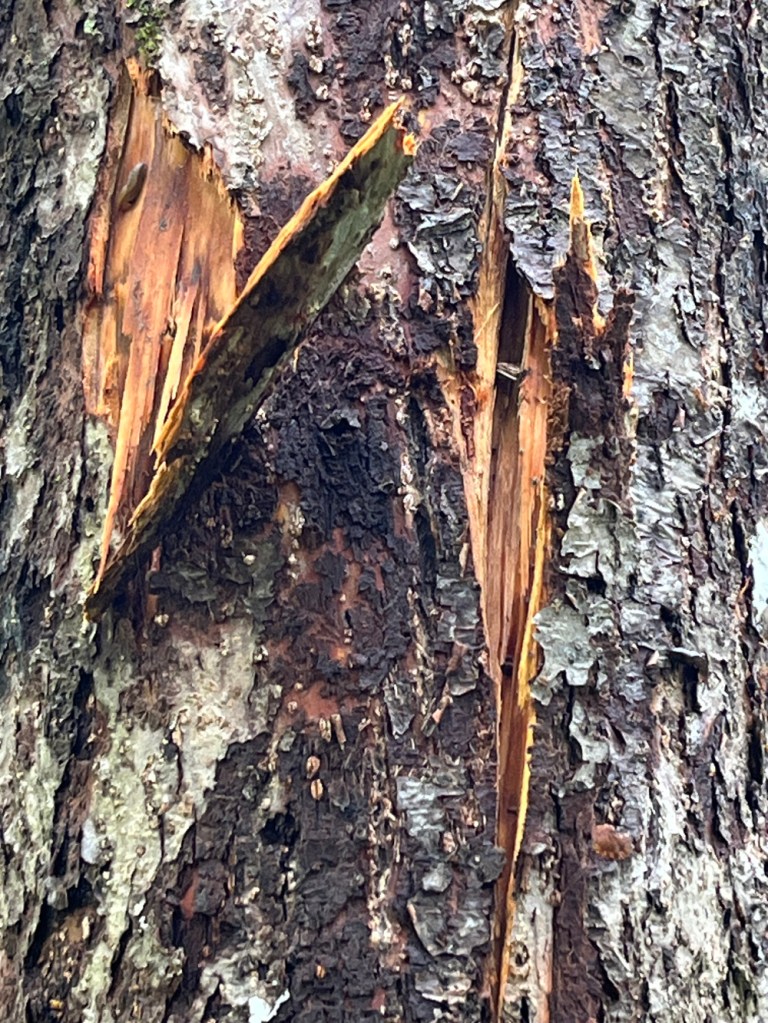
My relationship with and time spent with Indigenous peoples reinforced my intuitive sense that seasonal turnings like the Spring Equinox need to be honored and experienced when the ‘time’ is right. Time, in the Indigenous sense is fluid. Because of this learning I have come to understand that although it is important to write a little ceremony that includes guardians, elements, prayer, gratitude, framing intentions/release that I also need to allow the powers of nature to determine when the actual passage occurs. Indigenous people dance their ceremonies which helped me understand that any experience that transpires around these turnings may become the body of the ceremony if it feels right though the words were written earlier. This year around the equinox darkness reigned in every sense of the word. Having set my intentions, I waited, wondering when the door would open… yesterday it did, and this is the story of what happened. Only afterwards did I realize that in every sense we had honored and experienced the beginning of spring and the rising of clear waters.

My Vet and dearest friend made one of his unscheduled visits. The moment after I got the text my little dogs began to bark. This is normal behavior for both animals who adore their Uncle Gary and are tuned into him on levels that defy explanation (he lives more than a half an hour away). They bark until he arrives, regardless of whether this is a regular visit, or one that’s a surprise. We keep track of the exact timing of his leave – taking, their behavior and his arrival for fun.

Continue reading “‘Willowing’ at the Turning by Sara Wright”

Legacy of Carol P. Christ: “Mermaid, Goddess Of The Sea”

carol-christ

This post was originally posted on Nov. 4th, 2013

On the recent Goddess Pilgrimage to Crete, I visited the Historical Museum in Heraklion where I saw a beautiful embroidered silk panel of a mermaid identified only as having come from Koustogerako, a village in western Crete. As it is unlikely that a man in a Cretan village would have been talented in embroidery, in this case “Anonymous” most definitely “was a woman.”

In this thread painting a mermaid surrounded by fish is holding the anchor of a ship in one hand and a fish in the other. In Greece the mermaid is the protectress of sailors. In a well-known legend, a mermaid said to be the sister of Alexander the Great, emerges from the sea in front of a ship during a storm and asks: “Is Alexander the Great still living?” If the sailors answer, “Yes, he lives and reigns,” the ship is saved.

mermaid greek0001

In this image the mermaid–who does not much resemble “the little mermaid” of recent lore—is identified by the woman who embroidered her as: “GORGONA, H THEA TIS THALASSIS,” MERMAID GODDESS OF THE SEA.” Assuming that the woman who created this embroidery was probably a Christian, I was surprised to see that she nonetheless referred to the mermaid as a Goddess. Was this phrase passed on to her down to her from pre-Christian times? Did she see any contradiction between her Christian beliefs and the “Goddess of the Sea?” Continue reading “Legacy of Carol P. Christ: “Mermaid, Goddess Of The Sea””

Herstory Profiles: Tending the Flame with Pema Chödrön By Anjeanette LeBoeuf

While the early days of the nation of America is seeped with Christianity, the West has also had an illustrious relationship with Buddhism. Western Buddhism and especially American Buddhisms has grown exponentially since the 1960s. One of the benefits of American Buddhism is the inclusion, reintegration of Women Religious. One of the most known Buddhist nuns is that of Pema Chödrön.

Pema Chödrön was born Deirdre Blomfield-Brown in 1936 in New York City to Catholic Parents. She would receive her English Literature Degree from Sarah Lawerence College and a Master’s in Elementary Education from University of California, Berkeley. She would be an elementary teacher for many years in New Mexico and California. Deirdre was married and divorced twice. She has two children and three grandchildren. In the 1970s. Deirdre would start to study and practice Buddhism under Lama Chime Rinpoche. This would be the start of her journey to become Pema Chödrön. Under the guidance and practice of Chögyam Trungpa, Deidre was given a new name, Pema Chödrön which means ‘lotus torch of the dharma’ when she took the refuge vows.

Continue reading “Herstory Profiles: Tending the Flame with Pema Chödrön By Anjeanette LeBoeuf”

Witches and Queens in C. S. Lewis’s Chronicles of Narnia by Elanur Williams

Jadis, The White Witch, by Leo and Diane Dillon. Front Cover for The Lion, The Witch, and the Wardrobe.

When I first encountered the Narnia novels as a child, the Christian symbolism was lost on me. I grew up in Istanbul, and what captivated me most was the magical world of Narnia, where one of my favorite characters, Aslan, had a Turkish name—a rarity in the British children’s books I read at the time. I also loved the mention of Turkish delight, which I did not consider to be “exotic;” rather, it was an ordinary reference to the rose, lemon, and pistachio flavored confections I often enjoyed at home. However, the character who truly fascinated me was Queen Jadis, also known as the White Witch. Her cold, regal majesty—draped in furs and gliding across a snowy landscape in her sleigh—was enchanting. I preferred witches to princesses and was drawn to stories where characters defied the roles they were expected to play, so it’s no surprise that I found the Witch’s character far more compelling than Lucy’s or Susan’s. I even had a picture of Jadis pinned to my bedroom wall. Yet within myself, I suppressed the Witch’s more admirable qualities—her anger, conviction, and sense of personal power. It took me years to reclaim, heal, and integrate these aspects.

Much has been written about C. S. Lewis’s restrictive and problematic portrayal of female characters. He perpetuates misogyny in Christian thought by depicting women who are idealized, distracted by ‘nylons and lipstick,’ in need of protection, or portrayed as liars—like Lucy, whose discovery of Narnia is initially dismissed as a childish fabrication, even though she is a truth-teller. Traces of paternalism run throughout his works, particularly through his reinforcement of a rigid gender binary. He perpetuates the view that women must suppress their own desires and dreams, in favor of being useful and serving others. Although the Narnia novels may appear to position women like Lucy and Susan as capable and responsible leaders (especially when they are crowned co-rulers of Narnia), this vision of female leadership is complicated by the presence of villainous witches and Queens.

Continue reading “Witches and Queens in C. S. Lewis’s Chronicles of Narnia by Elanur Williams”

An Omer Calendar of Biblical Women by Jill Hammer

Jill as the prophetess Huldah

Right before Passover every year, my wife and I visit a botanical garden to look at the spring flowers: daffodils, tulips, cherry and apple blossoms, magnolia.   One year, in 2004 or so, we were on our way there when I had an idea. I grabbed a pen and started scribbling long lists of biblical women.

“What are you doing?” my wife asked.

“Making an Omer Calendar,” I said. 

Since biblical times, there is a Jewish practice of counting the forty-nine days between the holiday of Passover (the barley harvest and festival of freedom) and the holiday of Shavuot (the first fruits festival and the season of receiving Torah).  These forty-nine days were the time of the barley and wheat harvest and were a fraught time for biblical farmers.  According to the Talmud, each day of the Omer must be counted along with a blessing.  One must count consecutively each day (usually in the evening) and one loses the right to say the blessing if one misses a full day of the count.  The Omer is often understood as a time of semi-mourning because of plagues said to occur during this time, but it is also a joyful season when nature’s abundance is at the forefront.  This seven-week period embodies both fear that the harvest will be damaged and gratitude for the harvest.

Continue reading “An Omer Calendar of Biblical Women by Jill Hammer”

Blodeuwedd; The Flower that Does Not Bloom and the Transhuman Death Spiral by Kelle Ban Dea

Blodeuwedd is often viewed as a Spring goddess, a personification of flower and bud and bloom. And why not; she is made of flowers after all; flowers and magic. It’s only when you read her original myth in the Fourth Branch of the Mabinogi that you realise how dark it is.

Of all the famous women – now seen as goddesses by many – in these ancient Celtic legends, Blodeuwedd is the only one who is not a mother, and therefore not seen as an aspect of the mother goddess, Modron. Bloduwedd cannot be a mother, because although she is made of flowers, she is a flower that will never bloom, that cannot reproduce.

In both ancient mythology and in the neopatriarchy we live in today, women who either cannot or will not be mothers (despite these being very different things; one a choice, one a lack of choice) are viewed with suspicion. As the opposite of the nurturing, fecund Mother, Bloduwedd instead brings betrayal and death to the hero of the tale. Yet, it was never Blodeuwedd at fault. She is created by the rapist magician Gwydion and given without her consent to be the wife of Lleu, the king, and our shining ‘hero’ of the story. Lleu has been cursed by his own mother to never have a human wife or children, so Bloduwedd is the best that Gwydion can conjure up, and he is celebrated for this marvellous feat of magic.

No-one, of course, bothers to ask Blodeuwedd what she might want.

Continue reading “Blodeuwedd; The Flower that Does Not Bloom and the Transhuman Death Spiral by Kelle Ban Dea”

Changing Woman’s Light, part 2 by Sara Wright

Last week Sara told the story of Changing Woman. You can read it here.

What I love the most about this story is that Changing Woman evolves from a woman who is passively acted upon into a self – directed deity  who stands up for what she wants and needs. A second reason I feel so strongly about this tale is that Changing Woman demonstrates the importance of having a relationship with more than human beings – animals and plants. A third reason I am so attracted to this myth is the gender balance that eventually evolves between the two – Changing Woman and the Sun. But I think the most important part of the story for all of us is that Changing Woman never dies. She grows old and then young again reflecting the powers of the Great Round to renew All Life.

Imagine if we were all brought up with this kind of myth to guide us…

  When I returned from NM five years ago, I brought home fragments of worked and unworked chert not realizing at the time that Changing Woman accompanied her stones and that they would continue to exert an influence on me. My relationship with that mountain is not distance dependent. I also continue to re – experience the wonder and awe I experienced as becoming part of that mountain, although these periods wax and wane like the moon. The Navajo call Changing Woman’s Mountain Tsip which means tree mountain and the Tewa use a similar word Tsip’in, to name this Being obsidian or flint mountain.  A shining mountain crafted of stones and trees, yes!

Continue reading “Changing Woman’s Light, part 2 by Sara Wright”

Journey to Freedom: Harriet Tubman Still on the Move, part 2 by Maria Dintino

Part 1 appeared yesterday

Additional Developments

Although there’s a significant dearth of statues depicting real women in our country, Tubman’s image and legacy have done much to address this gap and put a serious dent in the bronze ceiling.

There are said to be at least 9 full-figure sculptures of Tubman with others in the works, along with plaques, busts,  parks and museums named in her honor. Also, three commemorative coins have been released, each depicting a particular phase in Tubman’s life.

Speaking of currency, the plan to replace President Andrew Jackson’s image with that of Harriet Tubman’s on the twenty-dollar bill is still in the works. It’s an important endeavor that’s taking far too long. Annie Linskey with The Philadelphia Tribune explains:

“There has never been a Black person on the U.S. currency, nor has there been a woman on a bill in the modern era, despite repeated attempts to diversify the currency.”

Continue reading “Journey to Freedom: Harriet Tubman Still on the Move, part 2 by Maria Dintino”

Yoga for Witches: Should You Try This at Home?

In this post, I review Yoga for Witches by Sarah Robinson, a practical book that weaves together two ancient practices with surprising similarities, yoga from the East, and witchcraft as practiced in Northwestern Europe.

I start with what I loved, and how Robinson describes the similarities and differences between those two traditions. That weaves into some personal and deeper reflections on the theoretical background and yoga sequences. At the end you’ll find a specific recommendation so you’ll know if this is the book for you!

Continue reading “Yoga for Witches: Should You Try This at Home?”

Sacred Secrets: The Legacy of Women’s Wisdom Across Generations by Rabbi Nadya Gross

From my earliest memories, I saw things that others didn’t see and knew things I had no business knowing. But at the time, I didn’t realize that others didn’t witness the dance of light around their bodies or the life forms at the base of trees. I didn’t know that the insights I had into people’s emotions were not universally shared. My curiosity led me to ask questions about these things… until my grandmother, Savta (Heb), took me into the kitchen (where everything important happened), closed the doors, and told me never to talk about these things with anyone except her. And so, my training began.

Savta was gifted in ways different from mine. She had grown up in a circle of women and their daughters, a circle where women educated each other, shared their unique gifts and insights, and passed down a legacy of wisdom.

The wisdom she shared with me was as ancient as the land on which we lived. We began with reverence for the Earth and all her elements—pre-patriarchal Goddess wisdom. We explored what it means to be intimately connected to all aspects of Creation, understanding that we are interdependent. Harm to a tree, an insect, or the water harms us. We learned that the respect we wish to receive from others must first be shown by us. I learned to never pick up a beautiful stone that caught my attention without first asking permission to remove it from its resting place. When harvesting fruit from one of the many trees in my grandparent’ yard, I expressed deep gratitude to the mother-tree whose body nurtured that fruit to ripeness.

Continue reading “Sacred Secrets: The Legacy of Women’s Wisdom Across Generations by Rabbi Nadya Gross”