
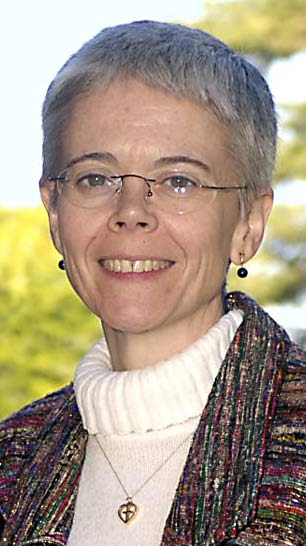
A Church With No Walls By Sheila E. McGinn, Ph.D.

Last year about this time, I spent a month in Malaysia, at the invitation of Alpha Omega International College, a school in Petaling Jaya, a suburb of Kuala Lumpur. I was rather surprised at the initial invitation, since AOIC is sponsored by the Assemblies of God and I myself am a feminist Roman Catholic. To put it mildly, the two denominations tend not to be “on the same page” on various aspects of the Christian tradition, so I wanted to ensure that the college administrators knew what they would be getting if I were to come. Happily, the AOIC president who had proffered the invitation confirmed that indeed they did want me to come for the guest lectureship, so the beginning of October saw me making my way almost exactly to the opposite side of the globe, to run my New Testament ethics seminar at the college and to spend time learning from Malaysian Christian and Muslim leaders about interreligious dialogue and inter-ethnic relationships in their country.

Malaysian hospitality was faultless—generous, thoughtful, inviting—and everyone made time to tell me about their cross-cultural experiences and their concerns for the religious climate in Malaysia. I continually was impressed by the sincere convictions of these religious leaders and their constituencies, and by the political and cultural difficulties they faced in any kind of collaborative endeavor or even attempts at dialogue. Wherever I looked, will or nil, boundary issues continued to arise. Although other ethnic groups had the right to choose their religious affiliation, the Malay ethnic group was legally defined as Muslim. Within the Christian tradition, certain denominations traditionally were connected with one ethnic group or another. Continue reading “A Church With No Walls By Sheila E. McGinn, Ph.D.”

Recession Proof Devotion By Valentina Khan

This  post is written in conjunction with the Feminist Ethics Course Dialogue project sponsored by Claremont School of Theology in the Claremont Lincoln University Consortium,  Claremont Graduate University, and directed by Grace Yia-Hei Kao.

Valentina Khan is a first year Master of Muslim Leadership Context student at the Claremont School of Theology.  She is a co-founder of I Am Jerusalem, an interfaith organization which promotes friendship, understanding, and striving for the “greater purpose” by dedicating time to community service and social justice. Born and raised in Southern California, to Iranian mother, and Indian father, Valentina has a diverse background that helps her identify as a “citizen of the world”. Valentina hopes to mediate conflicts between intra-religious and inter-religious groups and cultures, via conflict resolution, as well as promote the peace she knows can exist between people if they just put in the effort. Valentina is a yoga teacher and the creator of Enerji barre, where she enjoys empowering her students to love their bodies, appreciate their health and live in the moment!

“I Am Jerusalem, that’s it, we got it, I Am Jerusalem! You are Jerusalem! We are all Jerusalem!” My best friend Sarah and I exclaimed on our yoga mats one day after a 90 minute intensive Vinyasa flow. Sarah was raised as a Christian, and I as a Muslim. It was when we were in the 7th grade when she asked me the heavy question, “so do Muslims believe in Jesus?” This question was the common theme in my life, growing up in suburban Orange County and surrounded predominately by white, Anglo-Saxon, Protestants. As a child, and still today, I can look up and down any major street in my town and find multitudes of churches: Trinity Presbyterian, a progressive church, First Church of Christ, Christian Science, Lutheran, Episcopalian, Unitarian, Methodist, and Catholic, all within a 5 mile radius. I remember we had to drive about 25 minutes to get to Sunday School at the local Mosque, and I wished so much to just go with my Christian friends down the street, after all God was the same…right? Continue reading “Recession Proof Devotion By Valentina Khan”

The Egyptian Revolution: Women, Islam And Social Change By Karen Torjesen

The following is a guest post written by Karen Torjesen, Ph.D., Margo L. Goldsmith Professor of Women’s Studies in Religion at Claremont Graduate University where she has helped establish graduate programs in Women’s Studies in Religion and Applied Women’s Studies. For ten years she served as Dean of the School of Religion, partnering with religious communities to create programs in comparative religion. She has published extensively on women, gender and sexuality within Christianity.

Originally posted at Huffington Post: http://www.huffingtonpost.com/karen-torjesen/the-egyptian-revolution-women-islam-social-change_b_978190.html

Traffic inches through the narrow streets. Sidewalks are peppered with chairs, men in gallabiyas (tunic-like garment reaching the ankles) chatting, drinking tea or smoking the hookah. Women in hijabs threading the traffic, children in tow. Shops bustle; vendors call. Normal life — but there is something in the air. What is it I wondered. What is going on in Egypt?

It is profound and it is complex, but a conversation at the Cheops pyramid with a young student worked as a single snapshot. His first question after, “Where are you from?” was, “What do Americans think of us now, after the revolution?” How can I describe his effect — it was something new. A tone? A manner? He asked with eagerness; he asked with pride, there was a confidence in his voice. He explained, straining for the English vocabulary that the regime had controlled how Egyptians thought about themselves. “When we woke up in the morning, we thought only of taking care of food and family. Now we think about ourselves differently.” Johnny West named this difference in his Journey through the Arab Spring. It became the title of his book, “Karama,” dignity. Continue reading “The Egyptian Revolution: Women, Islam And Social Change By Karen Torjesen”

Hidden Spirituality: The Life of a Muslim Family By Najeeba Syeed-Miller

The following is a guest post written by Najeeba Syeed-Miller, J.D., Professor of Interreligious Education at Claremont School of Theology. She has extensive experience in mediating conflicts among communities of ethnic and religious diversity, and has won awards for her peacemaking and public interest work.  Najeeba also writes her own blog, “Najeeba’s world,” and can be followed on Twitter @najeebasyeed. 

This article was originally posted at Muslim Voices.

Recently, I was asked to write an entry for a book that will be coming out about spiritual development. Initially, I did as many would do think about my introduction to religion as a topic I was taught in an academic setting.

However, as I reflected more deeply, I realized that much of what I know of my faith comes from my mother and the way that she embodied her religion. Here is an excerpt of how she affected me growing up: Continue reading “Hidden Spirituality: The Life of a Muslim Family By Najeeba Syeed-Miller”