The Great Dragon, Níðhöggr by Deanne Quarrie

Deanne Quarrie, D.Min.I am a student of the Northern European/Old Icelandic worldview known as Seidr. What I find particularly fascinating in my studies are not the deities but rather the creatures living on the World Tree, along with the Primordial Giants who predated the gods. One such creature is Níðhöggr, the “Derision Striker.” Níðhöggr is a great dragon who lives at the base of Yggdrasil, the World Tree. She gnaws on the roots of the tree, stimulating new growth. Her home stretches from icy Niflheim, near what is called the “Roaring Kettle”, the sacred well of all the rivers of Niflheim, all the way to Dead Man’s Shore in Helheim where she devours the piled corpses.
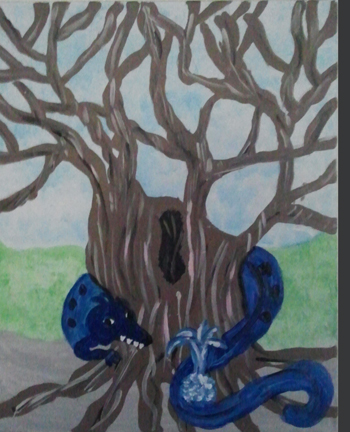
NíðhöggrNíðhöggr embodies the principle of rot, which is that all things must decay to make room for those things that are new. It is Níðhöggr’s job to clean up the mess! She is involved in acts of undoing. She reminds us of the impermanence of life and that eventually, all that is must become undone. It is important to know this so that we can be prepared for unexpected or difficult changes in our lives.

Níðhöggr is there to devour nasty things in one’s self, both physical and emotional. She is there to take away anything that no longer serves us, as long as we are willing to give it to her. She also is there to help anyone working to clean up the environment, especially from our own pollution.

Many fear Nidhogg because of the job she must do but without this part of the life cycle there would be no cycle at all. We make every effort to hide things that are unpleasant. We flush our human waste into our water supply instead of simply giving back to the Earth where we can restore it and use it as nourishment for new life. Menstrual blood is hidden away as if somehow shameful. We hide all that is ugly or that which makes us uncomfortable. And so it is too, with creatures and characters in mythology. Somehow in our dualistic world, the lines between good and bad, negative and positive are clearly drawn. So often those things we suppress, hide and call negative are actually, what save our lives. They are the things in our basic natural spirit that propel us forward into becoming better human beings.

Níðhöggr also serves us as a moral agent, reminding us that our own cruelty, especially harmful acts that undermine another’s sense of self. Bullying behavior is a good example. She reminds us that our actions always have consequences to the energy of the whole, not just our own lives.

Her work is much like that of the vulture, a bird so ugly it is beautiful. I have always thought of vultures as the great recyclers, returning what is lifeless and no longer useful back to the Earth to make ready for new growth.

She is truly all about roots, and keeping them clean. As that, she reminds us that real strength is found in one’s roots.

In her story, at the end of days, Níðhöggr chews through a root and upends the World Tree. Clearly if this were the root upon which all else depended, the mighty tree would fall. Perhaps this would represent our own failure to clean up after ourselves, both in our own lives as well as here in this place we call home, the Earth.

Deanne Quarrie. D. Min. is a Priestess of the Goddess. She is the author of five books. She is the founder of the Apple Branch where she teaches courses in Feminist Dianic Witchcraft, Northern European Witchcraft and Druidic Shamanism. She mentors those who wish to serve others in their communities. She is also an Adjunct Professor at Ocean Seminary College and is the founder of Global Goddess, a worldwide organization open to all women who honor some form of the divine feminine.

E Pluribus Unum and The Unrecognized Black Goddess of Rome by Stuart Dean

Stuart WordPress photoE pluribus unum (‘EPU’), which first began to be used by the U.S. in the 18th century, comes from a poem entitled Moretum that until well into the 19th century was generally attributed to Vergil.  During those centuries Latin would have been studied from what was the equivalent of today’s elementary school through at least high school.  Because Vergil is to the study of Latin what Shakespeare is to the study of English, Moretum would have been read by anyone lucky enough to receive formal education in those centuries–mostly boys–including the white sons of slave owners.

Those boys, however, would have been motivated not just to read, but to memorize Moretum.  That is because Moretum, through a variety of clues, encourages allegorical interpretations, one of which is that it celebrates the sexual intercourse of a single white farmer and his sole companion, his black female slave.  Such an interpretation requires ignoring the clues that the author thinks of such sex as rape (as anyone other than a male slave owner would); those clues lead me to think the author may have been a woman.

Illustration of Moertum (1558 Edition of Vergil's works)

Illustration of Moretum from a 1558 edition of the works of Vergil available here.

Continue reading “E Pluribus Unum and The Unrecognized Black Goddess of Rome by Stuart Dean”

Rosmerta, the Great Provider – a Celtic Goddess of Abundance by Judith Shaw

judith Shaw photoAs we near August 2, known to the ancient Celts as Lughnasadh or Lammas, examples of abundance are everywhere.  Gardens and farms are in full bloom with some crops ready for harvest and others very near.  Lambs born in spring are now reaching maturity. Days are still long and we are full of energy. It is a perfect time to remember the Celtic Goddess, Rosmerta.

Rosmerta,  a goddess loved by both Celtic and Roman Gauls was known as ”The Great Provider”. She is a goddess of fertility and wealth. She was worshipped in South-western Britain, Gaul, and along the Rhone and the Rhine rivers.

Continue reading “Rosmerta, the Great Provider – a Celtic Goddess of Abundance by Judith Shaw”

Sappho, Frankincense, and Female Spirituality by Stuart Dean

Frankincense

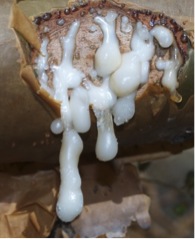
White Howjary Frankincense (photo: Trygve Harris (www.enfleurage.com))

Sappho is the first Greek author to attest to the usage of frankincense.  The word she uses to refer to it (libanos) is what comparative linguists call a ‘loan word,’ in this case from ancient South Arabic (the root meaning of which is ‘white’), the language spoken in the only region in the world still now, as then, where the trees grow that produce the resin that is frankincense (the finest being White Howjary from near Salalah Oman).

This was long before Amazon Same-Day Prime: that frankincense even made it to where Sappho was is astonishing given the thousands of miles of desert terrain that had to be covered.  That fact plus the fact that Sappho chose to use the Arabic word for frankincense suggests it must have been of special importance to her.  How important can be seen in the power she attributes to it.  In one prayer poem (S.2, composite translation and very brief notes here) she completes a stanza by referring to frankincense burning from Aphrodite’s altars; she completes the very next stanza with a reference to ‘sleep falling.’  The parallelism implies a reciprocity: the smoke goes up, the sleep comes down and a stanza later, there is Aphrodite. Continue reading “Sappho, Frankincense, and Female Spirituality by Stuart Dean”

Aine and the Giant Leap by Deanne Quarrie

Deanne Quarrie, D.Min.For our full moon rites coming up on the first of July we will be honoring Aine, Goddess of Love, Light, and Fertility who is also Queen of the Faeries. Aine’s name means “Bright” and She is typically honored at the Summer Solstice when the sun is at its peak of power.  The next full moon falls just after the Summer Solstice. The Solstice is associated with abundance, beauty and bounty.  It is not necessarily about the harvest season, as that is yet to come.  However, everywhere we look we can see the abundance of the Mother and so it is when we first acknowledge, with joy, what is before us.

In my Tradition, the Summer Solstice falls within the Oak Moon, the Moon in which we “court the lightning bolt.”  What that means to us is that with our roots planted firmly in the ground, as does the Oak tree, now is the time to take all of our plans and put them into action.  “Go for it” is what we are saying to ourselves and to the world. Continue reading “Aine and the Giant Leap by Deanne Quarrie”

All Hail a New Priestess! by Marie Cartier

ordination photo
“All hail- the new priestess!” they all shouted at the end.  I was recently ordained near Midsummer Eve (June 20, 2015) as a priestess with the Temple of Isis, Los Angeles and Fellowship of Isis. As befits feminism and religion — I felt it important to share the document read by my scribe – the person who did a lengthy interview and wrote up a summary of why I should be accepted into ordination. I am sharing this with her permission with the Feminism and Religion community. Why do we choose the paths we choose? Why did I choose this Goddess path? The document that explores those reasons follows:

~~~~~~~~~~~~~~~~~~~~~~~~~~~~~~~~~~~~~~~~~~~~~~~~~~~~~~~~~~~~~~~~~~~

June 20th 2015 – 4:00 p.m.
Ordination of Dr. Marie Cartier into the Fellowship of Isis,
Temple of Isis Los Angeles and the Temple of Isis Long Beach.

Our dear sister has reached a point in her life that our ancient mothers of old have been preparing for her and she is ready to be dedicated to and be an emissary of the Goddesses.  She is ready to take on the responsibilities of Priestess and is very honored and proud to be accepted by her Priestess Sisters who she dearly loves and admires. 

Dr. Marie Cartier is a scholar, visual/performance artist, queer activist, writer and theologian. She has been active in many movements for social change. Marie teaches at UC Irvine in the Film & Media Studies Department and CSU Northridge in Gender and Women’s Studies and Queer Studies. She received her Ph.D. in Religion from Claremont Graduate University, 2010, in Women Studies in Religion, with an emphasis on theology, ethics, and culture. She published in 2013 through Routledge the book Baby, You Are My Religion: Women, Gay Bars and Theology Before Stonewall and created the concept of “theelogy” a religion of friendship for people in exile, particularly lesbians prior to 1975. Continue reading “All Hail a New Priestess! by Marie Cartier”

Grainne – Sun Goddess/Winter Queen by Judith Shaw

judith Shaw photoIn the ancient Celtic world the Goddess was the One who expressed Herself through the many.  Grainne is such a one. She is both Winter Queen/Dark Goddess, nurturing seeds through winter, and Solar Sun Goddess, welcoming the rebirth of spring.  She is Aine’s sister or another aspect of Aine. She, like Aine, was honored at the summer solstice and the first grain harvest of early August with bonfires and torchlit processions on top of her sacred hill at Leinster, Ireland.  Remnants of these festivals are still found in folk ritual today.

Continue reading “Grainne – Sun Goddess/Winter Queen by Judith Shaw”

Aphrodite in Bagram Afghanistan & The ‘Friend of the World’ of the Flower Ornament Scripture by Stuart Dean

Stuart WordPress photo

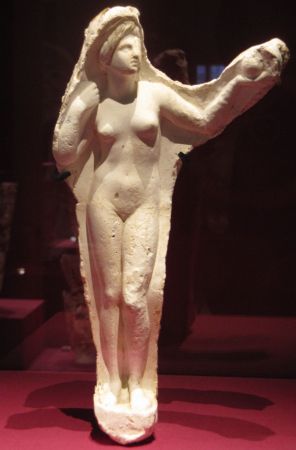
 In the 1930s two ancient storerooms in Afghanistan near what is now the Bagram US Air Base were discovered by French archaeologists and unsealed for the first time in about two thousand years.  They contained artifacts from all over the ancient world, evidencing just how active trade then was along the complex network of routes known collectively as the Silk Road.  Among the artifacts in one of the storerooms was a plaster statuette of Aphrodite (‘Bagram Aphrodite’).

BagramAphroditeThough it is not known what the motivation originally was for acquiring the Bagram Aphrodite, its presence in Afghanistan arguably evinces an interest in female spirituality–if not in the owner of the storerooms then among some of the people in the market for which she may have been destined.  Evidence of such interest among Buddhists is to be found in the Flower Ornament Scripture (FOS), a compendium of sutras dated to approximately the same time (and possibly the same region) as the storeroom containing the Bagram Aphrodite.  Female spiritual figures, both mortal and immortal, some portrayed as having official positions, others without any, are prominent in the final chapter of the FOS, so prominent that one scholar suggests Buddhist women of the time in some way influenced its composition (see Douglas Osto, Power, Women and Wealth in Indian Mahayana Buddhism).

Continue reading “Aphrodite in Bagram Afghanistan & The ‘Friend of the World’ of the Flower Ornament Scripture by Stuart Dean”

Time for Change: What Do the Goddesses Say? by Carolyn Lee Boyd

cb2015From our very beginnings, women have danced with time. Our bodies’ moon cycles have always been a human calendar. As the first agriculturists, we partnered with the seasons to feed our families and communities. When we served as midwives and carers for the dead, we ushered our species into and out of their Earthly lives.

Time is also embedded in the stories of goddesses worldwide. Like human gatekeepers of birth and death, goddesses are often the stewards of fate. The Greek Moirai spun the thread of life and cut it at death’s proper time. The Balkan Laima , the ancient Arabian Menat, and the Etruscan Nortia are other among many fate goddesses. Some goddesses oversee change, the physical manifestation of time, including Anna Perenna, goddess of the circle of the year as well as all the seasonal goddesses. Kali, Rhea Kronia, and other Creator/Destroyer goddesses rule over time itself.*

Now, however, time is often a weapon of oppression against women. Women overburdened with an unfair share of daily life’s tasks were never able to create millions of paintings, symphonies, and inventions, make scientific discoveries, or engage in other endeavors at great loss to themselves and the world. After just a few years of maturity, we are cast aside as being “old.” How many lives have been cut short by violence, human-made disease, poverty, and war? For how many centuries have we been told to wait for equality and freedom until another war or crisis is over or we die and go to heaven? Continue reading “Time for Change: What Do the Goddesses Say? by Carolyn Lee Boyd”

Spring in the Era of Pesticides, Global Climate Change, and War by Carol P. Christ

Carol in Crete croppedThis was not a normal winter. It rained and rained and rained. It was grey, grey, grey. Gale force winds blew in from the ocean, not once but many times. Several of my shutters were shattered. An olive tree fell in my garden. I pruned the dead leaves from its branches and had it hauled away. I am still in the process of pulling out a large number of plants that did not survive an unusual number of very cold days.

The soil is so saturated that streams are running where they have never been seen before, the land gives way, and boulders come crashing down the mountainsides. I have decided to remove all of my traditional shutters rather than repair them–as it is becoming clear that no shutters will survive the winds that will blow over our island in the coming years.

They say that we used to have strong gale winds of about 50 miles per hour once a year. Now we have hurricane force winds of 70 miles per hour several times each winter. I once read that Lesbos has the largest number of sunny days of all the Greek islands. We often sit out of doors wearing light jackets in the middle of winter. This year we did not.

My response to the long winter that has only just begun to give way was to stay inside. Though I said I was mildly depressed, I think deep down I was sad and angry.

Changes in the weather are normal and natural phenomena. But it is becoming increasingly evident that the changes we now experiencing are not. Climate experts tell us that because of the carbon we have released into the atmosphere of our planet, we will experience more and more extreme weather conditions.

I have noticed a decline in bees and butterflies in my garden in recent years. So far this spring there are almost none. This is not the result of global climate change, but of our failure to heed the warnings of Rachel Carson to stop poisoning the environment with pesticides.

house martin in flightThe house martins have returned. I hear their liquid chatter as they fly above me. Freesias and irises are about to come into bloom. Pale pink, almost white petaled flowers are opening on the quince tree. Red leaves are budding on the pomegranate trees. The Judas tree burst into deep pink blossom overnight. Spring is a time of rebirth and renewal. This year is no exception.

Spring has also brought an increase in the arrival of refugees fleeing war in Syria and Afghanistan to our island. People discuss what will happen to them, but no one is talking about ending war.

Although spring is coming, it is hard for me to rejoice today. Human beings seem to be hell bent on destroying life. Right now I am holding back tears and screams because I fear that if I let them out, they will not stop.

Postscript: I will find the strength to rejoice in the regeneration of life and to redouble my commitment to save what can be saved–because we must.

Carol leads the life-transforming Goddess Pilgrimage to Crete (facebook and twitter)–space available on the spring and fall 2015 tours.  Carol’s books include She Who Changes and and Rebirth of the Goddess; with Judith Plaskow, the widely-used anthologies Womanspirit Rising and Weaving the Visions; and forthcoming next year, Goddess and God in the World: Conversations in Embodied Theology. Photo of Carol by Maureen Murdock.