
Winged Iris flew over earth and sea.
Rainbows luminesced in her wake.
Messenger from the clouds,
she gathered up the rain,
Continue reading “Rainbow Goddess by Sara Wright”
Exploring the F-word in religion at the intersection of scholarship, activism, and community.

Winged Iris flew over earth and sea.
Rainbows luminesced in her wake.
Messenger from the clouds,
she gathered up the rain,
Continue reading “Rainbow Goddess by Sara Wright”
Sometimes I’m asked where I get my inspirations for verses to explore. In this case it was from the God Squad’s Rabbi Marc Gellman who discussed Psalm 93 in a recent column. In his analysis, he used Psalm 93 to wax poetic about how powerful god is outside of nature. In fact, he declared that the worship of nature is idolatry because it only points toward God but can’t completely match God’s majesty. Ahem and Excuse me! With my ire raised, I had to go and look at the Hebrew from my own Mystic Pagan perspective. Rabbi Gelman looks at these verses and his take-away is that “God is more powerful than even the most powerful storm.” Ahem and Excuse me again!
After delving into the Hebrew words, I see a whole other side to this powerful Psalm. I see the “power of God” [as he would say] or the “beauty of the divine [as I would say],” is that most awesome ability to midwife creation and birth. In other words, to make love manifest. I see in Psalm 93, an esoteric poem bursting with motion that begins by creating a place (Earth) for life to exist. This poem is filled with sound vibrations, thunderous surf, the movement of water and descriptions of thresholds. As the motion unfolds, one is invited to participate in the energies [powers] of the divine pouring out through these threshold gateways.
Continue reading “A Mystical Journey: Psalm 93 by Janet Rudolph MaiKa’i”
We take a slice of honey cake
and a pottery cup of grape juice
and leave it by the rose bush
as an offering,
arrayed on a bed of petals
and topped with a single daisy
and a ring of wild raspberries.
We make some wishes
in the dusty air,
kneel down
with our palms upon the warm earth
and sing for rain.
We walk under
a half-moon sky
beside a blood-red sun,
the sound of coyotes
rising into the night
as a silent deer watches us,
head a triangle of alertness,
black eyes staring across
the heat-weary field.
We catch fireflies,
winking
above the wildflowers
sparks of yellow-green,
and find a plump brown toad
waiting in the path.
Then, we stand quietly together,
mosquitoes beginning to cluster
around our legs,
our heads tilted back
watching carefully for fairy
silhouettes against the deepening gray
of the midsummer sky.
It is summer here in the Northern Hemisphere. Deep summer. Dusty summer. Thirsty summer. Humid summer. In central Missouri, it is the type of thick, wet heat that soaks into you and saps your strength and enthusiasm about life. Life can feel faded, dull, and magic hard to see. The woods, where I find such solace, renewal, and enchantment, become closed to me as poison ivy, thorns, ticks and chiggers, resolutely bar my way. So, I walk on the road these days, in the mornings and at sunset, seeing what I can see from my vantage point on a dusty gravel road. Deep summer I find offers an opportunity to look around to see what flourishes of its own accord, to see what grows without tending, to see what rises wild and unfettered from the natural conditions in which they thrive.
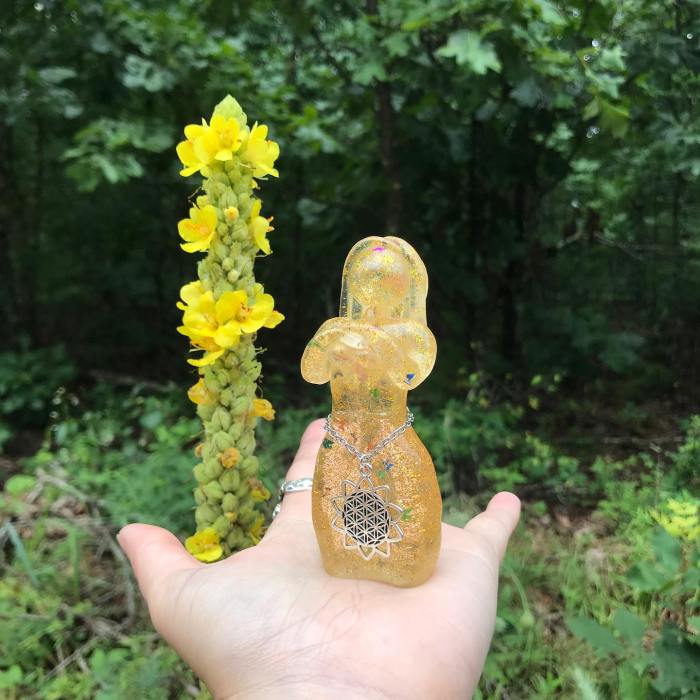
Sometimes as humans we become used to controlling as much of the world as we can control and as much of ourselves as we can control. Sometimes we get focused on what we can cultivate and grow and intentionally tend. So focused on this conscious tending may we be, that we may even rip up or destroy or change what is naturally growing in our own little ecosystem, our own little biome, what is growing right where we are. We may even pull it up and put something else in its place that we think is prettier, or nicer, or even more beneficial or useful. I encourage us to consider summer as a time in which to pause with, appreciate and look at, savor and explore, learn about and discover, what really grows right where you are, what thrives right where you stand, without the need for you to manipulate or control or change it. And, I invite you to also consider how this might apply to the growing and thriving in your own personal life? How or what are you perhaps trying to manipulate or change or control in yourself or with the people in your life? Perhaps it is time to take a step back, to sit back, and to see what is already growing. What is already there? What is thriving in your world? What is thriving for you that doesn’t require wrestling with or changing or trying to make it fit in a certain way? I encourage you to soften and see. Perhaps the mulberry trees are green and spreading in your world. Perhaps the clover is in bloom. Perhaps there are daisies. Perhaps there are monarch butterflies still bravely persistent on the milkweed in the field. Perhaps there are wild onion scapes, with their little purple heads. Perhaps there is yarrow, white, and waiting, and interwoven in its own curious way with the health of your own blood and body. Perhaps that book you want to write is bubbling right behind your fingertips, waiting for your pen to be set against the page. Perhaps that project that sings your name is waiting for you to pause to see it.
We doubt sometimes our place in the natural world. And, yet these plants that surround us, that spring up around us, that grow right where we are, are here and growing, just like we, ourselves, are growing where we are. These plants are intertwined with the health of our own bodies. That is amazing and enchanting and wondrous to me.
My youngest son, Tanner, is six and we are working together on an earth science class, studying planets and the earth and geology and the universe. He came to me saying: “Mom, did you know, there’s real iron in us! There’s real iron in us.” And I replied, “there’s real iron at the core of the Earth too. Isn’t that amazing? The earth has iron in it and so do we.” He looked at me and asked then, “is magic real?” And I replied, “yes, honey, we walk around inside of it every day.” I pause here in the hot exhaustion of summer to marvel that so it is. In truth, it is not only that we walk around inside of it every day. We walk on top of it every day. We walk with it every day. It beats in our veins every day. We live with it every day. If we carry an awareness of this embodied magic with us, then every day becomes enchantment. Every day becomes sacred space in motion. Every day becomes the opportunity to fully inhabit our own living magic as we literally walk around within it each and every day.
So, what is growing for you? What is blooming for you? What is flourishing and healthy, just of its own accord, asking nothing else from you, but witnessing?
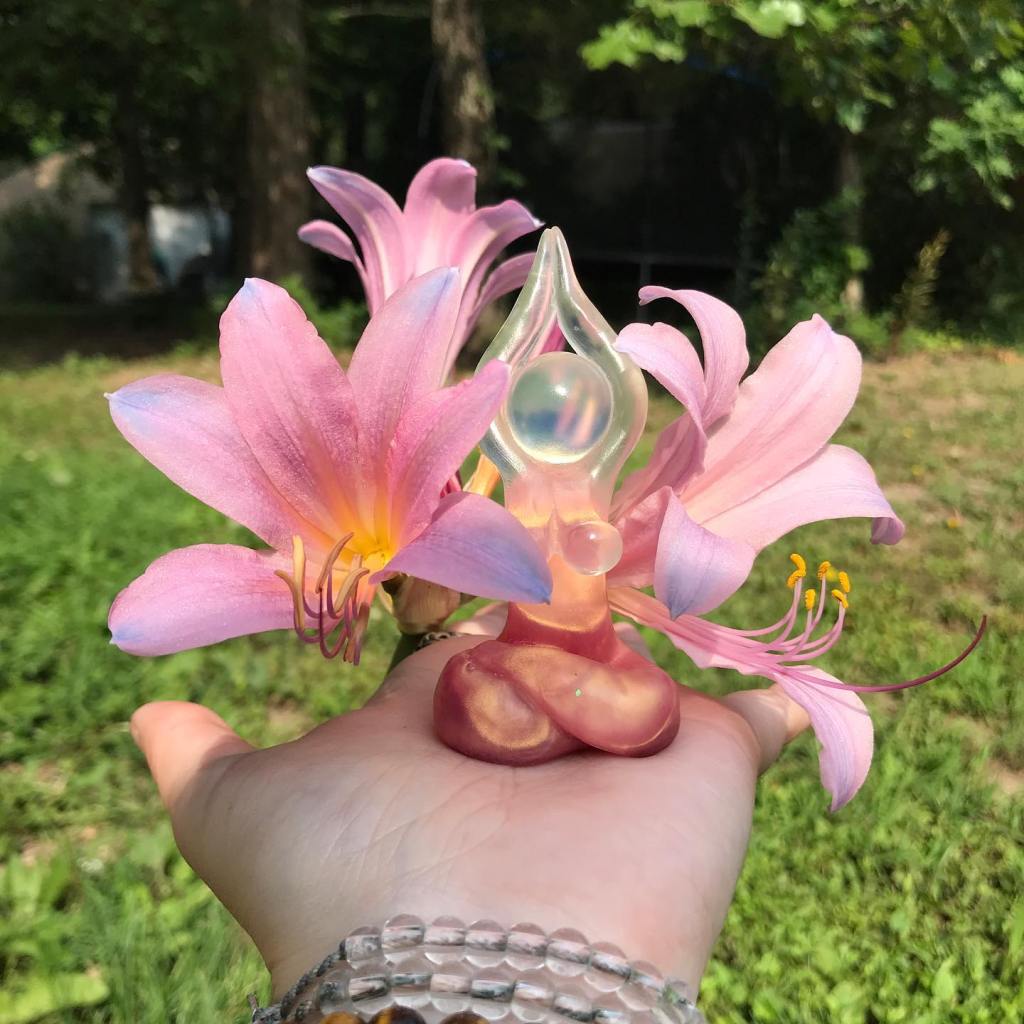
The earth is made
of days
beyond count
and roots beyond question.
The fire in your belly
is that which whirls worlds into being.
There is iron in your blood,
iron at the planet’s core,
iron in the stars,
iron in beak of hawk
and eye of crow,
and iron in the red rocks
beneath your feet.
This air you breathe is
river woven,
lightning laced,
tear salted,
iron eyed,
earth kissed,
raven winged.
Wait,
let this breath expand
your chest
and know:
here you are,
today,
in-dependence
with all things.
Molly Remer, MSW, D.Min, is a priestess, writer, and teacher facilitating ritual, making art, and weaving words together in central Missouri. Molly and her husband Mark co-create Story Goddesses at Brigid’s Grove. Molly is the author of nine books, including Walking with Persephone, Whole and Holy, Womanrunes, and the Goddess Devotional. She is the creator of the devotional experience #30DaysofGoddess and she loves savoring small magic and everyday enchantment.
Dedicated to Carol Christ, 1945-2021, who taught so many of us how to love the Goddess

She is called “Nude Woman” and currently lives
in her natural museum house in Vienna.
Nude woman. She is art, but she is not in an art museum.
And there are questions:
why was she originally painted red? Why are her breasts so large?
Why is her stomach so large?
Why does she fit in a human hand?
What was her purpose?
Was it to entice men, or to comfort women?
Historians disagree.
Is her hair woven? Or is it a hat?
Why does she have no eyes? No feet? Why is she there?
This is the 5th in a series of work I have been doing to translate passages of the bible into poetry that strips out the patriarchal overlays. You can read the previous posts.
In this installment I am grouping together some passages that deal with vibrational energy and its role in creation. We humans often express sacred vibration as song or chant. When we get into the vibrational flow they are truly uplifting. In the translations below, I have kept two of the words in Hebrew because of their wonderful vibrational essences:
Continue reading “Biblical Poetry, 5th Installment”
Old Woman cackled on the wing
a pterodactyl with claws
crimson black and white
a great wind
was howling
and she was too.
Passages she screeched.
Her wrath undid me.
The Way was Narrow.
Cushions of moss
calmed wet cavern walls,
steep stones threatened
uncertain footsteps,
echoing my descent.
At the bottom
of the well
Silence rang out
like a bell.
She’s been called a “national treasure” by Bruce Feiler and lauded by Erica Jong as “one of the women by whom our age will be known in times to come” … And yet Rosemary Daniell is not as well-known as she deserves to be–perhaps because she is a fiercely feminist Southern woman.
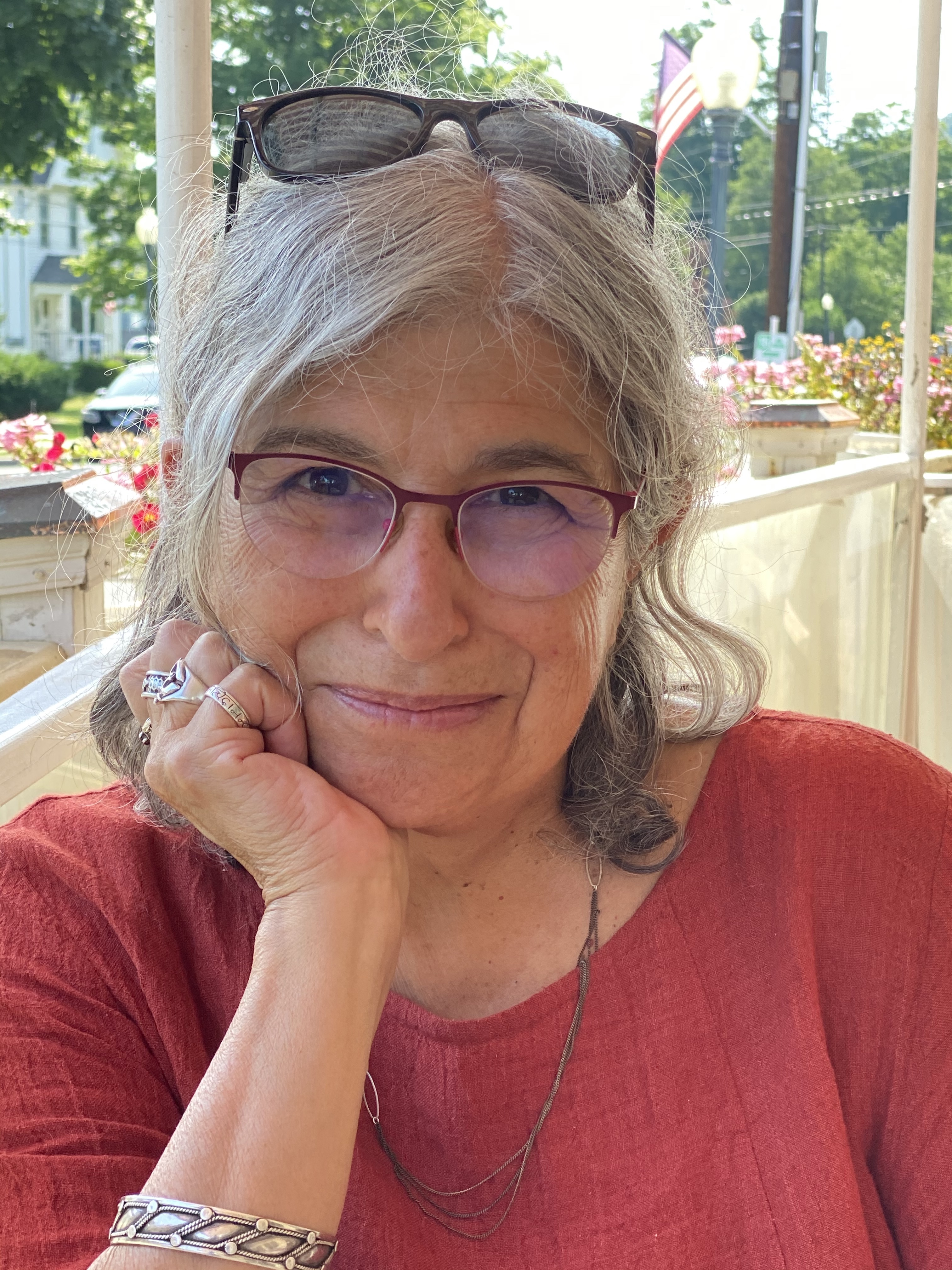
She’s been called a “national treasure” by Bruce Feiler and lauded by Erica Jong as “one of the women by whom our age will be known in times to come.” The author of three books of poetry, a novel, several memoirs, and several books of nonfiction, she is the founder of the revolutionary “Zona Rosa” writing workshops and retreats that have helped hundreds of participants—mostly women—become published authors. For many years she led writing workshops in women’s prisons in Georgia and Wyoming, and served as program director for Georgia’s Poetry in the Schools. Her work has been featured in numerous magazines and newspapers. And yet Rosemary Daniell is not as well-known as she deserves to be—perhaps because she is a fiercely feminist Southern woman who unabashedly celebrates her own sexuality while also bringing her formidable intellect, wit, charm, and compassion to bear on her approach to writing.
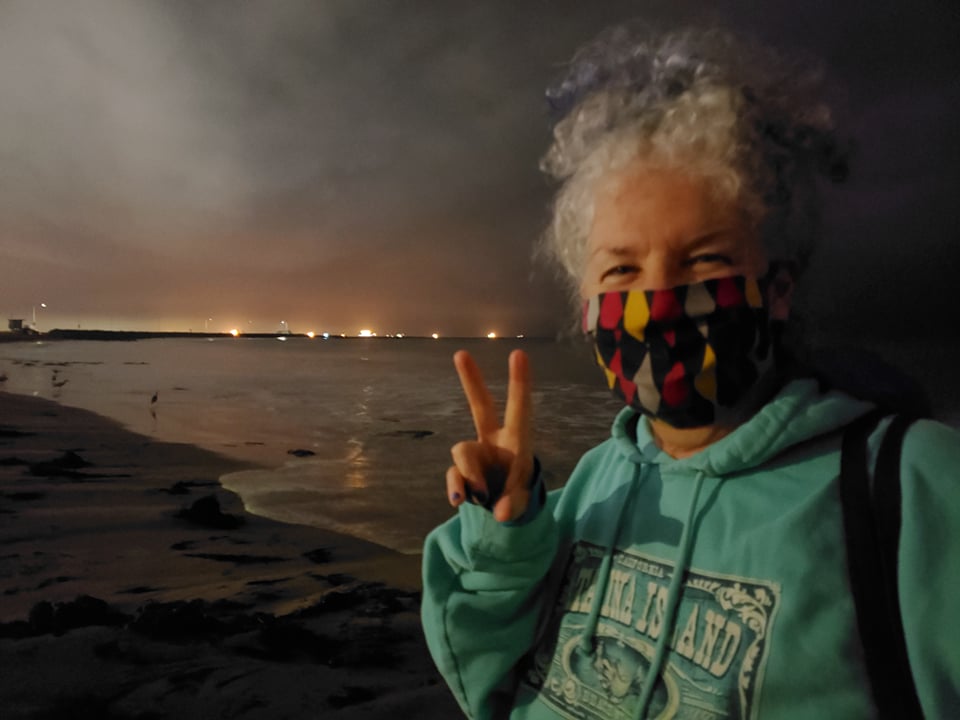
You can’t have the ocean without blue.
I walk at night, that’s the time of year
the grunion run, a silver school teaching us that it’s
work to populate –the small shimmer of a female screwing herself into
the sand. I wish her blue. She wooshes three thousand eggs
into the hole she’s made, her birthing room. The males circle her, and fertilize the eggs with a hug. The males leave and the female is quiet.
Then she flips and flops herself back and forth and forth and back,
side flopping to the ocean.
I wish her blue. I wish her free. I bless the eggs.
Continue reading “Blue Is My Favorite Color by Marie Cartier”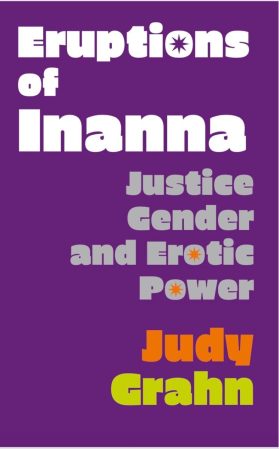
Any new book by Judy Grahn is cause for celebration. For decades, Grahn has been a lyrical and passionate poet, author, mythographer, and cultural theorist whose work features both goddess wisdom and contemporary culture centering on women and queer people. Nightboat Books has just published her newest book, Eruptions of Inanna: Justice, Gender, and Erotic Power, which offers ancient yet fresh world views with which to approach such issues as injustice, sexuality and gender, climate change, and more just when we need it most.
In Eruptions of Inanna, she brings what she calls her “poet’s eye” to eight stories featuring the Sumerian goddess Inanna as well as religious practices of those devoted to her. She explores how these have directly influenced our world and, in her words, can continue to “feed our needs and help us take better care of each other and our world.” According to Grahn, Inanna “is a combination of human, creature, erotic and other energetic forces, and civilization. She also inherited very old powers that grew out of women’s rituals” (55). Her essence engenders sovereignty and self-worth, especially in women and queer people. She is a goddess of love, espousing passion and the joy of eroticism as integral to both life and society. She practices an expansive justice that creates positive outcomes in response to horrific acts. She creates a civilization of the arts, beautiful and useful crafts, abundance, and a jubilant communal life. She demands respect for nature and ecological sustainability.
Continue reading “Eruptions of Inanna: Justice, Gender, and Erotic Power by Judy Grahn BOOK REVIEW by Carolyn Lee Boyd”1.
I went into the unknown world with glasses
that made everything so clear I could
move through this world into the next.
Before I got my glasses…I didn’t see the way I could step to the edge,
put out my hand, split the known world and
go through: into the unknown.
I became someone without history.
Those rooms with my father, those times, those days, then nights.
Those stories …
Incest really is not a word that describes anything.
It does not describe the way the body splinters and then the known world separates and
when the known world separates, when all you know is you splitting,
all you see is clouds.
So, I got glasses and I walked to the very edge of the flat world and stepped through.
Oh, I said, the world is round… is round is round. I started circling the round world
to find my hero, my Self.
I was alone, but my glasses were sparkling clean.
Continue reading “How I Learned to Make Maps by Marie Cartier” Feminism and Religion