“THE DIVINE MYSTERY”? by Carol P. Christ

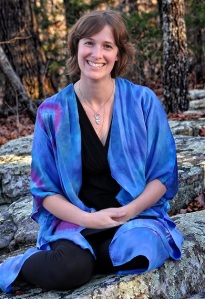
carol-christ“The mystery of God in feminist theological discourse” is the subtitle of Elizabeth Johnson’s widely read She Who Is. The notion that God is “a mystery” is rarely questioned in feminist theologies. But maybe it should be.

Although it is true that the finite cannot encompass the infinite, and that all knowledge is rooted in particular standpoints, I do not agree that the first and last thing to be said about the divine power is that it is “a mystery.” Indeed as I will argue here, speaking about God as “a mystery” obscures more than it “reveals.”

christina's loveThe notion that Goddess or God is “a mystery” is rooted in notions of “a God out there” that most spiritual feminists reject. Goddess or God “in” the world is, I suggest, not unknown, but known, not hidden, but revealed–in the beauty of the world and in ordinary acts of love and generosity.

The notion that God is “a mystery” is a well-worn trope in Roman Catholic theology. Protestants make similar claims when they speak of  the hiddenness of God Continue reading ““THE DIVINE MYSTERY”? by Carol P. Christ”

Fand – Goddess of the Sea – a Shapeshifter for Samhain by Judith Shaw

judith shaw photoFand is a Celtic Sea Goddess whom some scholars believe originated as a Manx sea deity (the original inhabitants of the Isle of Man).   With time She became the most loved of Ireland’s fairy queens, called “Queen of the Fairies.  Fand, meaning “Pearl of Beauty” or “Tear” was stunningly beautiful.  Though she was married to the Celtic Irish Sea God, Manannan Mac Lir, She, like other faery queens, fell in love with and then enchanted a mortal man, linking our world with Her Otherworld.  Being the Goddess/Faery Queen she was, Fand fell in love not with any common man but with Cuchulainn, the greatest Irish hero.

Continue reading “Fand – Goddess of the Sea – a Shapeshifter for Samhain by Judith Shaw”

Entering Winter, the Season of Darkness by Barbara Ardinger

Halloween used to be spelled “-e’en,” with the apostrophe replacing the V in “eve.” The N was probably added so the word ends in a consonant and we don’t have “hallow-wheee.” But people get lazy, and since the late 20th century, both the V and “eve” have disappeared. This holy day is the true beginning of winter. In pre-Christian Europe, it was celebrated by the wild Celts, who called October 31 Samhain (pronounced approximately SOW-un). Today it’s a major sabbat, or holy day, celebrated by most modern pagans. Although religious fundamentalists keep trying to convince us that Halloween is an evil pagan festival (emphasis on the evilness of pagans) and pressuring retailers not to sell little collectable witches, the name of this day is in fact Christian: it’s Hallowed (or Holy) Evening, or the Eve of Holy Days. In the olden days and still today in, for example, the Jewish calendar, a holy day begins when the moon rises on the evening before. October 31 precedes All Saints Day (November 1) and All Souls Day (November 2). Like Christmas Eve, it’s a holy (but seldom silent) night.

All Saints Day, the Catholic Encyclopedia informs us, was instituted in the fourth century when dioceses began to divide up and exchange the relics of martyr-saints. At first, only martyrs and St. John the Baptist were recognized, but in 609 Pope Boniface IV consecrated the Pantheon in Rome to the Blessed Virgin and all martyr-saints. The theological basis for All Souls Day is the doctrine that “souls that have not been perfectly cleansed from venial sin are debarred from the Beatific Vision.” With prayers, the living can help the dead pass through purgatory. To commemorate “the faithful departed,” the Catholic Encyclopedia further tells us, the priest recites the Office of the Dead and celebrates a Requiem Mass. The vigil for All Saints, or Hallows Eve, was also first celebrated in the fourth century. The Mexican version of this holiday is Día de los Muertos, which is also celebrated on November 1 and 2. That’s when we see the wonderful costumed skeleton figures and the sugar skulls. Like similar festivals in cultures around the globe, this is a celebration of family and ancestors.

Continue reading “Entering Winter, the Season of Darkness by Barbara Ardinger”

IS THE SPIRIT OF GREAT GENEROSITY IN CRETE A SURVIVAL OF ANCIENT MATRIARCHAL VALUES? by Carol P. Christ

carol-christAt a coffee shop in Agios Thomas, Crete last month a perfect stranger offered to pay for the coffees and sodas of the 16 women on the Goddess Pilgrimage to Crete. This spirit of great generosity is rarely experienced in the United States or other parts of Europe, but it is still common in rural Crete and some parts of Greece.

 In fact our group was in Agios Thomas because our bus driver Babis, also in a spirit of great generosity, insisted on stopping to show us his village when we were passing nearby. He guided us to see Roman rock cut tombs and arranged for the early Byzantine church to be opened. At the end of the our pilgrimage, Babis stopped the bus at a wooded glen beside a small church where he offered us his own homemake raki, wine, and olives, accompanied by local sheep cheese he had purchased while we were climbing a mountain. After every meal that we ate in local tavernas, we were offered bottles of cold raki, fruit, and sweets.

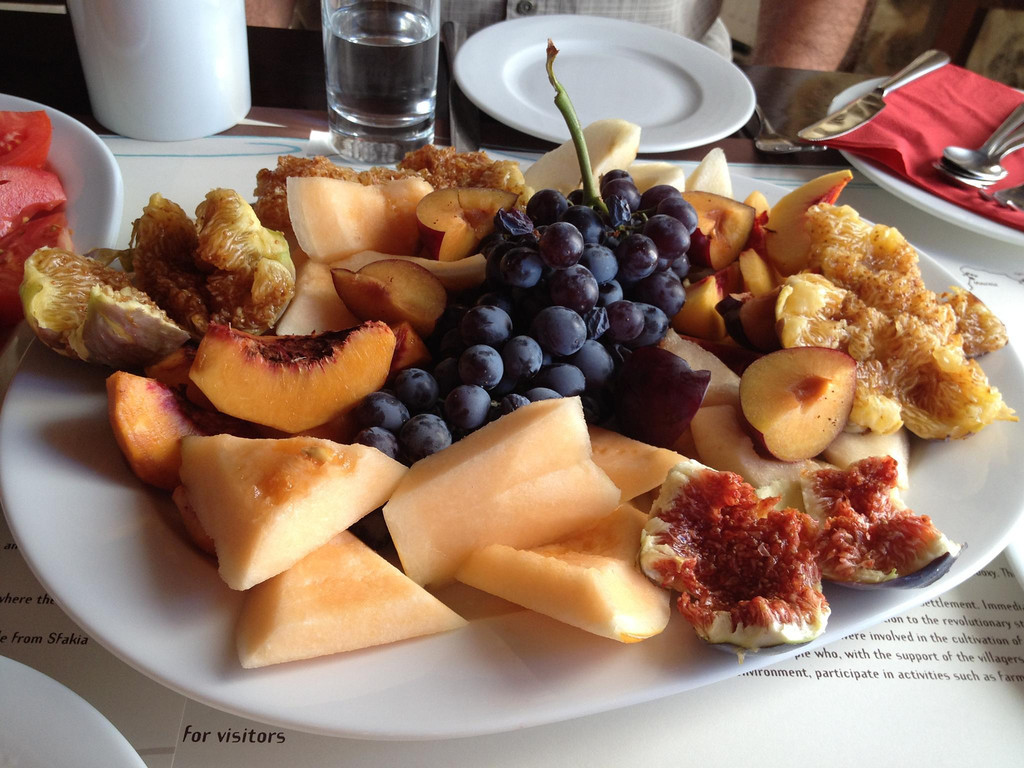
crete fruitsThis spirit of great generosity has long been commented on by travelers in Greece, who often speak of it as unexpected (for them) hospitality to the stranger or traveler. That it is, of course. Through the work of Heidi Goettner-Abendroth, I now understand that the famous Greek hospitality to the stranger has deep roots in matriarchal cultures. According to Goettner-Abendroth, equality of wealth is assured through the widely-practiced custom of gift-giving in matriarchal cultures. Continue reading “IS THE SPIRIT OF GREAT GENEROSITY IN CRETE A SURVIVAL OF ANCIENT MATRIARCHAL VALUES? by Carol P. Christ”

Birth Song, Life Song, Death Song by Molly

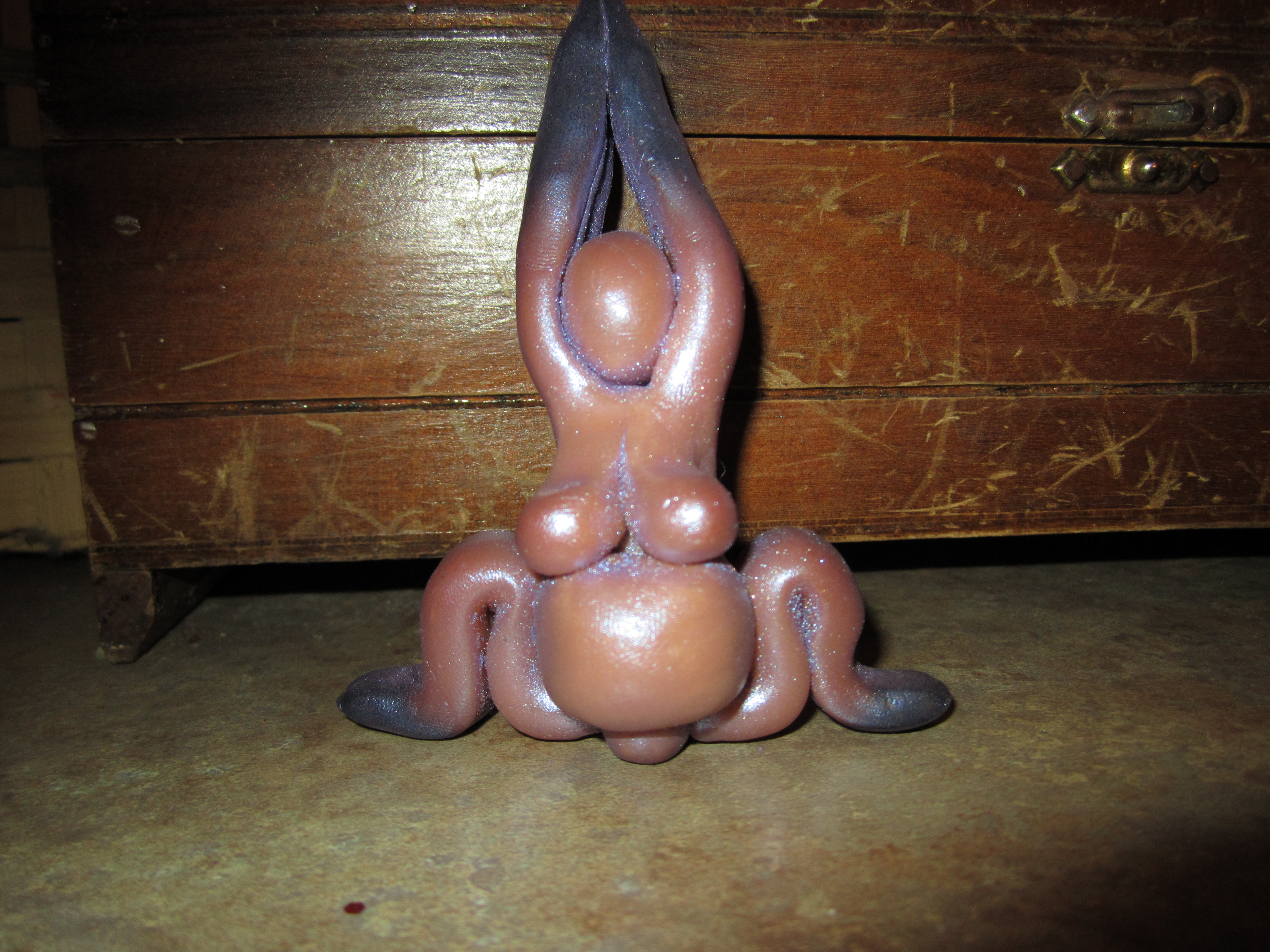
editMollyNov 083“A woman can spin a primal umbilical rope within her womb through which she passes life-energy to the future.” –Melissa Raphael

“In some indigenous cultures of the Americas there is the practice of finding one’s death song while alive. This song becomes the ally of the person throughout their lives, so that they become very acquainted with what the song means in their lifetime. Death then, is a companion of life, and is never forgotten. In the hour of death, these people would, if they were able to, sing their death song–exiting this world with song on their lips and no doubt feeling the power their ally-song had gathered by being with them in their life. I can see that a death song would provide a connection between the person and the cycles of life, guiding the dying person into the next world and helping to allay fear…” –Leslene della-Madre, Midwifing Death

I was introduced to blessingways, or mother blessing ceremonies, as a girl when my mother’s group of friends hosted them for each other during their pregnancies. I loved attending the ceremonies for my mom during her pregnancies with my younger brother and sister and witnessing the web of love, support, and commitment woven around her. They touched me deeply with their sacred, magical, and mysterious flavor. When I was twelve, the same group of friends had a coming of age blessingway ritual for the daughters of the group, ranging in age from 10-16. It was a mystical, beautiful experience. We wore wreaths of flowers in our hair and were blessed with wisdom and tokens from the wise women of our tribe. At 34 years old now, I still have my folder of prayers, quotes, and messages from that day. For years it smelled faintly of rose petals.

Continue reading “Birth Song, Life Song, Death Song by Molly”

Balance and the Autumn Equinox by Deanne Quarrie

Deanne QuarrieWe are in the season of the Autumn Equinox.  The Autumn Equinox occurs on a specific day each year, as does the Spring Equinox. While it may be a precise moment in time, it is also a season. Nothing happens quickly in time and space. Without getting scientific as an explanation of what happens at both, here is a quick one – the name ‘equinox’ comes from the Latin aequus,  meaning equal and nox, meaning night. Earth’s two hemispheres are receiving the sun’s rays equally at the equinoxes. This causes night and day to be approximately equal in length. Continue reading “Balance and the Autumn Equinox by Deanne Quarrie”

Flidais, Celtic Earth Goddess, Lady of the Forest and Much More by Judith Shaw

gugg jude72This year the fall equinox occurs on September 22.  In the Pagan calendar it is a time for giving thanks called Mabon.  Mabon celebrates the end of the harvest season and is a time to honor our wild nature and nature spirits. It is a day of perfect balance when the hours of daylight and darkness are equal. Mabon ushers in our journey into the dark night of winter.

Flidais (pronounced flee-ish) is a complex Celtic Goddess with many differing stories and aspects.  She represents both our domestic and our wild natures and is an appropriate Goddess to call on on this day of balance.  She first appears in the ancient mythological cycles as an Earth Mother. She was the  mother of the Irish cultivator heroes, Arden, and Bé Téite and the “she-farmers” Bé Chuille and  Dinand.   From Her they gained the power to cultivate and work the earth for the community.

Flidais, Celtic Goddess painting by Judith Shaw Continue reading “Flidais, Celtic Earth Goddess, Lady of the Forest and Much More by Judith Shaw”

An Equinoctial Ritual for Balance by Barbara Ardinger

Day and night are in balance twice a year, at the spring and fall equinoxes. (The word “equinox,” of course, comes from Latin words meaning “equal” and “night.) I think most of us will agree that balance is a good thing—after all, many of us are writing these blogs at Feminism and Religion to bring some balance to the ideas and institutions of religion. Many spiritual teachers in many faiths tell us that it’s good to bring ourselves into balance—our physical, emotional, mental, and spiritual bodies are healthier and we’re happier when they’re in balance. This is one reason we try to live healthy lives. Note that the fall equinox is also the day the sun moves into the astrological sign Libra, the symbol of which is the scale with its balance pans.

Working on achieving personal balance is a way we can act locally as we think globally. If we can get ourselves into balance, then maybe our personal balance will ripple out into our family, our extended family, our community, our church, our workplace…heck, maybe eventually into local, state, and federal governments. In this age of civil wars, terrorists, drones, and what seems like universal spying, balance is something devoutly to be wished for. And worked for. To celebrate the equinox (September 22), therefore, let’s do a modest ritual of balance. Continue reading “An Equinoctial Ritual for Balance by Barbara Ardinger”

Birth Warrior by Molly

editMollyNov 083“In this culture…a woman can be made to feel foolish for emphasizing the centrality of giving birth to her identity or her personal religiousness, her ‘womanspirit…’” –Stephanie Demetrakopoulos (Listening to Our Bodies)

After the birth of my daughter in 2011, I received a small package from a Birthing from Within mentor friend. In it was a sweet little t-shirt imprinted with the words, My Mama is a Birth Warrior. The words on the shirt surrounded a labyrinth image, which I love as a metaphor for birth and life

Written on the enclosed card was the following:

Imagine a tribe in which a woman is prepared for childbirth in the same way warriors are prepared for battle. Imagine a Ceremony for this woman before she gives birth, a grand send-off with holy songs and fire. Imagine a feast, prepared just for her.

Her tribe tells her, they say to her “Go to your journey, you have prepared. We have prepared you. If you fall from your horse once or a hundred times, it does not matter. All that matters is that you come back to us, that you come home.

Throughout your journey–your labyrinth of Great Love, Great Determination, Great Faith and Great Doubt—you rode on!

The Great Tribe of Mothers welcomes you back from your birth journey with honor.

Modeling her little t-shirt.

Imagine, indeed. After I read this note I reflected that I did feel I embarked on a mighty journey during my last pregnancy, I did pass through those Gates, and I did ride on. I AM a birth warrior!  Continue reading “Birth Warrior by Molly”

The Found Goddesses of Good Eats by Barbara Ardinger

August 1—Lughnasadh (pronounced LOON-us-uh) or Lammas—is the first of the three traditional harvest festivals of the traditional Celtic calendar that most pagans follow today. And what naturally follows harvest? Feasting, fairs, and festivals. To help us celebrate the season, here are two Found Goddesses of good eating. The term “found goddesses” was created in 1987 by Morgan Grey and Julia Penelope, authors of a hilarious book titled Found Goddesses. After reading this book and having never met a pun I didn’t instantly love and being of a naturally satirical state of mind, I started Finding—i.e., inventing—my own goddesses shortly before the turn of the century. After I found a hundred of them, they were published in 2003 in my book, Finding New Goddesses.

When Xochitl Alvizo wrote here about the philosophy of vegetarianism and veganism in late June, I was inspired to contribute to the conversation. Although I understand the philosophy of not eating meat, I’m still a meat eater. (Though I don’t go quite as far as the so-called paleo diet.) Yes, it’s an issue of consciousness. I admit it. I just refuse to think about cows and sheep and chickens when I’m eating. But I refuse to eat lobster (because they’re cooked alive) or veal (because of how the calves are treated). I guess I’m not very consistent, and I suspect I’ve just settled for the hungry coward’s way out of the diet dilemma. Continue reading “The Found Goddesses of Good Eats by Barbara Ardinger”