From the Archives: Sleeping Beauty: An ancient tale for these challenging times by Diane Perazzo

This was originally posted on April 24, 2021

Fairy tales are intwined in our imagination and our spirituality. As Jane Yolan writes, one of the subtlest and yet most important functions of myth and fantasy is to “provide a framework or model for an individual’s belief system.” (1)

In the Reclaiming spiritual tradition, we often use fairy tales in healing and self development work. These stories act as warp and weft as we weave and spin complex ritual arcs and other events that take place at extended Witch Camp sessions. In Twelve Wild Swans, Starhawk points out that fairy stories are “more than just encouraging and inspiring. They are also templates for soul healing from Europe’s ancestral wise women and healers. When the ancient Earth-based cultures of Europe were destroyed, these stories remained.” (2)

Continue reading “From the Archives: Sleeping Beauty: An ancient tale for these challenging times by Diane Perazzo”

The Motomami Theology: “Segundo chingarte, lo primero Dios.”* Part II

*“God comes first. Fu*king you, a close second.”

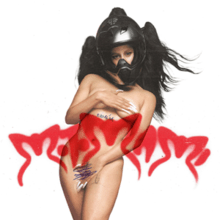
In Part 1 of this post, I described my first encounters with Rosalía’s music and visual arts, which are controversial for many, but I find them wonderful. I mentioned how she integrated God, mainly Catholic references and images, into a story of love and suffering in El Mal Querer. But I finished emphasizing my surprise when I listened to the album Motomami, since she managed to combine reggaeton (sexual-indecent music) and her views of God.

So, here is my attempt to describe Rosalía’s theology in Motomami. (Before I start, let me say: yes, I heard every song multiple times collecting references of God or the Christian tradition, so I hope you enjoy it.) Rosalía understands God as someone who controls our destinies amid grief and joy. In Como un G she says “It’s sad when you want something, but God has different plans for you” (“Qué pena cuando quieres algo pero Dios tiene otros planes pa’ ti”.) In Diablo, she says, “What God gives, God takes back” (Si Dios te lo da, te lo quitará), referring to her fans who first loved her but afterward became haters. God also protects us from an evil former partner when she says in Despecha‘ “May God forbid I go back to you” (“Que Dios me libre de Volver a tu la’o). God also is our help and supports our choices. Rosalía brings this concept talking about her identity as a woman, her freedom and autonomy in Saoko: “I know who I am, and I don’t forget where I’m going. I’m driving while God guides me. I am mine and I transform myself” (“Sé quién soy, y a dónde voy nunca se me olvida. Yo manejo, Dios me guía.)

Continue reading “The Motomami Theology: “Segundo chingarte, lo primero Dios.”* Part II”

The Motomami Theology: “Segundo chingarte, lo primero Dios.”* Part I

*“God comes first. Fuc*king you, a close second.”

I went to Rosalía’s promotional concert for the Motomami album in Boston a month ago. I knew some songs from her 2018 album El Mal Querer (Bad Love), a musical masterpiece. That album made Rosalía a visible star in the constellation of musicians and composers in Hispano-American mainstream music. The album has a particular story that Wikipedia explains very well:

The album was written by Rosalía and co-produced with El Guincho on an initial low budget as an independent artist. Presented as experimental and conceptual, revolving around a toxic relationship, the album was inspired by the anonymous 13th-century Occitan novel Flamenca. Therefore, every song on the album is conceived as a chapter of the book. It served as the singer’s baccalaureate project, graduating from Catalonia College of Music with honors. [Read more here]

In El Mal Querer, Rosalía mixed electronics, contemporary dances and rhythms, and traditional flamenco sounds and movements in a beautiful musical and visual collage. Some musically conservative audiences characterized the album as the “profanation” of traditional flamenco music, but there’s no doubt that Rosalía brought the genre back to life and made it mainstream again.

Continue reading “The Motomami Theology: “Segundo chingarte, lo primero Dios.”* Part I”

“Our Lady of the Shards”: Icons for the Buried and Rising by Lauren Raine MFA

Our Lady of the Midwives (2019)

When I became a feminist, I realized that somebody had to write all about this women’s art that was out there being totally ignored, and it was going to be me. And of course the ideas and the discoveries about what women’s art was……. I look at it for the information it gives me about women’s imagery, women’s psyches, women’s lives, and women’s experience.” 

 Lucy Lippard in Talking about Art Since 1976

I have been making art, masks, and theatre about “surfacing” for a very long time. As a child I was always digging at the roots of trees, fascinated by their interwoven strength, wondering how far down they went. That fascination never really left me. Sometimes it occurs to me that I and most of my colleagues are “spiritual archeologists”, sorting through artifacts and the mythic overlay of the past to re-discover and re-vitalize the present. I joined many of those colleagues for over 20 years:  un-earthing, re-inventing, and animating stories of the Great Goddess throughout world culture with the Masks of the Goddess Project (1999-2019), among other collaborations.  I am not religious, so much as I am a mythologist, following archetypal trails of myth back and back, seeking the sacred source they often reveal.

Continue reading ““Our Lady of the Shards”: Icons for the Buried and Rising by Lauren Raine MFA”

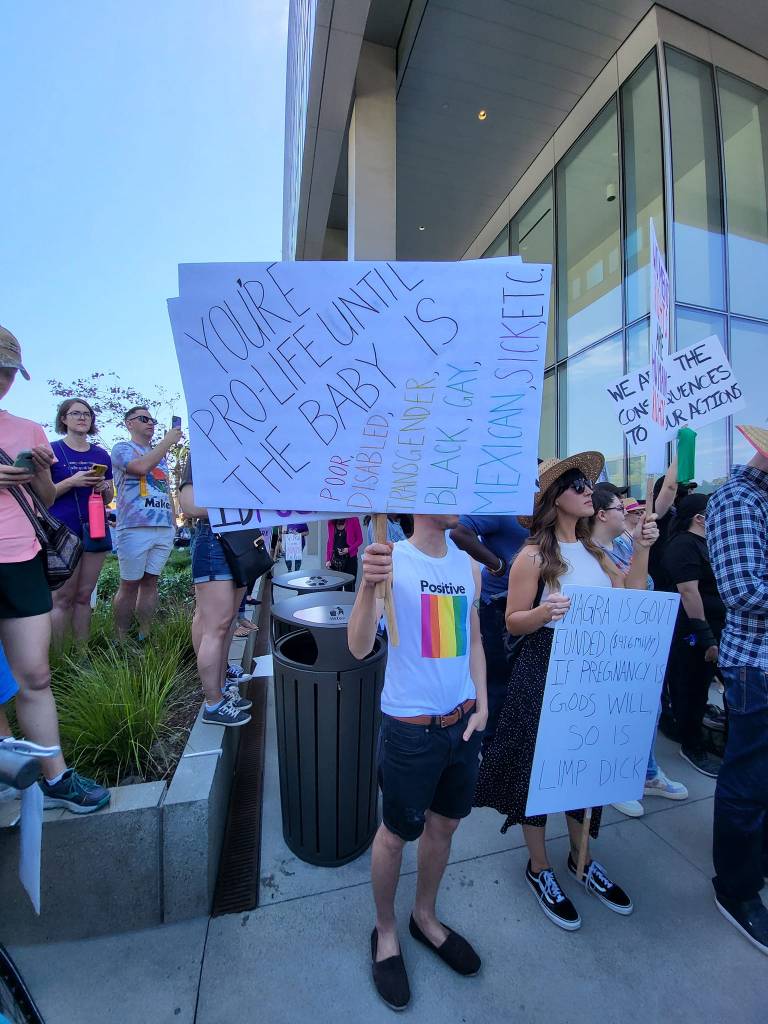
photo essay, part 2: bans off our bodies rally by Marie Cartier

photos from bans off our bodies rally, long beach ca may 14, 2022

all photos by: marie cartier

BIO: Marie Cartier is a teacher, poet, writer, healer, artist, and scholar. She holds a BA in Communications from the University of New Hampshire; an MA in English/Poetry from Colorado State University; an MFA in Theatre Arts (Playwriting) from UCLA; an MFA in Film and TV (Screenwriting) from UCLA; an MFA in Visual Art (Painting/Sculpture) from Claremont Graduate University; and a Ph.D. in Religion with an emphasis on Women and Religion from Claremont Graduate University.

Moderator’s note: This is the 2nd of the two part series. Part 1 was posted yesterday.

Continue reading “photo essay, part 2: bans off our bodies rally by Marie Cartier”

Sappho in a Locrian Mode by Carolyn Lee Boyd

Sappho

The world Sappho envisions in her poetry is one with many lessons for us in the 21st century about how to live. While ancient Greek society, especially in later eras, was deeply misogynistic and women had few rights, Sappho’s words evoke a perspective in which goddesses, especially Aphrodite, are revered and the connection of worshippers to goddesses is intimate, art created by women is celebrated, women’s relationships are central to one’s well being, and love and sensuality are enjoyed.

But words only tell part of the story. Sappho’s poetry was meant to be sung, and while we can’t hear the songs she wrote, I think it is interesting to note that Anne Carson, in her 2003 translation “If Not, Winter” says that Sappho is credited with inventing the Locrian musical mode.  A mode is a scale in which the progression of notes follows a set pattern of whole and half notes. We are all familiar with the major mode that makes music sound happy (Happy Birthday song) and the natural minor mode that we use for sad music (House of the Rising Sun). But there are many other modes, and the Locrian mode is one of them. (just a note: the Locrian mode is the same as the Greek Mixolydian mode and completely different from the modern Mixolydian mode, just to be confusing.)

Continue reading “Sappho in a Locrian Mode by Carolyn Lee Boyd”

Mother-Love: A Review of Rosemary Daniell’s THE MURDEROUS SKY: POEMS OF MADNESS AND MERCY by Joyce Zonana

She’s been called a “national treasure” by Bruce Feiler and lauded by Erica Jong as “one of the women by whom our age will be known in times to come” … And yet Rosemary Daniell is not as well-known as she deserves to be–perhaps because she is a fiercely feminist Southern woman.

joyce-zonana

She’s been called a “national treasure” by Bruce Feiler and lauded by Erica Jong as “one of the women by whom our age will be known in times to come.” The author of three books of poetry, a novel, several memoirs, and several books of nonfiction, she is the founder of the revolutionary “Zona Rosa” writing workshops and retreats that have helped hundreds of participants—mostly women—become published authors.  For many years she led writing workshops in women’s prisons in Georgia and Wyoming, and served as program director for Georgia’s Poetry in the Schools. Her work has been featured in numerous magazines and newspapers. And yet Rosemary Daniell is not as well-known as she deserves to be—perhaps because she is a fiercely feminist Southern woman who unabashedly celebrates her own sexuality while also bringing her formidable intellect, wit, charm, and compassion to bear on her approach to writing.

Continue reading “Mother-Love: A Review of Rosemary Daniell’s THE MURDEROUS SKY: POEMS OF MADNESS AND MERCY by Joyce Zonana”

Sleeping Beauty: An ancient tale for these challenging times by Diane Perazzo

Fairy tales are intwined in our imagination and our spirituality. As Jane Yolan writes, one of the subtlest and yet most important functions of myth and fantasy is to “provide a framework or model for an individual’s belief system.” (1)

In the Reclaiming spiritual tradition, we often use fairy tales in healing and self development work. These stories act as warp and weft as we weave and spin complex ritual arcs and other events that take place at extended Witch Camp sessions. In Twelve Wild Swans, Starhawk points out that fairy stories are “more than just encouraging and inspiring. They are also templates for soul healing from Europe’s ancestral wise women and healers. When the ancient Earth-based cultures of Europe were destroyed, these stories remained.” (2)

Continue reading “Sleeping Beauty: An ancient tale for these challenging times by Diane Perazzo”

The Gathering: A Womanist Church BOOK REVIEW by Mary Ann Beavis

Book title: The Gathering: A Womanist Church—Origins, Stories, Sermons, and Litanies

Authors: Irie Lynne Session, Kamilah Hall Sharp and Jann Aldredge-Clanton

Publisher: Wipf & Stock, 2020

Womanist theology is a form of theological reflection that centers on Black women’s experience, sensitive to issues of race, class and gender. It originated in the United States in the mid-1980s and has grown in scope, sophistication and influence, but until recently there has been no expressly womanist church. This book charts the founding and development of a womanist church from the perspectives not only of its pastors (Irie Lynne Session and Kamilah Hall Sharp) but also of its ministry partners (Jann Aldredge-Clanton and others). Continue reading “The Gathering: A Womanist Church BOOK REVIEW by Mary Ann Beavis”

The Mask and the Mirror – Part 3 By Sara Wright

Artist Debra Fritts

One concrete way of accomplishing this change is to submerge ourselves in the rest of Nature and stay open to the appearance of animals, birds, plants, etc., and by paying close attention to images and words, nudges, synchronicities, dreams, and fantasies. Especially while caregiving, perhaps the most exhausting job of all. S/he provides us with a means to deal with the crisis of Covid 19 by staying in the present moment as much as we possibly can. Debra’s flowers/ four-leaf clovers, owls, stars, all speak to the importance of the presence of nature in different ways.

It is hard to miss the change of expression on Everywoman’s face. Held by the bear, her eyes are focused and there is a sense of peace that permeates the woman’s countenance. Clearly, Everywoman is able to be present to what is. This woman has once again found home.

To the right and below the moon there is a small leaf-like image that seems to be drifting. When I asked Debra what the image was she responded that the leaf was a simplified four-leaf clover. It symbolized the role that luck plays in the spread of an impersonal virus, but memories of being with her grandfather on Sunday afternoons searching for four-leaf clovers, and the way the two were connected with nature were also part of the reason she included this image. Once again we see the archetypal and the personal intersecting in Debra’s work. On an archetypal level, the impersonal presence of luck/trickster/fool determines viral outcomes, on a personal level this symbol attaches Debra to nature and her love for family.

Continue reading “The Mask and the Mirror – Part 3 By Sara Wright”