Miriam Is For the Girls by Zoe Carlin

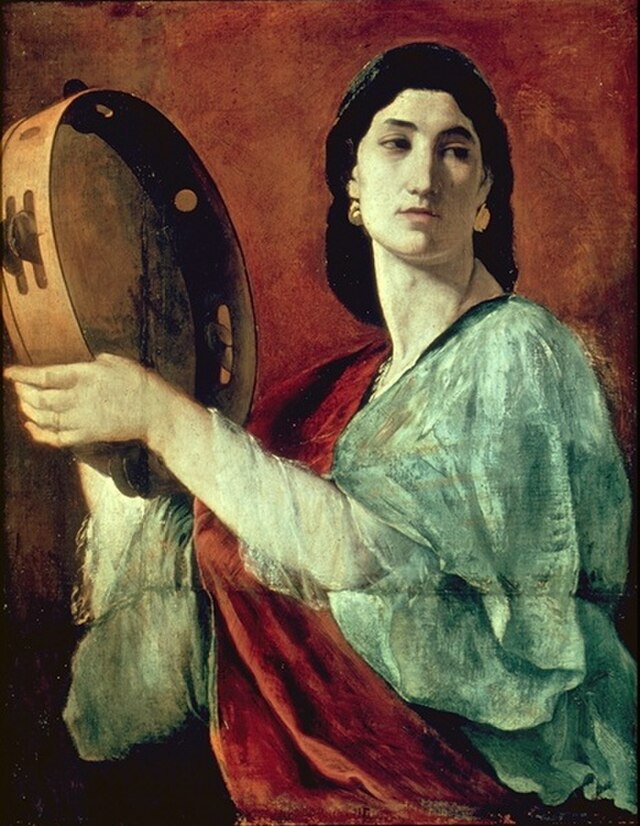
The Book of Exodus is a well-known scripture, and it is one that many Jews, Christians, and even people who are non-religious are very familiar with. Growing up, our family continued to tell this story year after year during Passover. It was one of many classic Torah readings shown to us in our temple. So, one of the key figures in this story is Miriam, Moses’ older sister. Most remember that she helped her mother deliver Moses in secret at the Nile River when he was an infant due to the Pharaoh setting an order to kill every Hebrew son because of concerns of the population growing too much (Exodus 11:5-6). She also assisted in leading the Israelites across the Red Sea when Moses opened it up for the Hebrews to cross (Exodus 14:21-22). An article titled “Miriam: Midrash and Aggadah” shares a deeper analysis of the roles that Miriam upheld as a sister, a daughter, and a woman during this time. It has also informed my understanding of Miriam’s story.

Continue reading “Miriam Is For the Girls by Zoe Carlin”

From the Archives: Painting Herstory: Our Lady of Silver Lake by Angela Yarber

This was originally posted August 8, 2015

It has become my new routine during the first phase of my queer little family’s year-long journey. After completing my chores, I run along the trails surrounding Silver Lake and once I’m thoroughly drenched in sweat, I grab a book and push our enormous 15-foot canoe into the frigid waters of the little lake we’re calling home for three months. With a smile that has yet to wipe off my face, I paddle fiercely. I’m typically the only person on the lake.

It’s a steep mile hike from the trailhead, and we’re the only ones “living” here for the summer, so my giant green canoe ripples the silvery waters in solitude. Once I find the right spot, I stuff my life vest behind my head and cozy down into the belly of the canoe, book in hand, goofy grin still spread across my flushed face. In the warmth of the sun, I read. In the belly of the canoe, I drift into the history of the lake, the unwritten annals lapping alongside my rocking boat, the portions on record filling the book in my sun-warmed hands.

Continue reading “From the Archives: Painting Herstory: Our Lady of Silver Lake by Angela Yarber”

The Wisdom of the Beguines: The Forgotten Story of a Medieval Women’s Movement by Laura Swan, part 1 by Theresa C. Dintino 

Moderator’s Note: This piece is in co-operation with The Nasty Women Writers Project, a site dedicated to highlighting and amplifying the voices and visions of powerful women. The site was founded by sisters Theresa and Maria Dintino. To quote Theresa, “by doing this work we are expanding our own writer’s web for nourishment and support.” This was originally posted on their site on July 5, 2022. You can see more of their posts here. 

Around 1200 AD in Europe, communities of women often called beguines began to form. These women were not nuns, they were devout and devoted to the tenets of Christianity but did not belong to any church. They were independent communities of women who often created their own industry, trade or other means to produce income. They were self-sufficient and generally concerned with helping the poor, especially women. They lived in convents. This was the origin of that word.

“These women were essentially self-defined, in opposition to the many attempts to control and define them. They lived by themselves or together in so-called beguinages, which could be single houses for as few as a handful of beguines or, as in Brugge, walled-in rows of houses enclosing a central court with a chapel where over a thousand beguines might live—a village of women within a medieval town or city”(2).

Continue reading “The Wisdom of the Beguines: The Forgotten Story of a Medieval Women’s Movement by Laura Swan, part 1 by Theresa C. Dintino “

How the Nineteenth-Century Spiritualist Movement Gave Voice to American Women -Part One by Theresa Dintino

Moderator’s Note: This post is presented as part of FAR’s co-operation with The Nasty Women Writers Project, a site dedicated to highlighting and amplifying the voices and visions of powerful women. The site was founded by sisters Theresa and Maria Dintino.

Throughout history women have found power and position in spiritual communities. They have acted as leaders, priestesses, oracles, mediums, disciples, saints, preachers and more. And yet these roles and positions of power are often overlooked in the story of women, and the general story of humans.

Still today many women function as leaders in a variety of spiritual disciplines, yet they do not receive the attention, respect and clout that men in similar positions do. More often women who hold roles of power in spiritual communities are dismissed or discredited.

If their spiritual community is not considered a formally accepted religion where their position was bestowed to them by a man ranking above them, women spiritual leaders are often ignored. This marginalization goes unquestioned.

Continue reading “How the Nineteenth-Century Spiritualist Movement Gave Voice to American Women -Part One by Theresa Dintino”

What an Outdoor Movie Taught me about Biblical Women By Alicia Jo Rabins

Once I went to a free outdoor movie in Miami Beach. The film was projected on the side of the giant concert hall. There was a grassy park with palm trees stretching out from the wall; families brought picnic dinners and cans of beer and stretched out to watch the movie once the sky darkened.

The movie was Star Wars, but as Princess Leah appeared, I was thinking about a different mythic canon. For over twenty years I’ve been studying and teaching stories of Biblical women from a feminist Jewish perspective, and after all this time, I was surprised to find that the way I feel while interacting with these stories was oddly, powerfully similar to the feeling of watching Star Wars projected on the side of a building on this Miami night.

Continue reading “What an Outdoor Movie Taught me about Biblical Women By Alicia Jo Rabins”

RACHEL KADISH:  TRANSCENDENCE AND TEXT, part 1 by Theresa C. Dintino

Moderator’s Note: This post is presented as part of FAR’s co-operation with The Nasty Women Writers Project, a site dedicated to highlighting and amplifying the voices and visions of powerful women. The site was founded by sisters Theresa and Maria Dintino. This was posted on their site on November 7, 2023

I love recognizing Toni Morrison’s influence on a writer as I am reading a book. Reading Rachel Kadish’s novel, The Weight of Ink, immediately sunk into Jewish reality, life, and experience without any explanation or apology, I sniffed a familiar point of view, a ghost of novels prior, detected the faint fingerprints of a giant. I liked it and when I recognized it for what it was, I thought to myself, Good for her.

Kadish had taken Toni Morrison’s advice to black writers that says you don’t have to explain yourself to white readers and applied it to not explaining herself to non-Jewish readers.

Why not?

Continue reading “RACHEL KADISH:  TRANSCENDENCE AND TEXT, part 1 by Theresa C. Dintino”

Ramadan Mubarak! (Have a Blessed Ramadan)—After Covid by Jamilah Ali

It is Ramadan again for the Muslim ummah (community). May I refer you to my previous FAR article in 2020,  to reference Ramadan, because this is a bit of a sequel. I am only one example of how the positive and negative pressures of the times are impacting our psyches. I consider, how can I fast voluntarily while Palestinians are literally starving? This is a paradox I’m sure shared by many this year in the world-wide diaspora of Islam. I send prayers in addition to donations for food, of course.

For the faithful, Ramadan is a month-long celebration of the Holy Quran. Our Quran as revealed is from the Creator. We believe in the Bible and Torah as well, but they are much older than the Quran, and we acknowledge are from God but we believe corrupted by people.  This is why we call Christians and Jews “the People of the Book”. For us, the Quran is a special divine universal message which beckons every Muslims heart when recited. Instead of Christ for Christians, the Quran is our manifestation of Divinity. Muhammad and Jesus born 600 years apart, are both Messengers of Allah, but not divine.

Continue reading “Ramadan Mubarak! (Have a Blessed Ramadan)—After Covid by Jamilah Ali”

Can Feminist Christians Hasten the Advent of Reproductive Liberation? by Elizabeth M. Freese, PhD

Wikimedia Commons, Servite Church in Hungary

The collision of the 2023 Christian liturgical season of Advent with American reproductive politics has been jarring. Feminist religious critique and transformative activism are imperative.

With the Texas Supreme Court decision on a dire abortion case, alongside increasing criminalization of women having miscarriages, we are witnessing the principle of patriarchal dominance of female reproductive capacity and the denigration of women’s full, equal personhood pushed to the extreme. In part, this barbarity is perpetuated by Christianity. Even though this tradition often challenges social systems of injustice, and it does not actually support their hollow theology of “life at conception,” misogynist oppressors have plenty of Christian religiosity to stand on.

Continue reading “Can Feminist Christians Hasten the Advent of Reproductive Liberation? by Elizabeth M. Freese, PhD”

What “Can” Women Do? – An Excerpt from Nice Churchy Patriarchy by Liz Cooledge Jenkins

In an essay called Sister, You Can Be Anything God Desires You to Be,[1] Kara Triboulet recalls a discussion in her theology class at her Christian college. When the professor opened up the floor and invited students to express their views on women in leadership, these are some of the things her classmates said:

“I believe women can be in leadership, just not as pastors.”

“Allowing women to teach other women and children isn’t limiting. At least they have a place to serve.”

“Women can be directors, but not pastors.”

“The Bible is very clear . . . women can’t teach or lead men because men were created first. It’s just the way God ordained it, and we all just need to accept that.”

Continue reading “What “Can” Women Do? – An Excerpt from Nice Churchy Patriarchy by Liz Cooledge Jenkins”

Goddess Lost: How the Downfall of Female Deities Degraded Women’s Status in World Cultures by Rachel S. McCoppin; book review by Margot Van Sluytman

She Who Knows

What then is my repentance?
If not, by rote this repetition?
“Godde is.”
“Godde is.”
“Godde is.”
“Love.”
And my face tastes
The beating heart
Of the sun’s call
For reclamation of
SHE Who Is.
SHE Who Is: knows me.
She, who also, is.
©Margot Van Sluytman

From the moment I saw the title, Goddess Lost: How the Downfall of Female Deities Degraded Women’s Status in World Cultures, by Rachel S. McCoppin, I knew I would have to read it. When it arrived in my mailbox and I saw the cover, I was imbued with inspiration. Then I read two sentences in the Preface, which articulate what for me, and for many, is one of the most vital, powerful, and, as yet, under-addressed, facts.

Continue reading “Goddess Lost: How the Downfall of Female Deities Degraded Women’s Status in World Cultures by Rachel S. McCoppin; book review by Margot Van Sluytman”