Mother Blues: Interfaith Somatic Reflections on Support Systems, Chronic Pain, Tension Relief, and Supporting Oneself by Chaz J

I have had a weird relationship with my stomach or core BEFORE birth. 

My back has been hurting since giving birth.

I’ve carried fragments of my birth story like heirlooms,
passed down in murmurs from my mother and family.
They say she went into labor at home,
a warm plate of food in her hands,
My aunt Akami recalls she refused to leave for the hospital
until every bite was finished.

I came into the world under sudden urgency—
an emergency C-section,
my first act a quiet rebellion:
I had soiled the waters before taking my first breath.

My mother remembers it in a haze,
“I was pregnant, went to sleep…
when I woke up, there was a baby in the corner.”

I do not know if every detail is true,
but the outline fits—
the origin of a loneliness that has followed me
like a shadow that never unhooks from the heel.

Continue reading “Mother Blues: Interfaith Somatic Reflections on Support Systems, Chronic Pain, Tension Relief, and Supporting Oneself by Chaz J”

SheSpeaks! Eve by Janet Maika’i Rudolph

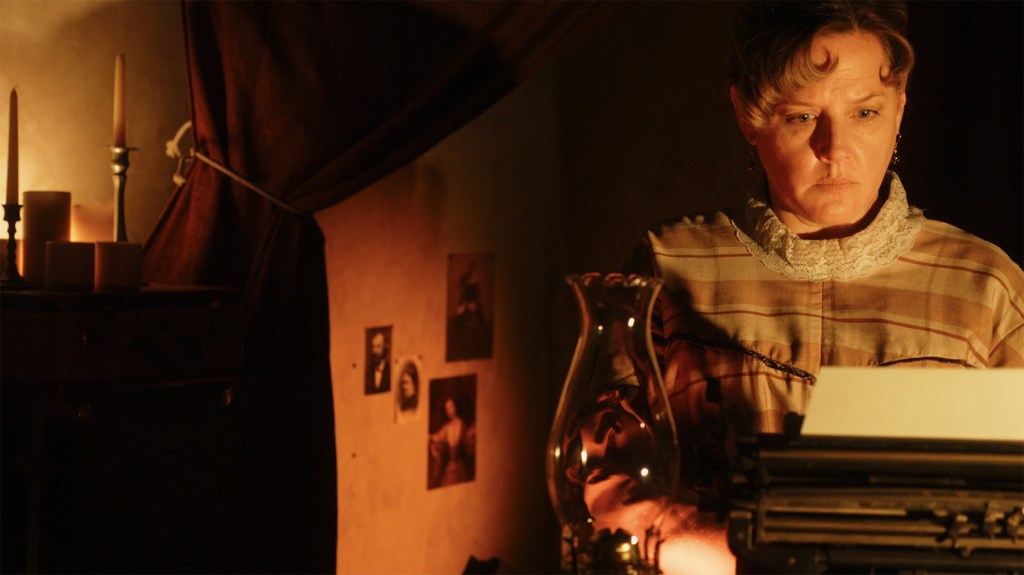
Author’s Note: I have begun a project called She Speaks! Women of the Bible Have Their Say. As part of this project, I have done five films with some very dedicated actors (friends of mine) who have dubbed themselves the SheSpeaks!Ensemble. I showed 4 of the films at the recent Yerusha Symposium. Based on the comments and reception, the project is now expanding. I am looking to create longer films that include story arcs. The first one will be of Eve. Below is the script for Eve along with the link to the video.

EVE speaks:

Why hello I don’t get visitors very often! Welcome. Come, come sit under my tree, let’s share some tea. I have the most wonderful and flavorful herbs here in my garden.

Look around at my most marvelous paradise. It is all filled with magical treasure. I’ll tell you a secret, the treasure I care for spans both the heavens and the earth. You see, we are at the place where spirit, breath and matter intersect. Where the living beings of earth and the animating forces of the divine join in harmony.

It is so hard to look at your holy book. I can’t imagine why I keep getting blamed for . . .well . . . just about everything.  It’s strange that your world wants to connect me with curses as I am the giver of life. In fact, did you know that my name Eve means life. I don’t understand what has become of you, my children. It is said that I brought a curse to humanity. Do you see life as a curse?  Let me tell you a bit about myself. Perhaps then you will see me differently.

Continue reading “SheSpeaks! Eve by Janet Maika’i Rudolph”

My Grandmother’s Pearls are Green by Sara Wright

“That move into mystery
is not an abandonment of
perception
into a cloud of unknowing.
It’s a move
into a different form
of knowing.”

Robert Macfarlane

I stepped outside when the sun was just rising over the horizon and low enough in the sky to create a play of shadow and light. This is my favorite time of the day to witness the astonishing beauty of the earth that is spreading her shimmering cloak around my feet… ‘oh, my grandmother’s hair, the words rose unbidden’. Chartreuse, plum, wine, lime, gold leaf and emerald canopies stretched across the brook blurring the leaves between birch, ash, beech and maples. The silvery water glistened, and I imagined myself flowing around those serpentine moss-covered banks listening to an ancient song  that has been sung by water for more than 4 billion years. How I wish I understood what ‘ki’ was saying but I am no longer able to discern the language.

Continue reading “My Grandmother’s Pearls are Green by Sara Wright”

Diana Beresford-Kroeger: Integrating Celtic Wisdom and Science, part 1 by Theresa Dintino

Moderator’s Note: This post is brought to you by a collaboration by FAR and Nasty Women Writers written and hosted by Maria and Theresa Dintino. This post originally appeared on their website on Sep 12, 2023

In her book To Speak for the Trees: My Life’s Journey from Ancient Celtic Wisdom to a Healing Vision of the Forest, Diana Beresford-Kroeger  shares her origin story, the humble beginnings of the famous scientist, the activist and crusader for the planet she became. We learn on what forge that will, strength, brain and consciousness were smelted. And it is one of beauty, strength and love, one that takes the breath away.

I loved this book. I loved going deeper and deeper into Beresford-Kroeger’s life story, into the rich depths of her Celtic heritage and medicine lineage. To learn the secrets and the wisdom. Beresford-Kroeger offers sacred transmission in this book, revealing another part of herself. It is a vulnerable telling and an irreplaceable gift.

Continue reading “Diana Beresford-Kroeger: Integrating Celtic Wisdom and Science, part 1 by Theresa Dintino”

Poetry by Mary Saracino

Mary Saracino’s statement on poetry: Poetry is based on intuition, emotion, something that is not really express-able other than through the poem. It’s a dialogue or conversation between the poet and the Soul (the collective unconscious, in my opinion), which then presents itself to the world. It can be a powerful medium for restoring, reviving, and revitalizing the memories of the Divine Female and reclaiming female sovereignty. Our planet, humankind and our plant and animal kin are in dire need of a paradigm shift, returning us to the time before patriarchy defiled women and usurped the natural order of the world. 

Resurrection By Mary Saracino

Deep in the coils of memory our DNA
sings ancient songs of life, death, regeneration.
We each turn on our own axis,
as the Earth turns through her seasons,
winter’s fallow followed by spring’s eternal greening.
All sacred litanies arise from her soil,
take to the sky, return their blessings
to the wells, the rivers, the oceans.
Why can’t we remember?
Our souls are hung on crosses,
our limbs bound, our hands and feet
nailed to unrelenting dogma,
our tender ribs pierced with thorny spears,
our vulva-wounds ooze with bloody amnesia.
We have forgotten where we come from:
the dank caves of consciousness
littered with the bones of
stone age lovers painted ochre-red
to honor menstrual blood, the original river,
to honor, too, its womb-source, our  primal passageway
the portal from which we all emerged, mouths open, wailing
for our mother’s breast,
seeking the milk that sustains us.
Like spring we are born again and again;
we circumnavigate our lives, spiraling forward,
circling back, orbiting our hearts
until we open to the sun
like red tulips in a once-fallow field,
dancing in the breeze, loose with joy,
sharing our subterranean secret,
reviving the buried bulb’s dormant hopes,
reveling in our resurrection.

Previously published: “Resurrection,” April 5, 2013

Subterranean Rage By Mary Saracino

Deeper than bone
deeper than muscle or sinew
or tenacious tendon
this howl of ages
rivers through bloodlines, ancient as oceans
salty as the primeval seas
this is what happens to women who
out-step their bounds
dare to be bold, brazen
speak up, name the subterfuge
women who grit their warriors’ teeth
fight on, for their children
their lovers, their nation
their homes, their hearts’ desires
branded as heretics: witch, bitch, cunt, whore
they race through forests and fields
trying to outrun the acrid scent of their own sweat
running from the hellish hounds
the priestly proclamations
the wrenching bite of the strappado*
running for their lives
caught between sinner or saint
rarely allowed sovereignty over Self
over mind & womb, over laws meant to undo them
Thousands of straggled cats launched the Plague
tender necks swinging from tree limbs
flaccid, cold paws an omen: the rats will have their day
Crucibles of change, cauldrons
of sorrow, voices stymied for ions by the threat of extinction
womb-wisdom silenced by public outcry
burned at the stake of cultural conditioning
the subterranean outrage
seeps out, sharp as knives
sharp as memory
sharp as justice denied
sharp as the bloodied knives
eviscerating their midnight powers
Deep is this grief
Deep this anger
A dirge of rage lost to the winds of time.
The weeping memory wails, still.
Hear it the moonless night sky,
touch it in the hot light of noon
smell it in the poisoned soil
taste it on your remembering tongue
see it in the burning irises
that bear witness to this unyielding genocide.

* Strappado is a form of torture, employed by the Inquisitional tribunals against women accused of witchcraft. Victims were suspended in the air by means of a rope attached to their hands which were tied behind their backs, causing their arms to be dislocated.

Previously published: “Subterranean Rage,” October 30, 2013

Tharros, Sardegna By Mary Saracino

The stones share their secrets with the sea,
the brilliant blue sky, the tasseled grasses,
the trees—and any humans who will listen—
defying history’s edicts to remain silent.
Parched by the wind and the rain,
the stones speak fiercely of love and of times lost
as outcroppings of brilliant wildflowers
sing sacred songs in the sunlight.
This ancient place is nestled
against a rugged shoreline,
its far-away culture castaway like a forgotten dream,
buried beneath rocks and earth;
here, the outcast souls bloom once more
in the red poppies
whose bloody tongues
whisper: “Remember, remember, remember.”

Author’s note: This poem was inspired by the ruins at Tharros, Sardegna during a visit I made in 2004 as part of a Dark Mother Study tour of that island led by Lucia Chiavola Birnbaum. I think of these ancient places as sanctuaries, containers, wombs, collecting and holding the memory of the Great Cosmic Mother; I see the flowers, the red poppies (sacred to Astarte) sprouting up among the archeological ruins, as Her resurging; blood red poppies, blood lines, blood flow; menstrual memory, carriers of life of memory, of lineage—blood-red, like flowery blooming tongues, telling their stories; reclaiming their truths; waving in the breeze, bending into the wind, but not submitting, allowing the wind to carry their message, carry their poppy seeds of memory out across the fields; kernels of memory—like an amnesic remembering, then speaking.

Previously published: “Tharros”, June 19, 2015

Mary Saracino is a novelist, poet, and memoir writer who lives in New Mexico. Her most recent novel is Heretics: A Love Story (Pearlsong Press 2014). Her novel, The Singing of Swans (Pearlsong Press 2006) was a 2007 Lambda Literary Awards Finalist. She is the author of the novels, No Matter What and Finding Grace, and the memoir Voices of the Soft-bellied Warrior. Mary’s short story, “Vicky’s Secret,” earned the 2007 Glass Woman Prize. Her poetry, fiction and creative nonfiction have been published in a variety of literary and cultural journals and anthologies, online and in print.

Reconsidering the Venus Myth by Lisa SG

Venus.  The Roman Goddess of the third-party situation.  Lady who wouldn’t stay faithful.  Hoochie who couldn’t, or wouldn’t, keep her coochie home.  Or is this viewpoint on the actions of Venus maligned?  (See Ancient-Origins:  Venus: Eroticized Goddess of Love, Fertility, Agriculture… And Infidelity? by Wu Mingren.)

Venus is often conflated with her Greek counterpart, Aphrodite.  Their myths intertwine in such a fashion that the two figures many times seem to be one; we will honor the ancient commingling in this article. 

Venus’ myth starts with the castration of her father by her brother.  Saturn, the Lord of Time and Karma, usurped his father Caelus (Uranus) (See World History Encyclopedia:  The Mutilation of Uranus by Saturn (Cronus) by Giorgio Vasari).  When Saturn used his sacred scythe to castrate his father, some of the seed of Uranus fell upon the sea and Venus was born from the sea foam (See The Internet Archive:  Theogony by Hesiod).  She rose whole and pure from the ocean and fell immediately under her brother’s care as reigning king of the Gods (See Le Gallerie Degli Uffizi:  Birth of Venus by Sandro Botticelli).

Continue reading “Reconsidering the Venus Myth by Lisa SG”

The Furious Sun in Her Mane: Nine Poems to Goddesses by Annie Finch

Poet’s Note: I composed this sequence of poems for performance, for chanting, and for devotion. I wanted people who would hear, read, memorize, and speak each poem to channel the original energetic patterns that the poets who best knew that Goddess used to connect with Her. So for each poem, I researched the meter and prosody of the original language in which that Goddess was first worshipped.  Then I carried the exact rhythmical pulse of Her language into my poem to Her in English.

The sequence was set to music by composer Laura Manning and choreographed by Georgia Bonatis, and I directed and performed a devotional dance collaboration version of it in 1994. That archival video of this performance has just been recovered for the first time in 31 years. It is now posted on my Youtube channel.

Continue reading “The Furious Sun in Her Mane: Nine Poems to Goddesses by Annie Finch”

She Spoke My Name: Finding the Feminine Divine in Silence, Fire, and Verse by Madeleine F. White

Two years ago I was in Pembrokeshire in South Wales. The retreat I’d taken myself to consisted of a collection of stone and flint buildings  half way up a mountain and set around a farmhouse and chapel. I had come to find a way through my writer’s’ block and also to deal with a couple of really painful family issues.

My room was only a half corridor away from the chapel itself. It was four o’clock in the morning and because I was quite close to the kitchen on the other side I had my earplugs in. Despite all this, on the second night, I quite clearly heard a woman’s voice calling “Madeleine,” loudly enough to wake me and send me looking down a deserted corridor. It was not imagined or metaphorical, but distinct and unmistakably real. The experience startled, not because I was afraid but because I recognised the truth of it. This familiar, maternal and sacred truth led directly to the writing of Maiden Mother Crone, my second poetry collection just a few months later as well as a resolution of the two other issues that had weighed so heavily on my mind.

Continue reading “She Spoke My Name: Finding the Feminine Divine in Silence, Fire, and Verse by Madeleine F. White”

Be A Friend:  A Conversation on Self-Care by Mary Gelfand & Rev. Bernadette Hickman Maynard

Mary:
Like many of you, I struggle to balance spiritual, emotional, and physical well-being in these chaotic times. As women, we’re conditioned to prioritize others—family, work, community—while systemic injustices demand our energy daily. It’s like Sisyphus pushing his boulder: exhausting, endless. But rediscovering the FRIEND acronym, created by Reverend Bernadette Hickman Maynard, helped me reframe self-care and I wanted to share this with my FAR community. Bernadette, how did this concept come to you?

Bernadette:
In December 2023, I was the pastor of a church, deputy director of a community organizing nonprofit, mom to four kids, and a wife. My body rebelled and I had pain in five areas, dizziness, heart palpitations, panic attacks. I’d cry uncontrollably. I was burned out. Finally, I took six weeks off from everything. During that time, I realized I couldn’t fight for others’ liberation while sacrificing my own. So I created FRIEND—six practices to reclaim my joy – and determined to “be a FRIEND to myself” every day.

Mary:
Your story resonates deeply. We’re rarely taught to prioritize ourselves and pay attention to our physical and emotional needs.  There’s always another task that seems to take priority over self-care and it’s easy to burn-out. How does Be A FRIEND work?

Continue reading “Be A Friend:  A Conversation on Self-Care by Mary Gelfand & Rev. Bernadette Hickman Maynard”

As a Hen Gathers by Elanur Williams

Gustav Klimt, Garden Path with Chickens, 1916

In the early years of my childhood, my family lived for a short time on a poultry farm in Bandırma. Hens wandered freely, unconfined. The contours of that land have long since changed, replaced by refrigerated depots and industrial freezers that hum along the highways, the relentless march of capital. In the Gospels of Luke and Matthew, Jesus laments: “How often have I desired to gather your children together as a hen gathers her brood under her wings, and you were not willing.” These days, I find myself returning to the image of the mother hen—a figure who embodies a special wisdom that is seldom named, yet deeply and instinctively known.

Although I did not have a religious upbringing, I grew up embracing aspects of many faiths. My spiritual background is Alevi, and after inviting the Presbyterian faith into my life following my marriage, I find these layered identities influence each other in ways that are both intricate and transformative. In her sermon Who Is Jesus? Mother Hen, Reverend Agnes Norfleet lingers on the vulnerability of the mother hen metaphor, questioning what strength a hen can possibly offer in the face of the fox—Herod—and, more broadly, in the face of violence at large. Reverend Norfleet asks why Jesus does not invoke a more forceful or fiercer maternal figure—a lion, perhaps, or a bear? What does this choice imply for our activism and understandings of leadership? What unique wisdom does the mother hen offer?

Continue reading “As a Hen Gathers by Elanur Williams”