The Erotic as Power, Notes on Audre Lorde by Janet Maika’i Rudolph

I’ve long kept a tract of Audre Lorde’s seminal piece The Uses of the Erotic near my computer. “The Erotic as Power” is her subtitle. If you haven’t read it, please do.  It is in her book Sister Outsider. And you can find it as a stand-alone here. It was written in 1978.

Lorde points out how the erotic is the opposite of pornography, in fact pornography is ultimately a denial of the erotic because it emphasizes sensation without feeling. “The erotic is a resource within each of us that lies in a deeply female and spiritual plane . . .” She goes on to note how it is through our bodies that we recognize and access this power. But she goes on, “We have been taught to suspect this resource, vilified, abused and devalued within Western society.”  In the hands of patriarchy this amazing and important resource often lies out of reach because it has become a source of shame and a sense of inferiority for women.[1]

I would add to the definition of patriarchy that one of its main goals is to damp down, even destroy, the erotic. We have seen this play out over thousands of years of history. Women are often viewed as either saints or sinners. Saints are denuded of this deep earthy power and sinners are those who flaunt it, or at least in the eyes of patriarchy.

Continue reading “The Erotic as Power, Notes on Audre Lorde by Janet Maika’i Rudolph”

Mother Blues: Interfaith Somatic Reflections on Support Systems, Chronic Pain, Tension Relief, and Supporting Oneself by Chaz J

I have had a weird relationship with my stomach or core BEFORE birth. 

My back has been hurting since giving birth.

I’ve carried fragments of my birth story like heirlooms,
passed down in murmurs from my mother and family.
They say she went into labor at home,
a warm plate of food in her hands,
My aunt Akami recalls she refused to leave for the hospital
until every bite was finished.

I came into the world under sudden urgency—
an emergency C-section,
my first act a quiet rebellion:
I had soiled the waters before taking my first breath.

My mother remembers it in a haze,
“I was pregnant, went to sleep…
when I woke up, there was a baby in the corner.”

I do not know if every detail is true,
but the outline fits—
the origin of a loneliness that has followed me
like a shadow that never unhooks from the heel.

Continue reading “Mother Blues: Interfaith Somatic Reflections on Support Systems, Chronic Pain, Tension Relief, and Supporting Oneself by Chaz J”

Honeysuckle Jewels and Women with Wings by Sara Wright

Female Hummingbird in Maine, April 26

Initially I wrote this article for publication at a plant site but was forcibly struck by the reality that what we are doing to plants is exactly the same thing we are doing to humans, women in particular. Separating, Othering, Judging, Dismissing, Eradicating. I could go on here. When you read this article about invasives think about how we are being treated as women. It alarms me that no matter I turn I see the same story played out with humans (women and children suffer most overall), trees, plants, and the animals we are so busy annihilating if not physically then in some other monstrous way. Fill in the blank with your own story.  Then imagine yourself as a bird with wings who carries the seeds of new life into unexpected places.

When I first moved to this area many years ago, I used to spend most of the time in the forests that surrounded my house except in the spring. Then I walked along what used to be a country road to see the wild trilliums, arbutus, lady slippers, bunch berry, violets and columbine that peppered the road edges. 

All the trees and flowers were so plentiful and so beautiful that it took me a few years to pay closer attention to the bushes like the various pussy willows and wild cherries, beaked hazelnut, witch hazel and hobblebush that I also came to love. 

Continue reading “Honeysuckle Jewels and Women with Wings by Sara Wright”

We Don’t Have to Live Like This by Trista Hendren

A Tribute to Carol P. Christ’s Legacy of Peace

Rawan Anani, The Melody of Freedom, Gaza Palestine

Carol P. Christ was a feminist scholar and thealogian I deeply admired from afar for many years. That changed when I read her post in Feminism and Religion describing “washing wet clothes cast off by refugees who crossed the Sea of Death.”[1]

In that moment, she became a woman I connected with on a soul level. What could be more profound than washing and folding the clothing of tiny dead children? What other metaphor could be more vivid for how desperately we need to change the world?

“A tiny pink long-sleeved shirt with a boat neck, for a girl, size 3 months. 

A pair of leggings with feet, grey with pink, orange, brown, white, and blue polka-dots, to be worn over diapers.” 

The week before, she asserted that “the only ‘solution’ to the problem of people leaving their homes in fear for their lives is TO END WAR.” She continued, “No one takes this suggestion seriously enough to engage it.”[2]

I remember sitting inside the Idean cave with our Goddess Pilgrimage group when Carol read, “We Need a God Who Bleeds Now” by Ntozake Shange. I knew the poem well, but hearing Carolina read it so forcefully shook something deep inside me.

While I have had the privilege of having several wonderful female pastors, they were never particularly affirming of my womanhood—or my divinity. They certainly never celebrated my period.

Continue reading “We Don’t Have to Live Like This by Trista Hendren”

Miriam Is For the Girls by Zoe Carlin

The Book of Exodus is a well-known scripture, and it is one that many Jews, Christians, and even people who are non-religious are very familiar with. Growing up, our family continued to tell this story year after year during Passover. It was one of many classic Torah readings shown to us in our temple. So, one of the key figures in this story is Miriam, Moses’ older sister. Most remember that she helped her mother deliver Moses in secret at the Nile River when he was an infant due to the Pharaoh setting an order to kill every Hebrew son because of concerns of the population growing too much (Exodus 11:5-6). She also assisted in leading the Israelites across the Red Sea when Moses opened it up for the Hebrews to cross (Exodus 14:21-22). An article titled “Miriam: Midrash and Aggadah” shares a deeper analysis of the roles that Miriam upheld as a sister, a daughter, and a woman during this time. It has also informed my understanding of Miriam’s story.

Continue reading “Miriam Is For the Girls by Zoe Carlin”

SheSpeaks! Eve by Janet Maika’i Rudolph

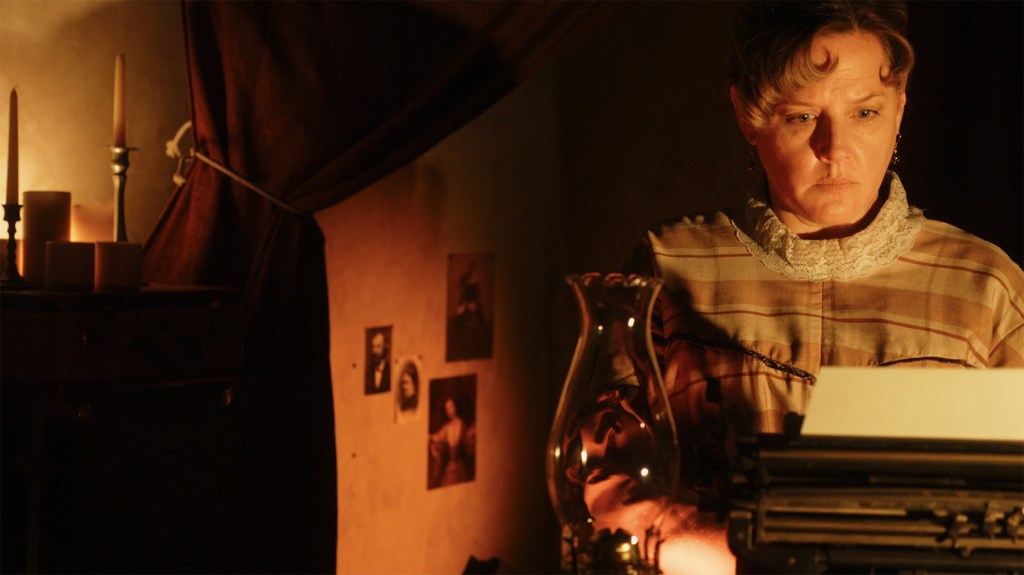
Author’s Note: I have begun a project called She Speaks! Women of the Bible Have Their Say. As part of this project, I have done five films with some very dedicated actors (friends of mine) who have dubbed themselves the SheSpeaks!Ensemble. I showed 4 of the films at the recent Yerusha Symposium. Based on the comments and reception, the project is now expanding. I am looking to create longer films that include story arcs. The first one will be of Eve. Below is the script for Eve along with the link to the video.

EVE speaks:

Why hello I don’t get visitors very often! Welcome. Come, come sit under my tree, let’s share some tea. I have the most wonderful and flavorful herbs here in my garden.

Look around at my most marvelous paradise. It is all filled with magical treasure. I’ll tell you a secret, the treasure I care for spans both the heavens and the earth. You see, we are at the place where spirit, breath and matter intersect. Where the living beings of earth and the animating forces of the divine join in harmony.

It is so hard to look at your holy book. I can’t imagine why I keep getting blamed for . . .well . . . just about everything.  It’s strange that your world wants to connect me with curses as I am the giver of life. In fact, did you know that my name Eve means life. I don’t understand what has become of you, my children. It is said that I brought a curse to humanity. Do you see life as a curse?  Let me tell you a bit about myself. Perhaps then you will see me differently.

Continue reading “SheSpeaks! Eve by Janet Maika’i Rudolph”

My Grandmother’s Pearls are Green by Sara Wright

“That move into mystery
is not an abandonment of
perception
into a cloud of unknowing.
It’s a move
into a different form
of knowing.”

Robert Macfarlane

I stepped outside when the sun was just rising over the horizon and low enough in the sky to create a play of shadow and light. This is my favorite time of the day to witness the astonishing beauty of the earth that is spreading her shimmering cloak around my feet… ‘oh, my grandmother’s hair, the words rose unbidden’. Chartreuse, plum, wine, lime, gold leaf and emerald canopies stretched across the brook blurring the leaves between birch, ash, beech and maples. The silvery water glistened, and I imagined myself flowing around those serpentine moss-covered banks listening to an ancient song  that has been sung by water for more than 4 billion years. How I wish I understood what ‘ki’ was saying but I am no longer able to discern the language.

Continue reading “My Grandmother’s Pearls are Green by Sara Wright”

Summer Lessons, by Molly M. Remer

Let us be gentle with ourselves 
as we cross the threshold 
into summer, 
as we both open our hearts to change 
and open our hands to choice. 
It is now that we both let things go 
and celebrate what is flourishing, 
what is thriving and growing 
and calling us onward. 
Let us be soft and supple, 
luminous and languorous. 
Let us practice the discipline of pleasure 
and the liturgy of delight. 
Let us protect wide margins for magic,
commit to our own life’s unfolding 
and swim freely 
in the current of the sacred 
that is always available 
to receive us 
and welcome us home.

Today, I sit missing the orioles and thinking about cycles of change, how things grow and decline, and how we can choose to be present or not with what we see and feel. I tip my head back in the green filtered light of morning and discover berries beginning on the mulberry trees. The wild raspberries and blackberries too are tipped with small, firm caps of green. I am feeling the sort of overdue clarity that descends when I finally realize I can let something go, that not everything is mine to carry or mine to fix. I know that this clarity too will come and go, but for now, I welcome it, feeling the cool wind stirring my hair and brushing my shoulders as I enjoy the sunshine and the sound of hawks on the wing. There is a powerful hope in these blue sky days and for now, I bask in the sensation of both remembering and reclamation.

This year, as we tip into summer in the Northern hemisphere, the temperatures in my own Midwestern biome have been surprisingly cool, peaceful and rainy. In an era of climate change, this slow entry into the heat of the year has felt welcome and encouraging. Something that continues to inspire and teach me this year has been to start where my feet are, to return again and again to where I am on this earth and in my body. In a culture that encourages fragmentation and distraction, distance, discord, and dis-embodiment, this practice of return is an act of both rebellion and reclamation.

I have been writing for Feminism and Religion for 13 years. This year, sitting down to write and reflecting on the life lesson of starting where my feet are, I decided to go back through my past summer posts here to discover the other lessons I have learned from summers gone by. I chose thirteen lessons to share from past summer posts:

Continue reading “Summer Lessons, by Molly M. Remer”

Poetry by Mary Saracino

Mary Saracino’s statement on poetry: Poetry is based on intuition, emotion, something that is not really express-able other than through the poem. It’s a dialogue or conversation between the poet and the Soul (the collective unconscious, in my opinion), which then presents itself to the world. It can be a powerful medium for restoring, reviving, and revitalizing the memories of the Divine Female and reclaiming female sovereignty. Our planet, humankind and our plant and animal kin are in dire need of a paradigm shift, returning us to the time before patriarchy defiled women and usurped the natural order of the world. 

Resurrection By Mary Saracino

Deep in the coils of memory our DNA
sings ancient songs of life, death, regeneration.
We each turn on our own axis,
as the Earth turns through her seasons,
winter’s fallow followed by spring’s eternal greening.
All sacred litanies arise from her soil,
take to the sky, return their blessings
to the wells, the rivers, the oceans.
Why can’t we remember?
Our souls are hung on crosses,
our limbs bound, our hands and feet
nailed to unrelenting dogma,
our tender ribs pierced with thorny spears,
our vulva-wounds ooze with bloody amnesia.
We have forgotten where we come from:
the dank caves of consciousness
littered with the bones of
stone age lovers painted ochre-red
to honor menstrual blood, the original river,
to honor, too, its womb-source, our  primal passageway
the portal from which we all emerged, mouths open, wailing
for our mother’s breast,
seeking the milk that sustains us.
Like spring we are born again and again;
we circumnavigate our lives, spiraling forward,
circling back, orbiting our hearts
until we open to the sun
like red tulips in a once-fallow field,
dancing in the breeze, loose with joy,
sharing our subterranean secret,
reviving the buried bulb’s dormant hopes,
reveling in our resurrection.

Previously published: “Resurrection,” April 5, 2013

Subterranean Rage By Mary Saracino

Deeper than bone
deeper than muscle or sinew
or tenacious tendon
this howl of ages
rivers through bloodlines, ancient as oceans
salty as the primeval seas
this is what happens to women who
out-step their bounds
dare to be bold, brazen
speak up, name the subterfuge
women who grit their warriors’ teeth
fight on, for their children
their lovers, their nation
their homes, their hearts’ desires
branded as heretics: witch, bitch, cunt, whore
they race through forests and fields
trying to outrun the acrid scent of their own sweat
running from the hellish hounds
the priestly proclamations
the wrenching bite of the strappado*
running for their lives
caught between sinner or saint
rarely allowed sovereignty over Self
over mind & womb, over laws meant to undo them
Thousands of straggled cats launched the Plague
tender necks swinging from tree limbs
flaccid, cold paws an omen: the rats will have their day
Crucibles of change, cauldrons
of sorrow, voices stymied for ions by the threat of extinction
womb-wisdom silenced by public outcry
burned at the stake of cultural conditioning
the subterranean outrage
seeps out, sharp as knives
sharp as memory
sharp as justice denied
sharp as the bloodied knives
eviscerating their midnight powers
Deep is this grief
Deep this anger
A dirge of rage lost to the winds of time.
The weeping memory wails, still.
Hear it the moonless night sky,
touch it in the hot light of noon
smell it in the poisoned soil
taste it on your remembering tongue
see it in the burning irises
that bear witness to this unyielding genocide.

* Strappado is a form of torture, employed by the Inquisitional tribunals against women accused of witchcraft. Victims were suspended in the air by means of a rope attached to their hands which were tied behind their backs, causing their arms to be dislocated.

Previously published: “Subterranean Rage,” October 30, 2013

Tharros, Sardegna By Mary Saracino

The stones share their secrets with the sea,
the brilliant blue sky, the tasseled grasses,
the trees—and any humans who will listen—
defying history’s edicts to remain silent.
Parched by the wind and the rain,
the stones speak fiercely of love and of times lost
as outcroppings of brilliant wildflowers
sing sacred songs in the sunlight.
This ancient place is nestled
against a rugged shoreline,
its far-away culture castaway like a forgotten dream,
buried beneath rocks and earth;
here, the outcast souls bloom once more
in the red poppies
whose bloody tongues
whisper: “Remember, remember, remember.”

Author’s note: This poem was inspired by the ruins at Tharros, Sardegna during a visit I made in 2004 as part of a Dark Mother Study tour of that island led by Lucia Chiavola Birnbaum. I think of these ancient places as sanctuaries, containers, wombs, collecting and holding the memory of the Great Cosmic Mother; I see the flowers, the red poppies (sacred to Astarte) sprouting up among the archeological ruins, as Her resurging; blood red poppies, blood lines, blood flow; menstrual memory, carriers of life of memory, of lineage—blood-red, like flowery blooming tongues, telling their stories; reclaiming their truths; waving in the breeze, bending into the wind, but not submitting, allowing the wind to carry their message, carry their poppy seeds of memory out across the fields; kernels of memory—like an amnesic remembering, then speaking.

Previously published: “Tharros”, June 19, 2015

Mary Saracino is a novelist, poet, and memoir writer who lives in New Mexico. Her most recent novel is Heretics: A Love Story (Pearlsong Press 2014). Her novel, The Singing of Swans (Pearlsong Press 2006) was a 2007 Lambda Literary Awards Finalist. She is the author of the novels, No Matter What and Finding Grace, and the memoir Voices of the Soft-bellied Warrior. Mary’s short story, “Vicky’s Secret,” earned the 2007 Glass Woman Prize. Her poetry, fiction and creative nonfiction have been published in a variety of literary and cultural journals and anthologies, online and in print.

Interfaith Womanism and Healing Psychology Embodied Through Art by Chaz J.

A thoughtful gesture from a coworker—complimentary tickets to the Isabella Stewart Gardner Museum—stirred a quiet excitement within me. It’s curious, isn’t it, to reside in Boston, a city so steeped in history and intellectual vigor, yet find oneself so often distanced from its beautiful, intricate past? Time, energy, and finances often conspire to keep such access at arm’s length, even for a history buff like myself. It was a welcome reminder of the stories waiting to be discovered, right here in my own backyard.

I arrived at the museum expecting to immerse myself in the European art showcased on its website. Yet, to my profound surprise, the featured exhibit immediately drew me into a powerful narrative: one that centered the Black struggle for freedom, dignity, and the reclaiming of ancestral roots, in this case Haitian Vodou. These roots, I believe, have always grounded, protected, inspired, and empowered the African diaspora across the globe.

Continue reading “Interfaith Womanism and Healing Psychology Embodied Through Art by Chaz J.”