From the Archives: Passover and the Exodus: A Feminist Reflection on Action, Hope, and Legacy by Michele Stopera Freyhauf

This was originally posted on March 26, 2015

Freyhauf, Durham, Hahn Loeser, John CarrollLast week, Supreme Court Justice Ruth Bader Ginsburg was in the news again, but not for reasons you would expect.  She, along with Rabbi Lauren Holtzblatt, penned a feminist essay about the Exodus title “The Heroic and Visionary Women of Passover.”  Finding this story was exciting, especially because I am so drawn to the Exodus story (the intrigue and curiosity of which caused me to return to school and study, as one of my main areas of focus, Hebrew Scriptures – along with Archaeology and Ancient Near Eastern History).  Now women’s roles in this story are being elevated thanks to Justice Ruth Bader Ginsburg and Rabbi Holtzblatt.

Before I discuss the message and the importance this message brings, I think it is important to know an important fact about Justice Ginsburg.  Ginsburg is not observant, but does embrace her Jewish identity.  When her mother died, she was excludedRuth_Bader_Ginsburg_official_portrait[1] from the mourner’s minyan because she was a woman; an event in Judaism that is meant to comfort the mourner, brings a sense of community, and is considered obligatory – a means of honoring our mother/father.  This important event left an impression and sent a loud message that inspired and influenced her career path – she did not count – she had no voice – she had no authority to speak.  No wonder her life and career focuses so much on women’s rights and equality.

As many of us know, the story of Exodus is focused on two things 1) Moses and 2) liberation from the bonds of servitude and enslavement; women are rarely discussed.  In the essay co-authored by Ginsberg, women are described as playing a crucial role in defying the orders of Pharaoh and helping to bring light to a world in darkness.  In the Exodus event, God had partners – five brave women are the first among them, according to Ginsburg and Holtzblatt.  These women are: Continue reading “From the Archives: Passover and the Exodus: A Feminist Reflection on Action, Hope, and Legacy by Michele Stopera Freyhauf”

Dancing with the Divine by Rabbi Nadya Gross

Moderator’s Note: The first part of this blog first appeared on the Yerusha website on Sept. 29, 2025. You can see it here.

From my earliest memories, I saw things others didn’t see and knew things I had no business knowing. I thought everyone noticed the dance of light around bodies, or the tiny life forms at the base of trees. I assumed everyone could feel another’s emotions as vividly as their own.

That illusion ended when my grandmother—my Savta—took me into the kitchen (where everything important happened), closed the door, and said: “Never speak of these things to anyone but me.” And so, my training began.

Savta’s gifts were different from mine. She had grown up in a circle of women and their daughters—a circle where wisdom was passed from generation to generation. In that circle, women taught each other, shared their insights, cultivated their gifts and skills, and preserved a legacy of sacred knowing.

The wisdom she shared with me was as ancient as the land itself. We began with reverence for the Earth and her elements—echoes of pre-patriarchal Goddess traditions. She taught me that everything is interconnected: harm to a tree, insect, or stream is harm to us. Respect is not something to demand, but to embody. I learned to ask permission before lifting a stone from its resting place, to give thanks to the fruit-bearing trees in my grandparents’ yard when I plucked the ripened fruit, and to recognize Creation as a web of relationship.

Continue reading “Dancing with the Divine by Rabbi Nadya Gross”

Standing On the Edge: Flipping the Goddess Community & Bringing Her Back by Caryn MacGrandle

As the creator of the divine feminine app, an online platform to find circles, events and resources to which an average of three women a day have found their way to for the past decade, I have been privy to quite a few opinions.

A large majority of the 12,000 women who have registered on the app are Circle hosts, course creators, retreat organizers, book authors, singers, product sellers and others that ‘She’ has tapped on the shoulder.

And I hear quite a lot.

‘Be careful about her.’ ‘Do you know what she did?’ ‘I would watch your back.’

‘Why do you have her work on your app?’

Continue reading “Standing On the Edge: Flipping the Goddess Community & Bringing Her Back by Caryn MacGrandle”

Mother/Meter: Reclaiming Poetry’s Sacred Goddess Languages by Annie Finch

Enheduanna poem to Inanna on tablet

Those of us on the paths of the Divine Feminine can go to great lengths to approach Her.  We might read and study hard-to-find books, invest time and money to visit temples and museums, and seek out Goddesses-related power spots around the world. We might acquire ceremonial jewelry and devotional artworks, attend conferences, track down Goddesses-inspired music, and apprentice with teachers from spiritual traditions that may be far removed from our own heritage. We might invest in supplies and training to craft devotional music, art, sculpture, and apparel, and create or attend performances, healings, and rituals honoring the Feminine Sacred.

Yet there is one important ritual activity that we routinely forget and ignore, one that we know was key to Goddess worship whenever we have written prayers, from Demeter to Inanna, Isis to Freyja, Hekate to Sarasvati. This time-honored practice is simple to learn, costs nothing to use, and quickly, safely, and legally creates an altered state of mind that brilliantly and efficiently connects us with our spirits, the natural world, the Divine Feminine, and each other. And furthermore, this ancient sacred craft is not limited to indigenous or ancient cultures but is already part of the familiar heritage of anyone who speaks English, so there is no danger of cultural appropriation in using it.

Continue reading “Mother/Meter: Reclaiming Poetry’s Sacred Goddess Languages by Annie Finch”

My God Bleeds With Me by Jsabél Bilqís

My god bleeds with me
Her feet right beside mine for morning gratitudes
Soles to soils, we touch skin to skin
She’s vast like me
And I love her

My god grieves when I do
My sorrows meet Hers at the ocean shore
Vial for vial, our tears make our medicine
She can transmute anything, just like me
And I love Her

She courts me
leaves me love notes in the shapes of flower petals
winks at me in amber sunsets
morning serenades and juicy fruits
She loves me! She lifes me!
And I love and I life Her too

Continue reading “My God Bleeds With Me by Jsabél Bilqís”

Decolonizing Liberal Feminism – Questioning Choices & Freedom in the Rhetoric of Saving by Huma Iqbal

In the wake of the attack on a Muslim imam, with his veiled wife in Melbourne on January 12, 2026, we are reminded of the Islamophobic violence targeting hijab-wearing women around the world. Concerns persist about ongoing Islamophobic attacks, from the murder of a German Muslim woman for wearing a hijab in July 2025, to the Bihar Chief Minister pulling down a Muslim woman’s hijab in December 2025. According to Reuters, data from various rights organizations indicate that Muslim women, particularly those who wear hijabs, face disproportionate levels of discrimination and hate crimes in parts of the EU.

These recent incidents remind me of Abu Lughod’s work, ‘Do Muslim Women Need Saving?’ 2013). Lila Abu-Lughod is a Palestinian American anthropologist and feminist scholar. She is known for her work on gender, Islam, media, and power in the Middle East. In her work, she critiques colonial and imperial feminism and advocates for culturally sensitive and context-based analysis of the lives of Muslim women.

Continue reading “Decolonizing Liberal Feminism – Questioning Choices & Freedom in the Rhetoric of Saving by Huma Iqbal”

Evolution of Cinema and Shift of the Moral Universe by Sabahat Fida

Annie Anderson, Beauty and the Beast, wikimedia commons, public domain

For most of cinematic history, the moral universe of film was anchored in clarity. The hero was dharmic—principled, disciplined, and guided by a moral compass that was neither ambiguous nor negotiable. The villain, by contrast, represented a clear rupture in the ethical order. Actions had consequences; justice was intelligible; human beings possessed agency, responsibility, and accountability. Main stream cinema reflected a world in which right and wrong, virtue and vice, were not merely narrative devices but metaphysical coordinates. One could locate a character on the map of moral compass with precision.

Older Indian cinema often adhered to a strong moral framework in which even the most charismatic or beloved protagonists were ultimately required to pay for their transgressions on screen. Unlike today’s era of morally ambiguous films—where anti-heroes may triumph, consequences are negotiable, and ethical lines are intentionally blurred—classic cinema rarely allowed wrongdoing to go unpunished. Yet this does not mean that earlier films lacked sophistication or ambiguity; rather, they explored moral conflict within a clear ethical horizon, allowing audiences to empathize deeply with flawed characters while still witnessing their inevitable downfall. For example, in Deewaar (1975), Amitabh Bachchan’s Vijay becomes an iconic rebel whom audiences passionately sympathize with, yet he must die in the end to restore moral order. In Parwana (1971), his obsessive, morally dark character meets a tragic ending, demonstrating the same principle. Even beyond Bachchan, iconic villains like Gabbar Singh in Sholay (1975) was originally written to die as a narrative necessity. Through such storytelling, older cinema balanced empathy with accountability, illustrating that complexity and moral clarity once powerfully coexisted.

Continue reading “Evolution of Cinema and Shift of the Moral Universe by Sabahat Fida”

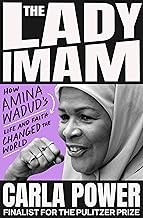
We Will Be Jaguars: A Memoir of My People by Nemonte Nenquimo, part 2 by Theresa Dintino

Part 1 was posted yesterday.

Eventually, Nemonte is fully taken in and away from her village by the missionaries to the city where she is indoctrinated further into White world with sexual abuse and rape. After years of this she is raging and lost, separated from her people and living in the city. She finds her brother and they decide to return to their people and try to find a way to change the trajectory.

“I couldn’t go home anymore. It was too late for that. I had left the forest many years ago because I believed in the white people. I had trusted them, thought they were better than us. Their skin, their teeth, their clothes, their planes, their promises. But now I knew they had no limits, that they wanted everything. They wanted to save our souls and change our stories and steal our lands. Those distant oil wells rumbling in the depths of the village night—those wells were creeping closer and closer. I still didn’t know what to do about it”(198).

Now she can speak, read, and write Spanish. Now she is educated in the White people ways. Now she can be a bridge. And what a bridge she will become.

Continue reading “We Will Be Jaguars: A Memoir of My People by Nemonte Nenquimo, part 2 by Theresa Dintino”

We Will Be Jaguars: A Memoir of My People by Nemonte Nenquimo, part 1 by Theresa Dintino

Moderator’s Note: This piece is in co-operation with The Nasty Women Writers Project, a site dedicated to highlighting and amplifying the voices and visions of powerful women. The site was founded by sisters Theresa and Maria Dintino. To quote Theresa, “by doing this work we are expanding our own writer’s web for nourishment and support.” This was originally posted on their site on May 20th, 2025. You can see more of their posts here. 

She didn’t know what the United States was. She didn’t know where it was, she called it “the land of Rachel” after the missionary in her village. She didn’t know what God was. She only knew if she went to church, she may get a pretty dress. And she wanted one.

More important than an activist tome, more important than a cry for the Amazon Rainforest and acknowledgement of indigenous peoples’ right to their own land, more important than a scathing exposé on colonialist pillage, and predatory preachers, this book is the story of a woman growing up, a woman coming of age, a woman allowing us into her personal story and her unique worldview in her own voice. This book is a treasure primarily because of that. Because we finally get to hear the story from the point of view of a Waorani woman as she experienced it.

Continue reading “We Will Be Jaguars: A Memoir of My People by Nemonte Nenquimo, part 1 by Theresa Dintino”

Kything—A Feminist String Theory of Connection by Mary Gelfand

The string of beads lies coiled in my palm as I reflect upon my women’s circle and our annual kything ritual.  Sixteen different beads, each representing a different woman in the circle.  We are a Goddess honoring group that meets twice a month from September through June, at the local UU church.  Some of us have been active in this group for twenty years.  Some of us joined last month.  We range in age from mid-forties to mid-eighties. 

We sit around the outsides of three long tables, arranged in a U-shape so we can see each other.  In front of us, we each have a small cup of beads, some paper to make notes on, and a knotted piece of beading wire.  We begin our kything ritual. 

Lynn, one of the facilitators, holds up a blue bead and describes it.  She names her intention for this summer—life energy—and asks us to visualize her walking confidently on the beach at low tide without a limp or cane, full of life energy.  Knowing as we do that she is recovering from knee replacement surgery, the intention is not surprising.  I find it empowering to energetically support her healing as I visualize her confidently walking on the beach. 

Continue reading “Kything—A Feminist String Theory of Connection by Mary Gelfand”