Lessons From the Mother Tree by Sara Wright

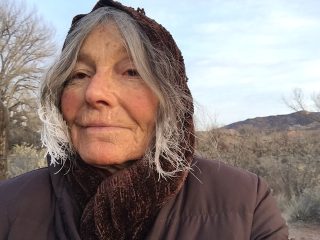
Picture of Sara Wright standing outside in nature

Last night I was reading Forest Scientist Susanne Simard’s new book “Finding the Mother Tree”. She was writing about how uncanny it was that her personal life has paralleled that of trees, the forests, the plants, the fungi, the mycorrhiza (underground networks), she has been studying for more than thirty years. This weaving of Nature’s ways through human lives has also been my life experience, although I am a naturalist and not a scientist. (I capitalize the word “nature” to accord her the Sovereignty that is missing because most humans see Nature as a “resource” to be used – not a Living Being). I take note of the fact that so many of these tree advocates are women.

I observe and listen to Nature by paying close attention to weather patterns, to flourishing or withering leaves, bowed or broken trees, to wind, to parched ground, to birds, to animals, to water, to fire, water, earth and air, and by being emotionally present to whatever is happening in my own backyard while scanning earth and sky for ‘signs’ of what’s to come. I receive the answers I need if not through a bird sighting, a porcupine, a clump of moss, a dying tree, then through dreams. For months now I have been threatened by the immanent loss of our forests by way of dreaming.

Continue reading “Lessons From the Mother Tree by Sara Wright”

What Does a Woman Want? by Esther Nelson


Sigmund Freud (1856–1939), well-known Austrian neurologist and founder of psychoanalysis, “…said once to Marie Bonaparte: ‘The great question that has never been answered, and which I have not yet been able to answer, despite my thirty years of research into the feminine soul is, ‘What does a woman want?’” (“Was will das Weib?”) ― Sigmund Freud: Life and Work (Hogarth Press, 1953) by Ernest Jones.


I don’t believe Freud ever answered the question posed here satisfactorily.  Women’s desire—even today—hovers in the taboo category.  After all, in our hierarchal, patriarchal society women’s wants/desires are mediated through social structures and institutions that favor men.  It’s easy to overlook since we all are spawned and then swim in those patriarchal waters.

Continue reading “What Does a Woman Want? by Esther Nelson”

‘Mother’ West Wind and Mary’s Gold by Sara Wright

One day last week it almost drizzled. When I stepped outside that morning I was engulfed by fragrant mist. Rarely does light fog give the thirst- driven forest a temporary reprieve, greening needles, and encouraging tiny leaves to unfurl. With this destructive weather pattern in place the next round of west wind hits the following day, graying out the green and cracking open the earth, perhaps bringing down another round of trees. The Cloud people continue to withhold the precious gift of water…

We have been suffering from drought for so long now that every tree, bush, and plant appears without an emerald coat. Harsh northwest winds, unseasonable heat, cold, and air so dry my lips are cracking have stunted most spring growth. Wildflowers have shrunk to half their size, and in places the woods are bare. High ground is parched. Lowlands are dry, and frogs, toads, and salamanders have few vernal pools in which to lay eggs. A glaring sky that denies the earth healing rain month after month brings on deadly headaches, my body’s response to endless frustration and longing.

Continue reading “‘Mother’ West Wind and Mary’s Gold by Sara Wright”

We Are Not Oppressed Because We Remember by Chasity Jones

Many questions are asked of us as a community, but the answers which are so complex that we should be commended for even attempting to answer, are heard- if they are not interrupted- but rarely understood. As a Black mother and wife, I have accepted the fact that no one will understand my struggle outside of other Black mothers and wives. After being asked questions about how my community relates to slavery, I am convinced that no one outside of my Black American community will ever understand how slavery has impacted our lives, identities, family structures, trauma, and deaths. Furthermore, it has yet to be understood how the past of slavery continues to impact these areas as a people.

Firstly, although slavery has left an immense imprint on our racial memory, the Black community is not stuck in slavery simply because we bring it up. It is brought up because it is a part of our story and we should not be made to feel ashamed of it. Just because you are tired of hearing about it or uncomfortable does not mean that Black Americans should be made to feel as though should avoid speaking of our history. Some many pro-Black groups and movements emphasize and celebrate the achievements of Black Americans before, during, after, and despite slavery. However, these movements threaten the dominant culture, and much of their achievements are ignored or perceived as threats and terrorism. It is hard to educate ourselves and our children about our ancestor pre-enslavement because our legacy, history, sacred knowledge, and culture were destroyed and our memories were erased and replaced with the bible and colonialist interpretations of scripture. Many of these scriptures are interpreted to justify slavery and are still used to justify police brutality, mass incarceration, and psychological warfare on Black Americans. Nevertheless, we do what we can to celebrate ourselves and our heritage. In doing so, we cannot ever forget slavery.

Continue reading “We Are Not Oppressed Because We Remember by Chasity Jones”

A Problem of Design by Laura Casasbuenas


When I was invited to create this post, a number of topics came to mind. But I decided to start our conversation with my response to the question: why do I write?

I am a Colombian woman designer who promotes venture projects in a region in which it is difficult to grow a business. In my daily work life, I ask entrepreneurs why they do what they do; why do they take the risk of possible failure? Usually, once we know the why, finding the how is much easier.

Continue reading “A Problem of Design by Laura Casasbuenas”

A Wish-Fulfillment Dream by Barbara Ardinger


Rest awhile, Dear Reader, and dream along with me. We’re standing on a corner, call it Main Street, Any City, USA. We’re chatting, passing the time of day, being happy we can stand among other people without the fear of a giant virus jumping out of someone’s breath and attacking us. It’s a nice day here on the street. Not much traffic.

Oh, look—there’s a huge box in the middle of the intersection. It’s shabby, looks to be made of old, thin wood loosely clamped together. The box starts shaking, rocking back and forth. What’s in there? Something is obviously trying to get out. As we watch, an orange mist starts seeping out through the cracks in the box. More shaking. Now the box seems to be jumping. More orange mist. And the box shatters. An orange form—is it human? It’s fat. It’s shaking an iPhone. Or is that a golf club? The orange one speaks. “Do you miss me yet?” “Stand back and stand by.” “I’ll be baa-ack.”

Continue reading “A Wish-Fulfillment Dream by Barbara Ardinger”

Sleeping Beauty: An ancient tale for these challenging times by Diane Perazzo

Fairy tales are intwined in our imagination and our spirituality. As Jane Yolan writes, one of the subtlest and yet most important functions of myth and fantasy is to “provide a framework or model for an individual’s belief system.” (1)

In the Reclaiming spiritual tradition, we often use fairy tales in healing and self development work. These stories act as warp and weft as we weave and spin complex ritual arcs and other events that take place at extended Witch Camp sessions. In Twelve Wild Swans, Starhawk points out that fairy stories are “more than just encouraging and inspiring. They are also templates for soul healing from Europe’s ancestral wise women and healers. When the ancient Earth-based cultures of Europe were destroyed, these stories remained.” (2)

Continue reading “Sleeping Beauty: An ancient tale for these challenging times by Diane Perazzo”

How I Learned to Grow Wings by Marie Cartier

April 2021, Poem

Visibility is

this body opening against itself over and over… an existence moving through fibers was

the one thing I had. When was the time…breathe in? Breathe out.

My existence to myself was the most political act. You can’t erase me. I exist for myself.

I am thirteen. I stand next to my father and say, “Don’t you touch me. Don’t you ever touch me again.” My mother stands by the sink, her hand reaches out and clutches its edge. My father sits and looks up

at me. He opens his mouth and closes it. I turn away, expecting his hand to land across my back.

I imagine me falling. But that doesn’t happen. Not that day.

That day I stood up. Said no, turned my back and walked away. I am a political act.

I am a body with a voice and I heard myself speaking for myself when no one else would, I said no.

No is the most beautiful word in the English language for a woman who learns its power.

The spell of no. I cast it when I was thirteen.


The gaze is

when they saw me. I started to erase myself, I was without fingers first. They kept finding me, so

I erased my hands. They kept seeing me, so I erased my arms. They kept locating me, so I erased my feet and my legs. But they kept finding me. I erased my secret places between my legs—what they most wanted. I erased my belly so I wouldn’t be seen eating, and my breasts so I would not be noticed as

a girl. But they found me anyway. I erased my neck and my head disappeared.

All that was left was my shoulders. I felt the weight of their gaze, and everything they wanted and took. And so, I lifted my shoulders, and I found my wings.

And I flew, and in flight, I let all of my parts come home.

A woman flying was the one thing they never thought to look for. But I found her. And she was me.

Continue reading “How I Learned to Grow Wings by Marie Cartier”

Every Bird in the Mountains: Wisdom for this Climate Moment by Tallessyn Zawn Grenfell-Lee

I found a bird’s nest the other day. A perfect, round little nest, with five pale blue speckled eggs. I’ve been working for several years to figure out how to support the birds who share our yard, with bird feeders, leaf litter and better soil for caterpillars and worms to feed the baby birds, yellow LED outdoor lights, and native plantings to attract more insects and pollinators. I knew that songbird populations are struggling, but lately I’ve learned even more about their truly worrying decline, and how we can all create ‘homegrown natural parks’ to help. It’s been a deep source of joy and hope, through the long pandemic, to see the tufted titmice, dapper chickadees, and bright red cardinals at our feeders, and the soft gray juncos hopping about on the ground. When we moved here a few years ago, a bird’s nest appeared right above the floodlight on our deck, and we got to see and hear the wee fledglings that spring, as if they were welcoming us to our common home. We loved those baby birds, and I’ve often wondered whether they are now among the visitors that seem drawn to the window feeder whenever we start to play music.

Continue reading “Every Bird in the Mountains: Wisdom for this Climate Moment by Tallessyn Zawn Grenfell-Lee”

C.G. Jung and the Heroine’s Journey by Sally Abbott


I was intrigued by the discussions of Jung and Jungian motifs, such as the sacred marriage, that sprang up in response to Mary Sharratt’s wonderful post “The Via Feminina:  Revisioning the Heroine’s Journey,” partly based on Maureen Murdock’s book. Carol Christ pointed out the problematical nature of the whole notion of the sacred marriage, relying as it does on our stereotypes of the masculine and feminine.

Sara Wright reported that her sense of the dangers of Jungian thought led her to change her profession; she had once been a Jungian analyst. Barbara McHugh put forward a well-thought out and articulate version of the Heroine’s Journey, corrected for sexist thought.

Continue reading “C.G. Jung and the Heroine’s Journey by Sally Abbott”