This is the time for good trouble by Marie Cartier

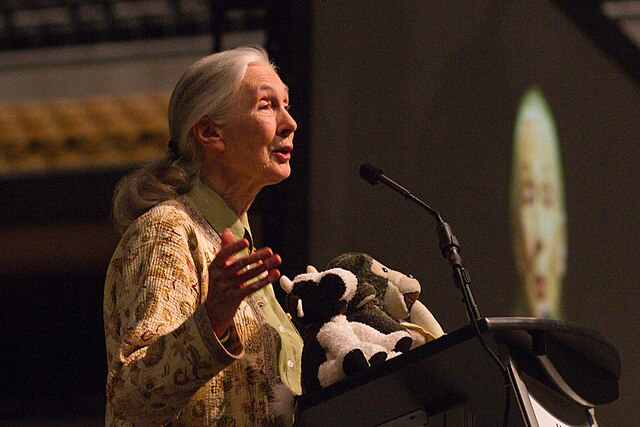
Marie Cartier performing this rant poem at the John Lewis Good Trouble Lives On Rally in Lakewood, CA July 17th. Photo by Mel Saywell

This I can guarantee you: there will come a day when it seems you cannot stop crying.

When will that day come? Today it came for me reading The Atlantic while I drank my morning coffee:

This is what they are reporting: the Trump administration has given the order to incinerate food instead of sending it to people abroad who need it. Nearly 500 metric tons of emergency food—enough to feed about 1.5 million children for a week—are set to expire tomorrow…the food, meant for children in Afghanistan and Pakistan, will be ash.

There will come a day.

And here we are in these United States with people in hiding, speaking of food. Why are they hiding? They are hiding from immigration officials and some of us are sending those people in hiding – food. Toiletries. Macaroni and cheese boxes line my grocery cart,

In these United States, we are building more prisons. And I read the detention center known as Alligator Alcatraz puts thirty-two people in a cage. Each person/prisoner costs the United States taxpayer approximately $275 a day. I guess I mean not prisoner, immigration detainee.

Continue reading “This is the time for good trouble by Marie Cartier”

Me and the All American Girls Baseball League by Winifred Nathan

During my grade school years, I was a passionate fan of the Belles, the Racine, Wisconsin team in the All-American Girls Baseball League. My aunt and I would travel across town to Horlick Field to cheer them on—an experience that took place during the challenging times of World War II. Racine proudly carried the nickname “Belle of the Lake.” I don’t remember the players fitting the conventional idea of “Belles”; what stood out was their competitiveness and the exciting baseball they played.

Later in life, the movie *A League of Their Own* became a cultural touchstone for me, although I formed my connection to it years after its first showing. I first watched it during a twelve-hour flight across the Pacific Ocean in 2023. Expecting only nostalgia, I was surprised to uncover a profound connection to my past as I watched it two or three times during the journey.

The scenes reminded me of the evening games played just a few blocks from Lake Michigan. The cool breezes from the lake enveloped me, and I recalled how the ballpark served as an oasis, providing a blissful escape from the harsh realities of the war effort. There were no distractions—just baseball—a stark contrast to the Brewers games I attended later with my grandson, which were filled with Jumbotrons and entertainment gimmicks. Back then, the focus was solely on the game itself, although I must admit I secretly looked forward to the Brewers’ sausage race.

Continue reading “Me and the All American Girls Baseball League by Winifred Nathan”

The Erotic as Power, Notes on Audre Lorde by Janet Maika’i Rudolph

I’ve long kept a tract of Audre Lorde’s seminal piece The Uses of the Erotic near my computer. “The Erotic as Power” is her subtitle. If you haven’t read it, please do.  It is in her book Sister Outsider. And you can find it as a stand-alone here. It was written in 1978.

Lorde points out how the erotic is the opposite of pornography, in fact pornography is ultimately a denial of the erotic because it emphasizes sensation without feeling. “The erotic is a resource within each of us that lies in a deeply female and spiritual plane . . .” She goes on to note how it is through our bodies that we recognize and access this power. But she goes on, “We have been taught to suspect this resource, vilified, abused and devalued within Western society.”  In the hands of patriarchy this amazing and important resource often lies out of reach because it has become a source of shame and a sense of inferiority for women.[1]

I would add to the definition of patriarchy that one of its main goals is to damp down, even destroy, the erotic. We have seen this play out over thousands of years of history. Women are often viewed as either saints or sinners. Saints are denuded of this deep earthy power and sinners are those who flaunt it, or at least in the eyes of patriarchy.

Continue reading “The Erotic as Power, Notes on Audre Lorde by Janet Maika’i Rudolph”

Time Dilates. Directs. Divines by Margot Van Sluytman/Raven Speaks

I am a pupil of this thing we call life. Swelling and swollen with the capacity to transform and to be transformed by language: Logos Incarnate=Word Made Flesh. Fleshy is this thing. And I am fully aware that Word sculpts me. Oft-times seeks an answer to the query: to what is my life tied? My response is bound with choice. I must forever remember choice. Choice that comes ever clearer the more mis-takes I have made, the sharper the dynamic degrees of un-learning weld my heart to my intellect in a new way. Age-ing and Sage-ing too, sturdy accomplices in this rollicking and rocky gavotte HERe on the body of Godde: Earth. Earth HERself ever evolving and unfolding. Mysteriously. Meticulously. With slow and un-seen purpose. Tied we are the HER and our choices. Each expressions of this vitally significant relationship.

     On my way to the Keynote I was invited to share with the John Howard Society, I watched the summer heat and haze emboldened by the relentless forest fires in Western Canada, finger its way in Central Canada, brush strokes of clotted air painting the sky a raw grey, causing lungs to feel the squeeze, noting that the beauty of the vastness of the un-burning forests through which I was being driven, was in no way diminished, curtailed, or truncated. Trees. Roots down deep. Sipping moisture. Sharing, far below the Earth, millennia of silent stories. Of as yet un-tapped Wisdom. Breathing us. Beckoning us, who journey upon and with HER to listen. And listen closely. Ask. Listen. Do that.

Continue reading “Time Dilates. Directs. Divines by Margot Van Sluytman/Raven Speaks”

May Sarton: Leaping the Waterfalls (1912-1995 American Woman Writer), part 2 by Marie Dintino

Part 1 was posted yesterday.

That richness of self may be what May chased her entire life: for herself to be enough. Eight years later in Journal of a Solitude, May further explores her relationship with solitude:

May’s house in Nelson, NH

“Later on in the night I reached quite a different level of being. I was thinking about solitude, its supreme value. Here in Nelson I have been close to suicide more than once, and more than once have been close to a mystical experience of unity with the universe. The two states resemble each other: one has no wall, one is absolutely naked and diminished to essence. Then death would be the rejection of life because we cannot let go what we wish so hard to keep, but have to let go if we are to continue to grow”(57).

But May knew the drill, and wrote such to a friend, “I came to see that my loneliness (acute and awful) was really a loneliness for myself”(Peters 279).

In Journal of a Solitude, May reveals the challenges surrounding the writing of Mrs. Stevens in 1965, the guts it took, the mission she had in mind:

“On the surface my work has not looked radical, but perhaps it will be seen eventually that in a “nice, quiet, noisy way” I have been trying to say radical things gently so that they may penetrate without shock. The fear of homosexuality is so great that it took courage to write Mrs. Stevens, to write a novel about a woman homosexual who is not a sex maniac, a drunkard, a drug-taker, or in any way repulsive; to portray a homosexual who is neither pitiable nor disgusting, without sentimentality; and to face the truth that such a life is rarely happy, a life where art must become the primary motivation, for love is never going to fulfill in the usual sense.

“But I am well aware that I probably could not have “leveled” as I did in that book had I had any family (my parents were dead when I wrote it), and perhaps not if I had had a regular job. I have a great responsibility because I can afford to be honest. The danger is that if you are placed in a sexual context people will read your work from a distorting angle of vision. I did not write Mrs. Stevens until I had written several novels concerned with marriage and family life”(91).

The need to mask in life and art, the patience to slowly roll out the truth, in a “nice, quiet, noisy way.”

Margot Peters weighs in on Mrs. Stevens in May’s biography:

“While Hilary Stevens might outrage those who believe that women artists are not deviants, her claim that women must find their own language and subjects in the dominant world of men’s literature was a radical concept in 1965. Mrs. Stevens’s idea of “woman’s work” also goes far to explain the puzzle of May Sarton’s own oeuvre: how such an aggressive, volatile, and violent person could produce novels and poems that ultimately transcend conflict. Like Hilary Stevens, May believed that her creative demon was masculine, her sensibility feminine”(254).

Mrs. Stevens Hears the Mermaids Singing was a novel before its time. In coming years, as the gathering momentum of the feminist, gay, and civil rights movements raised America’s consciousness and women’s studies departments sprang up on campuses across the nation, Mrs. Stevens brought its author a fame she had sought all her life”(259).

While living in Nelson, May received letter upon letter from women envying her seemingly ideal situation, but May wanted to set the record straight, that her living alone in a small rural town in New Hampshire was not the panacea so many imagined.

“No partner in a love relationship (whether homosexual or heterosexual) should feel that he has to give up an essential part of himself to make it viable. But the fact is that men still do rather consistently undervalue or devalue women’s powers as serious contributors to civilization except as homemakers. And women, no doubt, equally devalue their own powers. But there is something wrong when solitude such as mine can be “envied” by a happily married woman with children.

“Mine is not, I feel sure, the best human solution. Nor have I ever thought it was. In my case it has perhaps made possible the creation of some works of art, but certainly it has done so at a high price in emotional maturity and in happiness. What I have is space around me and time around me. How they can be achieved in marriage is the real question. It is not an easy one to answer”(Journal 123).

Make no mistake, although May was living alone, she was not alone. She had frequent visitors and was often off lecturing, leading workshops and teaching seminars. Nelson was an attempt to extract, one met with mixed results.

May Sarton grappled with life’s intangibles while living as close as possible to tangible pleasures; she struggled with darkness in the greatest sense and basked in full-on light in the intimate moments, where she found peace. Nothing was meaningless; everything was meaningless. She bared her soul and her heart, revealed her gifts and vulnerabilities in a way not many dare.

“Rage is the deprived infant in me but there is also a compassionate mother in me and she will come back with her healing powers in time”(Peters 339). How accurately May’s sums herself up here; for all her crossness and fire, she was generous to a fault, gifting thousands of dollars to friends every single year.

May became a gardener, as was her mother. In Nelson, she planted, weeded, harvested and displayed vibrant, oh-so-necessary flowers. It became a true labor of love, for even if she wasn’t up to doing such work, she forced herself out of doors to commune with the rocky soil, the scent of dirt and plants, the distinct hope of growth and blossoms. This seemed the antidote to starving for love and light:

“For a long time, for years, I have carried in my mind the excruciating image of plants, bulbs, in a cellar, trying to grow without light, putting out white shoots that will inevitably wither. It is time I examined this image. Until now it has simply made me wince and turn away, bury it, as really too terrible to contemplate.”(Journal 57).

May lamented in a letter to a friend,

“My rage and woe come from great and prolonged suffering that the critics have never never given the poems a break. I see the mediocre winning and I suppose to keep going I have to get mad…better than committing suicide. It is a fight to survive somehow against the current. I am a salmon leaping the waterfalls”(Peters 279).

Thank you for passionately and patiently swimming against the current, May.

May Sarton is a #NastyWomanWriter.

(Here’s the post about May’s resting place in the Nelson cemetery: The Phoenix Takes Its Rest: Visiting May Sarton’s Grave.)

©Maria Dintino 2019

Works Cited:

Peters, Margot. May Sarton: a Biography. New York: Alfred A. Knopf, 1997.

Sarton, May. Journal of a Solitude. New York: W.W. Norton & Company, Inc., 1973.

Sarton, May. Mrs. Stevens Hears the Mermaids Singing. New York: W.W. Norton & Company, Inc., 1965.

May Sarton: Leaping the Waterfalls (1912-1995 American Woman Writer), part 1 by Marie Dintino

Moderator’s Note: This piece is in co-operation with The Nasty Women Writers Project, a site dedicated to highlighting and amplifying the voices and visions of powerful women. The site was founded by sisters Theresa and Maria Dintino. To quote Theresa, “by doing this work we are expanding our own writer’s web for nourishment and support.” This was originally posted on their site on July 13, 2021. You can see more of their posts here. 

Spending summer 2021 in New Hampshire, I drive through Nelson quite often these days. Each time I do, I think of May Sarton, her years here, who she was, her art, and all she accomplished. I always glance down the road at the cemetery where she now rests.*

This post is one I wrote about May two years ago and it feels right to run it again since I feel so close to her these days. Enjoy!

May Sarton: Leaping the Waterfalls

I’d been duped. The gray-haired writer who moved to the small town of Nelson, New Hampshire in 1958 was not who I imagined. I only discovered this when I began work on this post. Far from the tranquil woman in my mind, May Sarton was an enigma, even to herself.

At forty-six, May Sarton purchased her first and only house, attempting to extract herself. In a destructive relationship, struggling to reign herself in, she sought to settle, to live where only those she wanted to see or those who really wanted to see her would visit. Plus, the dramatic move would provide fresh writing material.

May, high school graduation, Cambridge, MA 1929

Continue reading “May Sarton: Leaping the Waterfalls (1912-1995 American Woman Writer), part 1 by Marie Dintino”

Circle of Fire by Sara Wright

Moderator’s Note: This is the final part of Sara’s poem that was posted last week. You can read it here.

Part 1

She burned
 in raging fires
swamped by
merciless floods
crossed mountains
 of grief
so wide so deep
crushed Silence
in her sleep
unknowingly
accompanied
by Owls
and Winter Wren
Marked by Bear’s
sharp Protective
 Claws
 Circles of Fire

Continue reading “Circle of Fire by Sara Wright”

Seeing Double by Esther Nelson

I’ve often thought that we (in the USA) have been somewhat, albeit reluctantly, willing to discuss and perhaps even change our minds, behavior, policies, and laws when confronted about the long-lived presence of racism in our local and national institutions.  However, when it comes to misogyny—not so much.

Shirley Anita Chisholm St. Hill (1924 – 2005), was an American politician who, in 1968, became the first black woman to be elected to Congress.  “Chisholm represented a district centered in Bedford-Stuyvesant, Brooklyn, for seven terms from 1969 to 1983.  In 1972, she became the first black candidate for a major-party nomination for President of the U.S. and the first woman to run for the Democratic Party’s presidential nomination. Throughout her career, she was known for taking ‘a resolute stand against economic, social, and political injustices’ as well as being a strong supporter of black civil rights and women’s rights” (Wikipedia).

Chisholm noted that “…she had faced much more discrimination during her New York legislative career because she was a woman than for her race” (Wikipedia). Why are not more of us aware of Chisholm’s confession?

Continue reading “Seeing Double by Esther Nelson”

Mother Blues: Interfaith Somatic Reflections on Support Systems, Chronic Pain, Tension Relief, and Supporting Oneself by Chaz J

I have had a weird relationship with my stomach or core BEFORE birth. 

My back has been hurting since giving birth.

I’ve carried fragments of my birth story like heirlooms,
passed down in murmurs from my mother and family.
They say she went into labor at home,
a warm plate of food in her hands,
My aunt Akami recalls she refused to leave for the hospital
until every bite was finished.

I came into the world under sudden urgency—
an emergency C-section,
my first act a quiet rebellion:
I had soiled the waters before taking my first breath.

My mother remembers it in a haze,
“I was pregnant, went to sleep…
when I woke up, there was a baby in the corner.”

I do not know if every detail is true,
but the outline fits—
the origin of a loneliness that has followed me
like a shadow that never unhooks from the heel.

Continue reading “Mother Blues: Interfaith Somatic Reflections on Support Systems, Chronic Pain, Tension Relief, and Supporting Oneself by Chaz J”

Honeysuckle Jewels and Women with Wings by Sara Wright

Female Hummingbird in Maine, April 26

Initially I wrote this article for publication at a plant site but was forcibly struck by the reality that what we are doing to plants is exactly the same thing we are doing to humans, women in particular. Separating, Othering, Judging, Dismissing, Eradicating. I could go on here. When you read this article about invasives think about how we are being treated as women. It alarms me that no matter I turn I see the same story played out with humans (women and children suffer most overall), trees, plants, and the animals we are so busy annihilating if not physically then in some other monstrous way. Fill in the blank with your own story.  Then imagine yourself as a bird with wings who carries the seeds of new life into unexpected places.

When I first moved to this area many years ago, I used to spend most of the time in the forests that surrounded my house except in the spring. Then I walked along what used to be a country road to see the wild trilliums, arbutus, lady slippers, bunch berry, violets and columbine that peppered the road edges. 

All the trees and flowers were so plentiful and so beautiful that it took me a few years to pay closer attention to the bushes like the various pussy willows and wild cherries, beaked hazelnut, witch hazel and hobblebush that I also came to love. 

Continue reading “Honeysuckle Jewels and Women with Wings by Sara Wright”