I wrote a piece in March 2021 regarding the British Royal Family and their horrendous treatment of the Duke and Duchess of Sussex, Prince Harry and Meghan Markle. On August 23, 2022, Meghan released her first podcast episode for her series titled “Archetypes”. The first episode had guest speaker, famed legendary tennis player Serena Williams. They talked about the misconceptions of ambition and the two-edged sword that women have to endure in society when striving to be their best in a male centric world. And for many of us within Religious and Theological spaces, the disparities that women, queer folk, and non-binary peoples have endured in society are also tied into the misconceptions and harmful archetypes found within religious spaces.
Continue reading “Spill that Tea: Catholic Nuns, Meghan Markle, and Theological Feminism by Anjeanette LeBoeuf”Building Community: Starting a Local Sacred Circle K & Letting It Go by Caryn MacGrandle

In January of this year, I put out the call for a Sacred Circle at a local Healing Arts Center. Over 150 people responded interested from a Facebook invite. Thirteen showed up.
From strangers, we have become friends and a community.
One was on the verge of checking herself in to a rehab.
She celebrated six months sobriety the other month in Circle.
We’ve had our share of potential drama. Egos and self-esteem issues and the potential pitfalls of being human. But we’ve made it through. Returning again and again to love to hope to dreams.
We’ve watched each other change and grow and open up.
Continue reading “Building Community: Starting a Local Sacred Circle K & Letting It Go by Caryn MacGrandle”Equinox amongst the Stones
A Modern Pilgrimage to the Isle of Lewis & Harris, Part 2
In the previous post of October 14th, I introduced my recent pilgrimage to meet the Goddess, honour the physical and psychological changes that have happened inside me recently. I described the different mountain ranges that resembles the bodies of sleeping women, and an ancient well dedicated to the Celtic goddess Brighde.
If I was traveling over the body of the goddess, the Callanish Standing Stones would be her navel. It seems as if energy is flowing out from there to all edges of the island. The shape of the site resembles a Celtic cross. Unusual is that the site consists of one large, central standing stone, surrounded by 13 stones, and with stone avenues to the cardinal directions. With its solar alignment, paraphrasing Jill Smith, the configuration looks like a cosmic dancer who juggles the sun from east to west. The “arms” are aligned exactly with the sunrise and sunset at this time of year.


Callanish 1, the main stone circle, is connected to 11 other sites across the island, some circles, some solitary standing stones. Together they are called the Callanish Complex. I visited Callanish 1 many times that week, and I was lucky to spend the Autumn Equinox there.
I’ve never come across stones that were so alive and expressive. Light would bounce off differently at different times of the day, accentuating irregularities, dulling, or sharpening edges, emphasising different aspects. I saw lion and wolf heads, young maidens, hooded wanders, gargoyle and dragon-like creatures, dolphins and even a Horned Dancer… Most importantly, it felt like in each of the stone circles in the area (Callanish 1, 2, 3, 4, and 8), there was at least one stone resembling a woman’s body, and I came to think of them as the Grandmother Guardians. They had a real living presence, that became even stronger as the day-visitors disappeared.
Usually there were 2-5 people there, sometimes I found myself alone. The sunset of the Equinox, however, drew many more people. There were about twenty tourists, who were taking snapshots of this magnificent light show, leaning, or pushing against the stones, talking, and giggling. Several professional photographers tried to capture a magical moment. And there were 5-7 fellow pilgrims, whom, like me, would stay long into the night. Everyone was so focused on the sunset, was I the only one who noted the rainbow in the east?
The below images were literally taken a minute apart – rainbow to the east, sunset and silhouettes to the west.


Eventually the tourists and photographers disappeared, and the rest of us gathered at the heart of the circle, in the remains of an ancient burial mound. With African and shamanic drums, a whistle, a singing bowl, an old man tapping his walking stick to the bottom of his tin mug, and some rattles, we improvised a rhythmic invocation to the spirits of the stones. With the rain becoming heavier, I soon found myself alone with the stones. Now I could finally sing, dance, weave between the stones without disrupting anyone, lean into the stones, close my eyes, and pray.
I felt very aware of the ‘balance’ in the year, the point of equally long days and nights. I asked for guidance on balance in my own life: between work and leisure, between doing and resting, between the first and second half of my life, between gathering wood for the fire and sharing it, between birth and death, and how I can better look after my body and energy living with an invisible auto-immune condition in these fast and demanding times.
After the rain departed, the clouds tore open, revealing the clearest and most brilliant night sky I’ve ever seen. The silhouettes of the stones reaching up into the night was truly magnificent. Moving, weaving, pausing, I made my way clockwise around all the 13 stones in the circle. I stood at either side of the stones, outer and inner, and took my place in between them, as if I was a moving stone myself. I reflected on centre and circumference, on axis, on direction, on the wheel of life, turning, turning, turning, turning… and felt connected to similar circles across Europe lighting up in the darkness, as a radiant hub of energy-places.

After having completed my weaving of the circle, by which time I had enjoyed half of my ginger tea for a warm kick, I decided to return to our cottage – also an act of balance. Having a cold already, I did not quite have the proper gear to stay out in the windy and rainy night. My lovely bed was calling! On my way home I saw three deer next to the road. I stopped the car and could be with them for several moments before they wandered off.
I had been so attuned to the rhythms that I woke up well before the alarm. I laid in the comfortable darkness, until it was time to return to the stones to witness the sunrise. My mom came along this time. Again, there were several photographers ready for ‘the moment’ (no tourists at this hour!). I just HAD to dance, and chose my spot at the far western end, out of line of any cameras. A dance of ground, earth, mountain, honouring the mother and my mother, weaving the light, the turn of seasons, changing, praying, calling, giving thanks, celebrating, welcoming, and letting go. Strong, soft, vibrant, still…


Standing against the central menhir, looking east, we finished the last of the ginger tea. So special to be able to share this together. Mother and daughter in a circle of ancient Grandmother Guardians, witnessing the sun rise on a new day. Sacred land, ongoing cycles of time, and a modern-ancient pilgrimage…
It will take many moons to fully digest and integrate the richness of this journey, but I already know this precious experience seeped deep into my bones.
May the magic of the land touch you too, wherever you are.

I’d love to invite you for my series of Embodied Spirituality Masterclasses that are going to start today, 21st October! Have a look if you’re interested in reconnecting body and spirit, re-anointing the body as sacred, nature as a temple, contemporary ceremony and much more… You can still join until Christmas, so don’t worry if you can’t make the first session live, it will be available in replay!
Jill Smith is a deep well of goddess lore on Lewis:
- Mother of the Isles (2003)
- The Callanish Dance (2000)
Bio
Eline Kieft danced from a young age, including rigorous classical and contemporary training to become a professional dancer. She then studied anthropology, deepening her fascination with worldwide similarities between indigenous traditions regarding intangible aspects of reality and other ways of knowing, including embodied epistemologies and shamanic techniques.
She completed her PhD in dance anthropology at Roehampton University, trained in depth with the Scandinavian Centre for Shamanic Studies and the School of Movement Medicine. Eline worked at the Centre for Dance Research (C-DaRE) at Coventry University for five years, where she created a Somatics Toolkit for Ethnographers, and pioneered soulful academic pedagogy. Her recent book Dancing in the Muddy Temple: A Moving Spirituality of Land and Body was well received as a unique blend of theory and practice and a medicine for our times.
She is now a full-time change-maker and facilitates deep transformation through coaching and courses both online and in person. Her approach The Way of the Wild Soul offers a set of embodied, creative, and spiritual tools to re-connect with inner strength and navigate life’s challenges with confidence.
Website: https://www.elinekieft.com
Beauty in the Heart of the Beholder by Janet Maika’i Rudolph
In the past two years, I began a project which I call biblical poetry. I had been doing my own translations of biblical verse based on the hieroglyphic meanings of Hebrew words. Ancient Hebrew or Semitic Early writing grew out of the hieroglyphs of Egypt. Since hieroglyphs are pictures, we are able to use the rebuses or picture puzzles to glean the original or at least older meanings of words. I have begun to see these a route to interpreting meanings from before the dawn of patriarchy. This door to understanding appeals to my religious/spiritual/feminist sensibilities. At first, I attempted to stay somewhat true to the well-known meanings as they have come down through the ages. When I began my poetry project, I broke out of that structure to reveal the more mystical/shamanic/pagan meanings that I find beneath the words. At the bottom of this post, I have links to a few of my past biblical poetry posts.
The bible is quite large, so this is an encompassing project with lots of material to explore. This month, I wanted to take a look at how the concept of beauty is treated in the bible. The word for beauty is yaphah. Yaphah can also mean miracle and wonder as well as beauty. Let’s stop for a minute to unpack that. When we think of the word beauty in our culture, the thought is generally about how someone looks (unusually a female someone). But just the Hebrew word alone broadens the meaning. If beauty is someone or something that is wondrous and has miraculous qualities than it goes well beyond cultural standards of how someone looks. If you love someone, they would be beautiful to you because they would be wondrous. Biblical usages and translations tend to focus on beauty, mostly women, sometimes cows (yep cows) and a few handsome men in the mix. But I found that yaphah doesn’t have to be a vision that relies on one’s eyes.
Continue reading “Beauty in the Heart of the Beholder by Janet Maika’i Rudolph”Reclaiming Forgotten Voices by Freia Serafina

Last night I found myself crying over Tiamat. Tiamat is one of the most ancient Babylonian Creatress Goddesses. She is known as the Goddess of the Salty Sea and is considered the primordial Creatress in Sumerian religion. Tiamat was slaughtered in the vilest of ways to demonstrate the death of the Goddess and the rise of the God. She was defiled and written about in such a way as to discredit women and provide justification for the slaughtering, defiling, and enslavement of “enemy” women abroad and “bad” women at home.
As I was reading Carol Christ’s Rebirth of the Goddess, I found myself shaken to the core at the ways in which Tiamat was defiled and destroyed in the “epic” called the Enuma Elish. As someone who is well aware of the ways in which the Goddess and women have been usurped throughout time and space, I was still so broken down after reading it that I had an actual ugly cry in my living room. I want to tell you to read the Enuma Elish to understand why I feel this way, but I also want to warn you about the way you might feel afterwards. It is a difficult read.
Continue reading “Reclaiming Forgotten Voices by Freia Serafina”Grief Overshadows Joy by Sara Wright

Fall is the season of ‘the cutting away’, a poignant time to celebrate the deepening darkness as we turn inward. I think the powers of the goddess are strongest at this time of year… I wrote this wistful poem in celebration of Autumn as I am experiencing it this year… perhaps the personal reflection that follows is the kind of thinking that is capable of opening a door to a new way of perceiving?
Autumn Gold
Autumn gold
stains the maples
beech hay ferns too
each day
a deeper glow
bittersweet bleeds
into lemon
liming veins
scarlet sears a leaf
or two
salmon rose blurs…
fir balsam hemlock
spires reach
skyward
forest green
needles
soak in drops
of rain.
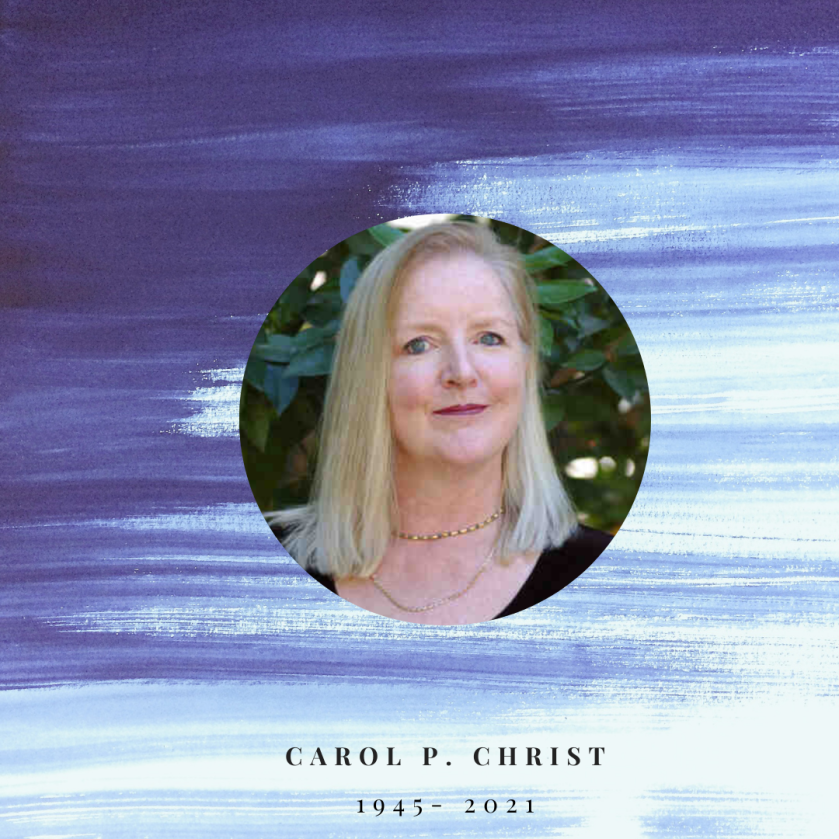
Continue reading “Grief Overshadows Joy by Sara Wright”Legacy of Carol P. Christ: The Devil’s Bargain: “If You Can Convince a White Woman”
This was originally posted on August 12, 2019
This week’s news from America. Where to begin? When will it end?
The President of the United States is a racist who incites racist violence. Republicans have been slow to condemn the President and are not likely to pass a complete ban on assault weapons and to make those currently in circulation illegal.
After reading a speech condemning hate speech and gun violence that he obviously didn’t write, the President scheduled a round-up of brown people working in chicken-packing factories in Mississippi to coincide with his unsympathetic visits to the cities of Dayton and El Paso, where two recent mass killings by assault weapons occurred. The next morning, we were greeted by images of little children coming home from school in small towns in Mississippi to find their parents missing. We were told that none of the surviving victims of the El Paso shooting wanted to meet the President.
This is not the America I want. But it is the America that many Americans seem to want. I would like to think that women as a group reject the President and his agenda. Sadly, this is not true.
Continue reading “Legacy of Carol P. Christ: The Devil’s Bargain: “If You Can Convince a White Woman””Is the Divine the Unknowable Unknown? A Feminist Take by Ivy Helman

I attended a number of High Holy Days services (online) over the past couple of weeks. In one of them, one of the rabbis said that the divine is the unknowable unknown. I cannot remember what the Rabbi said to contextualize or explain their train of thought; I think I was too intrigued by the idea that I got lost in my own thoughts. In fact, I have been thinking about the unknowable unknown ever since.
As I write this, I’ve come to this conclusion: if the divine is present among us and the world around us, then there is much we can intuit. In addition, there is much that we can experience the more we interact with other humans and nature. On the other hand, if the divine is understood as a detached, distant being of a completely different essence than humanity, of course, what can we really know about such a divinity? How would we even know if that divinity even existed? We probably wouldn’t. Here is the difference between a feminist understanding of the divine as this-worldly and empowering and a patriarchal conception of a distant divinity wielding power-over. Yet, interestingly, even the most patriarchal image of the divine has insisted on being relatable to human beings. Nonetheless, how we imagine the divine does matter.
In her book, Models of God: Theology for an Ecological, Nuclear Age, Sallie McFague argues that the words and ideas we use to describe the divine are important. She advocates for the use of metaphors to describe the divine, stating that we can only describe what the divine is like, not what divinity actually is. In fact, she warns the reader of long-lasting models for the divine as these can lead to idolatry, an understanding that limits divinity and, because of this, is essentially untrue. She writes on page 99 that, “[i]f we use only the male pronoun [for the divine], we fall into idolatry, forgetting that God is beyond male and female…” In other words, we are limiting the divine and furthermore speaking an untruth.
This talk makes we wonder if she too is of the camp that we cannot understand divinity; that the divine is quite different from us. I mean if we cannot and should not have any long-standing model for the divine but only use shaky fleeting metaphors, our understanding of the divinity is genuinely limited and amorphous. Yet, there is a difference between some knowledge and experience of the divine and the idea of the divine as the unknowable unknown, isn’t there?
That being said, I find much of what she has to say extremely helpful when it comes to traditional understandings of divinity. In her book, she implicates as problematic the long-standing models of divinity as Father and King, among others. These out-dated models move us further and further away from the divine because they are thought to definitively explain who the divine is in relation to us.
Let us look at Yom Kippur, the Day of Atonement, as an example of this in Judaism. Here, we have a day in which we are highly vulnerable as we reflect on the ways in which we have not always treated ourselves, others, the world around us, and the divine as we should (had hoped to). Yet, we enter the synagogue and repeatedly address the divine as Avinu Malkeinu (Our Father, Our King). Why is the understanding of divinity that we approach one of judge, strict parent, and ruler over us? Does that not drive a wedge of sorts between divinity and humanity? Does that not make being inscribed in the book of life seemingly impossible unless we are non-human-like?
Contrary to what we often hear in shul, Judaism recognizes some 70 diverse understandings, or names for the divine. These names range from Hashem (the Name) and Shalom (Peace) to Shechinah (the in-dwelling) and Kadosh Israel (the Holy One of Israel). And there are many, many more.
Returning to our example again, instead of the umpteen rounds of Avinu Malkeinu, what would it be like on Yom Kippur if we approached the divine as Shaddai (Comforter), Hamakon (the Present One, literally the Place), or YHWH-Rapha (The One Who Heals)? These understandings seem to offer the compassion we need on a most vulnerable day. How much easier would it be to connect to divinity that understands us? Perhaps we could learn a little more about divinity in that case, and we could in the process become much closer to the holy? And, isn’t that the point of Judaism? To be holy like the divine is holy? I think so.
From a feminist perspective, how we understand the divine has real-life consequences which can shape how we understand ourselves and the world around us. Just imagine what Yom Kippur would feel like, if we called on the divine that day as the comforter, the present one, and the one who heals. It would feel totally different, and for very good reasons.
Who would have thought that some three weeks ago or so, I would have heard a phrase about the divine that still has me in a quandary? I mean, in the end, I suppose there are ways in which the divine is unknowable. Importantly, though, that does not make the divine wholly unknown. Rather, it is often the language we use about the divine that puts distance between us and divinity, that makes divinity less and less known.
Ivy Helman, Ph.D.: A feminist scholar and faculty member at Charles University in Prague, Czech Republic where she teaches a variety of Jewish Studies, Feminist and Ecofeminist courses.
A Celtic Pilgrimage: Becoming a Bard by Trelawney Grenfell-Muir

As I gazed up at Grand Bard Mab Stenak Veur, I could feel my eyes shining with joy, my gratitude, awe, love, and reverence for Kernow thrumming through me like the crescendo of a bright, glorious song. My whole world focused in that moment to the feel of his hands clasping mine — as though all Kernow were embracing me and holding me; the sight of his kind eyes and gentle smile— as though Kernow were lighting beacons to greet my homecoming; the sound of his voice proclaiming my new name, “Bleydh Ow Resek,”— as though Kernow herself were naming me to be her own child, come home at long last to my mother, who longs for me even as deeply and powerfully as I have always longed for her.
While I started learning Kernewek only four years ago, my journey to Bardhood started much earlier. I believe it began at birth, when my parents gave me the Christian name Trelawney, after the revered Cornish rebel leader who stood up against English oppression. Though no one in New England had heard of Kernow (Cornwall), my family’s joyful pride in our Cornish identity shaped my life. We were taught how my grandfather Jack left Kernow as a child because his parents responded to the call for more Methodist pastors to come to the United States.
Continue reading “A Celtic Pilgrimage: Becoming a Bard by Trelawney Grenfell-Muir”Triple Goddess in the Land by Eline Kieft

A Modern Pilgrimage to the Isle of Lewis & Harris, Part 1
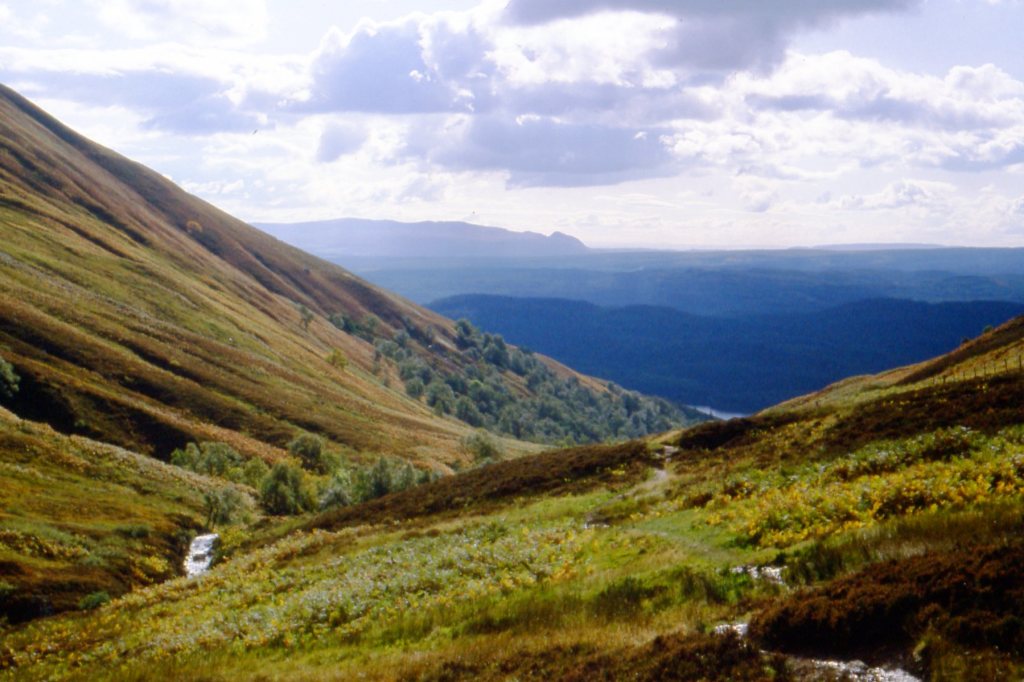
For a long time, I felt a soft but insistent tug to go to the Isle of Lewis & Harris, on the west coast of Scotland. Third time lucky, because the trip got cancelled twice due to Covid-19. Even this time was a challenge, with flights being pulled, and airport strikes causing last minute changes. It was as if the Goddess was asking me, “how serious are you about this, daughter?”
Eventually I managed to get to Edinburgh on time, all the way by train from our small sleepy village in France, to catch the connecting flight to the island.
In this post (Part 1), I write about meeting the Triple Goddess in the Land. Part 2: The Stones, focuses on my Equinox ceremony in the Callanish Stone Circle.
Continue reading “Triple Goddess in the Land by Eline Kieft“