Women, Life, Freedom زن زندگی آزادی : Let’s talk about the protests in Iran by Anjeanette LeBoeuf

Trigger Warning: This post deals with violence towards women, violence towards humans, and egregious abuses of power.

Women, Life, Freedom; Zan, Zendegī, Āzādī;  زن زندگی آزادی has become one of the main slogans for an incredibly important and crucial global protest that is taking place right now. For over 2 months, life and death protests are taking place in Iran. The protests are focusing on the perpetual degradation of human rights with women bearing a large brunt. Many have declared the current state affairs as gender apartheid. We need to be talking more about what is happening with the people of Iran and how best to support them. The protests were started after the brutal murder of a woman due to a portion of her hair being visible outside of her hijab.

Continue reading “Women, Life, Freedom زن زندگی آزادی : Let’s talk about the protests in Iran by Anjeanette LeBoeuf”

Unsung Heroines: Self-Worth takes Time: The Transformation of Angela di Foligno by Elisabeth Schilling

Angela di Foligno was a 13th century Umbrian Franciscan mystic who began her initiation on the spiritual path when she was almost 40. She was officially declared as saint in October of 2013. Her works were dictated to a relative who was scribe and a Franciscan brother in the church, and so we unfortunately do not have access to the complete depth and intimacies of her ecstatic visions and commentary (both she and her scribe discuss how he was writing in such haste and fear from admonishment from his religious brothers that it is a “short and defective version” of her experience). Nevertheless, as readers, there is still so much for us to gain in terms of inspiration and commiseration.

In “The First Twenty Steps of the Blessed Angela in the Way of Penance and Spiritual Perfection,” the Franciscan saint details the arduous journey of mastering both fear and love, a requirement to evolving in our human consciousness to realize our divine spark and transform shame. I want to discuss three aspects of this journey that relate specifically, as I see it, to the challenges set forth by many women: love for the body, love for one’s relational boundaries, and love for one’s time and space. Most cultures fail to honor women in all of their desires and powers, and so we must learn to honor ourselves and each other. Angela, as we shall see, was fiercely willing to honor herself.

Continue reading “Unsung Heroines: Self-Worth takes Time: The Transformation of Angela di Foligno by Elisabeth Schilling”

From the Archives: Thanksgiving and Service by Sara Frykenberg

This was originally posted on December 3, 2103

Growing up in an evangelical Christian church, I was taught that human beings should serve one another and put others before themselves.  These two different teachings, paired with patriarchal misogyny, have sometimes been very problematic for me.  I tend(ed) to give too much.  Too many demands with which I complied were self-negating (which after all, helped me to make other people more important than myself).  It took me a long time to learn how to appropriately prioritize my own needs, to stop mistaking self-esteem for the”‘sin of pride,” and how to say no when I needed to… Actually, I am still learning some of these lessons.

Conversely, my ritualized service to the church was sometimes confusing, awkward or embarrassing.  I clearly remember having the opportunity to serve as something like an usher during Thanksgiving at our family’s church as a child.  This involved wearing a pilgrim costume, which for me meant finding a Puritan style costume in the church’s closet that fit my overweight childhood frame.  This was not an easy task and left me feeling ashamed.  Later as an adolescent, my youth group asked us to wash one another’s feet as Jesus did for his disciples.  Now, don’t misunderstand me here— I do believe that this ritual has the potential to be very powerful and meaningful for those involved.  However, my teenage self could not identify with the symbolic gesture beyond realizing that:

1)    I thought touching other people’s feet was gross, as was having my dirty feet touched and,
2)    I knew I ‘should’ get something out of the ritual but did not, so I felt spiritually guilty or inadequate.

Overall, I often associated Christian service with guilt, inadequacy, my role as a daughter or woman or my sacrificial duty.

Despite these issues, I usually genuinely enjoy serving others and giving to other people.  I love to host people and care for them.  I like to help.  I even prefer to help.  Serving one another we can express and allow others to express love.  But this past week, one day before Thanksgiving, a dear friend of mine gently challenged me to allow myself to be served or, as she put it, “to give someone else the gift of giving to me.”  Specifically, she was referring to a pending holiday meal for which I expressed my anxiety and frustration with not being allowed to help—which somehow makes me feel like a child.  Even writing this phrase, “makes me feel like a child,” I know that I have touched deeper feelings of helplessness or vulnerability that at some point, I learned to battle with competence and over-achievement.  I do often feel like a child or guilty when other people do for me what I think I could or should do for myself; and my friend’s brief words encouraged me to explore this relationship to being served.

“Service” can sometimes feel uncomfortable for the reasons I mention above, but more so, for its connection to the coercive “servitude” required by existent hierarchies within andro-kyriarchal oppressive systems.  I have been subject to this coercive servitude, and also, its beneficiary.  As a white, middle class, Western woman I have far too much privilege that is contingent upon the forced labor and oppression of other people.  This kind of forced servitude is very wrong; and I am still learning how and where to choose other than to be complicit in this abuse.  But, there have also been many distinctive instances in my life where I have felt reciprocally and undeniably “served” by people around me, without abuse and without manipulation.

Driving to Colorado one summer to see the friend I mentioned above, my two companions and I served one another.  The individual in the back seat was responsible for cutting bagels and spreading cream cheese on them for the driver and navigator, while the navigator held the drink, food or whatever other item that the driver could not.  This may sound like a small thing, but it wasn’t.  I felt taken care of and loved in this small and traveling community.  We also had a safe word that meant, “leave me alone, I’m grumpy” on our long trip.  We made agreements to account for one another’s  discomfort and effort.  We respected one another and cared for each other.

Beginning my work as an adjunct professor, I encountered a great deal of stress and often long and awkward work hours.  Many times I felt like I needed help, but there was nothing I could ask for help with when it came to my job: I needed to grade my own papers, plan my own lectures, and yes, write my own blogs.  My husband has responded by taking care of me in other ways.  He makes me dinner, goes to the store and makes sure I take breaks.  We take turns taking care of one another, and I am grateful for him.

This past week after talking to my friend, I noticed how willing people were to touch me to soothe aching muscles.  I’m not sure how to describe what I felt, but it was like something invisible in certain spaces was suddenly visible.  I also realized that it had been a very long time since I had freely and openly received this touch.  Later during the weekend, a friend came to my house  and she made me dinner!  My husband rubbed my chest after a long night of coughing yesterday because I still haven’t completely rid myself of the smoldering in my lungs.  I was defensive for so long.  Shedding my defender allows me to rediscover all those things for which I am thankful.

Gratefulness is an action.  It can be found in those expressions that return, receive and allow for mutual loving.  I am learning new rituals that help me to remember that this kind of mutual serving and being served is sacred.  In a summer ritual, my friend and I washed one another’s hair instead of our feet.  I am still learning to ask for assistance from the goddess after freeing myself from an abusive omnipotent god, but I am starting to ask.

I am starting to pray again.

BIO: Sara Frykenberg, Ph.D.: Graduate of the women studies in religion program at Claremont Graduate University, Sara’s research considers the way in which process feminist theo/alogies reveal a kind transitory violence present in the liminal space between abusive paradigms and new non-abusive creations: a counter-necessary violence.  In addition to her feminist, theo/alogical and pedagogical pursuits, Sara is also an avid fan of science fiction and fantasy literature, and a level one Kundalini yoga teacher.

A Ritual for Thanksgiving, by Molly Remer

Find some pine trees
and a wide rock in the sun.
Settle down and feel gratitude
curl around your shoulders.
Listen to the wind
sense that there is sorrow too
in this place,
deep and old,
threaded through the
lines of sun
slices of shadows.
It tells of what has been lost,
what has been stolen,
of silenced stories,
and of fracturing.
Make a vow,
silent and sacred,
to do what you can,
to rebuild the web
to reweave the fabric.
Lie on your back in the pine needles,
feel your body soften into the ground
and become still.
Allow yourself to feel held,
heavy bones and soft skin
becoming part of the land.
Wonder how many of your
ancestors kept other people
from becoming ancestors themselves.
Watch the sunlight making tiny rainbows
through your eyelashes and pines.
Find a pretty rock.
Don’t take it.
Leave it where it belongs,
on the land that gave it birth.
Go home.
Keep your promise.

Continue reading “A Ritual for Thanksgiving, by Molly Remer”

From the Archives: Turkey – Abundance, Gratitude and Connection to Mother Earth by Judith Shaw

This was originally posted on October 25, 2020

In the United States turkeys are equated with Thanksgiving. But there is so much more to Turkey – a gentle creature who forms strong attachments. Reputed to be dumb, Turkey is in fact quite intelligent and curious, with the ability to solve problems. Turkeys have an excellent understanding of the details of their location which makes them so successful at feeding themselves. They also love to play and to cluck along with music.


wild-Turkey-with-fanned-tail
photo by Tony Castro

Turkeys, indigenous to North America, evolved over 20 million years ago and share a common ancestor with grouse, pheasants and other fowl. Two species of wild turkey exist today – the wild turkey of eastern and central North America of which there are 5 sub-species and the ocellated wild turkey of the Yucatan.

Yet why is turkey named turkey? Strangely enough it was a mistake. English colonial settlers thought turkeys were a type of guinea fowl which England imported from Turkey – thus the name. The Spanish word for turkey is guajolote which is derived from the Nahuatl (Aztec) name huexolotl.

Continue reading “From the Archives: Turkey – Abundance, Gratitude and Connection to Mother Earth by Judith Shaw”

Hemlock Haunting by Sara Wright

When I stand under

one of these giants

I sink into the dark

 spiraling into

Deep Time.

 If Hemlock

does not succumb

to insects

 a poisoned sky

 this tree might 

live out a natural life…

 800 years is eight to

ten times longer

than this piercing pain

of mine –

So why is

anguish

stretching me

into ‘forever’

mourning trees

without hope?

One difference

is that Hemlock

lives in community

with others that care

the kindness of kin

both young and old

Roots entwine, support…

communicate.

Comfort seeds the air.

Hemlocks can tolerate

the darkest forest

gloom, the sparse

spongy needle strewn

floor stores

 a multitude of seeds…

for hundreds of years…

Witch hobble thrives

above, golden

beech composts

 future…

400 million years

of Life

buried a few

feet deep….

If nature’s patterns

wed to genes

story a future

when Earth

is ready to birth,

these trees

might rise again

as Blessed

Green Beings

once despised

and rejected

insect infected

Now thriving

in Balance

with All That Is…

___________________________________________________________________

Continue reading “Hemlock Haunting by Sara Wright”

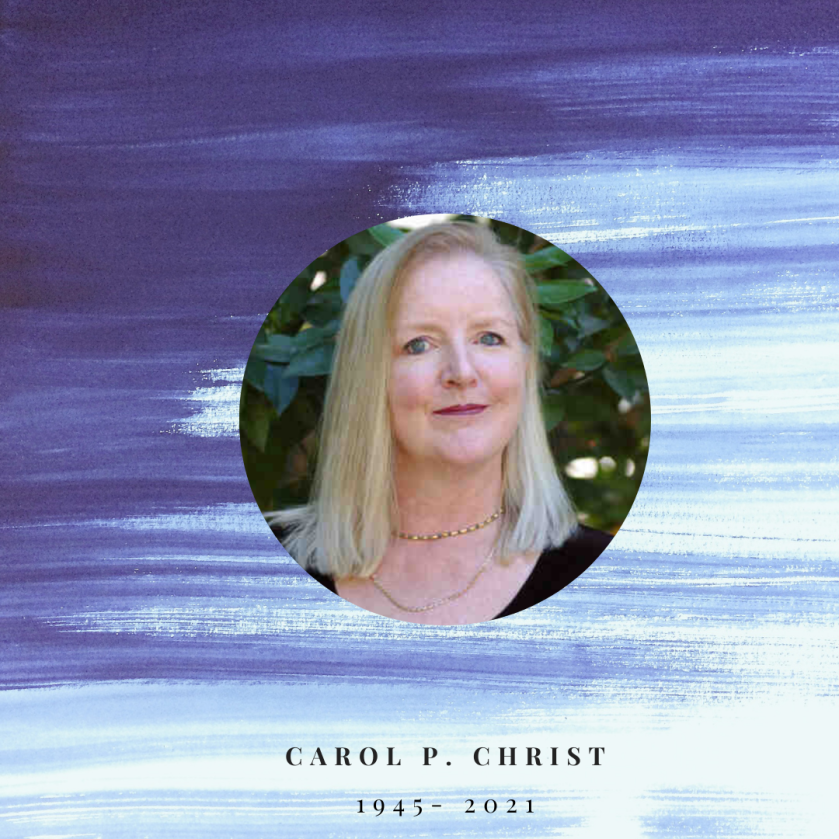
Legacy of Carol P. Christ: Can We Celebrate the Dark? Can We Sleep?

This was originally posted on December 19, 2019

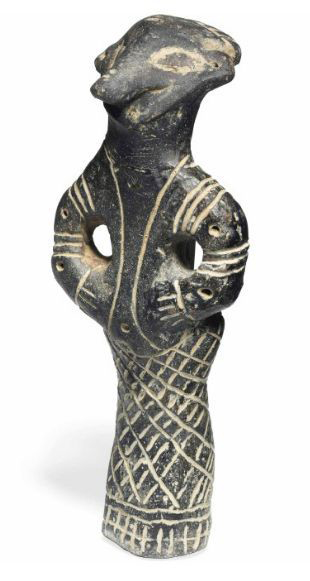
According to Marija Gimbutas, the religion of Old Europe celebrated the Goddess as the power of birth, death, and regeneration in all of life. Agricultural peoples understand that seeds must be kept in a cold dark place during the winter if they are to sprout when planted in the spring. People who work hard during the long days that begin in spring, peak at midsummer, and continue through the fall, are grateful for the dark times of the year when they can rest their weary bones on long winters’ nights. Long winters’ nights are a time for dreams, a time when people gather around the hearth fire to share songs and stories that express their understanding of the meaning of the cycles of life.

The Indo-Europeans were not an agricultural people. Herders, nomads, and horseback riders, they celebrated the shining Gods of the Sky whose power was reflected in their shining bronze armor and shining bronze weapons. When the Indo-European speaking peoples entered into a Europe, they married their Sun and Sky Gods to the Earth Mother Goddesses of the people they conquered. These were unequal marriages in which the Sun was viewed as superior to the Earth. The unhappy marriage of Hera and Zeus reflects this pattern, as do the many rapes of Goddesses and nymphs recorded in Greek and Roman mythology.

Continue reading “Legacy of Carol P. Christ: Can We Celebrate the Dark? Can We Sleep?”

Witches’ New Year: She is Everywhere by Caryn MacGrandle

Samhain, the Witches ‘New Year’ was a busy time for me. I did a workshop at a local large artist facility Lowe Mill Arts in Huntsville, Alabama. I watched and participated in a releasing burning ceremony the next night at the same artist site. There is so much we are needing to release especially with where we are in the world right now. 

And then the following night, I was in charge of a Fire Circle at the Witches Ball at Mill Kat Healing Arts Center where I host my weekly circles.

I admit to some trepidation hosting the very public Fire Circle. I live in the deep south of Alabama most definitely not known for its open mindedness. A friend told me that she shared the Witches Ball event on her facebook page and received the comment, ‘that is how they indoctrinate you.’

Oh my.

But we are not in a time to be deterred by fear. I have been called to share this magic. And people need it.

Continue reading “Witches’ New Year: She is Everywhere by Caryn MacGrandle”

Bulletproof: How BTS – and ARMY – are Changing the World

There’s this boy band I’m a little obsessed with. Try to love me. I know some of their early stuff has the toxic masculinity you’d expect from a group of teenage boys. But not only do they openly admit their faults, they keep learning and trying to do better. They’ve really matured as artists, with a genuine desire to help make the world a better place. They sing about love, and female empowerment; loneliness, social justice, and inclusion. And even though they’re from another country and culture, I love listening to them, and it’s fun to get to know them through their interviews and little jokes.

Yup. I’m a Beatles fan.

Continue reading “Bulletproof: How BTS – and ARMY – are Changing the World”

Mother Sky: I See You, I Hear You by Carolyn Lee Boyd

Deep field galaxy cluster from 4.6 billion years ago.
Deep field galaxy cluster from 4.6 billion years ago with light from galaxies 13.5 billion years old soon after the “Big Bang” 13.8 billion years ago.

The sky is telling us a story of our universe’s first moments while the cosmos sings, and now we can see and hear these wonders through our bodies as well as our imaginations, spiritual journeying, and intuition. These feats are made possible by the successful launch of the James Webb Space Telescope (JWST) and the sonification of sound waves emanating from galaxies that have, for the first time, been converted into a range audible to human ears. Now, experiences that we have only heard about in ancient myths have come to the human realm.

The JWST, according to NASA, allows us to see stars and galaxies as they formed 13.5 billion years ago. Because the light from these stars and galaxies took billions of years to reach us, we see them at the first moments of their birth.

Continue reading “Mother Sky: I See You, I Hear You by Carolyn Lee Boyd”