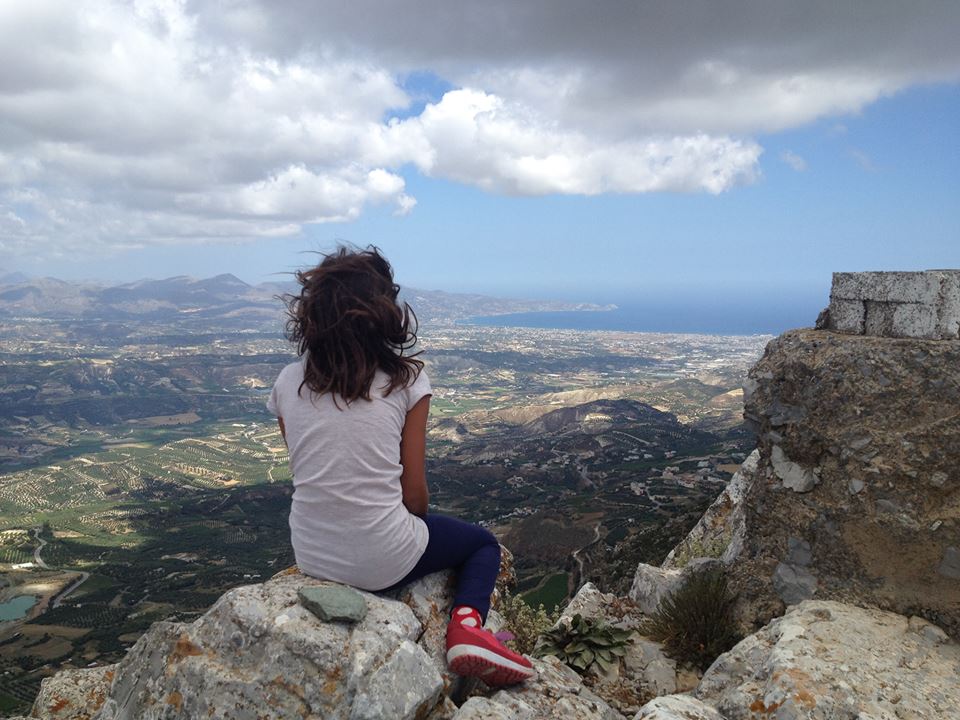
The past few years have been way too busy. Every winter I longed for quietness and solitude – for time and space to see and feel the strong bones of tree trunks and branches standing sharp against the sky and to gaze in awe into the fathomless winter night. And yet responsibilities and duties continued to yell at me for attention. The quiet gifted by Winter slipped away and soon I was on the treadmill of action offered by Spring and Summer once again.
Continue reading “Grandmother’s Story by Judith Shaw”Feeding the Birds….Refuge, Part 1 by Sara Wright

It’s another gray snowy day with large white flakes falling from the sky… January lasts “forever” every single year. I feed chickadees on my window ledge until the squirrels show up; then I scatter seed on the ground. Chickadees begin their day just before 7 AM when it is still dark, coming to the ledge. Today the turkeys are absent, fluffed up monks still hidden under hemlock boughs. The blood male cardinal appears with his usual message. I peer into the forest as the turkeys make their way across the brook and start up the hill while gazing at sage green shield lichens and two pure white birches that stand out like sentries, peeling white skin. Some maples and many hemlocks border the brook that is running clear of ice. A multitude of twigs and evergreen spires sway, branches twist and bend filling every inch of space, a comforting sight, even though all the deciduous trees are bare. Global warming turns snow to rain and back again in every storm creating ice bound paths, easily traversed by my little dogs. Dangerous for me. Often now I am housebound.
This gray world of mine needs animation from within…
Continue reading “Feeding the Birds….Refuge, Part 1 by Sara Wright”Legacy of Carol P. Christ: The Mountain Mother: Reading the Language of the Goddess in the Symbols of Ancient Crete
The blog was originally posted on May 22, 2017
Before he told the story of how his people received the sacred pipe, Black Elk said:
So I know that it is a good thing I am going to do; and because no good thing can be done by any man alone, I will first make an offering and send a voice to the Spirit of the World, that it may help me to be true. See, I fill this sacred pipe with the bark of the red willow; but before we smoke it, you must see how it is made and what it means. These four ribbons hanging here on the stem are the four quarters of the universe. The black one is for the west where the thunder beings live to send us rain; the white one for the north, whence comes the great white cleansing wind; the red one for the east, whence springs the light and where the morning star lives to give men wisdom; the yellow for the south, whence come the summer and the power to grow.
But these four spirits are only one Spirit after all, and this eagle feather here is for that One, which is like a father, and also it is for the thoughts of men that should rise high as eagles do. Is not the sky a father and the earth a mother, and are not all living things with feet or wings or roots their children? And this hide upon the mouthpiece here, which should be bison hide, is for the earth, from whence we came and at whose breast we suck as babies all our lives, along with all the animals and birds and trees and grasses. And because it means all this, and more than any man can understand, the pipe is holy. [italics added]
In this passage Black Elk illustrates the multivalency of symbols: the sacred pipe does not have a single meaning, but many meanings, in fact, more meanings than anyone can understand.
Continue reading “Legacy of Carol P. Christ: The Mountain Mother: Reading the Language of the Goddess in the Symbols of Ancient Crete”Two Steps Forward, Three Steps Back By: Anjeanette LeBoeuf
It is a new year, 2023 and with it, some truly concerning elements. One of the most all consuming is that of the persistent and continual attack on women, communities of color, non-Christian communities, and the queer community.
One of my last FAR posts talked about the situations, uprising, and horrible killings done by the Iranian Fundamentalist regime. The protests are still happening, more people are being arrested, and the death toll has continued to rise. We have also seen the death of the longest reigning monarch, Queen Elizabeth II, and the surprised resignation of New Zealand Prime Minister Jacinda Ardern.
Continue reading “Two Steps Forward, Three Steps Back By: Anjeanette LeBoeuf”Love and Other Fruits by Esther Nelson
The modern-day play “J.B.,” authored by Archibald MacLeish (1892–1982) and published in 1958, portrays a modern rendition of the Biblical character, Job, someone who became a pawn in a battle between God and Satan. God “allowed” all kinds of misery (sickness, loss of reputation, loss of wealth, and loss of children) to befall his faithful servant, Job. In MacLeish’s telling, we see that J.B. (like the biblical Job) undergoes setback after setback. In the end, J.B. comes to the realization that “He [God] does not love. He is.” Sarah, his wife, responds, “But we do. That’s the wonder.”
We (humans) spend a lot of time talking, singing, and writing about love. Sometimes we even claim to behave in loving ways. Yet, just what is love? Why do we love? How do we love?
Continue reading “Love and Other Fruits by Esther Nelson”The Patriarchal Dilemma by Janet Maika’i Rudolph
I was listening to a newscast when it was reported that the Ukraine sent missiles into Russia. My initial thought was “it’s about time they took it to the Russians.” The next moment I was horrified at myself. I am a pacifist. I think the proliferation of weapons is one of humankind’s great evils and here I was cheering on an attack. One that could escalate an already nasty war, lead to nuclear weapons use and possibly even a world war. And yet when I look at what is happening in Ukraine, my mind simply can’t comprehend what the people are going through. The trauma of the children cuts particularly deeply. And I can see no sane reason behind the strikes other than rank cruelty.
There it is in a nutshell, what I have come to call the patriarchal dilemma. It’s a no-win situation with no right answer. While life might place us in such positions all on its own, the patriarchal form of this is created by design. It is nasty, it is cruel, and loss of human life and ecological destruction are not glitches but features.
Continue reading “The Patriarchal Dilemma by Janet Maika’i Rudolph”The Motomami Theology: “Segundo chingarte, lo primero Dios.”* Part II
*“God comes first. Fu*king you, a close second.”
In Part 1 of this post, I described my first encounters with Rosalía’s music and visual arts, which are controversial for many, but I find them wonderful. I mentioned how she integrated God, mainly Catholic references and images, into a story of love and suffering in El Mal Querer. But I finished emphasizing my surprise when I listened to the album Motomami, since she managed to combine reggaeton (sexual-indecent music) and her views of God.

So, here is my attempt to describe Rosalía’s theology in Motomami. (Before I start, let me say: yes, I heard every song multiple times collecting references of God or the Christian tradition, so I hope you enjoy it.) Rosalía understands God as someone who controls our destinies amid grief and joy. In Como un G she says “It’s sad when you want something, but God has different plans for you” (“Qué pena cuando quieres algo pero Dios tiene otros planes pa’ ti”.) In Diablo, she says, “What God gives, God takes back” (Si Dios te lo da, te lo quitará), referring to her fans who first loved her but afterward became haters. God also protects us from an evil former partner when she says in Despecha‘ “May God forbid I go back to you” (“Que Dios me libre de Volver a tu la’o). God also is our help and supports our choices. Rosalía brings this concept talking about her identity as a woman, her freedom and autonomy in Saoko: “I know who I am, and I don’t forget where I’m going. I’m driving while God guides me. I am mine and I transform myself” (“Sé quién soy, y a dónde voy nunca se me olvida. Yo manejo, Dios me guía.)
Continue reading “The Motomami Theology: “Segundo chingarte, lo primero Dios.”* Part II”The Motomami Theology: “Segundo chingarte, lo primero Dios.”* Part I
*“God comes first. Fuc*king you, a close second.”
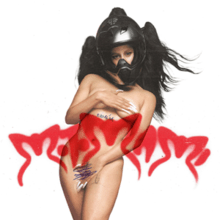
I went to Rosalía’s promotional concert for the Motomami album in Boston a month ago. I knew some songs from her 2018 album El Mal Querer (Bad Love), a musical masterpiece. That album made Rosalía a visible star in the constellation of musicians and composers in Hispano-American mainstream music. The album has a particular story that Wikipedia explains very well:
The album was written by Rosalía and co-produced with El Guincho on an initial low budget as an independent artist. Presented as experimental and conceptual, revolving around a toxic relationship, the album was inspired by the anonymous 13th-century Occitan novel Flamenca. Therefore, every song on the album is conceived as a chapter of the book. It served as the singer’s baccalaureate project, graduating from Catalonia College of Music with honors. [Read more here]
In El Mal Querer, Rosalía mixed electronics, contemporary dances and rhythms, and traditional flamenco sounds and movements in a beautiful musical and visual collage. Some musically conservative audiences characterized the album as the “profanation” of traditional flamenco music, but there’s no doubt that Rosalía brought the genre back to life and made it mainstream again.
Continue reading “The Motomami Theology: “Segundo chingarte, lo primero Dios.”* Part I”A Womanist’s Perspective by Sara Wright
Last night I was listening to plant scientist Monica Gagliano who is pushing the boundaries of what we know about plants. She proved that plants respond to the sound of water by moving toward it and cannot be tricked. Bio-acoustics is the study of sound and Monica is researching other ways that plants communicate. We know they use chemical messengers to warn each other above ground and below through the mycelial network thanks to the work of Suzanne Simard who I shall discuss in a moment. We have learned that plants emit electrical impulses. But Monica is studying another way that plants communicate. She says they listen to all the plants around them and learn from each other so that they do not have to re-invent the wheel with each generation. In one amazing memory experiment mimosa plants taught her that plants remember what happened to them previously and don’t repeat their mistakes. The Mind of Plants was her first book. She also studied with Indigenous healers in the Amazon and discusses this mysterious and compelling journey in her latest book Thus Spoke the Plants.
Continue reading “A Womanist’s Perspective by Sara Wright”Legacy of Carol P. Christ: Mountain Mother, I Hear You Calling
This was originally posted on July 7, 2014
The mountaintop shrines of Mount Juctas in Archanes, Crete are situated on twin peaks, which may have symbolized breasts. Ancient shrines on the northern peak date from 2200 BCE until at least the end of the Ariadnian (Minoan) period in 1450 BCE. A crevice in the rock was filled with offerings of pottery, clay images of women and men in ritual dress, diseased bodies and body parts, sheep and cattle, and other objects. Excavations to a depth of 13 meters did not reach the bottom layers. Many offerings had been burned, suggesting that the objects were first thrown into fire and then dropped into the crevice. People who climbed the mountain for the festivals would have spilled over both peaks and there may have been shrines as well as fires on both of them.
Continue reading “Legacy of Carol P. Christ: Mountain Mother, I Hear You Calling”