Memories of Greek Easters Past by Carol P. Christ

Yesterday was Greek Easter and as Greece was still on lockdown, friends brought a lovely meal of roast chicken and vegetables, scalloped potatoes, green salad, and pineapple upside down cake, which we ate together on my balcony. Still I could not help remembering Easters past. This blog was originally published in 2013.

Though I am not a Christian any more, I don’t want to sit home alone on Easter Day.  Besides being a Christian ritual, Greek Easter is a time to eat lamb with family and friends, and to celebrate the coming of spring by feasting out-of-doors in flowering fields or in a garden filled with flowers, bees, butterflies, and birds.  Such rituals have been celebrated from time immemorial.

lavender

Greek Easter came late this year, only yesterday, May 5.  I prepared for an Easter party in my garden for weeks.  My garden is planted with herbs and aromatics—lavender, thyme, oregano, rosemary, curry plant, rue, sage, cistus, rose-scented geranium, sweet william, cat mint and several other kinds of mint, bee balm, and roses and fruit trees, including lemon, bitter orange, pomegranate, olive, quince, and cherry.  Everything blossoms in spring, attracting bees and butterflies.

purple sage

I began weeding and pruning about 6 weeks ago.  This year I had to remove many overgrown lavender plants.  For the last 3 weeks in addition to ongoing weeding and pruning, I have been replanting lavender which I have promised myself to prune “way back” in the fall, along with purple sage, blue daisies, and thyme.  Though there is bare ground in some parts of the garden, in other parts mature plants and trees are in full flower.

I have my breakfast in the early morning on a terrace from which I can see the garden and the sea.  I love to” just sit” in the garden at this time of year. My thoughts cease as I enjoy the flowers, new ones every few days, and watch birds, butterflies, bees, and my two tortoises.  Then my eyes come to rest on a task that needs doing, and I work for an hour or more as the sun comes into the garden.

hoopoe

There is a flowing fountain in the center of my garden that attracts birds. This year as in other years, there is a nest of great tits in a hole in an old locust tree.  This tree is an import from America favored by the Ottomans, planted decades ago by someone whose name I do not know.  One morning in early spring a migrating hoopoe landed above my head in the other locust tree.  A hoopoe is a magnificent rust-colored bird with a black and white wings, a crown that can be opened or closed like a fan, and a long down-curved bill.  Its arrival–a garden first– felt like a blessing.  This spring I have seen blue tits, sparrows, collared doves, chaffinches, goldfinches, and for the first time a pair of black-eared wheatears drinking and cavorting in the fountain.

testudo marginata face

With the old lavender bushes gone, I have been able to see the tortoises with whom I share the garden more clearly.  They wake up about ten as the sun begins to shine on the stone paths in the garden.  They warm themselves for a while, and then start searching for food. Last year they “weeded” the garden for me—though they didn’t care for the bermuda and other invasive grasses.  This year I feed them greens and vegetables.  When the first rose petals fell to the ground, I remembered that, like us, they have a “sweet tooth”—besides flower petals, they like tomatoes and other fruit. They don’t actually have teeth, but rather hard gums, which are quite effective for munching and sometimes gobbling down food.  After eating, they wander around the garden and usually have sex at least once (they are both boys), before they crawl under the bushes to wait out the hottest part of the day.  They wake up again in the late afternoon.

I find it amazing to be sharing my garden with two reptiles whose ancestors perfected their evolution 200 million years ago when Pangaea was a single continent.  I marvel at the agility they have despite their heavy shells.  They push themselves up low steps and slide back down. They can get from one side of the garden to the other quite quickly when they want to.

Greek-Easter-Bread-Tsoureki

All of my garden preparation culminates at Easter when I make a party for my friends.  I order the lamb early in the week and make a pilgrimage with one or two others to a mountain village to pick it up. Along the way we stop to admire migrating birds in the wetlands of Kalloni and the wildflowers in the fields and on the hillsides.  In the village we also buy braided sweet Easter bread called tsoureki, cooked with a red Easter egg in its center, and tiny Greek sweets called baklava and kataiifi, made of thin pastry, nuts, and honey.  We lunch at a favorite taverna in the village, before  returning home.

My house, which is over a hundred years old, originally had its kitchen in the garden:  the old brick oven and an open fireplace remain.  I use the oven only on Easter to roast a lamb that cooks all night long and into the morning.  I save tree prunings, rosemary and lavender clippings, and collect driftwood for the fire.  It must burn fast and hot.  I wait until midnight to light it.

In the evening, I prepare the rice as the Greeks once did in Smyrna with orange and lemon juice, black currants, golden raisins, pine nuts, mint, parsley, and onions. I use it to stuff the lamb.  I make tzatziki with yogurt, cucumber, and garlic, garnishing it with mint from the garden.  The next day friends will bring potato salad (as my Grandma made it) and a green salad to which I will add mint, dill, and bee balm from the garden.

At midnight the church bells peal announcing “Christos anesti,” “Christ is risen.” The village rings with the sounds of firecrackers and the sky is lit by fireworks.  This is the moment I choose to light my fire.  I revel in the feeling of danger within and without. The fire burns wildly for at least an hour “until the bricks turn white.”  Then I push the flaming wood to the sides of the oven, watch the embers burn down until they are small glowing coals, insert the lamb, shut the oven door, and go inside.  I am always too excited to fall asleep immediately.

When I wake, I check to be sure the lamb is cooked, but don’t open the oven door again until my guests arrive.  I take my time setting up folding tables next to the marble table with stone seats in the secluded area that used to be a kitchen.  I think of the generations of women and girls who used the oven where the lamb awaits, as I bring the taverna chairs and cushions out storage.  I spread out tablecloths from Crete and set out ceramic dishes from Skyros–painted with birds, flowers, mermaids, sailing ships, and people in traditional dress–pink wine glasses, pink and blue cloth napkins.  Like the garden, my table is a feast of color.

Before the guests arrive, I sit in the garden and wait.  A song of thanksgiving reverberates in my mind:

Gardem Easter 2013

This is my Mother’s world,

And to my listening ears,

All Nature sings,

And ‘round me rings,

The m-u-s-i-c of the spheres.


Easter Lamb Smyrna Style


Easter lamb stuffing Smyrna style

2 cups white long grain rice

2 T black currants

2 T golden raisins

2 T pine nuts

2 T olive oil

1/4 cup chopped fresh mint

1/2 cup chopped parsley

2 onions chopped

juice of one orange (and/or lemon)

salt and pepper to taste

(you can also add the liver, cooked and chopped)

Cook the onions in the olive oil, add the rice and orange juice, cook lightly, add the other ingredients stir.

Spoon into the cavity of a cleaned lamb carcass with the legs but without the head.

Can also be used for chicken.  If not used as stuffing, add enough water to cook rice.  Amounts of ingredients can be varied.

*Smyrna is the Greek name for Izmir, a city where Greeks lived for many centuries, until 1922, the year of the “great catastrophe” when many of them fled to Lesbos, Chios, and Samos, while others ended up in Athens.

Easter 2013

Bio

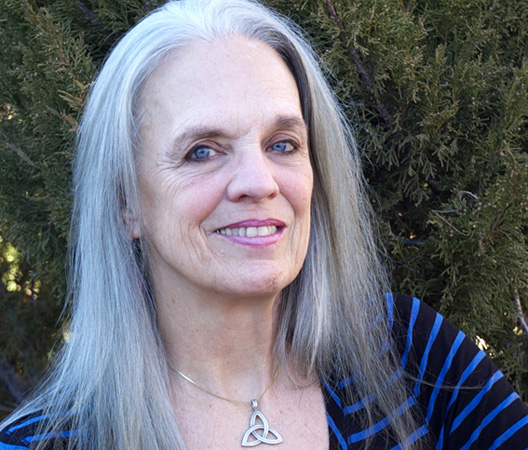
Carol P. Christ is an internationally known feminist and ecofeminist writer, activist, and educator who lives in Heraklion, Crete. Carol’s recent book is Goddess and God in the World: Conversations in Embodied TheologyCarol has been leading Goddess Pilgrimage to Crete for over twenty years: join her in Crete. Carol’s photo by Michael Honneger.

Listen to Carol’s a-mazing interview with Mary Hynes on CBC’s Tapestry recorded in conjunction with her keynote address to the Parliament of World’s Religions

A Wish-Fulfillment Dream by Barbara Ardinger


Rest awhile, Dear Reader, and dream along with me. We’re standing on a corner, call it Main Street, Any City, USA. We’re chatting, passing the time of day, being happy we can stand among other people without the fear of a giant virus jumping out of someone’s breath and attacking us. It’s a nice day here on the street. Not much traffic.

Oh, look—there’s a huge box in the middle of the intersection. It’s shabby, looks to be made of old, thin wood loosely clamped together. The box starts shaking, rocking back and forth. What’s in there? Something is obviously trying to get out. As we watch, an orange mist starts seeping out through the cracks in the box. More shaking. Now the box seems to be jumping. More orange mist. And the box shatters. An orange form—is it human? It’s fat. It’s shaking an iPhone. Or is that a golf club? The orange one speaks. “Do you miss me yet?” “Stand back and stand by.” “I’ll be baa-ack.”

Continue reading “A Wish-Fulfillment Dream by Barbara Ardinger”

Beltane and Greek Easter: Mary and the Goddess by Laura Shannon

Today, May 1, we celebrate Beltane, the Celtic festival between the Spring Equinox and the Summer Solstice. Starting tonight, we also celebrate Greek Easter, with its ritual drama of life and death. 

In the Western Church, Easter never falls as late as May, but in the Orthodox calendar, Easter and Beltane more or less co-incide every few years. It’s a reminder of connections between Christian and pre-Christian traditions, both in the archetypal cycle of life, death, and regeneration, and in links between the Christian Mary and the pre-Christian Goddess in her various names and forms.

Continue reading “Beltane and Greek Easter: Mary and the Goddess by Laura Shannon”

REVELATIONS: The Mysticism of Julian of Norwich and Margery Kempe

My new novel REVELATIONS is drawn from the lives of two medieval mystics who changed history—Julian of Norwich and Margery Kempe, two very different women whose paths converged and who, I believe, have much to teach us today.

Women’s spiritual experience is a theme that keeps coming up in my novels. Perhaps some of you have read my novel ILLUMINATIONS, about the visionary abbess, composer and polymath, Hildegard von Bingen.

As a spiritual person myself, I’ve always found it frustrating how women have been side-lined and marginalized in every established religion in the world. Yet from time out of mind, mystic and visionary women of all faith traditions have offered radical resistance. They have subverted institutional patriarchal religion from within and found their own direct path to the divine by plunging into the deep mysteries of the soul on a path of inner revelation. Julian of Norwich called God Mother and devoted her life to writing about the Motherhood of God. Similarly, Hildegard of Bingen wrote about her visions of the Feminine Divine. This isn’t a modern feminist interpretation. It’s right there in the original texts.

Like us today, Julian of Norwich and Margery Kempe lived in a time of pandemic and social upheaval, yet both women bore witness to the divine promise that ultimately all shall be well.

Continue reading “REVELATIONS: The Mysticism of Julian of Norwich and Margery Kempe”

BFF – Or, The Delicate Dance of Female Friendship by Joyce Zonana

Like so many others, I learned this jingle, actually the opening of a lovely poem by Joseph Parry, during a brief stint in the Girl Scouts when I was nine or ten. I’m not sure I understood it then—what was wine, after all? what did it mean for it to “mellow and refine”?—but the words stayed with me, echoing unbidden through the years and shaping many of my choices.

Joyce Zonana   

     Make new friends, but keep the old;

        Those are silver, these are gold.

     New-made friendships, like new wine,

        Age will mellow and refine.


Like so many others, I learned this little jingle, actually the opening of a lovely poem by Joseph Parry, during a brief stint in the Girl Scouts when I was nine or ten. I’m not sure I understood it then—what was wine, after all? what did it mean for it to “mellow and refine”?—but the words stayed with me, echoing unbidden through the years and shaping many of my choices.

I’m sure it was thanks to these words that, three years ago, I found myself dancing at the wedding of my childhood best friend. Deb lives in Southern California; I live in New York. Yet I never had the slightest hesitation about saying “yes,” I’d attend. This was to be her second marriage, after a painfully failed first. For years she’d sworn she would never remarry; the wonderful man she’d been living with for two decades finally persuaded her. Clearly, a moment to celebrate. And although we’d missed all the other milestones in each other’s lives, I knew I had to be there for this one.

At Deb’s San Diego wedding, 2018

I’ve known Deb since we were seven; we’re now both in our seventies. For nearly forty years we had no contact—different cities, different lifestyles, different choices. But when Deb sought me out after Hurricane Katrina (I’d been living in New Orleans and somehow she knew that); when she came to see me in New York and we revisited our childhood haunts; when she took to phoning me regularly on Jewish holidays—I was irresistibly drawn back into this relationship that linked me not only with her but with my own self over time. (“For ’mid old friends, tried and true / Once more we our youth renew.”)

Continue reading “BFF – Or, The Delicate Dance of Female Friendship by Joyce Zonana”

Wren, Herald of Dawn by Judith Shaw

Wren, the first bird to sing at dawn, is known as the Herald of Dawn. It calls out its joy as each day begins. 

Continue reading “Wren, Herald of Dawn by Judith Shaw”

One-In-A-Million by Marcia Mount Shoop


Today I am fully vaccinated. It’s been two weeks since I got the Johnson and Johnson vaccine. The day after I got the vaccine was the day the New York Times headline read, “Johnson & Johnson Vaccinations Paused After Rare Clotting Cases Emerge.” People told me not to worry, “it happens to only one in a million people.”  

That “one-in-a-million” argument isn’t what calmed me down. The “one-in-a-million” odds had already struck once in our household over the pandemic when my husband was diagnosed with a rare kind of cancer. A one-in-a-million kind of cancer. And to top it off, it was his second cancer diagnosis during the pandemic. He turned 51 years old this past August and has spent most of the pandemic either waiting for treatment, receiving treatment, or in recovery from treatment. A lot of the year he has been and continues to be in considerable pain and discomfort. 

Continue reading “One-In-A-Million by Marcia Mount Shoop”

“Finding The Mother Tree” by Sara Wright


Susan Simard received her PhD in Forest Science and is a research scientist who works primarily in the field. Part of her dissertation was published in the prestigious journal Nature. Currently she is a professor in the department of Forest and Conservation Sciences at the University of British Columbia where she is the director of The Mother Tree Project. She is designing forest renewal practices, investigating the ecological resilience of forests, and studying the importance of mycorrhizal networks during this time of climate change.

Susan’s research over the past 30 plus years has changed how many scientists perceive the relationship between trees, plants, and the soil. Her intuitive ideas about the importance of underground mycorrhizal networks inspired a whole new line of research that has overturned longstanding misconceptions about forest ecosystems as a whole. Mycorrhizae are symbiotic relationships that form between fungi and plants. The fungi colonize the root systems of plants providing water and nutrients while the plant provides the fungus with carbohydrates. The formation of these networks is context dependent.

Continue reading ““Finding The Mother Tree” by Sara Wright”

Myanmar’s Dangerous Military Coup by Anjeanette LeBoeuf

On February 1st, a successful military coup took place in South Asia. The national military of Myanmar arrested top non-military officials and seized all power. While this February coup happened in South Asia, it could have happened on our very shores. Myanmar’s successful military coup d’état took place almost a month after the unsuccessful January 6th attack on the US Capitol.

Continue reading “Myanmar’s Dangerous Military Coup by Anjeanette LeBoeuf”

Sleeping Beauty: An ancient tale for these challenging times by Diane Perazzo

Fairy tales are intwined in our imagination and our spirituality. As Jane Yolan writes, one of the subtlest and yet most important functions of myth and fantasy is to “provide a framework or model for an individual’s belief system.” (1)

In the Reclaiming spiritual tradition, we often use fairy tales in healing and self development work. These stories act as warp and weft as we weave and spin complex ritual arcs and other events that take place at extended Witch Camp sessions. In Twelve Wild Swans, Starhawk points out that fairy stories are “more than just encouraging and inspiring. They are also templates for soul healing from Europe’s ancestral wise women and healers. When the ancient Earth-based cultures of Europe were destroyed, these stories remained.” (2)

Continue reading “Sleeping Beauty: An ancient tale for these challenging times by Diane Perazzo”