

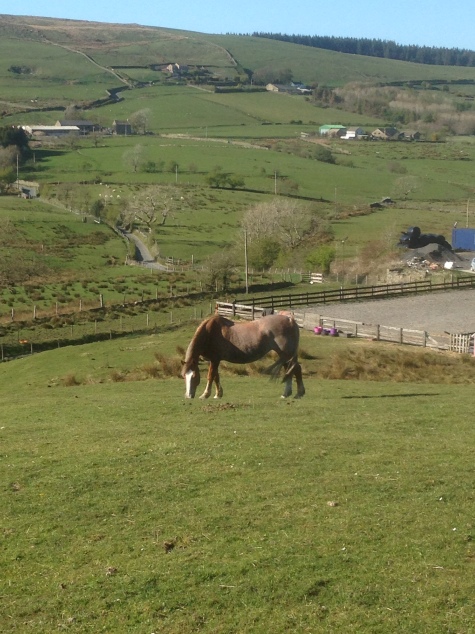
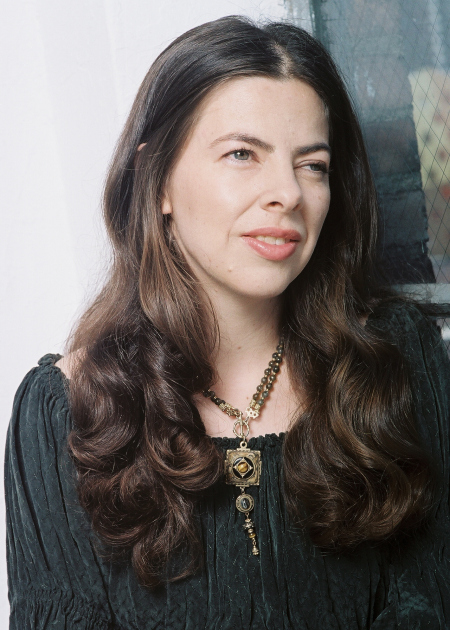
Ms. Boo, aka Queen Boudicca, in the heart of Pendle Witch Country.
Though I was born and raised in Minnesota, I have wandered the world as an expat writer nearly my entire adult life, living in Belgium, Austria, and Germany, before moving to Pendle Witch country in northern England in 2002. I fell in love with the beautiful, rugged moorland, haunted by its history of the Pendle Witches, who cast their everlasting spell on the land. This was the landscape that inspired my 2010 novel, Daughters of the Witching Hill, which casts the Pendle Witches in their historical context as cunning women and healers. Indeed I was inspired enough to write seven out of my eight published novels in Lancashire. The mythic name for that part of Northern England is Brigantia–simultaneously the name of the Celtic Goddess of the land, the tribe of people who made their home there, and the land itself.
As a novelist, evocation of place is my passion. The question I ask myself is what makes this place I’m in now unique, unlike any other place I’ve ever been? What song does the land sing? What stories does it have to tell? What ancestors and elders cry out from the depths of the earth? I am obsessed with local history and regional folklore and myth, and how these stories merge with the landscape itself. History is a fluid thing that, together with folklore and myth, continually shapes the present. As contemporary storyteller Hugh Lupton has said, if you go deep enough into the old tales and can present them in an evocative and meaningful way to a modern audience, you become the living voice in an ancient tradition—every storyteller’s dream. This is what I aspire to do in my life’s work. Continue reading “The Grace of Letting Things End by Mary Sharratt”

 I’ve been puzzled for a long time why people, especially conservative Christian people who seem to be decent human beings, enthusiastically support Donald Trump, our current president. My thinking stems from my own experience of being brought up in an evangelical, fundamentalist space.
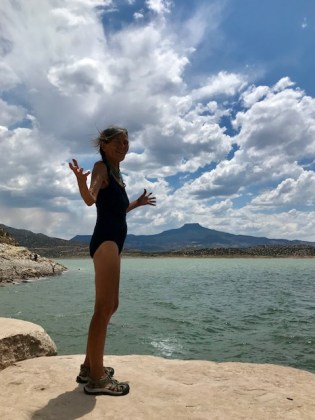 I was deeply moved by
 As I write this in late June, the news is still pretty depressing. Pandemic. Politics. Corruption. No no no. I can’t write anything current and cheery, so here’s another bit of distracting nonsense from my so-called archive.
 The fierce light of the white star pierced her thick white fur as the mother froze. She was trying to imagine how her cubs could make the jump from one jagged ice flow to another in the cracked deep blue waters.
 When I moved to Maine from New Orleans 15 years ago, I was delighted to discover how many birch trees were on the property where I lived with my new partner. Previously I had had little contact with these beautiful white trees, other than in pictures and stories. The name always evoked images of birch bark canoes and messages to fate scrawled with bits of burnt wood.
 About six months ago I was hired to write a curriculum for a Jewish organization on biblical women in ancient and contemporary midrash. Midrash—the ancient process of creative interpretation of sacred text that began two thousand years ago and continues to this day—has been one of my fields of expertise, and women in midrash is a particular specialty. I knew the first lesson I wrote would be on Eve (Chava in Hebrew), the first woman of Genesis. Yet as I began to write lessons, I started with Sarah and Hagar, then proceeded to Rebekah and Lot’s wife, Rachel and Leah, even Asnat (Joseph’s wife) and Naamah (Noah’s wife). It became clear over the months that I was avoiding Eve. Whenever I began to think about beginning “her” lesson, I grew anxious and immediately began to think of something else. Only when I had already written six of my ten lessons did I finally, reluctantly, begin to research ancient legends and modern feminist poems on the first foremother of the Bible.
