When Networking Feels Like My Soul is Dying by Melody Stanford

Melody

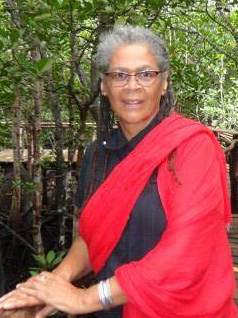
A few months ago I sat down to eat with Dr. Kwok Pui Lan. We were meeting because I had voiced some personal struggles during our class, and she offered to have a meal with me. 

I was nervous, mesmerized by her accessibility – by her – for all the many things she has accomplished.

Over plates of chicken and rice, we sat, chewing. Professor and student. She smiled, and waited for me to start speaking. I told her in spurts that I was struggling through my semester at seminary and didn’t know what gave me hope anymore. I didn’t know why I was doing this. I asked what gave her hope.

“Well,” she said, “thirty years ago, there was no such thing as Asian feminist theology. My friends and I got together, and we started it.” She said, between bites of chicken. “You just started it?” “Yes,” she replied. She and her friends sat around, over glasses of wine, and talked.

And those nights of friendship became a global conversation.

Continue reading “When Networking Feels Like My Soul is Dying by Melody Stanford”

God is Too Big by amina wadud

amina 2014 - cropped

In my current casual reading, a novel, the answer to the question “and where is God for you?” was expressed this way:

“Definitely in the car with us as we talk and exchange things, and change each other in the process…People have things they want to give away, or they want things they don’t know where to look for, and they need containers to pool their information. This night is far too large for us to rattle around in on our own. It’s a perfect fit for God, but we need our container. We need one another for God to work through us: that’s something I experience every day. The concept of God is way too big for me to get my mind around, but despite that, maybe even because of it, the relationship keeps growing and changing.  Sometimes it grows so slowly it seems it’s stopped. Or gone in reverse. Then when I least expect it, it takes a big leap forward.”

I was struck by this first because of the concept of God being “way too big.”  I struggle with this and yet would have it no other way. I have gone out my way to kill off the childhood concepts of God, referred to in that book Your God is Too Small. It explains that for many people, their concept of God has not advanced far from the one they had as a child – from the Big Bad Punisher to the tooth fairy God of requisition. As a strict monotheist, I constantly fight to smash the idols of my own imagination or preoccupation. To get God out of any box.

Continue reading “God is Too Big by amina wadud”

Sanctuary of Echoes by Natalie Weaver

Natalie WeaverTomorrow I will have the unique opportunity to hear my son recite a poem I wrote before his class. The students were invited to select a poem to memorize and perform along with props or costumes as suited the material. The only conditions were that the poem be a minimum of twelve lines, published in a book, and in good taste. A poorly chosen poem, he said, would result in perpetual detention.

I was excited when he expressed enthusiasm for the assignment. I asked him what kind of poem he would like to learn. Something humorous? Something dramatic? Something tragic? Something about love? War? I read to him first those famous opening words of Virgil’s Aeneid: Arma virumque cano (I sing of arms and a man…). I thought surely he would be intrigued by the rhythm and the promise of such a tale. He asked for some other options, so I presented favorites from the Medieval Hebrew canon. I taught him Adon Olam, since he was curious about learning poetry in a foreign language. He liked it quite a bit and learned how to pronounce the Hebrew, but this was not his choice. I pulled out selections from Catullus’ eulogies for his brother. I searched Sappho for something playful. We read more contemporary options from the usual suspects in an anthology of poetry that I had used in a college course: Frost, Dickinson, Poe. I even introduced him to the seductive “duende” of the great early 20th century Spanish poet Federico Garcia Lorca in his Poet in New York.

Continue reading “Sanctuary of Echoes by Natalie Weaver”

Musings on Reification by Sara Frykenberg

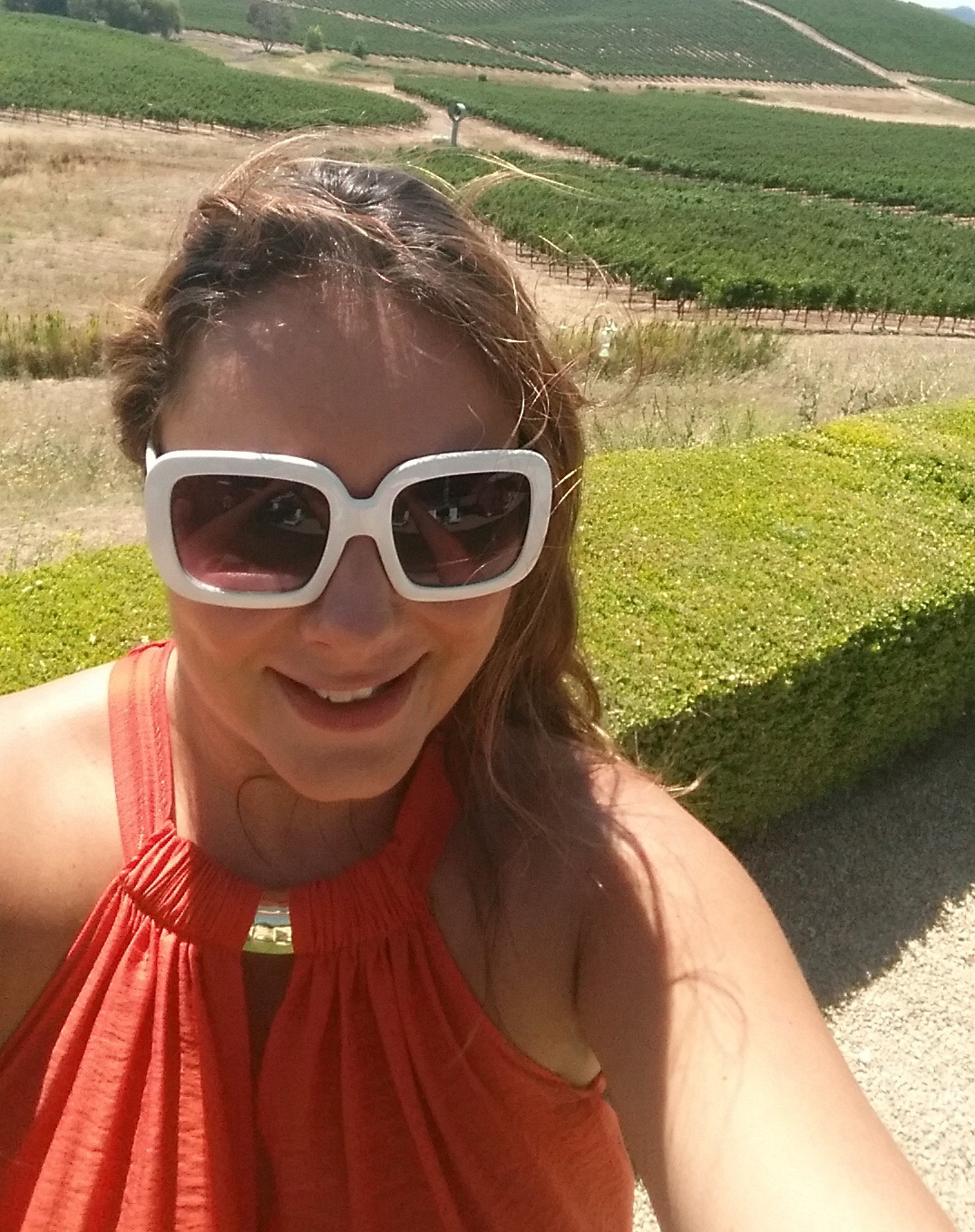
Sara FrykenbergThe following is a bit of a messy and meandering blog: a kind of a ‘brain train,’ that starts with a question of reification and eating disorders, and moves into a sense of the literal ‘consuming’ nature of oppression.   So I will start with a ‘thank you’ to readers who will meander with me and with gratitude to the teachers whose thoughts I am wandering with along the way.

Reification is the process by which those created ideas that we externalize into institutions, concrete objects, or social principles then become so real to us that we tend to think of them as a separate reality or a thing/ life in and of itself.[1] I teach this concept in my ethics classes when we discuss the way in which actions and choices are connected to what we often consider to be external forces like “the government,” or “the economy,” when in fact, we are in relationship to and often, actively play a role in maintaining these realities (even when only playing a small role). Reification can subversively undermine our understanding of response-ability because it is a way of making the structures that form our society “other” than ourselves.

My students definitely struggle with this concept and often express the fear that they are too small as individuals to see any real change happen. (I too, often struggle with this fear when thinking about the reified ‘monsters’ of oppression and hate.) Dealing with this discouragement in class, I (and we) switch gears by emphasizing praxis and recognizing its successes. I ask my students to consider what can be done and what choices/changes I, they, or we are capable of making while re-membering changes already being made. As Gustavo Guiterrez says: “Pessimism comes from reality because reality is tragic, while optimism comes from action because action can change reality.”[2] Continue reading “Musings on Reification by Sara Frykenberg”

IS EVIL PART OF THE NATURE OF REALITY AND DIVINITY? by Carol P. Christ

 carol-christWhat is the origin of evil? Is it innate in human nature or even in the nature of the universe? Judith Plaskow and I discuss this question in our forthcoming book Goddess and God in the World and this is a chance to listen in our conversation.

I am responding to Judith’s allegation that in imagining Goddess as loving and good I am fantasizing an ideal deity who exists apart from the evil-and-good world that we know. Judith speaks of an “evil impulse” in human beings which she considers to be innate in human beings and in the nature of reality. Judith says that my “defense” of the goodness of God comes down to “the traditional free will defense.” She also questions my view that human beings can 

I argue that it does not because the traditional free will defense imagines an omnipotent God who existed before the creation of the world. Then I continue:

I think what you meant to say is that like those who invoke the traditional free will defense of the omnipotent God, I attribute humanly chosen evil entirely to human beings—and not to Goddess or God. Continue reading “IS EVIL PART OF THE NATURE OF REALITY AND DIVINITY? by Carol P. Christ”

The Bee Goddess Calls by Judith Shaw

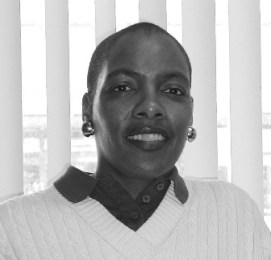
judith ShawSpring arrived in the Northern Hemisphere and all of Goddess’s children are waking up from our winter slumbers.  Birds are singing, fruit trees are blossoming, bees are buzzing, and early spring bulb flowers are in full bloom.  Signs of spring fever are evident as we find ourselves full of energy and vitality for new projects and relationships.

As new life emerges from the Earth we can more easily reflect on our place in the greater scheme of life.  It’s a good time to question the values of our consumer society and ask if there is another way.

In contrast to these values of domination, separation, and consumption, ancient wisdom traditions teach that we are all connected – to each other, to all life, to the whole natural world and to the spiritual cosmos. Continue reading “The Bee Goddess Calls by Judith Shaw”

My Afternoon with Amina Wadud: Some Pearls of Wisdom for a Warm Autumn in Santiago by Vanessa Rivera de la Fuente

Vanessa Rivera de la Fuente. Amina WadudAlbert Einstein said that there are two ways for understanding life: One, to believe nothing is a miracle; the other, to believe everything is a miracle. I think life is a bit of both. There are experiences that result from a chain of events we can easily recognize. Others are just a gift. My meeting with Amina Wadud was of the second kind – a beautiful gift from life in the beginning of the autumn in Santiago of Chile.

Meeting The Lady

Since I converted to Islam, around 5 years ago, and started my path now as a feminist Muslim, it is not possible to explain one without the other in my life history- the presence, words and activities of Amina Wadud have been a source of inspiration for me.

Her book, Quran and Woman, was the first approach to and basis for an Islamic Feminism that stands with strong feet against misogyny and fundamentalism in the name of religion. Her courage when she dared to preach a jutba (sermon) and lead a mix prayer – something still forbidden officially for women in Islam – led us to question our  physical place and its symbolic meaning in the mosque. Her vocation as a globetrotter, talking, meeting, and encouraging people in the world to build new meanings and communities based in freedom of spirit, made me understand that the message of Islam and its different reading on gender, is not only on behalf of Muslim women or Muslims in general, but is on behalf of all humankind, like a whole family looking for social justice and freedom, passengers in this big mosque and madrassa that is Allah’s creation.

Continue reading “My Afternoon with Amina Wadud: Some Pearls of Wisdom for a Warm Autumn in Santiago by Vanessa Rivera de la Fuente”

Meditating on Oneness by Amy Wright Glenn

Utah native Amy Wright Glenn will talk about her book: "Birth, Breath, & Death: Meditations on Motherhood, Chaplaincy, and Life as a Doula." Courtesy Amy Wright GlennAt the age of fourteen, I began to question the Mormon faith of my family. I embarked on a life long personal and scholarly quest for truth. While teaching comparative religion and philosophy, I was drawn to the work of supporting women through labor and holding compassionate space for the dying.

In my book, “Birth, Breath, and Death,” I share moving tales of birth and death while drawing on my work as a doula, hospital chaplain, and mother. I weave together these stories with philosophical reflections on truth, meaning, and Spirit.

This is an excerpt taken from the first chapter entitled “Search.”

I spent much of my early twenties traveling throughout The Middle East and India. I lost track of time gazing at an ancient copy of Homer’s Iliad at a museum in Cairo. I remember sleeping through a freezing cold night on Mt. Sinai and awakening to a brilliant sunrise over the Arabian Peninsula. I climbed the pyramids in Egypt and protested the Israeli occupation of the West Bank with Arab and Jewish women peace activists. For a year, I studied in Jerusalem. Later, I dedicated myself to the practice of meditation at an ashram in the Himalayas.

A lively mix of debate and discussion characterized my Hebrew University days. In the evenings, I worked illegally as a waitress in the Jewish Quarter of the Old City. Adorned in Roman attire, I served fantastic platters of Middle Eastern cuisine and performed folk songs and dance routines for photo-snapping tourists. I was nineteen and living in Jerusalem, a place saturated in religious symbolism. Known as Al-Quds in Arabic and Yerushalim in Hebrew, Jerusalem is a city renewed and ravaged due to contested paradigms of poetry and politics. Continue reading “Meditating on Oneness by Amy Wright Glenn”

In Memoriam – God Hates Fags

Phelps didn’t just live a life filled with hate but he also embodied the very reasoning why so many communities cannot cross that proverbial bridge to work together to see past their differences and maybe never will. In the case of Phelps, sticks and stones may break our bones, but words really do hurt.

Fred Phelps, an American PasFred Phelpstor who headed the Westboro Baptist Church in Topeka, Kansas died at the age of 84 on March 19, 2014.  While some individuals leave behind legacies of their good deeds and loving memories, the only thing Phelps left behind was a family and church founded on the principle of hate.

A frequent eyesore at various events ranging from military funerals and gay pride gatherings to mainstream events that captured the attention of our pop-culture obsessed society, Fred Phelps and his clan believed it was their sacred duty to warn others of God’s anger over the growing acceptance of not only modernity in general but also issues like gay rights and abortion.  From slogans and signs such as ‘God Hates Fags’ to ‘Thank God for IEDs (Improvised Explosive Devices), Phelps has caused many controversies both during his lifetime and after his death.

Continue reading “In Memoriam – God Hates Fags”

The Soul is Symphonic: Reclaiming Sacred Music

https://i0.wp.com/media.tumblr.com/55c2821e2413450d48ec03b96e4cd426/tumblr_inline_mqcp4y6ZwN1qz4rgp.jpg

Here is a hymn of praise, a beautiful and intimate piece meant to be sung.

Hail, O greenest branch,

sprung forth on the breeze of prayers.

. . . . a beautiful flower sprang from you

which gave all parched perfumes their aroma.

And they have flourished anew  in full abundance.

The heavens bestowed dew upon the meadows,

and the entire earth rejoiced,

because her flesh brought forth grain,

and because the birds of heaven built their nests in her.

Behold, a rich harvest for the people

and great rejoicing at the banquet.

O sweet Maiden,  no joy is lacking in you . . . .

Now again be praised in the highest.

When I posted this sacred text on my blog back in 2008, I asked my friends who come from a diverse range of spiritual backgrounds to guess the author and the divine figure to whom the text is addressed. Some thought it might be an ancient hymn to Persephone. In fact, it is one of Hildegard von Bingen’s ecstatic odes to the Virgin Mary. This song, O viridissima virga, can be found on a number of CDs of Hildegard’s music.

Born in the rich green hills of the German Rhineland, Hildegard von Bingen (1098-1179) entered the religious life at the age of eight. A Benedictine abbess, she composed an entire body of sacred music, including seventy-seven songs and a musical morality play which can be regarded as our first surviving opera. A polymath well versed in science and the healing arts, she developed her own form of natural medicine that is still practiced in Germany today. During her own lifetime, she was most famous for her prophecies which earned her the title Sybil of the Rhine.

Since earliest childhood, Hildegard experienced profound visions which directly influenced her music, theology, and healing practices. Her visions revealed the feminine face of the divine, which is mirrored in her music. Many of her songs are addressed to Mary or female saints, such as Ursula. Even the Godhead itself appeared to her in feminine form. In Scivias, her first book of visionary theology, she writes, “She is with everyone and in everyone, and so beautiful is her secret that no person can know the sweetness with which she sustains people, and spares them with inscrutable mercy.”

Hildegard’s sacred songs are filled with a deep sensuality and reverence for the natural world. In her hymn O viridissima virga, she transforms the Latin word virgo, or virgin, into virga, or branch, addressing Mary as the most verdant and lushly abundant branch on Jesse’s tree. Hildegard was Christian, yet her music and visions have profound resonance for people from all spiritual backgrounds. The more I study mystics and visionaries, the more I am convinced that they draw on the true heart of divinity. They tap into the ineffable.

Sacred music was the bedrock of Hildegard’s spirituality. For her, song was the highest form of prayer, sacred harmonies rising like incense in a perfect offering to heaven. Hildegard believed that the soul is symphonic. Such is the sweetness of music that it banishes human weakness and fear, and draws us back into our original state of grace, reuniting humans to their divine Source.

Benedictine monastic life was structured around the Divine Office: eight times a day, from the dawn office of Lauds to the night vigil of Matins, the choir nuns gathered to sing the Psalms of David and other sacred songs. Near the end of her long life, Hildegard and her nuns at Rupertsberg Abbey were subject to an interdict, or collective excommunication. A supposed apostate lay buried in their churchyard and they refused to allow the ecclesiastical authorities to exhume this man and desecrate his grave. As a result of the interdict, Hildegard and her nuns were denied the Mass and the sacraments—a very old woman, Hildegard herself might have died without the final sacraments or Christian burial. Yet what infuriated her most was that she and her sisters were forbidden to sing the Divine Office. Sacred song was absolutely central to her identity as a religious woman. The interdict was lifted only shortly before her death. I imagine her singing until her dying day.

What relevance does this have for us today? When I listen to recordings of Hildegard’s music, I am struck by its ethereal beauty. Nowadays, for people across the spiritual spectrum, there seems to be a dearth of good music. Much of what is sold as meditation music or inspirational music seems shallow and insipid to me. A regular church-going Catholic is more likely to experience the guitar mass than the mysterious beauty of Hildegard’s music.

As contemporary spiritual people, are we to live our lives severed from the kind of music that can truly feed our souls?

What can we do to reclaim the power of sacred song? Few of us are gifted composers. Many of us cringe to even hear ourselves sing. How do we integrate sacred music into our spiritual practice? Most of us lead busy lives and the stillness of a monastic lifestyle remains an impossible dream. Yet we might find sung devotions at morning and twilight to be deeply enriching. We might start by listening to recorded music that inspires us. From my own practice, I’ve discovered that Hildegard’s music definitely works as a backdrop to meditation and contemplation. It soothes the soul and draws the heart and mind to a higher place. Over time we might gain the courage and will to take the leap to sing for ourselves. It’s not necessary to play an instrument. The voice  God gave us is enough. The next logical step is creating our own new music.

If we can’t find the music to nourish our soul, we must create it. Hildegard took the established tradition of plainchant and wedded it to her own vision to create hymns of incomparable beauty that still move us today. Most of us aren’t visionaries like Hildegard, but we can write our own heartfelt lyrics in praise of the Divine as we see Her. We can write songs to celebrate the sacred cycles of the year and the days we hold sacred. We can take ancient sacred texts and find a melody to carry the words. Medieval plainchant is beautiful in its simplicity. Or perhaps a haunting old folk air will inspire you.

When you offer your songs as prayers, sing like you mean it. It’s not a performance to impress other humans but a pure act of devotion. Meet together with friends in an informal devotional gathering. Share your songs. Inspire each other. Our modern sacred music will inevitably keep evolving as people compose new songs and add to the canon. We each have the opportunity to be part of this evolution.

Mary Sharratt is the author of Illuminations: A Novel of Hildegard von Bingen (Houghton Mifflin 2012, Mariner 2013), winner of the Nautilus Gold Award: Better Books for a Better World. Visit her website.


Sacred Music Discography:

Hildegard von Bingen:
11,000 Virgins: Chants for the Feast of St. Ursula, Anonymous Four, Harmonia Mundi, USA.
The Dendermonde Codex, Dous Mal/Katelijne Van Laethem, Etcetera.
A Feather on the Breath of God, Gothic Voices, Hyperion.
Canticles of Ecstasy, Sequentia, Deutsche Harmonia Mundi.
Voice of the Blood, Sequentia, Deutsche Harmonia Mundi.