Incarnating the Mystery with Psychological Awareness by Jean Benedict Raffa

image010As a college professor I taught Children’s Literature. Mythology, stories about humanity’s relationship with the gods, always raised a few eyebrows. Students tended to feel uncomfortable when this term was applied to their own faith traditions since it generally connotes “untrue.” So I found it helpful to note up front that myths are not necessarily literally or historically true, but they’re always psychologically and spiritually true.

From his extensive study of myths, psychologist Carl Jung concluded that we are all born with a “religious function,” an inherent sense of awe about, and longing to connect with the Sacred Mystery of life. He saw it as a faculty of our central archetype, the Self: our core and circumference, our god-image.  Myths, rituals and religious symbols are our attempts to incarnate the Self so that we can be infused with love, hope and holy wonder. Some myths are helpful in this endeavor. Others are dysfunctional; for example, myths which justify the dominance, exclusion or destruction of others considered less worthy or entitled.

When our primitive ancestors reflected on the miracle of life, the Self prompted the thought that because humanity is gendered, the Mystery must be as well.  Since Earth was the foundation of existence and had an inexhaustible fruitfulness, it felt like a Mother. This shaped our earliest images of God. Mircea Eliade noted: “In some cases, the sex of this earth divinity, this universal procreatrix—does not even have to be defined. A great many earth divinities…are bisexual. In such cases the divinity contains all the forces of creation—and this formula of polarity, of the coexistence of opposites, was to be taken up again in the loftiest of later speculation.” Continue reading “Incarnating the Mystery with Psychological Awareness by Jean Benedict Raffa”

The Flesh Made Word: Colm Toibin’s “The Testament of Mary” on stage and in print By Joyce Zonana

Colm Toibin Fiona Shaw Testament of Mary Ephesus Artemis House of the VirginBefore the play begins, the audience is invited on stage; we walk around, not quite knowing what to do, gazing at the props, uncertain.  A few chairs, scattered jars of honey, jugs of water beside a free-standing waist-high faucet, a tall ladder, a long table, a stripped tree trunk with a wooden wheel at the top suspended from the rafters, a menacing roll of barbed wire, and a live turkey vulture occasionally spreading wide its iridescent blue-black wings: such is the set for Deborah Warner’s searing production of Colm Toibin’s The Testament of Mary, a one-woman show currently in previews at the Walter Kerr Theater in New York.  In a large open-sided box, stage left, the actress Fiona Shaw, draped in blue from head to toe, arranges herself, then sits perfectly still, holding a lily and an apple.  We know this woman.  The Virgin Mary.  The Icon.  Incarnate.

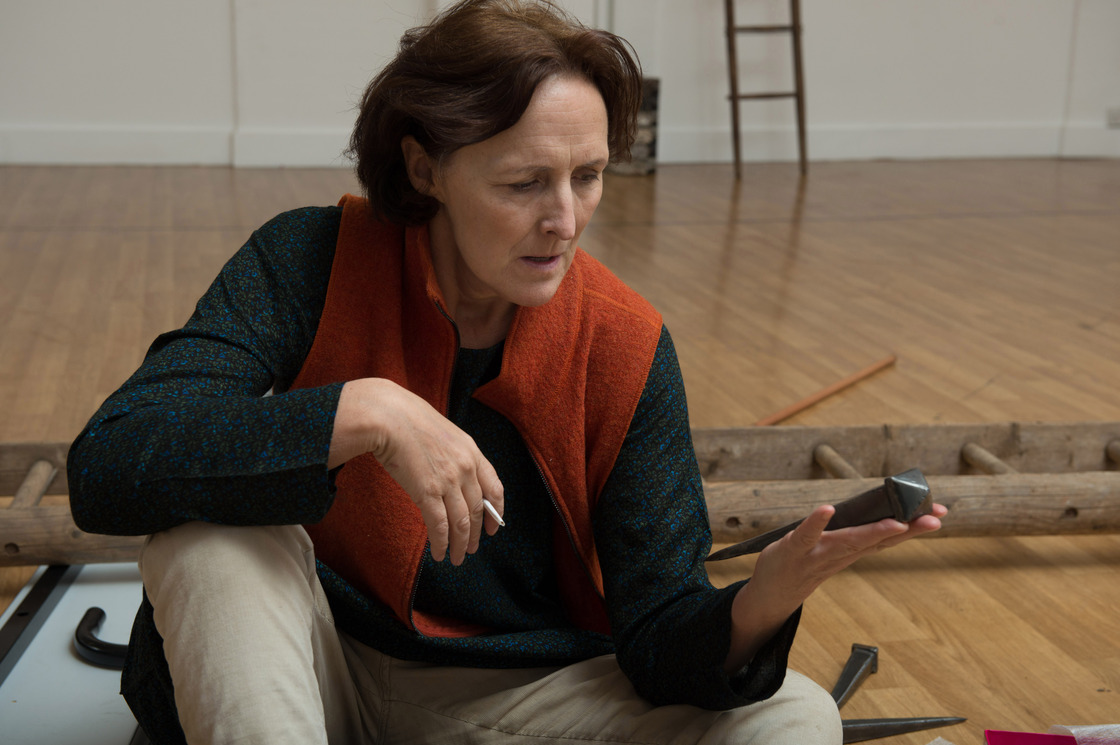
Fiona Shaw rehearses for her role as the Virgin Mary in The Testament of Mary. Irish novelist Colm Toibin's one-woman play opens April 22 at Broadway's Walter Kerr Theater.
Shaw in rehearsal. Photo by Hugo Glendinning

But when we are all back in our seats, Mary casts off her robe to stand before us in a simple black shift, flowing easily over narrow brown pants. Her hair is cropped, her face haunted; wearing short leather boots, she fumbles as she searches for a hand-rolled cigarette to steady herself.   “I remember everything.  Memory fills my body as much as blood and bones.”  No longer an icon, hardly a virgin, this Mary addresses us with the piercing directness of the passion she has suffered: to have seen her only son crucified despite her efforts to save him. Now, interrogated by two unnamed apostles (John and Luke?) who want to fix the story of her son’s life and death and resurrection, Mary insists on reporting only what she knows:  “I was there.  I fled before it was over but if you want witnesses then I am one and I can tell you now, when you say that he redeemed the world, I will say that it was not worth it.  It was not worth it.”

Continue reading “The Flesh Made Word: Colm Toibin’s “The Testament of Mary” on stage and in print By Joyce Zonana”

The Green Man By Barbara Ardinger

The Green Man’s message about rebirth is why he is so popular today. He’s come to symbolize the green movement. He’s a friend of the earth who is whispering to us to wake up and grow up, to march and dance with him in celebration of our relationship with nature. What green thing can we do today?

The Green Man’s message about rebirth is why he is so popular today. He’s come to symbolize the green movement. He’s a friend of the earth who is whispering to us to wake up and grow up, to march and dance with him in celebration of our relationship with nature. What green thing can we do today?
The Green Man

Spring has, as they say, has  sprung, and we who live in the Northern Hemisphere are witnessing the annual greening of the earth. Grasses and grains are growing, trees are leafing, flowers are budding. I like to imagine the goddesses who rule the springtime—Anna Perenna (classical Roman, probably Etruscan), Butterfly Maiden (Hopi), Freya (Norse), Hu-Tu (Chinese), the Rusalky (Russian), and others—calling their worshippers and gatheringthem on the village green to dance and celebrate the revival of the earth. Continue reading “The Green Man By Barbara Ardinger”

Grief Beyond Belief and Rebecca Hensler by Kile Jones

Kile Jones, atheistIn my last post, “A Pro-Science, Skeptical Woman Speaks” I interviewed a woman with whom I share many views in common.  One of my goals here at Feminism and Religion is to introduce different secular, atheistic, liberal feminists who share many of the same ethical views as regular contributors and readers, but not the same “religious” or “spiritual” ideas.  In this post I examine an online support network for unbelievers, Grief Beyond Belief, and ask a few questions to its founder, Rebecca Hensler.

I met Rebecca in February in San Francisco while on a visit I made to meet with the Unitarian Universalist Association in regards to my ordination.  My girlfriend and I met Rebecca in North Beach, San Francisco for dinner and drinks.  I experienced her as a compassionate, friendly, and genuine person.  Her experiences and insights inspired me to think more about the role of grief and pain among unbelievers.  I mean, atheists cry, agnostics experience loss, skeptics lose family members, and we do it all without a “God” or “spirit” to help us.  And if we were to meet C.S. Lewis, we would make

sure to exclaim, “No…pain is not some megaphone for God to rouse a deaf world.”

R Hensler

Why did you start Grief Beyond Belief?

The original idea was born of my own grief.  After my son died, I found a group in which to share comfort and compassion with other grieving parents: The Compassionate Friends, a mainstream parental grief support organization with a strong online presence.  It was so close to exactly what I needed, but I frequently felt alienated by the religious and spiritual content — not just the offers of comfort that depended on beliefs I do not hold, but the assumption that everyone there held some sort of belief in life after death. And the assumption, so common in mainstream grief support, that even if I am not the same religion as you are, I have a religion, and I believe in some sort of afterlife was equally alienating and hurtful. Continue reading “Grief Beyond Belief and Rebecca Hensler by Kile Jones”

Women’s Ordination and the Mormon Church by Margaret Toscano

Me April 2011 3Caroline Kline’s March 26 post, “Mormons Who Advocate Women’s Ordination,” marks a new direction in the Mormon feminist movement. As she describes, the website Ordain Women was launched on March 17 by a few dozen Mormon women and men who state: “As a group we intend to put ourselves in the public eye and call attention to the need for the ordination of Mormon women to the priesthood.” By the end of March, 44 people (37 women and 7 men, including a Mormon bishop) have posted profiles with photos where they describe their relationship to Mormonism and why they think women should be ordained. I understand from the organizers of this site that a number of others have submitted profiles for posting and that the site has had close to 100,000 hits. On the corresponding Facebook page, however, only 363 people have given Ordain Women a “Like” sign.

While supporters may appear to be a small group in comparison to the 14 million Mormon (aka LDS) church members worldwide, it is a significant number for a grassroots movement like this. As a Mormon feminist who has publicly advocated for the ordination of women since 1984, this is the first time I have seen more than a handful of people willing to state publicly their belief that women should be ordained. In the past, women’s ordination has always been the dividing issue among Mormon feminists. All Mormon feminists want women to have more voice in the Church, more decision-making power, more visible authority and equality. Very few have wanted to be ordained into the male-priesthood structure of the Church, though more have claimed a private, spiritual priesthood.

And yet, as I have always argued, there is no way that Mormon women can be equal to Mormon men as long as they are denied access to priesthood ordination and offices because the priesthood structure controls all resources, discourses, and practices. In some ways this issue is even more crucial in the LDS Church than in other religious traditions because the Mormon organization is based on a lay priesthood where all active boys and men have priesthood. What this means is that grown women have less practical and religious authority than their 12-year old sons. Continue reading “Women’s Ordination and the Mormon Church by Margaret Toscano”

Pope Francis: A Fisherman for Our Times? by Dawn Morais Webster

Dawn Morais Webster, the Pope off to his summer palace, Castel Gandolfo. He tells the world he will now become just a “humble pilgrim.”

 A thoughtful non-Catholic friend, Mei Li, in largely Muslim Malaysia, wondered aloud in a Facebook chat after the election of Pope Francis: “How many people get to start anew like this?   A new name, a new life, a new kingdom here on earth. He could be what keeps thousands, maybe millions of people from getting AIDS. Even if my vote does not count, so to speak, I have to care what he teaches.”

Yes, believers or not, we all have to care.  The skeptics were right.  Picking a Pope from the ranks of the nuns was expecting the current crop of cardinals to cast their net further than they could. But Pope Francis may yet prove to be a fisherman who casts a different kind of net.

Countries of the South, where Catholics still fill the churches, rejoice at the selection of a Pope with whom they might claim a closer kinship. It is unclear whether he can ensure the success of a soccer team, or even whether his election proves that God is an Argentine.  But the fact that even the weary are tuning in is a good sign. Continue reading “Pope Francis: A Fisherman for Our Times? by Dawn Morais Webster”

Gender in Kabbalah by Judith Laura

Judith LauraI first started delving into both Jewish Kabbalah and Hermetic Qabalah in the 1990s, after friends told me these forms of mysticism included both female and male representations of divinity and therefore were gender equitable. They were right about the first part: Kabbalah/Qabalah contain both divine masculine and feminine imaging and male and female images.  But as far as gender equity goes, to use today’s slang, not so much!

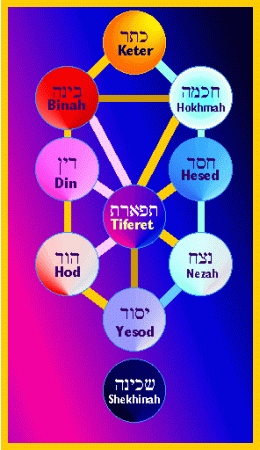
tree of life kabbalah

Though they are both transliterations of the same Hebrew word, as is common I use “Kabbalah” for the Jewish versions, and “Qabalah” for the Hermetic version, best known through its association with the British Hermetic Order of the Golden Dawn, which began in the 19th Century. The word means “that which is received,” with the understanding that it was “received” from ancient times. Though there is one tradition that says Adam was given Kabbalah in the Garden of Eden, the first written material for Kabbalah, Sefir Yetsirah (Book of Creation), is dated to between 200 and 500 C.E. Kabbalistic concepts changed over the centuries, with writings becoming more significant in the 13th century and even more popular in the 16th and 17th centuries.

Beginning with the Sefir Bahir (Bright Book) in late 12th century France, Kabbalah is represented by the Tree of Life, which has round areas transliterated sefirot (Heb. pl.; sing. sefirah) that I think of as fruit and others call “spheres,” but which in the Bahir, are more accurately translated “sapphires.”*  These “divine emanations,” as they are often called in English, are gendered. How equal is the gender representation? Continue reading “Gender in Kabbalah by Judith Laura”

Cosplay and Choice by Sara Frykenberg

Sara FrykenbergCosplay is often a deliberate, interpretive and self-chosen performance of gender and power.  Like drag performers, cosplayers put on a show of the characters they represent; and in my experience, they often do so within diverse, supportive and principally, inclusive communities. 

This week my husband sent me a great blog post he found about cosplay and one woman’s determination that she would no longer tolerate being demeaned, objectified or trivialized because of what she chooses to wear.  Blogger Megan Marie’s post, entitled “What would you do if you weren’t afraid,” inspires me.  She points out and refuses the trappings of rape culture: victim blaming, assumed male control over female sexuality and shame; and claims her right to be who she is.  I, as fellow (what is the female equivalent for fellow???) cosplayer, was also moved by her defense of this creative art.  I have been cosplaying a long time, but I have been too afraid to speak much about this or to directly protest the rejection of these fantasy images within some feminist communities.  So to answer Megan Marie’s question* in her own words, “What would you do if you weren’t afraid? My answer.  I’d write this blog.”

Coplay = costume + play!  It is the recreation of popular characters from video games, comic books, anime, scifi series, fantasy literature or the like.  Cosplayers do this for the fun of it, the craft involved, to express one’s fandom and sometimes, professionally, usually within an arena where fans can enjoy one another’s recreations.  The attempt to embody these characters involves a great deal of work and artistic expression.  Many conventions, like Fanime Con in San Jose, CA, host panels in which fans can learn cosplay skills, such as armor construction, wig making and costume design.  I have cosplayed the following characters: Sailor Star Healer, Eudial and Sailor Iron Mouse from the anime Sailor Moon, Misa

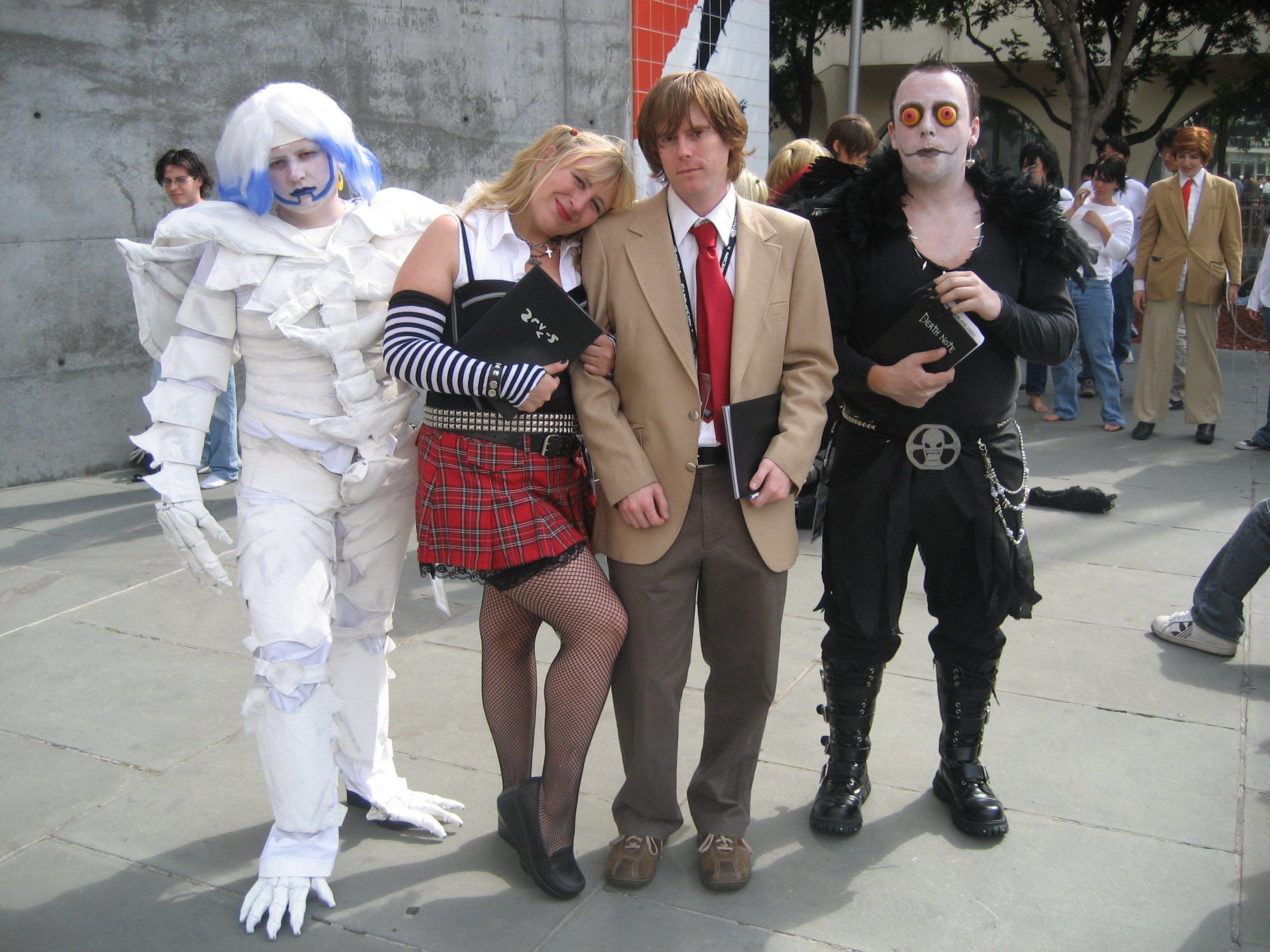
Death Note Cosplay: Misa and Light are in the center, flanked by their respective "Shinigami," or the death gods they are working with
Death Note Cosplay: Misa and Light are in the center, flanked by their respective “Shinigami,” or the death gods they are working with

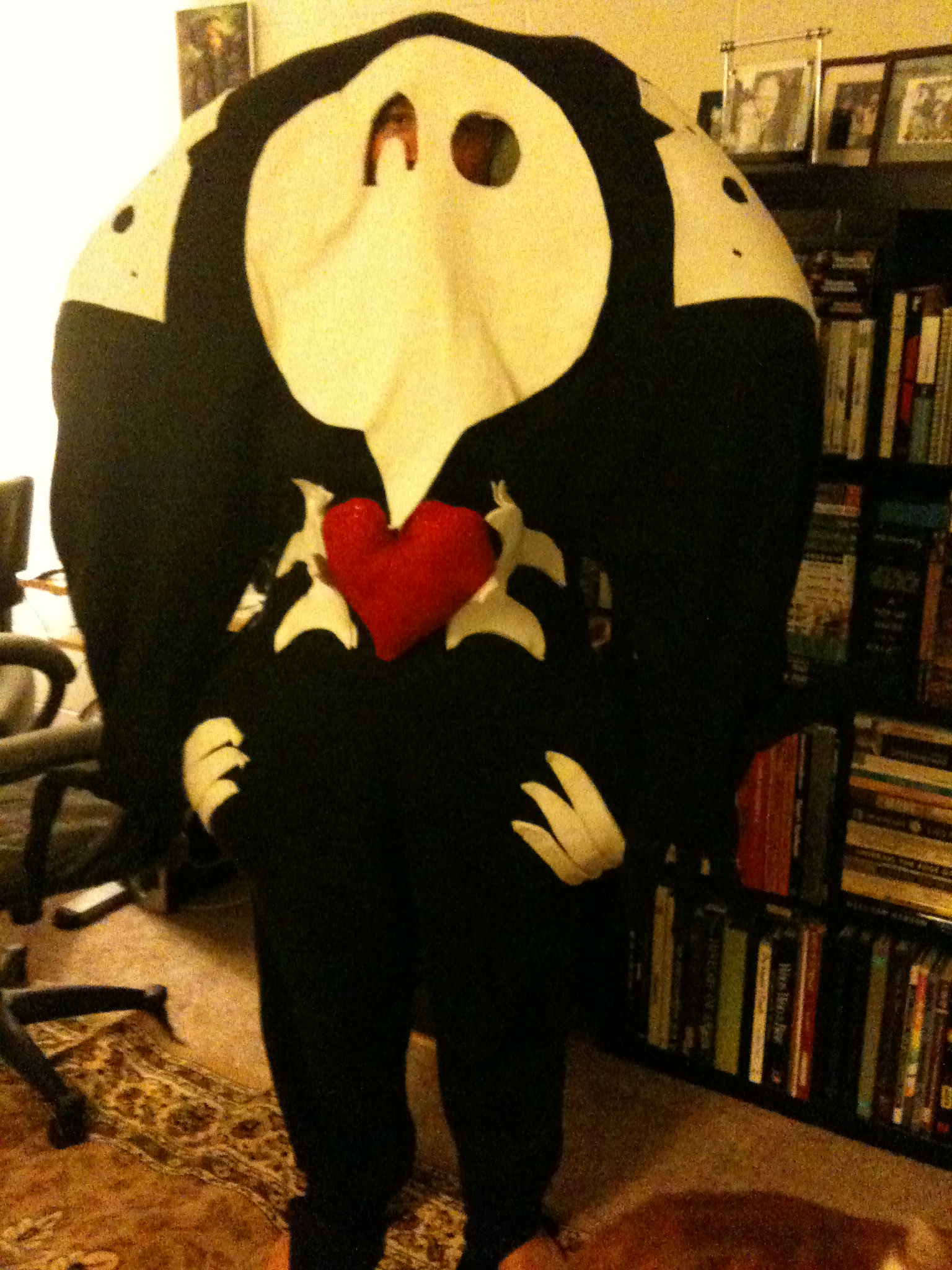
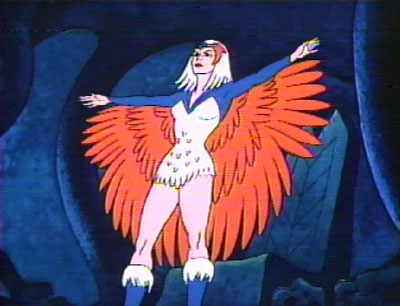
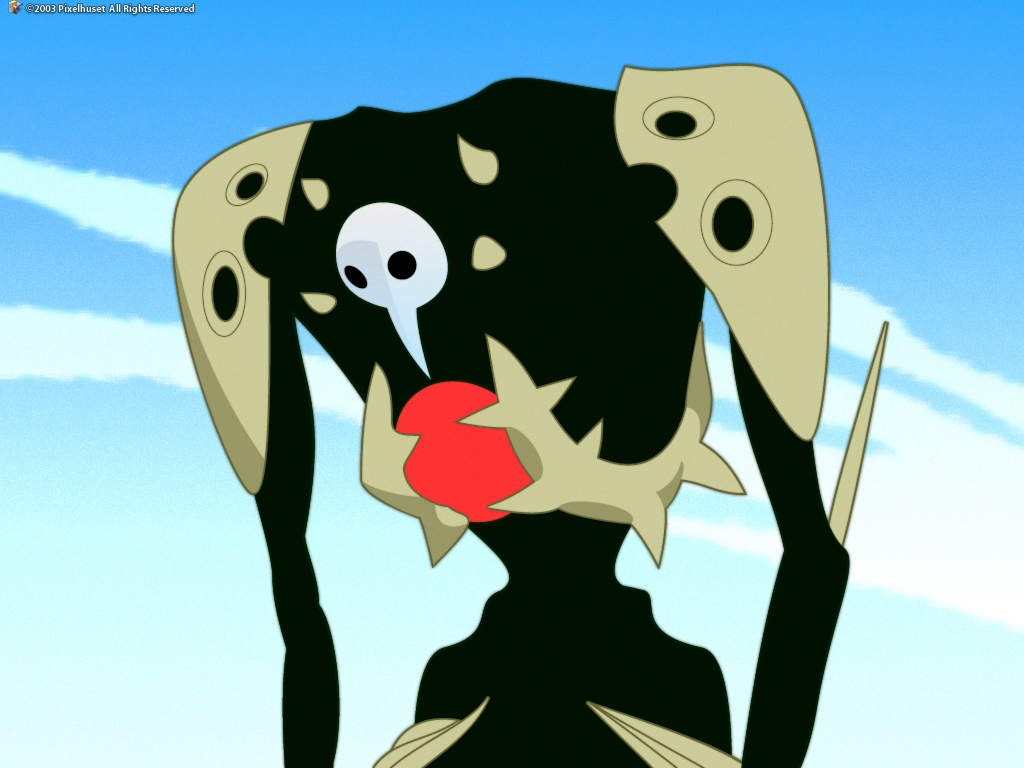
from the manga Death Note, the Sorceress from He-man, a Star Fleet officer from Star Trek: The Original Series, and most recently, a giant “Angel,” Sachiel from Neon Genesis Evangelion.

Sachiel from Neon Genesis Evangelion: I am trying on my almost finished costume here!

I am currently planning a to make a Metroid out of an umbrella and to cosplay Nyan-kitty at the May conference that my husband (who will be playing Tac-nyan), my sister and many of my friends attend.

So, why the feminist-anxiety?  Continue reading “Cosplay and Choice by Sara Frykenberg”

“Am I Crazy?” Loving Laura Dern by Carol P. Christ

carol p. christ 2002 color“Am I crazy?”

“No, just full of hope. You got more hope than most people do. It’s a beautiful thing to have a little hope for the world, you know.”

This question was posed by Amy Jellicoe, played by Laura Dern, at the end of the HBO television series Enlightened.  Unemployed, single, and in debt after she was fired for “whistle-blowing” on the corrupt activities of the corporation where she worked, Amy wondered if she had done the right thing.  The answer of her ex-husband Levi  brought tears to my eyes.

In many ways, I am Amy.

Let’s begin with the obvious.  When I was young, I was slender and pretty and exceedingly tall, with long blonde hair—I imagine I looked like Amy.  I couldn’t take my eyes off Laura Dern. There just aren’t many women in the world as tall as I am. Because of that I don’t know what I look like to others.  In the series, Laura Dern is taller than just about everyone else, including the men, and she seems not to care, because she often wears high heels.  Continue reading ““Am I Crazy?” Loving Laura Dern by Carol P. Christ”

What Does Exclusivism Feel Like? Part II by Janice Poss

This is part two of a post started yesterday. At the end of it I asked why a woman cannot be a follower of St. Ignatius and a Jesuit.

The days of separating religious communities because rape is a possibility should be behind us–as we all know separating the sexes does not prevent rape anyway.  Let’s get real, if I can understand the Ignatian exercises, use them in discernment, prayer, and reflection, understand the concepts and gain the graces, through doing them in a similar fashion as male Jesuits, what’s the big mystery, what’s keeping me out of the Jesuits–except that that it is a male club that is exclusive.  Exclusion of any kind is oppressive, whether it is for racist, sexist, or other reasons.

Communities based on separation and exclusion because of sexual temptation ignore the simple fact that all people need to be responsible for their own actions.  Male religious in exclusivist communities are like the Iowa  dentist who fired his assistant because she was “too” good looking.  He said could not control his own urges, his own temptations.  An all-male court was unanimous in upholding his right to fire his assistant of more than 10 years. Is not an all male court a biased court? The woman in question certainly did not get a decision rendered by her peers!

That such a trial could even take place is an aberration of colossal proportions and reeks of the male, misogynist, supremacist backlash that is going in society right now in America and everywhere.  Continue reading “What Does Exclusivism Feel Like? Part II by Janice Poss”