Mourning the Loss of Beverly Wildung Harrison

20121216-213151.jpg

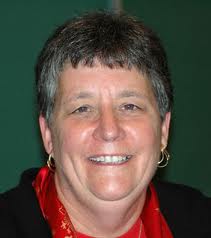
It is with deep sadness that Feminism and Religion mourns the passing of our foresister Beverly Wildung Harrison. As a feminist religious ethicist her work has made substantial contributions to the field and she has paved the way for the next generation of feminists to continue the pursuit of justice and social change.

As Mary Hunt states, “her mentoring and friendship set the bar high for how to be a feminist professor. Her stalwart commitment to justice is a legacy all its own.”

She was known to say, “Bless you, and bless the revolution.” We bless and celebrate Beverly’s life, her wisdom, strength, generous nature, and commitment to our community. May she rest in peace and may we all continue the revolution!

“I believe that our world is on the verge of self-destruction and death because the society as a whole has so deeply neglected that which is most valuable and the most basic of all the works of love — the work of human communication, of caring and nurturance, of tending the personal bonds of community….Those who have been taught to imagine themselves as world builders have been too busy with master plans to see that love’s work is the deepening and extension of human relations. This urgent work of love is subtle but powerful. Through acts of love — what Nelle Morton has called “hearing each other into speech” — we literally build up the power of personhood in one another. It is within the power of human love to build up dignity and self-respect in each other or to tear each other down. We are better at the later than the former. However, literally through acts of love directed to us, we become self- respecting and other-regarding persons, and we cannot be one without the other….The power to receive and give love, or to withhold it — that is, to withhold the gift of life — is less dramatic, but every bit as awesome, as our technological power. It is a tender power….rooted in our bodies, ourselves.”   Beverly Wildung Harrison, Making The Connections, p.12. 

A Call for Gun Control by Gina Messina-Dysert

Gina Messina-Dysert profileBut America seems to be the place the whole world thinks of when apparently ordinary people use guns for grotesque acts of violence. America stands alone in its historic and cultural attachment to guns. America stands armed. — Jonathan Mann

Reflecting on the tragedy in Connecticut, as well as the shooting in Portland earlier this week and the shooting in Colorado during the Dark Knight Rises screening in July, it is clear that gun violence is out of control. In the last six months we have had three major tragedies related to gun violence. While some argue this has nothing to do with gun control, I wonder how it could not?

Continue reading “A Call for Gun Control by Gina Messina-Dysert”

SPECIAL AAR SERIES Part 2: Gamer-Player/ Gamer-Avatar: The Potential of a Video-Gaming Body by Sara Frykenberg with introduction and response by Mary Hunt

Sara Frykenberg Mary HuntIntroduction:

This is one of four papers presented in Chicago at the Annual Meeting of the American Academy of Religion, November 17, 2012, in a session entitled  “Feminism, Religion and Social Media: Expanding Borders in the Twenty-First Century,” organized by Gina Messina-Dysert and chaired by Rosemary Radford Ruether with Mary E. Hunt as the respondent. What follows is the general response followed by, after each of the contributions, Hunt’s appreciative analysis. The first paper was posted here on Feminism and Religion, and the other two papers are posted here and here on the Feminism in Religion Forum

General Remarks by Mary Hunt:

The stated purpose of the panel is to discuss “how digital projects are remapping the feminist theological terrain and creating opportunities for a wide range of voices to participate in ongoing and new conversations related to feminist issues in religion.” These writers have done that and more. Continue reading “SPECIAL AAR SERIES Part 2: Gamer-Player/ Gamer-Avatar: The Potential of a Video-Gaming Body by Sara Frykenberg with introduction and response by Mary Hunt”

SPECIAL AAR SERIES Part I: Re-envisioning the Academy as ‘Open Source’ Community by Kate Ott with introduction and response by Mary Hunt


Kate OttMary HuntIntroduction:

This is one of four papers presented in Chicago at the Annual Meeting of the American Academy of Religion, November 17, 2012, in a session entitled  “Feminism, Religion and Social Media: Expanding Borders in the Twenty-First Century,” organized by Gina Messina-Dysert and chaired by Rosemary Radford Ruether with Mary E. Hunt as the respondent. What follows is the general response followed by, after each of the contributions, Hunt’s appreciative analysis. Two of the papers will be posted here on Feminism and Religion and two will be posted on the Feminism in Religion Forum

General Remarks by Mary Hunt:

The stated purpose of the panel is to discuss “how digital projects are remapping the feminist theological terrain and creating opportunities for a wide range of voices to participate in ongoing and new conversations related to feminist issues in religion.” These writers have done that and more. Continue reading “SPECIAL AAR SERIES Part I: Re-envisioning the Academy as ‘Open Source’ Community by Kate Ott with introduction and response by Mary Hunt”

Cancel Christmas? By Elise M. Edwards

Elise EdwardsDespite the time and energy it takes to participate in the religious and social rituals associated with Christmas, the result is that I am spiritually grounded, emotionally provoked, mentally rested, and physically fed.   Advent, Christmas, New Year’s, and the last week of the year are times when I reconnect to what is important to me, and the holiday rituals help me do this.

The “holiday season” is upon us, and I’m still busy and exhausted, as I’m sure many of you are.  Although my life isn’t as stressful as it was in October, I am still juggling multiple commitments while trying to make significant progress on my dissertation.  This past weekend, I spent some time with other dissertation writers in the same predicament, and quite a few of them were thinking of cancelling Christmas in their households in response.

My immediate reaction to canceling Christmas (or another alternative they mentioned, micro-Christmas) was to inwardly scream “THAT’S RIDICULOUS!!!!”  To be honest, I’m not sure my facial expression didn’t make my reaction plain.  But since I value my relationships with these people and I genuinely respect their insights, I decided to keep my reaction to myself and to give the matter more thought.  I realized later on that all of the “cancel Christmas” advocates were women.  So I began to consider what the implications of cancelling Christmas would be for women. Continue reading “Cancel Christmas? By Elise M. Edwards”

We’ll Have a Green Christmas… Together! by Tallessyn Grenfell-Lee

Many of us journey through Advent in a culture whose businesses frantically try to capitalize on the hope, peace, joy, and love promised by the season. Although many agree that consumerism contradicts the fundamental teachings of Jesus, I am not here to disparage every last Christmas tradition until we’ve pared our so-called celebrations down to nothing. Yet many of us wish our festivities could better reflect the heart of Jesus’ teachings and ministry. It’s harder to feel quite so celebratory once we understand the ways in which our choices affect our kindred – both human and otherkind, near and far.

Maybe the point is not to have some kind of pure, ideal Christmas. If we can acknowledge the imperfect world we live in yet at the same time lift up our communal journey toward greater healing and justice, we will feel the laughter and songs of the whole Earth intertwine with our own joys at Christmastime. When gifts to our loved ones also help others around the world, the warmth we feel at their own excitement grows deeper and more powerful when we can also sense the joy of our unknown kindred somewhere else. Our appreciation of festive decorations feels more authentic when we know our choices are helping reduce the impacts of climate change, or providing habitats for God’s little sparrows. Our traditions can bring us closer to one another, and help us feel the presence of our family – all of them – throughout the journey toward Christmas. Continue reading “We’ll Have a Green Christmas… Together! by Tallessyn Grenfell-Lee”

Don’t Worry, I Won’t Marry Your Girlfriend: Sexuality, Identity, and the Easy Laugh

No longer having to deconstruct the larger cultural and sexual narratives, heterosexuals who do not support marriage equality or feel threatened by homosexuals return to their one source of power that reinforces the ideology that they are on the right path: the Bible. “Marriage is between a man a woman,” or “A man shall not lie with another man as he would a woman,” becomes the newly reinforced heterosexual rallying cry and the progressive progress that occurred in the past becomes nothing more than a joke.

johnI must say, I will be the first to admit that the recent outbreak of videos promulgating the idea that gay men will marry a straight guy’s girlfriend or lesbians will marry a straight girl’s boyfriend all for the sake of marriage equality left me stifling my laughter as I attempted to pay attention in class.

However, after the calamity died down I took a moment to reflect upon the intrinsically embedded aspects of misdirected norms of sexuality, gender, and misogyny latent within the laugh lines and the guffaws throughout each video. Continue reading “Don’t Worry, I Won’t Marry Your Girlfriend: Sexuality, Identity, and the Easy Laugh”

Does Belief Matter? by Carol P. Christ

carol p. christ 2002 colorIn recent days I have been pondering the fact that some people and some feminists seem to see the issues of religious faith and belonging to be rooted in birth, family, and community, while for others the question of belonging to a religious community hinges on belief and judgments about the power exerted by religious institutions.  What accounts for this difference in the way we view religious belonging?

Recently I watched The Secret History of Sex, Choice and Catholics, a film featuring Roman Catholic feminists and ethicists who dissent from the Roman Catholic hierarchy’s views on contraception, abortion, and homosexuality.  At the beginning of the film those interviewed state almost univocally that for them being Catholic stems from having been born Catholic. These Catholic dissidents continue as Catholics, even though they disagree with major portions of Roman Catholic teaching.  It may have been because they were not asked, but most of them did not name reasons of belief for remaining Catholic.

Thus the viewer did not learn the theological reasons these progressive Catholics stay in the church.  I wondered: Do they believe that salvation occurs only through Jesus as the Christ? Do they believe in original sin? How do they feel about the God of Exodus and the prophets who achieves his will through violence or the Christian doctrine of hell?  I also wanted to know how they justify being part of an institution that, as June Courage stated on these blog pages, is responsible for the deaths of women and children through its contraception and abortion policies just as surely as if it were bombing their homes in an unjust war. Continue reading “Does Belief Matter? by Carol P. Christ”

The Israel-Palestine Conflict and Ecofeminist Insights for Lasting Peace By Ivy Helman

ivyOn Thursday, November 29, 2012, the United Nations officially recognized the Palestinian Authority as a sovereign state and granted its petition for observer status within the international decision-making body.  Sixty-five years before the United Nations had approved a two-state solution for the region, UN Resolution 181, that officially ended the British occupation of the territory and sanctioned the possibility of two states.  It says:

“The resolution recommends that the United Kingdom (as mandatory power for Palestine) evacuate; armed forces should withdraw no later than August 1, 1948; independent Arab and Jewish States and the Special International Regime for the City of Jerusalem administered by the United Nations should come into existence;  the City of Jerusalem should preserve the interests of Christian, Jewish, and Muslim faiths.united nations

While the Palestinian Arab population disagreed with that solution, when British forces left on August 1, 1948, Israel declared statehood.  The United States recognized its statehood the same day.  Russia was soon to follow suit.

Continue reading “The Israel-Palestine Conflict and Ecofeminist Insights for Lasting Peace By Ivy Helman”

Painting Guadalupe and Mary by Angela Yarber

As we feminists struggle to elevate Mary and Guadalupe, we sometimes forget that speaking of birth and gestation is not always empowering or even essential to womanhood. 

It is early morning on the Hill of Tepeyak on December 9, 1531 when a wondering peasant named Juan Diego first caught a glimpse of her presence.  Diego sees a vision of a teenage girl surrounded by light; the young girl asks that a church be built on the hill in her honor.  After hearing her speak and seeing the light emanating from her presence, Diego recognizes her as the Virgin Mary.  He rushes to the Spanish archbishop who insists on a sign as proof of Diego’s vision.  The young girl instructs Diego to gather flowers from the top of the hill, even though it is past their growing season.  Upon climbing to the top of the Hill of Tepeyak, Diego discovers Castilian roses—a beautiful flower otherwise unheard of in Mexico—which the glowing young woman arranges in his cloak.  When Diego returns to the archbishop, he opens his cloak to reveal the miraculous flowers and they fall to floor; in their place was an image imprinted on the fabric of his cloak.  It was the image of Our Lady of Guadalupe.

Guadalupe is one of Mexico’s most popular religious and cultural images and her icon, now on display at the Basilica of Our Lady of Guadalupe, is one of the most visited Marian shrines in the entire world.  On December 12, countless Christians—particularly Catholics—celebrate her feast day.  Her feast day occurs within the four week celebration of Advent, which is the period of waiting, expectancy, and gestation before the birth of Jesus at Christmas. Continue reading “Painting Guadalupe and Mary by Angela Yarber”