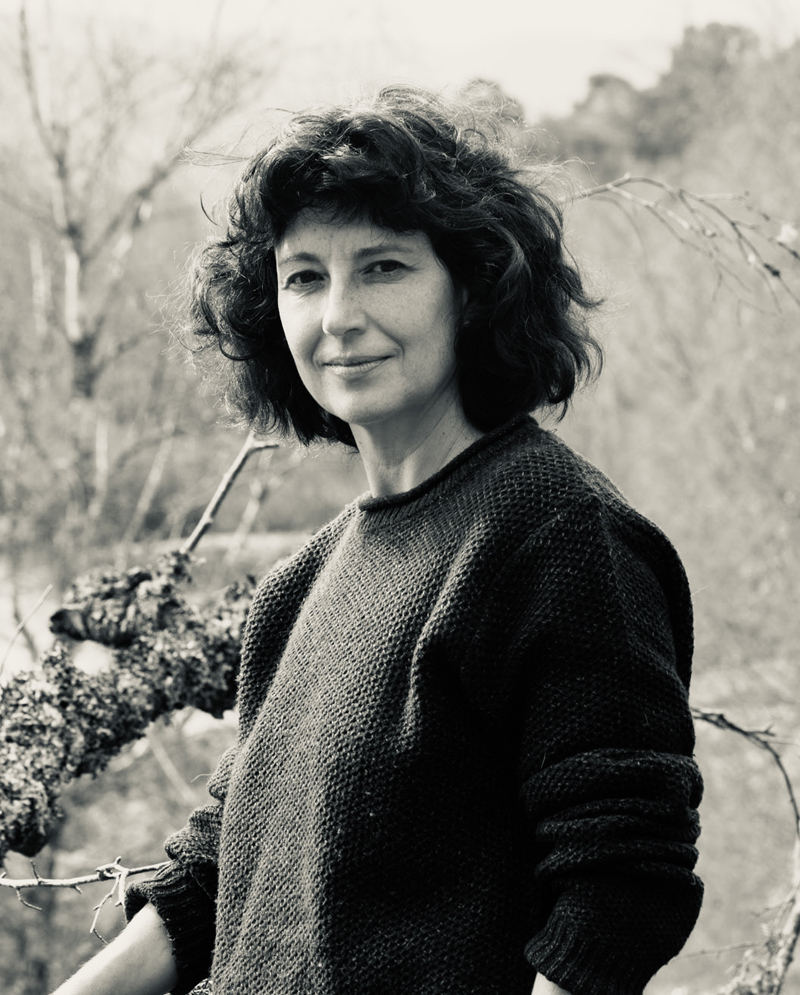
“A new heart I will give you . . . “: Part Two by Beth Bartlett

You can read part 1 here.

Hope: What is a heart transplant if not hope? In granting the possibility of new life out of death, it is the essence of hope. Yet, hopefulness is also knowing death is imminent and finding a way to live well into that knowledge. The impulse of hope encourages us to go on despite the odds. Hope indeed seems to spring eternal. In my darkest days, something would come along and lift me up. Hope is a testimony of the human spirit, lifting us up, refusing to refuse us. This new heart brought hope to me, and I believe that in our going on together, we carry the hopes of my donor’s loved ones as well. 

Continue reading ““A new heart I will give you . . . “: Part Two by Beth Bartlett”

“A new heart I will give you . . .” : Part One by Beth Bartlett

February is “Heart Month.” Presumably the American Heart Association chose February as the month to raise awareness about cardiovascular health because in February we celebrate Valentine’s Day which we observe by the giving and receiving of hearts of all kinds — heart-shaped Valentines, candy, jewelry – symbolic declarations of love, of giving our hearts to one another. Hearts have long been associated with love. When bringing our emotions to the surface, we “wear our hearts on our sleeve.” When speaking our deepest feelings, we “pour our hearts out.” Feelings of tenderness “warm our heart,” and compassion “pulls at our heartstrings.” When grieving, we feel “heartache,” and loss of love renders us “heartbroken.” The French word for heart, coeur, associates hearts with courage. We “take heart;” we “lose heart;” we “hearten.” We can engage in a task “wholeheartedly,” “halfheartedly,” or our “heart’s not in it” at all. We can be “bravehearted,” “lighthearted,” “tenderhearted,” “hardhearted,” or totally “heartless.”  That’s a lot for the heart to carry.

Continue reading ““A new heart I will give you . . .” : Part One by Beth Bartlett”

Grown Up World: Sit in the Contradiction by Caryn MacGrandle

It occurred to me this morning in meditation that evidence of maturity and balance is being able to sit in the contradictions of this world.

We’re not all good. We’re not all bad. People can have good intentions and be bad for you. People can have bad intentions and be good for you.

‘All is well. Wellness abounds.’ Source (Abraham Hicks) says.

No it’s not. You respond.

Yes it is.

That is our task. To get back to ‘yes it is’ no matter what is going on in your life.

Continue reading “Grown Up World: Sit in the Contradiction by Caryn MacGrandle”

Women, Blame, and Patriarchy by Mary Gelfand

Pandora by Rebecca Guay

Last May I had a vision in the shower. It wasn’t the kind of vision I like to have—where the Goddess and I dance across a meadow with flowers springing up as we pass and cool breezes bringing sweet fragrances. This was the kind of vision I’d rather not have, but probably needed to. This is from my journal.

Something happened during my shower recently that feels relevant. As I stepped into the shower, a phrase thrust itself into my mind: “I was forced to watch them die and it was all my fault.” As I ‘stood’ there with water pouring over my body and that statement vibrating in my brain, it attached itself to a scene where I was the spiritual leader of a community that came under attack. I was forced to watch the women and men who believed in what I taught as they were executed. Many of them were friends and relatives. I was restrained and couldn’t intervene to save them, or join them in execution. Having to witness this was part of my punishment. Instead I was carried to a bigger town, publicly humiliated and beaten, and then executed in some painfully unpleasant way I can’t recall–probably because I don’t want to.

Continue reading “Women, Blame, and Patriarchy by Mary Gelfand”

Inspiration is Always Present by Sara Wright


I walk with care
clearing paths
iced over
lead feet
dragging
a broken foot
my companion
Listen to
first spring
bird song –
chickadees
and doves!

Continue reading “Inspiration is Always Present by Sara Wright”

Legacy of Carol P. Christ: FORGIVENESS or TRUTH: WHICH IS THE BEST REMEDY?

This was originally posted on March 5, 2012

What happened to you really was bad. This should not happen to any child. It should not have happened to you.

In our culture there is often a rush to forgiveness that precedes acknowledging the harm that has been done. When I was a child and my father yelled at me or withheld love, I was told by mother, “He really does love you. He just does not know how to show it.” She sometimes added, “Even though he will never say he is sorry, you should forgive your father, because he did not really mean what he said.”

Continue reading “Legacy of Carol P. Christ: FORGIVENESS or TRUTH: WHICH IS THE BEST REMEDY?”

On Mishpatim, Feminism and A Caring Community by Ivy Helman.

Mishpatim (Exodus 21:1 – 24:18 and 30:11-16) is the Torah portion for February 18, 2023.  Its name, mishpatim, means laws or ordinances, and the portion is essentially just that – a list of laws to be followed.  It is not the easiest parshah to follow as it jumps around, backtracks numerous times, and sometimes contradicts itself, particularly in the sections with Moses. 

That being said, there are two main themes in Mishpatim; both of which I have discussed in past blogs.  First is the death penalty.  There is an overabundance of crimes that result in the death penalty in this parshah.  Way, way too many.  Another theme is idolatry.  In many ways, that is a theme in the Torah itself.  For more on these themes from my feminist perspective, see here: Sh’lach; Ki Tisa; Shofetim ; and on b’tzelem Elohim.

Continue reading “On Mishpatim, Feminism and A Caring Community by Ivy Helman.”

Happiness is Analog by Mary Sharratt

I hate Fakebook.

Social media depletes my energy. It depresses me. It’s designed to create a sense of anxiety, comparison, envy, and lack as we compare our rough edges with the carefully curated images of other people’s lives. Images that only reveal the surface of things, because social media has no time for depth.

Social media kills authenticity. You have to be so careful what you post because you never know who might be trolling you or what kind of backlash you might get, especially if you’re female.

Continue reading “Happiness is Analog by Mary Sharratt”

Love and The Last of Us

I was excited and thought I knew what to expect. I know what happens in the game after all. But after watching episode three, Long, Long Time (aired Jan. 29, 2023), I found myself considering what seems like something new in a zombie story as well.

Warning: Contains spoilers for The Last of Us video game and HBO series! (Oh, and for The Walking Dead… And maybe a few other zombie films too.)

I remember when Naughty Dog released the first iteration of its popular game, The Last of Us (2013) because a friend of mine worked with the sound design team for the game. This friend started out as a game tester and through years of effort, was eventually creating game sound and dialogue. The release was a BDF for his personal success and at the time, felt like something new in gaming: it was realistic, cinematic, and emotional. (And incidentally, it was reviewed very, very well.) This past month HBO released The Last of Us as a TV series. I was excited and thought I knew what to expect. I know what happens in the game after all. But after watching episode three, Long, Long Time (aired Jan. 29, 2023), I found myself considering what seems like something new in a zombie story as well.

Continue reading “Love and The Last of Us”

Woman’s Sacred Hand – and Handkerchief by Laura Shannon

Berber Hamsa. Photo: public domain.

In my recent post ‘Forty Days After Childbirth, Mary Returns to the World,’ I wrote that ‘the woman’s power to bless and protect, as well as to create, is shown in the symbol of her hand.’ We see expressions of this power in the Orthodox Christian icon of the Three-Handed Madonna, whose third hand is over her womb, and the Hamsa, the hand-shaped talisman common to Jewish, Christian, and Islamic traditions. Also known as the Hand of Fatima, Miriam, or Mary, the Hamsa often incorporates eye or vulva motifs, which also offer protection.

Hand, womb, and eye all signify female creative power, personified in the image of Goddess and revered in Neolithic Old Europe. This life-giving principle is expressed in many ways apart from childbearing: as Carol Christ affirms, early technologies of spinning, weaving, pottery, and agriculture, along with Neolithic religion, were most likely invented by women. 

Continue reading “Woman’s Sacred Hand – and Handkerchief by Laura Shannon”