

Perhaps we all are standing on the borderlands – left standing in the debris of our consumptive and violent past, walking toward a future we cannot see but can feel in every cell of our bodies as this global fever is creating a world on fire that is reaching each one of us. How do we find our way home? What will it take to change us and, in so doing, change society?
-Terry Tempest Williams
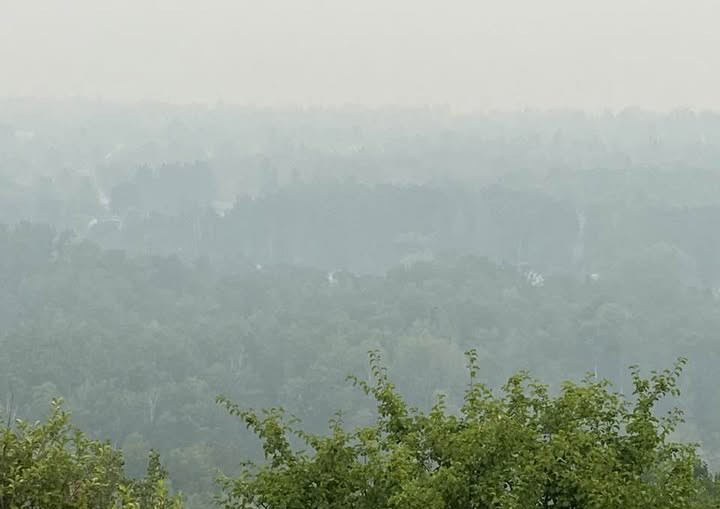
We awoke Wednesday morning to thick, thick smoke. It looked like the more typical fog that often engulfs us in the early morning, but the faint whiff of smoke even inside with windows closed was unmistakable. One step outside and the smoke was overwhelming – like sitting next to a large campfire with the wind blowing the smoke in my direction. As I was starting to cough, I put the baby in his highchair and headed to the basement to get the air purifier. As soon as I plugged it in the indicator light turned red, meaning very dirty air. Fortunately, it quickly cleared the air, but any time we opened a door the light immediately turned purple.
At the moment, in this land of clean water and clear skies, we are experiencing some of the worst air quality anywhere in the world. In the past few days, the Air Quality Index (AQI) on my EPA app has registered over 1100, far higher than the threshold for “Hazardous” air, which is 301. The entire east coast and Midwest have been under air quality alerts from the fires in Canada, but where I live — Duluth, Minnesota — has had the worst air from the fires just a hundred miles to our north. Oddly, the air here is actually worse than in the towns that have been evacuated due to the fires. It’s the worst air ever experienced here. Even inside, the air purifiers are struggling to keep up.
Continue reading “Smoke by Beth Bartlett”
