God is a Midwife by Halley Kim

It was four in the morning in the north Georgia mountains. A woman labored quietly but powerfully in her home, with her partner at her side. Her watchful midwife hovered nearby. I was a nursing student and a zealous “birth junkie,” tickled pink by the invitation to observe childbirth. At just the right time, the mother delivered her child from her womb to the world. The sun rose with a new soul suddenly among us, and I knew I would never be the same.

Feminist theology has long-invoked the image of God as a laboring mother, and progressive theologian Marcus Borg suggested that humanity is God’s midwife. But less has been written about the opposite metaphor. Imagine that we are in labor, in pain, and God is our midwife. 
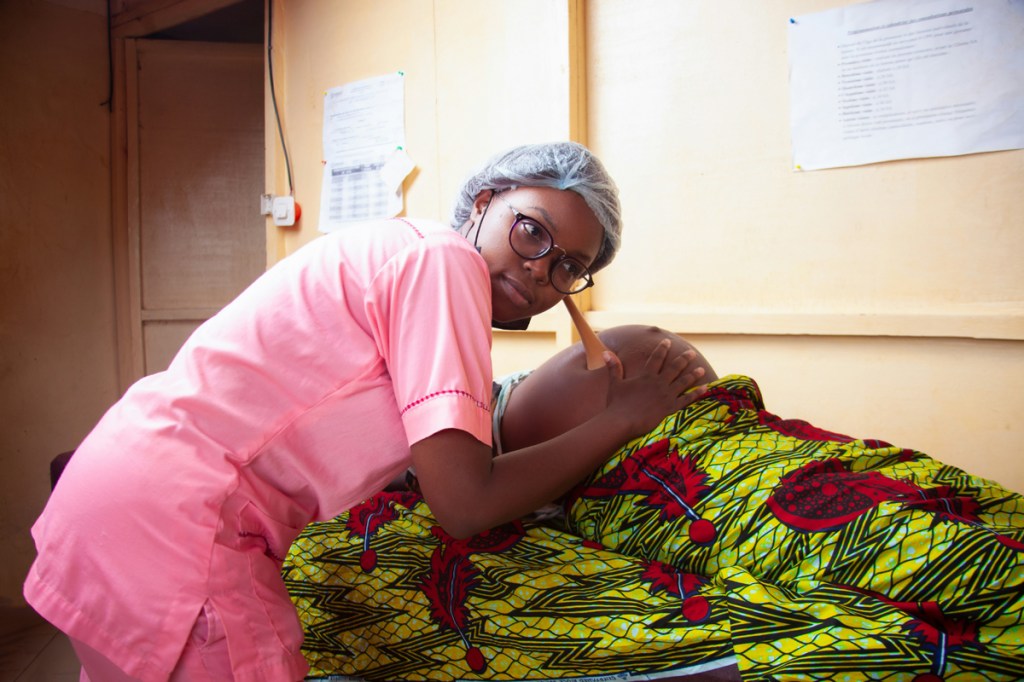
The word “midwife” means “with woman,” and that’s what midwives do: they are with birthing people through it all. They empower and guide, safeguard and witness, but they do not save. Midwives facilitate the birth process, but they don’t—they can’t—take the pain away. They don’t deliver babies; that honor belongs to their clients. Like physicians, they monitor the health of parent and baby, and can deftly manage a cord around a baby’s neck or stop a postpartum hemorrhage. But they mostly rely on the power of presence to bring babies earth-side. 

Continue reading “God is a Midwife by Halley Kim”

Reclaiming Our Birthright of Joy by Mary Gelfand

Part 2 was posted yesterday

In my earlier piece on joy I wrote about collective joy—the kind that can be experienced in larger groups of people engaging in a shared experience that brings them a sense of joy and connection, like dancing in the streets. Here I’m talking about a more personal kind of joy, shared perhaps with a few people.  

Speaking as a woman and a feminist, I have often been conflicted about joy.  Sure I want to experience joy, but I often feel guilty about it.  How can I allow myself to feel the simple joy that beauty and cosmic connection can bring when there is so much suffering in the world? When I was finally able to accept that denying myself joy did not reduce the suffering of others and was harmful to me, I was able to move past the guilt trip induced by my Christian upbringing. I began to look for ways to bring more joy into my life, and discovered a mother-lode of wisdom from multiple sources. 

Continue reading “Reclaiming Our Birthright of Joy by Mary Gelfand”

Women, like Goddesses, Come in All Colors, Shapes, and Sizes…by Vanessa Soriano


I wish I could have gotten this phrase tattooed on my arm when I started the serpentine journey into womanhood.  Like most of us, growing up, all I ever saw in media were thin female bodies with impossible proportions.  As one article put it:

Although body size and weight perception differ across race and ethnicity, women in western society are subject to images of women as not only thin, but also athletic and toned, with small waists, large buttocks, and large breasts, a body type that is largely unattainable.  Because of this ideal, all girls and women typically have weight concerns that ultimately shape body image, satisfaction, and appreciation. Continue reading “Women, like Goddesses, Come in All Colors, Shapes, and Sizes…by Vanessa Soriano”

Grief and Rebirth by Gina Messina

Rebirth is challenging. It demands that we be accountable, acknowledge failures and fears, recognize the ramifications of our actions, and the ways we impact those who share our journey. We often don’t realize that denying self-love and care in favor of sacrifice for others results in a double negative. If we don’t care or ourselves, we cannot care for anyone else. 

Warning…TMI ahead. I’ve thought a lot about writing this piece. I believe in the spirit of sharing experience; learning from one another—recognizing our own stories and finding we are not alone—when someone is willing to speak her truth. My gratitude to Carol Christ whose courage to share experience has empowered me to brave (I feel an overwhelming urge to insert emojis to express my emotion and gratitude; and although I am desperately trying to restrain myself… 🤗❤️🙏).

Being vulnerable is scary. It is uncomfortable. It requires us to share our deepest fears, that for which we feel shame. It can be embarrassing. We don’t want to be judged. And yet, our vulnerability can also promote our own healing and offer a sense of comfort to those who share in our struggle. And so, I feel like I should shout out Geronimo…

This month marks eleven years since losing my mother to violence. It also marks fours year since I chose to leave my seventeen year marriage. I hadn’t before made the connection about these two events occurring the same month until this very moment of my writing – but it occurs to me that there is a significance in finding strength during a time when I was grieving the anniversary of my mother’s passing. Perhaps a reflection for another post…

I remember the moment I knew that my marriage was likely going to end; I felt like I was dying. I begged my husband to stay. I recited prayers that have never brought me comfort. I went to a church that offered me no community. I sought counseling from a priest who devalues me because I am a woman. I turned to the traditional interpretation of my religion to keep me firmly placed in an unhealthy marriage. Power structure enforcing power structure.    Continue reading “Grief and Rebirth by Gina Messina”

Religion: Trapped in Love Through Shame by Andreea Nica

Andreea Nica, pentecostalismI was first introduced to shame in the church. Shame paradoxically drew me closer to God, prevented me from committing sins, and helped me repress certain natural urges. The church I grew up in indoctrinated its congregation to believe that shame would transform us into true and wholehearted believers – that as carnal beings, we needed to feel both guilt and shame in order to be saved and transformed into spiritual entities.

One question that permeated my mind growing up, but I’d never dare to publicly ask:

Why would Jesus die for me when I never asked Him to? Continue reading “Religion: Trapped in Love Through Shame by Andreea Nica”

On being an imperfect feminist: releasing definitions built in shame By Sara Frykenberg

A few weeks ago, a very interesting and in some places, tense discussion arose from John Erickson’s post, “Hands Off,” some of which related to the difference between what it means to be a liberal feminist and what it means to identify as radical.  Since then, I have been thinking a lot about what the identification “feminist” means to me, what it means to be an ally and how I am defining these categories.  Rather, I mean to say, against what kind of a standard am I applying this definition.

I think I have asked myself these questions many times in my life, in different ways, but perhaps most significantly I asked myself “am I a feminist?” when I started graduate school.  I was sitting in a classroom, set up like a circle, and all the women and two men in my… I think, “Gender and Education,” class were introducing themselves.  “Hello, I am so and so, and I have been a feminist for X number of years and I do this, etc.”  “Hello, I am so and so, and I am a feminist ally and I do such and such, etc.”—as I remember, some classmates identified more as allies.  When it came time for me to introduce myself, I said, “Hello, my name is Sara, and I am not sure if I am a feminist or not.  I thought I was, but I don’t know now.” Continue reading “On being an imperfect feminist: releasing definitions built in shame By Sara Frykenberg”