Of Resistance and Risk, Community and Kin: A Thanksgiving Reflection by Beth Bartlett

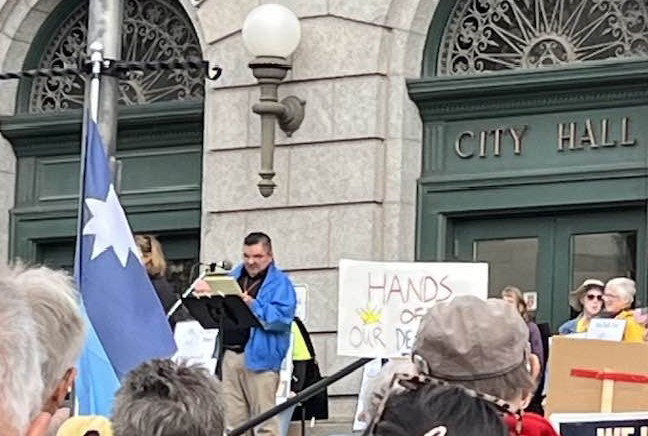
Ricky DeFoe

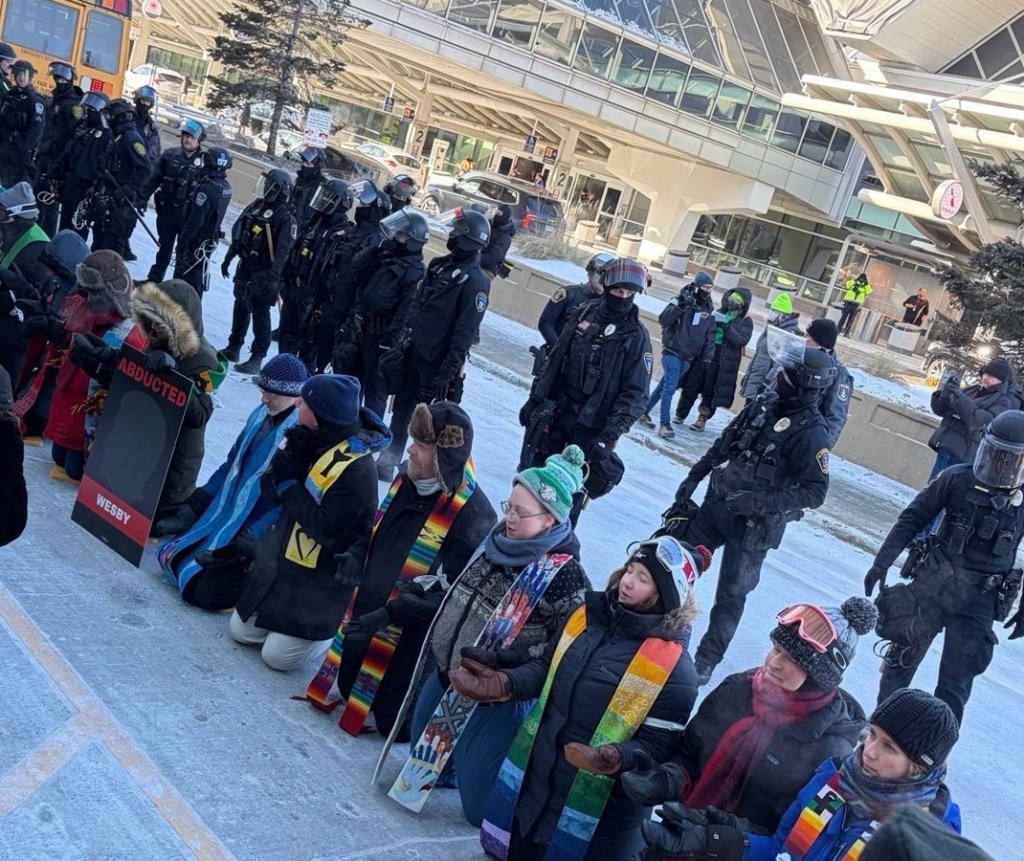
At the No Kings rally on October 18th, Anishinaabe elder Ricky DeFoe affirmed to the gathered crowd that “the natural response to oppression, ignorance, evil, and mystification is wide-awake resistance.” Such resistance, he claimed, calls for an “ethic of risk.”  I was immediately struck by his use of the term, paralleling feminist theologian Susan Welch’s A Feminist Ethic of Risk.[i]Returning home, I picked up my copy and found many of the same points DeFoe had articulated.[ii] Both asserted that an ethic of risk recognizes that “to stop resisting, even when success is unimaginable, is to die,” and by this they meant not only the threat of physical death, but also “the death of the imagination, the death of the ability to care.”[iii]

Continue reading “Of Resistance and Risk, Community and Kin: A Thanksgiving Reflection by Beth Bartlett”

Healing Soul Loss Through Movement

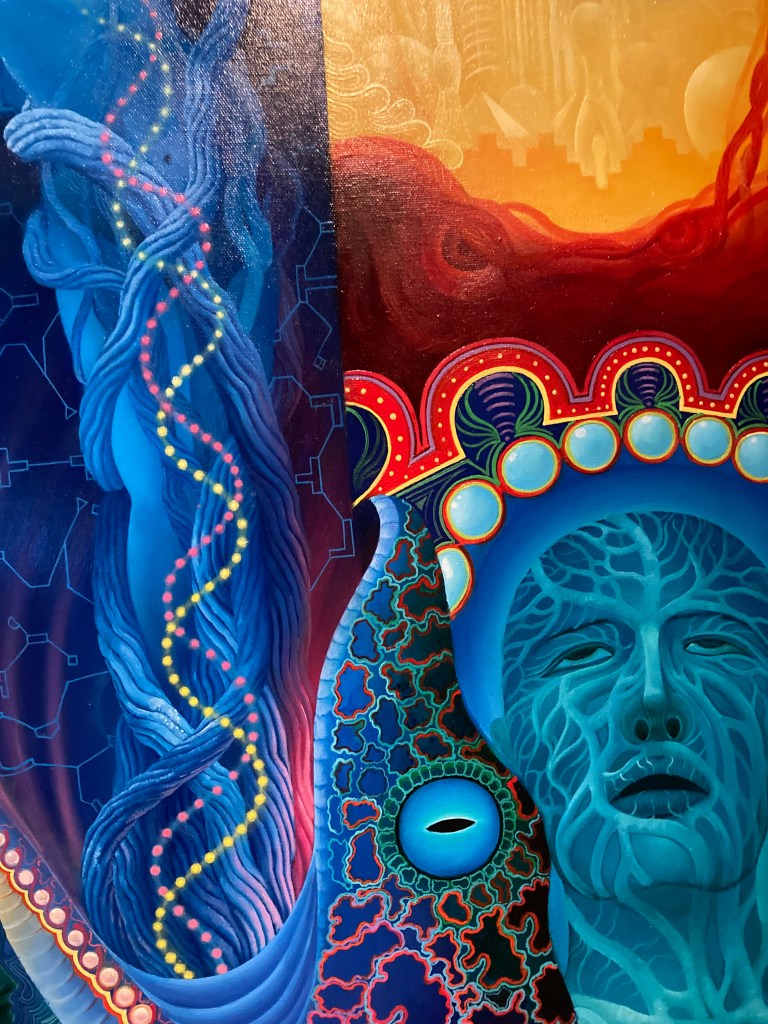
We tend to imagine soul loss as something rare and dramatic, or reserved for those with deep trauma. But in shamanic paradigms across cultures, soul loss is a normal part of being human. The concept refers to moments when a vital piece of our essence disconnects, often as a survival mechanism. In psychology this is called dissociation. This can happen through shock, illness, relational rupture or subtle decisions we make to fit in, stay safe or succeed. A piece of us leaves in order to preserve the rest.

[Image credits: Detail from Anderson Debernardi’s painting “Iniciacion Shamanica”, seen at Exhibition Visions Chamaniques. Arts de l’Ayahuasca en Amazonie Péruvienne, ‎⁨Musée du Quai Branly, 2024. Photo by Eline Kieft.]

Continue reading “Healing Soul Loss Through Movement”

Dancing the Stories That Heal

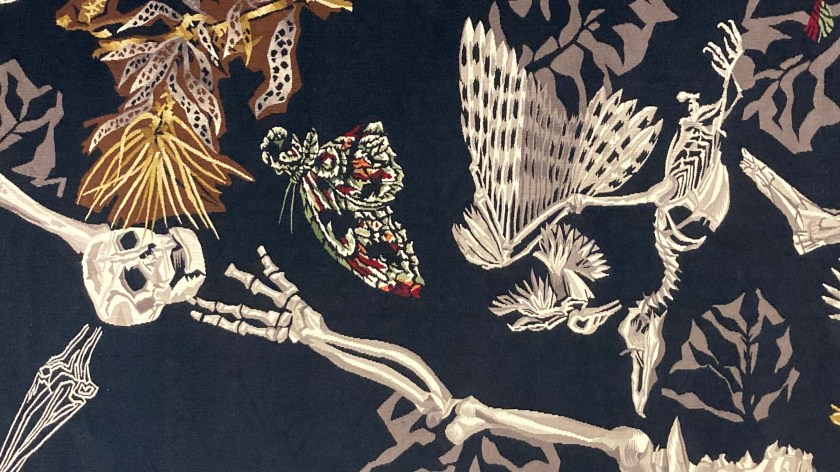
After a near-death experience in 2019, I found myself immersed in myth and movement—sitting with Clarissa Pinkola Estés, dancing archetypes through Movement Medicine, and weaving stories like the Handless Maiden and the Red Shoes into my everyday life. This post shares some of the journey of how myths became embodied allies and an invitation for you too, to remember what lives in your bones.

Tapestry: Le Grand Charniers (1959) by Jean Lurçat, Musée Jean-Lurçat, Angers, photographed in 2024. Image © Eline Kieft.
Continue reading “Dancing the Stories That Heal”

Do You Hear Seal-Woman Calling?

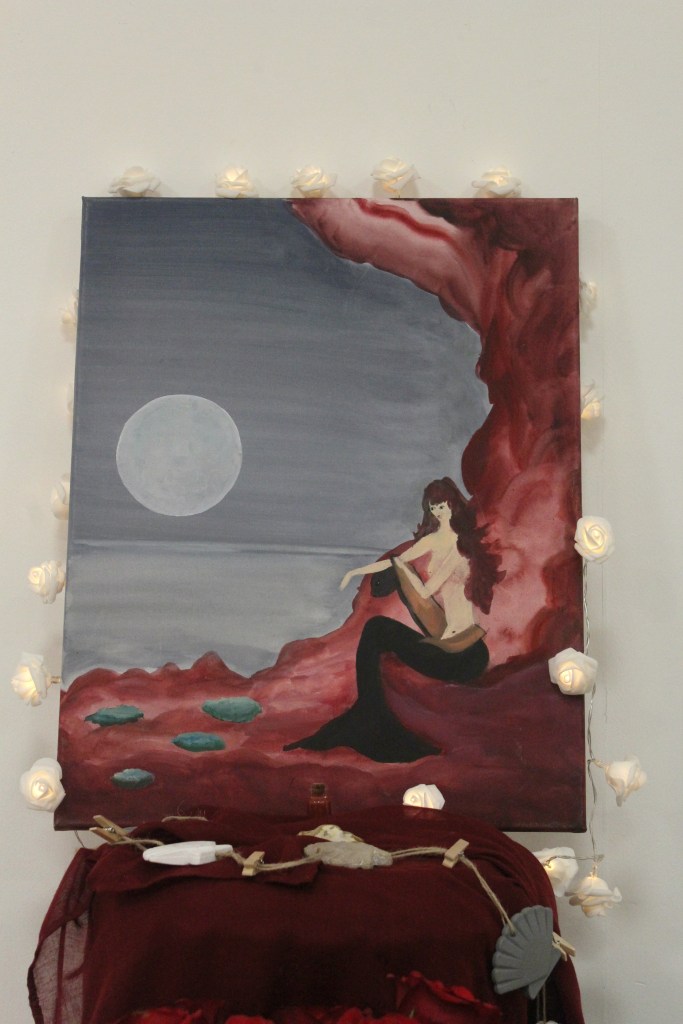
It was beautiful to read Carol P. Christ recent ‘from the archives’ post “Mermaid, Goddess Of The Sea,” especially because I’m in the middle of organising my first live Story-Dance workshop since several years, to move through one of my favourite stories of the Selkie-Seal Woman!

Stories of seal-women drift across the sea from the windswept coasts of Scotland to the icy shores of the Arctic. In the Scottish and Irish Highlands, Seal-women are known as selkies—shapeshifters who live as seals in the ocean, and who, when they shed their skins, walk as women on land. These selkie women dance beneath the moonlight, their laughter echoing across the waves as they rejoin their sisters in joyful reunion with the earth.

Continue reading “Do You Hear Seal-Woman Calling?”

The John Howard Society: Poetic Justness & Hope by Margot Van Sluytman

COMMUNITY

Unexpected comfort
Permeated raw, cold ache.
Warmth melted sorrow.
Embraced we are.
Once again
Knowing we are loved.
And loving too.

©Margot Van Sluytman

~~~
“Supporting neighbours. Protecting communities. Providing supports. Rebuilding lives.”
Donna De Jong, Executive Director of The John Howard Society, Hamilton-Burlington, Ontario, Canada.
~~~

I think often about why and how community matters. About joy and justice and hope and healing. And indeed, the importance of spaces such as our own here on FAR, this community of poets, writers, artists, activists, advocates, allies, academics. Each whose choice to put pen to page, affords light and life to throb and to thrive.

Continue reading “The John Howard Society: Poetic Justness & Hope by Margot Van Sluytman”

The Field of Belonging, by Molly Remer

May we be resilient
in the face of conflict and change.
May we lean in,
reach out,
root down,
and deepen into
the practices that nurture us
and sustain us.
May we cultivate wise discernment.
May we persist in reclaiming our power
and our attention.
May we embody our prayers.
May we dance bravely
on the bones of the coercive systems
that try to drag us down.
May we lift our heads
to meet the eyes of life.
May we persist in seeing,
in being,
in lifting our resilient and stubborn joys
up to soar.

I know we are weary, overwhelmed by how much damage can be done by sweeps of pen and distant deciding, callous disregard seeming to seep into all the edges and change how the world feels to live in. We may feel frozen with indecision, unsure of what to do or how to help or what to say. So much asks for our attention and our time, asks us to look and to not turn away. We wonder what there is to celebrate in the face of so much anger and so much need. It is hard to feel so small and human, hard to keep hoping, to trust in our own inherent magic and that goodness and beauty are still at work amid the pain. 

Continue reading “The Field of Belonging, by Molly Remer”

TikTok, Boom: My Ode to The Social Media App by Anjeanette LeBoeuf

Like millions of others, I downloaded a social media app called TikTok during the first few weeks of the Covid-19 Pandemic. I wrote a FAR post about the rising importance and threat that TikTok was back July 2020. And here we are five years later and the United States Government, while incompetent to stop the persistent gun violence, the rising costs of living, the erosion of democracy and personal freedoms, the dumpster fire that is our medical system CAN vote together to ban and remove a social media app used by millions.

Continue reading “TikTok, Boom: My Ode to The Social Media App by Anjeanette LeBoeuf”

Legacy of Carol P. Christ: Home for the Holidays

This post was originally published on Dec. 16th, 2011

Yesterday I was watching an episode of Grey’s Anatomy in which George’s father said to him, “you’re not like us, you’re a surgeon.” “And,” George’s father added, “you don’t like to do the things we like to do.”  It is not easy not being like your family and not liking the things they like.  When my mother was alive, she was the glue that held us together. Since then, my sheer presence in the lives of my father and my brothers and their families is disruptive. No matter that I try not to make waves, I make them all the same. I do keep my mouth shut about politics and religion and feminism. Even so, the last time I was home for the holidays my father asked me to stay in a hotel because having me in the house made him nervous and uncomfortable. To be fair, how would you feel if your daughter was 6 feet tall and you weren’t, she had a PhD and you didn’t, and even if she didn’t open her mouth at all, you knew that she didn’t agree with your political views or your everyday assumption that men make the final decisions on all important matters? Or if you were my brother who does not have a college education and who feels that women and minorities and gays have taken something from him? Or if you were my Mormon brother who is trying to keep his three daughters on the straight and narrow and not on the path chosen by their aunt? On the last Christmas day I spent at my brother’s house, I did not mention any of the obvious things, but it was hard to hide being astonished by the number of presents and the amount of money spent on them, and I simply could not force myself to watch football.   Continue reading “Legacy of Carol P. Christ: Home for the Holidays”

Healing What Ails Us and Coming Together: Politics and Other Forbidden Subjects by Caryn MacGrandle

I met my best friend growing up in Third Grade.  I moved around the country after high school, but regardless, her and I have managed to stay in touch.  I spoke with her last weekend and asked about her parents.  Even though its been years since I’ve seen them, I remember them as if it were yesterday. Going out to their cabin at Lake Texoma. Seeing them around the house. 

You see Kim and I were tight.  We saw each other pretty much daily for years.  In some ways it was a much more innocent time.  I remember summers leaving the house in the morning and not going back until sunset, muddy and barefoot.  Crawdads and horse models.  Playgrounds and baseball games.  

But in some ways, it was a much less innocent time. We dabbled in quite a lot that we should not have as the term helicopter parent was unheard of.  Our skies were wide open.  The good and the bad. The large majority of us were latch key kids, and we raised ourselves.  No apps to tell our parents where we were or check in. We went as the wind blew us.

Continue reading “Healing What Ails Us and Coming Together: Politics and Other Forbidden Subjects by Caryn MacGrandle”

Acharei Mot: Build Each Other Up.

The parshah (Torah portion) for May 4, 2024 is Acharei Mot, Leviticus 16:1-18:30.  It explains how to approach the divine and who should approach the divine in the context of establishing a yearly day of atonement to absolve the people of their sins.  This atonement day proscribes various rituals for the high priest to perform that day including immersions in ritual baths, special clothing, many animal sacrifices and sprinklings of blood, an incense offering, and a goat let loose in the wilderness carrying the sins of the community.  In addition, the parshah warns against idolatry and forbids the drinking and eating of an animal’s blood, as it contains its soul.  The parshah ends with a list of prohibited sexual relations.  This is a tricky parshah as it is often cited as proof that homosexuality is forbidden by the deity, and this has caused much pain and struggle for us within the LGBTQ+ community. 

Continue reading “Acharei Mot: Build Each Other Up.”