FAR Project Intern – Join Us!

It’s about every three years when we at Feminism and Religions put out a solicitation for a new intern to join our team. Back in 2013 we had the great privilege of having Kate Brunner join us. She came on as an intern and stayed to become one of our permanent co-weavers who help run the day-to-day behind-the-scenes of this collaborative project. She reorganized the structure and rhythm of how we run things and made it easier for us to bring in the next person. Enter Katie M. Deaver at the end of 2016. She is the superhero who so smoothly swooped in as Kate stepped back to attend grad school. Katie shared all the values and ethos of FAR – it was the most organic match we could have hoped for. Truly FAR couldn’t have survived without each of them.
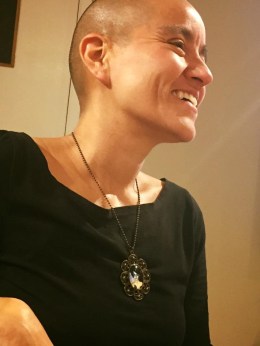
FAR is an all-volunteer effort and now, again three years later, we are looking to bring on a next team member. From the very start, we have been of the mindset that the more voices and perspectives we can bring into constructive, community-building dialogue, the better. So…might you be up and ready to contribute to this collaborative feminist task? Continue reading “FAR Project Intern – Join Us!”

Start, Stop, Continue: 2019 Mid-year Check-in by Xochitl Alvizo

It is the first of July—half way through 2019. I remember that I and many of my friends were very glad for the end of 2018; it was a hard year of many heavy events and we looked forward to a fresh start, a new year. It’s hard to accept that half of that “new year” is over. What is different? What is new?

In the United States, we are still suffering the same president. Women’s rights over their bodies and reproductive autonomy are still under attack. Immigrants and refugees are subjected to purposefully cruel treatment under the current administration—humanitarianism not a U.S. priority. We are entering another high-stakes election season that is sure to raise all our blood pressure. Not to mention larger global concerns regarding the destruction of our environment and survival of our planet, about which Karen Hernandez recently wrote.

All of this while we also deal with our own personal work, relationships, communities, and day to day responsibilities. We attend to our practical micro concerns always in the midst of overwhelming macro realities. How are you holding up? Continue reading “Start, Stop, Continue: 2019 Mid-year Check-in by Xochitl Alvizo”

My Body, My Self by Carol P. Christ

The other night I was invited out by a new friend to meet a group of his friends. It was a lovely gathering, and I felt welcomed. As we hugged good night outside the restaurant, one of the women commented, “Wow you really are tall.” Without missing a beat, I responded, “Yes it has been the bane of my life.” As the words tumbled out of my mouth I was aware that I spoke them dispassionately, not as is usual with a catch in my throat.
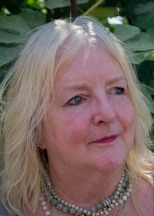
Don’t get me wrong about this. I don’t go around hating myself or my body. I know I am striking. I know I stand out in a crowd. I believe I am beautiful even as I age. Still, it is difficult to be singled out as different—especially when you are just going about your business. Moreover, comments about a woman’s height are never neutral: women who are taller than men challenge gender norms by our sheer physical being. Part of what is being said is almost always: you shouldn’t be so tall.

One of these things is not like the others, one of these things just isn’t the same. Continue reading “My Body, My Self by Carol P. Christ”

Kassiani’s Song: Woman at the Center of the Easter Drama by Carol P. Christ

Today I am reposting the song and story of Kassiani, the Byzantine composer, poet, and hymnographer, who is not well-known to western feminists or in western history in general. In Christian Orthodox tradition, Kassiani’s most famous song will be sung this week on Easter Tuesday night or very early Easter Wednesday morning, placing a woman’s love for Jesus at the heart of the Easter drama.

For many this song is the high point of Easter week.

Kassiani, also known as St. Kassia, was a Greek woman born into a wealthy family in Constantinople (now Istanbul) about 805 to 810 AD. According to three historians of the time, she was intelligent and beautiful and selected as a potential bride for the Emperor Theophilos. The chroniclers state that the Theophilos approached her and said: “Through woman, the worst,” referring to the sin of Eve. Clever Kassiani responded, “Through woman, the best,” referring to the birth of the Savior through Mary.

Apparently unable to accept being put in his place by a woman, Theophilos chose another bride. Perhaps relieved, Kassiani founded a monastery in Constantinople becoming its first abbess. She was an outspoken theological advocate of icons during the iconoclastic crisis (for which she was flogged). One of only two women to publish under her own name during the Byzantine Middle Ages, Kassiani wrote both poetry and hymns. Up to 50 of her hymns are known today, with 23 of them being part of the Greek Orthodox liturgy. Continue reading “Kassiani’s Song: Woman at the Center of the Easter Drama by Carol P. Christ”

Resurrections by Elizabeth Cunningham

Photo by: Douglas C. Smyth

As a minister’s daughter, I grew up almost literally in the church, its red door and ivied walls across the driveway from the rectory. On Easter the church was packed; every family received a pink or red geranium. There were Easter egg hunts, baskets stocked with chocolate rabbits and the jelly beans these magical creatures laid. The church rang with triumphant hymns: Jesus Christ is risen today. Although like all children I reveled in holidays involving excessive sweets, it was not the candy or the or the requisite rejoicing that moved me most.

It was the women, or in the Gospel according to John, the woman, bereft and brave, who went to the tomb to tend Jesus’s body. The male disciples had scattered and gone into hiding. In the Protestant Episcopal Church, Christmas Eve and Easter were the only times women played a prominent role in the story. Those were not the loud, triumphant moments. They lived in my child’s imagination as the quiet, mysterious times, Mary giving birth in the night attended by cows, donkeys, and stars. Dawn in a garden, wet with dew, the only sound birds waking and singing, the only people, the women, or the one woman who captured my imagination and, in my story, has her own apotheosis on that morning.

I did not question the miracle of resurrection. Miracles and magic made sense to me as a child. Theology didn’t. My father liked to expound on Jesus’s utterance from the cross “My God, my God why hast though forsaken me.” He insisted that Jesus was not crying out in despair but quoting Psalm 22, which ends in triumph. The Gospel narratives emphasize Jesus’s rising again “in accordance with the scriptures,” implying that he knew he would come back to life on the third day.

Continue reading “Resurrections by Elizabeth Cunningham”

The Room Where We Support Each Other, Part 2 by Carol P. Christ

Last week, In the Room of Undressing where women strip themselves to the bone, my great-great-grandmothers on my father’s side spoke in me. I had been afraid they would judge me for not being a wife and mother like they were, but they did not.

The story continues with my great-great-grandmothers on my mother’s side.

Ingrid Mattsdottor, born 1829, Överhogdal, Jämtlands Län, Sweden, died 1918, Kansas City, Missouri, proprietor of a boarding house, mother of five daughters:

I was the oldest of eight children. Our father died when I was eleven. At sixteen I was sent to work as a servant in a village far from home. I stayed for six years. After that, I worked for two years on a farm in our village. I was twenty-nine, and wondering if I would be an old maid, when Olof and I married. Our five daughters came quickly. I knew a lot more about work and children he did, so I took charge. When the crops failed all over Sweden for two years running, I said enough was enough. As soon as our last daughter was born, I sold the farm, and we left for America.

Iowa was worse than Sweden. Our little Carin died the first year. Olof gave Ingrid to a wealthy Swedish couple without so much as a word to me. He kept talking about going back to Sweden. One day he took the money I set aside and bought his ticket.

By the time he came back for us, Anna, Sarah, Belle, and I had moved to Kansas City. I was running a boarding house. I told Olof that we had no intention of going back to Sweden with him. When Anna married, instead of moving out, she brought her husband and his children to live with us. Belle became quite the business woman and took over my role as provider. Sarah and her family were always close by.

I worked as hard as any man and Belle did too. “Far better off on our own,” we would often say. We are proud to have another strong woman in our family. I am sorry you didn’t get to meet Belle. You would have liked her.

Continue reading “The Room Where We Support Each Other, Part 2 by Carol P. Christ”

The Room Where We Support Each Other, Part 1 by Carol P. Christ

Over the past year or so I have been reciting my mother line, seven generations back, as a mantra of gratitude that helps me sleep at night. Sometimes I also name my sixteen great-great-grandparents, though I often fall asleep before finishing.

I have gained courage from the strength of their lives, but I never wondered what my eight great-great grandmothers would think of me. My life feels so different from theirs. Perhaps I feared they would judge me and my life.

This weekend, while re-reading Woman and Nature, I followed the narrator through a Passage to the Room of Dressing:

Where the women are not close. Where the women keep themselves at a distance.  . . . where the women tell each other that they are happy.  . . . The room where the daughter denies she is anything like her mother. (156)

Continue reading “The Room Where We Support Each Other, Part 1 by Carol P. Christ”

Exercising Women’s Religious Voice and Authority – Why is this Still an Issue? by Elise M. Edwards

elise-edwardsOver the past few days, I’ve been spending time at a church in Alexandria, Virginia conducting oral history interviews.  I’m doing research for a project about the arts and the church that has me diving deep into the church’s congregants’ and leaders’ experiences. Yesterday’s conversations offered insight about many theological topics that interest me, but what was particularly encouraging was what I witnessed concerning women in ministry.  That’s not what I was looking for, but it is what I needed to see.

Before beginning these interviews, I had already been thinking about the ways women’s authority and voice are often challenged.  This past weekend, I attended a regional religion conference where I assumed a leadership position and my voice was sought out for advice and insight.  I had great conversations with other women in academia about wellness and success while I was there.  Attending the conference provoked fond memories of a similar conference many years ago, when I connected with many colleagues in this FAR community and we discussed the theme of “Women and Authority.” Those were positive experiences.  But I had an unpleasant encounter, too, when I was on the receiving end of a male colleague’s condescending remarks.  I was also made aware of a disturbing incident in which a woman of color was publicly disrespected while speaking at a university event and subsequently trolled.  Those experiences triggered anger and deep sadness. To be honest, I also felt a sense of resignation and defeat.  Patriarchy is just so persistent.

Continue reading “Exercising Women’s Religious Voice and Authority – Why is this Still an Issue? by Elise M. Edwards”

Recognizing Abuse by Karen Tate

I’ve been thinking a lot about abuse.  Of course, most of us know about the domination, exploitation and  need for control meted out by patriarchy, but I wonder if we have actually normalized many abuses?  Abuse in the home, in the workplace, in our culture.   Perhaps  we accepted it unconsciously because so many of us are conditioned by religions that tell us to make noble sacrifice and tolerate suffering silently. I wonder if we’re calling it out when we see it – often and loudly – or if we’ve become conditioned to quietly accept the abuse with little push back.

My intent is not to offend anyone with this.  I want to find common ground and defeat the polarization we find around us, but our President is the poster child for abusive behavior.  Do we recognize his lies and fear-mongering and so many of the ideas he gives credence and license to as abuse?  Not only is he eroding our democratic institutions but he poisons the political, social and cultural arena with negativity, fear and hate, rather than uplifting us and encouraging us to evolve and be the best version of ourselves.  I equate him to poison in a well from which we must all drink. Continue reading “Recognizing Abuse by Karen Tate”

Making a New Home: It’s Not So Easy by Carol P. Christ

I am sitting in my studio apartment with my computer on my lap on a cold, windy, and rainy day in Voutes, Heraklion, Crete. My little dog is curled up asleep, seeing no reason to awake on a day like this.

I made the decision to leave my beautiful home in Molivos, Lesbos last winter, renting a small Air BNB house in Heraklion the winter and a small house in Pachia Ammos for the summer. Then back to Lesbos for 2 weeks, on to the Goddess Pilgrimage to Crete for 2 weeks, back to Lesbos for 2 weeks, on to America for a speaking tour, back to Lesbos for a few more weeks with an interval in Thessaloniki, and on to Crete for the New Year holidays.

Things went pretty much as planned up until my return to Crete. There were a few glitches, but I enjoyed being in Heraklion and then in by the sea in Pachia Ammos, and I was beginning to make new friends. I enjoyed my time in Lesbos and my trips to the US and Canada. I was looking forward to my return to Crete. Continue reading “Making a New Home: It’s Not So Easy by Carol P. Christ”