Legacy of Carol P. Christ: “The Language of the Goddess” In Minoan Crete


This post was originally published on Oct. 8, 2012

While the “war against Marija Gimbutas,” rooted in what my friend Mara Keller calls “theaphobia,” is being waged in the academy, her theories continue to unlock the meaning of hundreds of thousands of artifacts from the culture she named “Old Europe.”

According to Gimbutas, the Neolithic and Chalcolithic cultures of Old Europe c. 6500-3500 BCE were peaceful, sedentary, agricultural, matrifocal and probably matrilineal, egalitarian, and worshipped the Goddess as the power of birth, death, and regeneration in human and all forms of life.  The cultures of the Old Europe contrasted with the Bronze Age cultures of the Indo-Europeans who brought the Indo-European languages and value systems to Europe and India and to all of the European colonies.  The Indo-European cultures were patriarchal, patrilineal, nomadic, horse-riding, and warlike, and worshipped the shining Gods of the sky. 

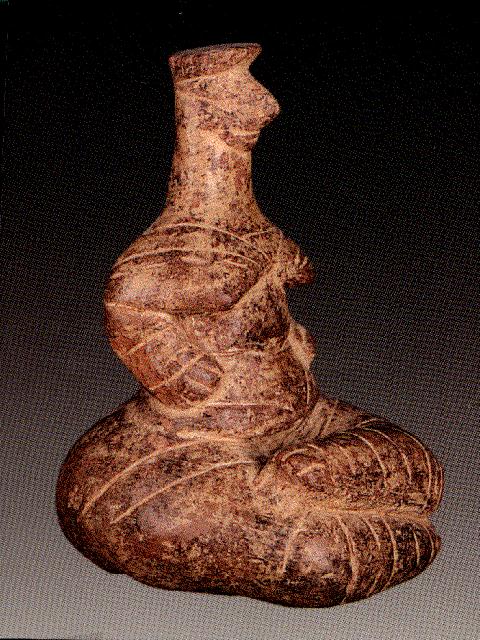
“The language of the Goddess” includes a series of signs and symbols that the people of Old Europe could “read” as surely as you and I know that a cross on top of a building marks it as Christian or that a woman wearing a star of David pendant is Jewish.  Gimbutas identified the meaning of these symbols through a painstaking process that involved comparison of artifacts, attention to where they were found, and clues from the recurrence of similar symbols in later cultures.  In twenty years of leading Goddess Pilgrimages to Crete, I have found Gimbutas’ theories an indispensible “hermeneutical principle” which unlocks the meanings of the artifacts we encounter.

  Continue reading “Legacy of Carol P. Christ: “The Language of the Goddess” In Minoan Crete”

From the Archives: Winter Solstice: Celebration of the Powers of Fire by Sara Wright

This was originally posted on Dec. 12, 2023

I have a problem with the belief that Winter Solstice is primarily about celebrating ‘the coming of the light.’ This one – sided thinking negates the cross-cultural reality that this is a festival during which candles are lit to light up the night and roaring fires blaze inside and out bringing warmth to all. Winter Solstice is above all else a Festival of Fire.

Fire is an ambiguous element (as all the elements are) carrying both a positive and negative charge. On one level fire brings warmth and light on cold winter nights. On the other hand, fire also incinerates, destroying everything it touches. Approaching a Festival that celebrates the Element of Fire should be done with consciousness and caution.

Continue reading “From the Archives: Winter Solstice: Celebration of the Powers of Fire by Sara Wright”

As Above, So Below—A Cosmic Tale by Mary Gelfand

It was when I was studying to become a Witch that I first encountered the phrase ‘As Above, So Below,’ which I now know to be a paraphrase of a ninth century Hermetic text from an Arabic source.  I liked this phrase from the beginning as it expressed something I believed but had struggled to articulate so elegantly.  I believe that there is a sacred connection between our earthy human existence and the grandeur of the cosmos—our very bodies are composed of star dust.

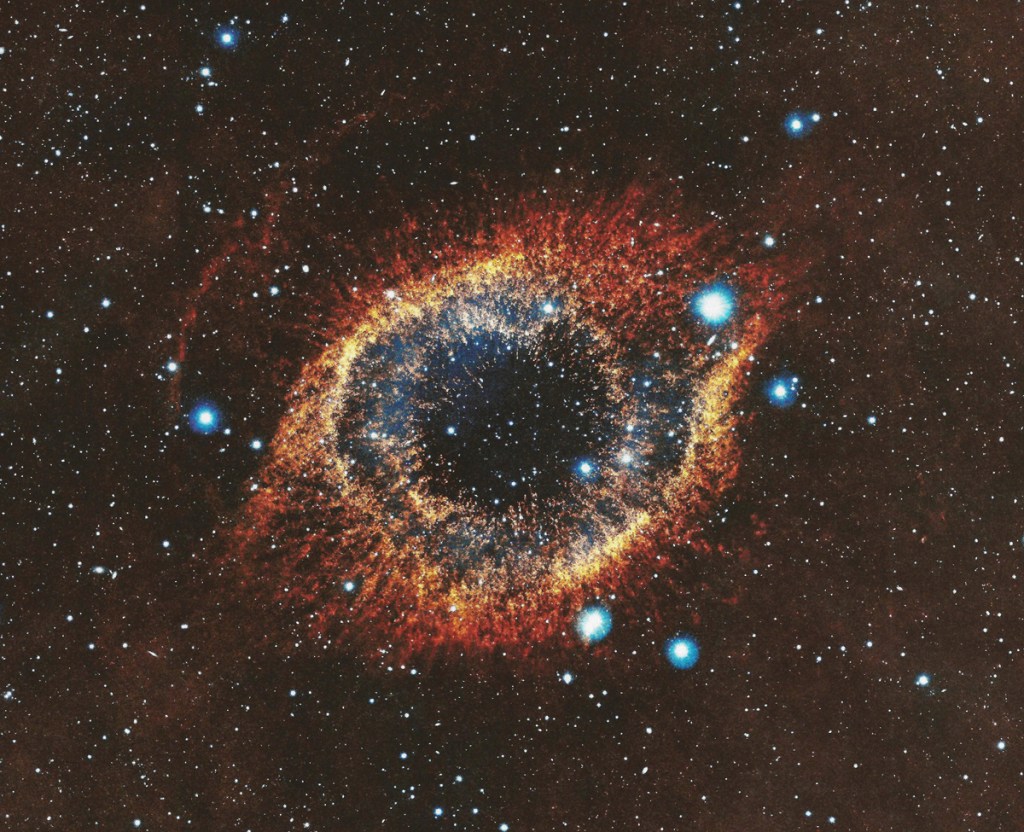
Helix Nebula from the Hubble Telescope

I was delighted to discover a more specific description of that connection in the Journey of the Universe, by cosmologist Brian Swimme & Mary Tucker, founder of the Forum on Religion & Ecology at Yale. They discuss the creation of the universe in terms of natural cycles of expansion and contraction, which they also refer to as ‘attraction,’ or gravity. They write “All of space and time and mass and energy began as a ‘single point’ that was trillions of degrees hot and that instantly rushed apart. (p. 4)” That expansion is on-going, billions of years later. 

Continue reading “As Above, So Below—A Cosmic Tale by Mary Gelfand”

Herstory Profiles: The Season of the Witch by Anjeanette LeBoeuf

Throughout the modern ages there have been stories, legends, myths, and historical accounts of threatening people, mainly women, who have been linked with the supernatural, with containing powers, engaging with elements that go beyond the natural world, and who decentralize, shake up, and counter mainstream patriarchal systems and groups. And the predominate word which can be translated and transcend languages is that of WITCH. And since we are in the month of October, when it becomes somewhat acceptable for people to deck their houses with items long been associated with witchcraft, this month’s herstory profiles is diving into all things witchy.

So, lets deconstruct what witches do and how they function in history and in modern times. When we look at the origins of magic – at the very core- is the manipulation of the natural world for supernatural outcomings. Those outcomes can be a range – from conversing with supernatural beings, healings, prophecy, alchemy, transformation, and to even holding secret knowledge. The word magic has origins in Ancient Persian and Proto-Indo-European languages with concepts of “being able to” and to “have power.” If we look at ancient cultures, civilizations, and religions we found multiple variations of people and roles being able to contain, control, and weld magic.

Continue reading “Herstory Profiles: The Season of the Witch by Anjeanette LeBoeuf”

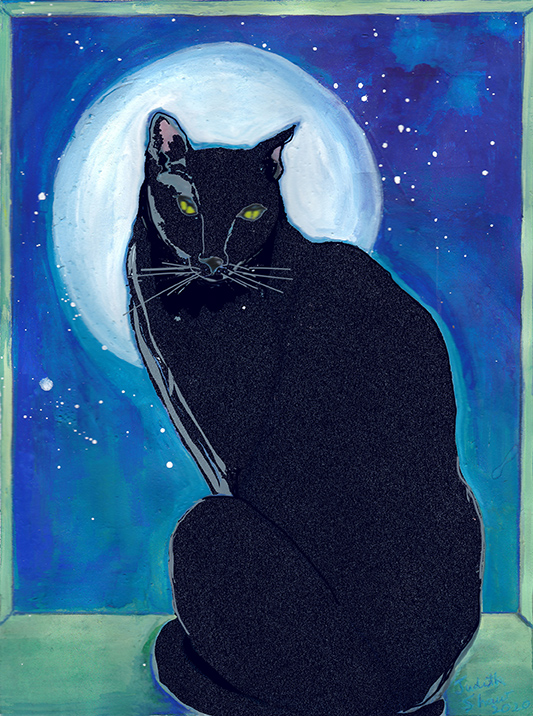
Samhain: The Cailleach, Wolf, and Black Cat  by Judith Shaw


Halloween, with its Celtic pagan roots in the sacred day of Samhain, which later morphed into a Christian holiday, is now mainly a nonreligious celebration in Europe and North America. It’s enjoyed by both young and old with scary outdoor decorations, parties, spooky costumes, haunted houses, carved pumpkins, and candy-giving.

Continue reading “Samhain: The Cailleach, Wolf, and Black Cat  by Judith Shaw”

Legacy of Carol P. Christ: WOMEN ARTISTS AND RITUALISTS IN THE GREAT CAVES: THE BEGINNING OF THE END OF INDOLENT ASSUMPTIONS

This was originally posted October 21, 2013

In an earlier blog, I suggested that women might have blown red ocher around their hands to leave their marks in prehistoric caves.

At the time I thought this was a rather bold suggestion.

Had I been asked why I thought the images were made by women, I might have said that people have understood caves to be the womb of the Great Mother, the Source of All Life, from time immemorial. I might have added that those who performed rituals in the caves cannot have been performing simple “hunting magic,” but must also have been thanking the Source of Life for making life possible for them and for the great beasts they hunted.  Still I am not certain that I imagined women as the artists in the Paleolithic caves.

handprint peche merle cave
Continue reading “Legacy of Carol P. Christ: WOMEN ARTISTS AND RITUALISTS IN THE GREAT CAVES: THE BEGINNING OF THE END OF INDOLENT ASSUMPTIONS”

Legacy of Carol P. Christ: GODDESS WITH US: IS A RELATIONAL GOD POWERFUL ENOUGH?

This was originally posted on Sept 2, 2013

Last week I wrote about Protestant Neo-Orthodoxy’s deification of male power as power over.  This week I want to ask why the relational Goddess or God* of process philosophy has not been more widely embraced, both generally and in feminist theologies.

Could it be that a relational God just isn’t powerful enough? Are some of us still hoping that an omnipotent God can and will intervene in history to set things right?  Do we believe an omnipotent God can save us from death?

Process philosophy provides an attractive alternative to the concept of divine power modeled on male power as domination.  According to leading process philosopher Charles Hartshorne, the power to coerce, power as power over and domination, is not the kind of power God has.

The concept of divine power as omnipotent (having all the power) leads to what Hartshorne called “the zero fallacy.”  If God has all the power and can dominate in all situations, then the power of individuals* other than God is reduced to zero.  In effect, this means that individuals other than God do not really exist, but at most are puppets whose strings are pulled by the divine power.

Continue reading “Legacy of Carol P. Christ: GODDESS WITH US: IS A RELATIONAL GOD POWERFUL ENOUGH?”

Cerridwen’s Cauldron; Stealing from Old Mother Universe by Kelle ban Dea

Catherine Kay Greenup, blue well
Unsplash stock

The story of how Cerridwen, the witch goddess, brews a magic potion full of awen (inspiration) which is then accidentally imbibed by the boy Gwion Bach, is well loved across the Western world, especially by neo-Druids. Gwion Bach is then reborn as Taliesin, the greatest bard in Britain. It is a typical heroes tale, with Cerridwen as the muse and initiatrix.

Or is it? This tale has always left a funny taste in my mouth, and when I recently read The Broken Cauldron by Lorna Smithers, I understood why. In the oldest version we have of this tale, Gwion Bach doesn’t accidentally taste the awen. He steals it.

Continue reading “Cerridwen’s Cauldron; Stealing from Old Mother Universe by Kelle ban Dea”

Atargatis, the Mermaid Goddess by Judith Shaw

Modern science has proven what ancient myth has long told us about our Earth — billions of years ago our world was a water world. It’s not surprising then to find water-based creation stories and goddess mermaids in the myths of our ancient ancestors. 

Continue reading “Atargatis, the Mermaid Goddess by Judith Shaw”

A Healing Shrine by Joyce Zonana

From October 5, 2023. Joyce posted the blogpost which she titled: Nineteen months and Counting: Experiencing  the Web of Life

On February 28, 2022, I unknowingly drove into a deep snowbank, shortly after finding myself in  a strangely  unfamiliar landscape. Suspecting a TIA, my primary care physician  urged me to go to an emergency room for a possible CAT scan. There, a lesion in my right parietal lobe was quickly discovered.

Continue reading “A Healing Shrine by Joyce Zonana”