Legacy of Carol P. Christ: GODDESS WITH US: IS A RELATIONAL GOD POWERFUL ENOUGH?

This was originally posted on Sept 2, 2013

Last week I wrote about Protestant Neo-Orthodoxy’s deification of male power as power over.  This week I want to ask why the relational Goddess or God* of process philosophy has not been more widely embraced, both generally and in feminist theologies.

Could it be that a relational God just isn’t powerful enough? Are some of us still hoping that an omnipotent God can and will intervene in history to set things right?  Do we believe an omnipotent God can save us from death?

Process philosophy provides an attractive alternative to the concept of divine power modeled on male power as domination.  According to leading process philosopher Charles Hartshorne, the power to coerce, power as power over and domination, is not the kind of power God has.

The concept of divine power as omnipotent (having all the power) leads to what Hartshorne called “the zero fallacy.”  If God has all the power and can dominate in all situations, then the power of individuals* other than God is reduced to zero.  In effect, this means that individuals other than God do not really exist, but at most are puppets whose strings are pulled by the divine power.

Continue reading “Legacy of Carol P. Christ: GODDESS WITH US: IS A RELATIONAL GOD POWERFUL ENOUGH?”

Cerridwen’s Cauldron; Stealing from Old Mother Universe by Kelle ban Dea

Catherine Kay Greenup, blue well
Unsplash stock

The story of how Cerridwen, the witch goddess, brews a magic potion full of awen (inspiration) which is then accidentally imbibed by the boy Gwion Bach, is well loved across the Western world, especially by neo-Druids. Gwion Bach is then reborn as Taliesin, the greatest bard in Britain. It is a typical heroes tale, with Cerridwen as the muse and initiatrix.

Or is it? This tale has always left a funny taste in my mouth, and when I recently read The Broken Cauldron by Lorna Smithers, I understood why. In the oldest version we have of this tale, Gwion Bach doesn’t accidentally taste the awen. He steals it.

Continue reading “Cerridwen’s Cauldron; Stealing from Old Mother Universe by Kelle ban Dea”

Atargatis, the Mermaid Goddess by Judith Shaw

Modern science has proven what ancient myth has long told us about our Earth — billions of years ago our world was a water world. It’s not surprising then to find water-based creation stories and goddess mermaids in the myths of our ancient ancestors. 

Continue reading “Atargatis, the Mermaid Goddess by Judith Shaw”

A Healing Shrine by Joyce Zonana

From October 5, 2023. Joyce posted the blogpost which she titled: Nineteen months and Counting: Experiencing  the Web of Life

On February 28, 2022, I unknowingly drove into a deep snowbank, shortly after finding myself in  a strangely  unfamiliar landscape. Suspecting a TIA, my primary care physician  urged me to go to an emergency room for a possible CAT scan. There, a lesion in my right parietal lobe was quickly discovered.

Continue reading “A Healing Shrine by Joyce Zonana”

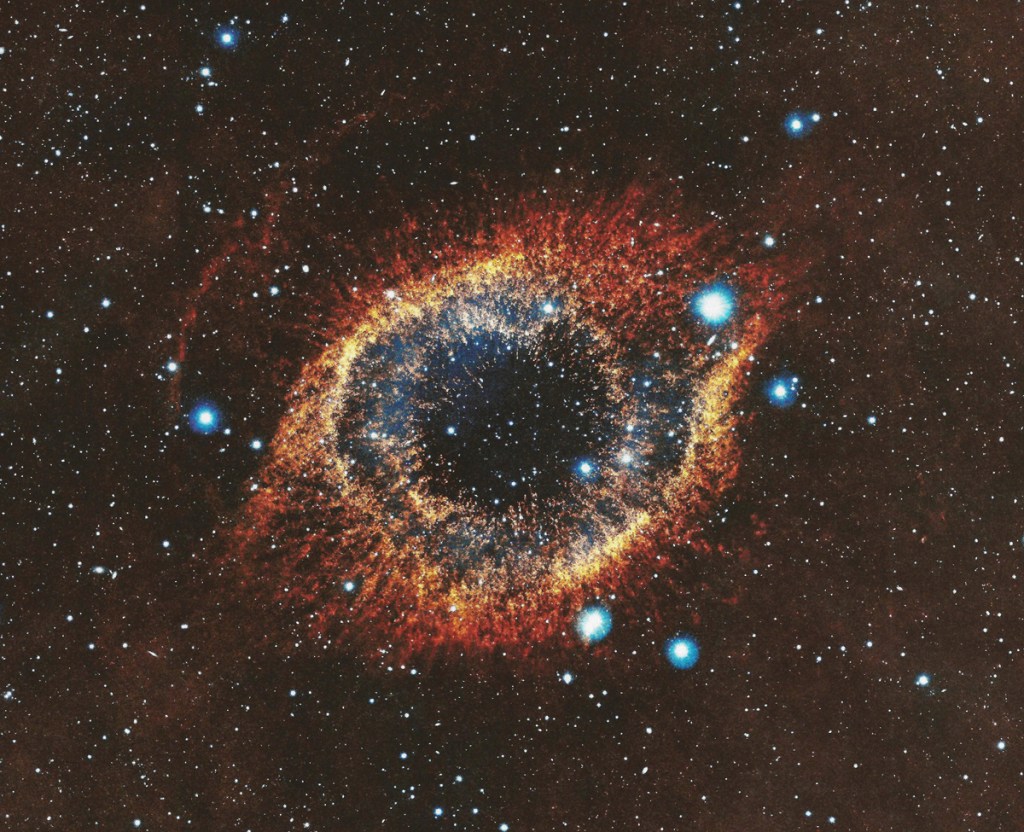
The Eye of the Goddess by Sara Wright

Spiraling In

I buried you today,
a fluff of earthly feathers
dipped in ebony
  bronze
and gold.
He left you
on my road
innocent
already broken
Just a tiny bird
peeping pitifully
in fear and pain
cocooned in
deep distress.

I scooped you up
held you against
my heart

Instantly Still
I felt you knew…

Wild Mothering
kicked in
create a loving
space for
life or death

Above all
Be Present
for whatever
is ahead…

I dug a grave
where you were born
  nestled under pines
fragrant roots
 cradled what
was left
your bones are
made of light

 Offering prayers
to Her
Our Bird Goddess*
I bowed my head
Ancient and Wise
She who Sees
She who holds
Abusers accountable
(as do I)
 She watches
 over us all
honoring the dead.

Continue reading “The Eye of the Goddess by Sara Wright”

Legacy of Carol P. Christ: Two Ultimates: The Ground of Being and Goddess

This was originally posted July 15, 2013

The concept of two ultimates, the ground of being and Goddess, can be helpful in understanding differences of emphasis within and among religions.  Some religions or strands within religions focus on relationship with or worship of a personal God, while other religions or strands within religions focus on identifying with or merging with the impersonal ground of being or the whole of which we are part.  These two ultimates are found in feminist spiritualities and theologies.

In “Being Itself and the Existence of God”* process theologian John Cobb identifies two ultimates.  The ground of being as the metaphysical principles that structure all of life is unchanging; as the whole of which individuals are part, the ground of being is impersonal.  God, on the other hand, is an active presence in the world, is personal, and cares about individuals in the world.  If God is understood to be in some sense an individual in relation to other individuals, then God cannot be identified with the whole, because the whole is made up of God and other individuals.  Yet God is not simply one individual among other individuals.  Only God has perfect knowledge of the world and every individual within it and only God cares for the world in light of perfect knowledge of it.

Continue reading “Legacy of Carol P. Christ: Two Ultimates: The Ground of Being and Goddess”

The Impresa of Great Mystery by Janet Maika’i Rudolph

The Fibonacci series has been called the fingerprint of god. That is because they are a sequence of numbers found ubiquitously in nature. I’ve been thinking up new names for it. It is a progression created by adding each number to its previous number after starting with the number one. It looks like this:

1, 1, 2, 3, 5, 8, 13, 21, 34, 55 and so on to infinity.

The Fibonacci Sequence was first described in the 12th century by Leonardo Pisano Bigollo, an Italian mathematician. His nickname was Fibonacci, which translates to “son of Bonacci.” He has been called the Leonardo of Pisa, the city of his birth. The series is unique. When you take the ratio of any two successive numbers in the series (after the three), the resultant numbers have a pattern. They fall into an increasingly narrow range with the sequence revolving around a ratio called the Golden Mean, the golden ratio, or the golden number. It is 1.618. Below is an example of how the number sequence works:

5 / 3 = 1.666
8 / 5 = 1.600
13 / 8 = 1.625
21 / 13 = 1.615
34 / 21 = 1.619
55 / 34 = 1.617

Continue reading “The Impresa of Great Mystery by Janet Maika’i Rudolph”

Legacy of Carol P. Christ: Bird Watching and Geology in the Body of Goddess

The notion of the earth as the body of Goddess has taken on deeper meaning for me in recent years.  I have felt connected to nature all of my life.  Yet often, though not always, I have related to nature in general rather than in specific ways. Some years ago, after reading Hartshorne’s essay “Do Birds Love Singing?” I stopped for the first time in the wetlands of Kalloni, Lesbos, to see the flamingoes that live in the salt pans there.

Flamingo's-Kalloni3-Saltpan
Continue reading “Legacy of Carol P. Christ: Bird Watching and Geology in the Body of Goddess”

Mountain Mother: Earth, Woman, Goddess (Part 2) by Jeanne F. Neath

Part 1 was posted yesterday.

In Part 2 we’ll complete our travels into Mountain Mother’s realms, as we explore female-centered economics and spiritualities as a means toward creating earth- and female-centered communities and small-scale societies.

Imagine living on Turtle Island prior to 1492. At that time Indigenous peoples had been living in respectful relationship to nature, tending her for thousands of years. European invaders and colonists were amazed by the abundance, but assumed they were seeing wild nature. These were subsistence societies! People’s needs were met by the Earth, her plants, animals, waters, and human efforts. No one charged a fee. Everything was a gift.

Continue reading “Mountain Mother: Earth, Woman, Goddess (Part 2) by Jeanne F. Neath”

Mountain Mother: Earth, Woman, Goddess (Part 1) by Jeanne F. Neath

Growing up in the 1950s in the U.S. I was deeply immersed, trapped like so many girls and women, in capitalist, colonizing, patriarchy. I rescued myself in the 1970s when I jumped head first into the Women’s Liberation movement. I found that the currents pushing communities of women were wild at times, yet taking me where I wanted to go.  At that time, it was possible to live one’s life, as I did, largely within this subculture and its women’s dances, bookstores, battered women’s shelters, women of color organizations, festivals, land groups and more. These female-centered and female-only spaces gave women a gut level knowledge of what a world without patriarchy could be like. We could imagine a female-centered world because we were, in many respects, living in one.

Thanks to a decades long assault by the right wing and other anti-feminist forces, women’s spaces became difficult to access. Now the grassroots women’s movement is making a comeback. Over 50 years of second wave feminist thought, research and organizing inform our work. Women’s communities are on the rise. These communities have the potential to become the base for an earth- and female-centered future, as I’ll discuss below.

Continue reading “Mountain Mother: Earth, Woman, Goddess (Part 1) by Jeanne F. Neath”