I am my Mothers
My Mothers are me
I am the Goddess
the Goddess is within me
As blood
as bone
as the spirals
of nuclei
as ova
as tears
as breath
I carry my Mothers
as my Daughters will carry me
And the Goddess carries us all

Exploring the F-word in religion at the intersection of scholarship, activism, and community.

I am my Mothers
My Mothers are me
I am the Goddess
the Goddess is within me
As blood
as bone
as the spirals
of nuclei
as ova
as tears
as breath
I carry my Mothers
as my Daughters will carry me
And the Goddess carries us all

Women’s Sovereignty and Body Autonomy Beyond Roe v. Wade was not what I was expecting. Given the title, I thought it would be similar to Robin Marty’s New Handbook for a Post-Roe America – a practical guide for ways to gain access to reproductive care in the wake of the overturning of Roe v. Wade. Instead, I found, in contributor Mary Saracino’s words, “the howl of ages” – a deeply passionate and spiritual collection of poetry, prose, and visual art expressing women’s outrage, grief, resistance, and empowerment in response to the U.S. Supreme Court decision of June 2022 denying women the right to abortion care that had been settled law in the U.S. for nearly fifty years.
Continue reading “Women’s Sovereignty and Body Autonomy Beyond Roe v. Wade: Book Review by Beth Bartlett”This was originally posted on November 25, 2013
The charge of “essentialism” has become equivalent to the “kiss of death” in recent feminist discussions. In this context it is taboo to speak of Mother Earth. Yet, I would argue there are good reasons for speaking of Mother Earth that do not add up to essentialism. What if the values associated with motherhood are viewed as the highest values? What if the image of Mother Earth encourages all of us to recognize the gift of life and to share the gifts we have been given with others?
For those not familiar with the “essentialism” debate in feminist theory, it might be useful to define “essentialism.” In philosophy, essentialism is the idea that every “thing” has an “essence” which defines it. In its pure form, essentialism is a by-product of Platonic “idealism” which states, for example, that the “idea” of table is prior to every actual table and that every actual table is an embodiment of the idea of table.
Continue reading “Legacy of Carol P. Christ: Is It Essentialist To Speak Of Earth As Our Mother?”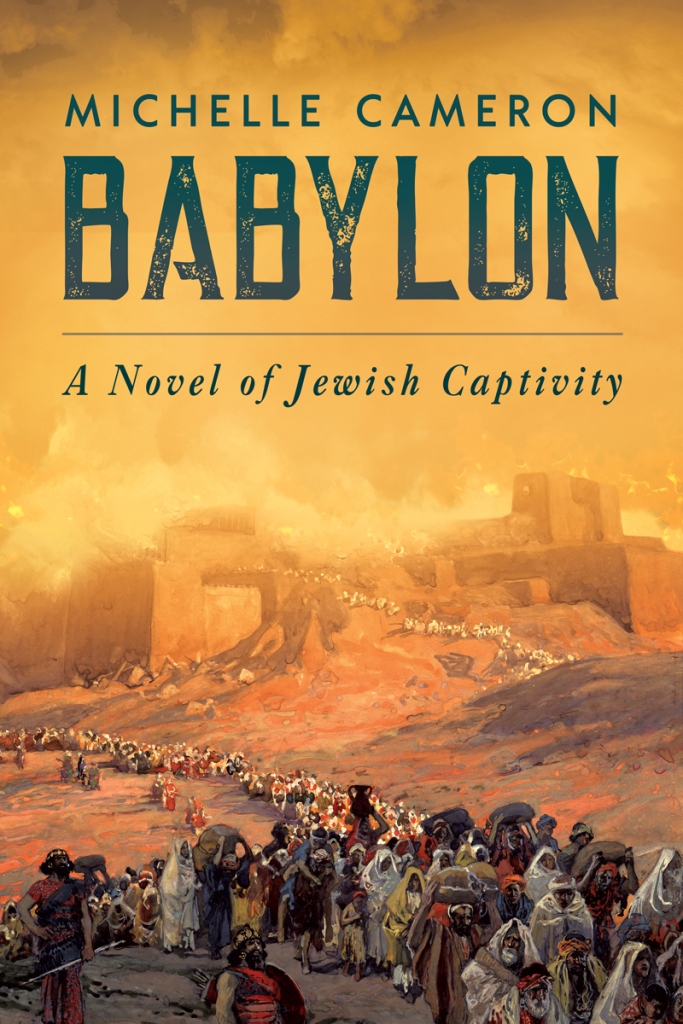
When one nation conquered another in antiquity, vanquished peoples typically switched allegiances to that country’s gods, since those deities were clearly stronger than their own. In my novel, Babylon: A Novel of Jewish Captivity, the prophet Daniel warns against this tendency, so the Judean exiles would remain faithful despite their captivity:
“You may be tempted to slip away from your Hebrew roots. Many of us struggle to remain steadfast to our faith. We are seduced by the lure of the gods of Ishtar and Marduk, Sin, Damkina, and Ea. Their temples overflow with riches and their ways are strange and compelling.
Continue reading “The Queen of Heaven Cakes: Asherah and Ishtar by Michelle Cameron”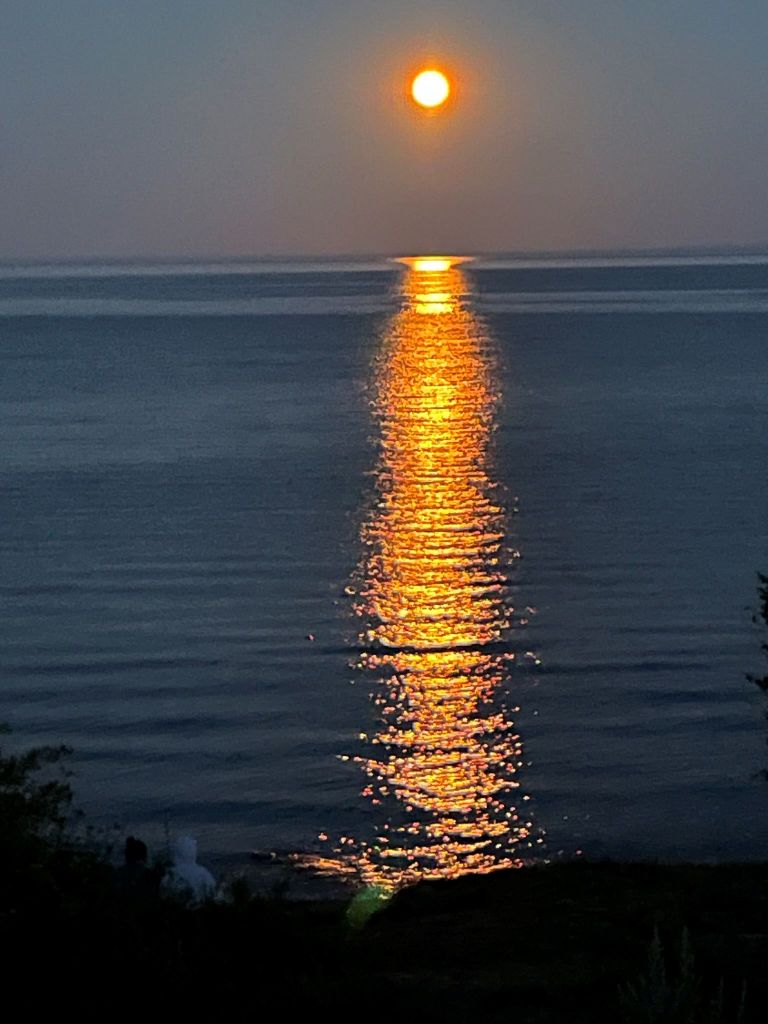
You’d have thought it was the 4th of July the way people were gathering on the shore of the great lake, Gitchee Gumee – some with coolers and lawn chairs, kids and dogs in tow, each claiming their spot — waiting for the viewing as if waiting for the fireworks. But what we awaited was far more spectacular – the “once in a very blue moon,”[i] the second full moon in a calendar month, but also a “super moon” – so named because at this time when it is closest to the earth in its orbit it appears larger than usual. Super moons happen a few times a year and blue moons happen every two to three years, but super blue moons are rare. This one was probably the last in my lifetime since the next one will occur fourteen years from now in 2037.
My husband, dog, and our son’s dog, aptly named Luna, made our way to the lake, finding our spot on the ancient rocks, joining the other moon gazers. A feeling of community celebration arose with the moon as we strangers to each other together watched the first light of rising moon with shared anticipation and appreciation. The “blue moon” in fact appeared red as it came up through the hazy atmosphere, but as it rose higher in the sky, just as in the lyrics to the song, “Blue Moon,” the moon turned to gold, casting its golden glow across the waters. As it rose, it seemed to grow even larger, rounder, brighter.
Continue reading “Moon Worshippers by Beth Bartlett”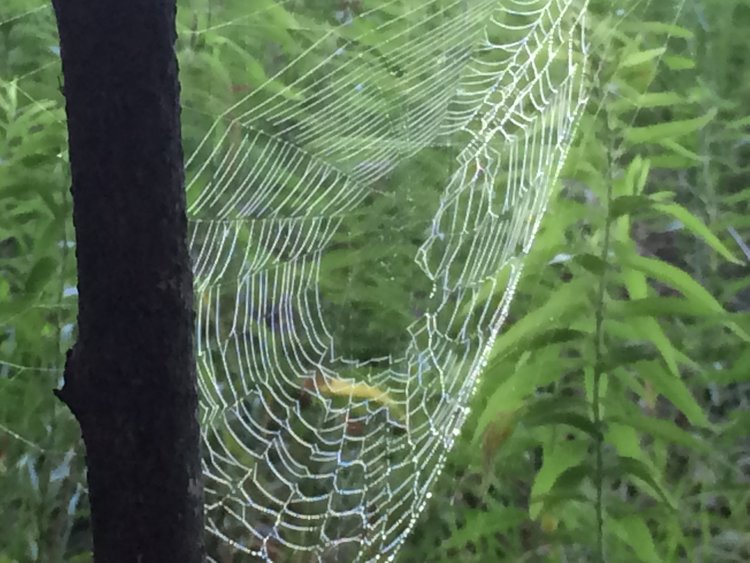
On February 28, 2022, I unknowingly drove into a deep snowbank, shortly after finding myself in a strangely unfamiliar landscape. Suspecting a TIA, my primary care physician urged me to go to an emergency room for a possible CAT scan. There, a lesion in my right parietal lobe was quickly discovered.
Continue reading “Nineteen months and Counting: Experiencing the Web of Life by Joyce Zonana”This was originally posted on January 25, 2016
In recent years “the Sacred Feminine” has become interchangeable with (for some) and preferable to (for others) “Goddess” and “Goddess feminism.” The terms Goddess and feminism, it is sometimes argued, raise hackles: Is Goddess to replace God? And if so why? Does feminism imply an aggressive stance? And if so, against whom or what?
In contrast, the term “sacred feminine” (with or without caps) feels warm and fuzzy, implying love, care, and concern without invoking the G word or even the M(other) word–about which some people have mixed feelings. Advocates of the sacred feminine stand against no one, for men have their “sacred feminine” sides, while women have their “sacred masculine” sides as well.
Nothing lost, and much to be gained. Right? Wrong.
Continue reading “Legacy of Carol P. Christ: The Sacred Feminine or Goddess Feminism?”26,000 years ago, life was precarious and dangerous. And so the human race revered the Mother. Mother Earth, who provided food amidst scarcity, protection from the dangers of the wild and healthy babies who grew to adulthood.
The Goddess.
In her many forms.

Some of these Goddesses.
Venus of Willendorf. The artifact known as the Venus of Willendorf dates to between 24,000–22,000 B.C.E., making it one of the oldest and most famous surviving works of art.
Continue reading “Why We Need to Bring Back God as a Woman, part 1 by Caryn MacGrandle”This was originally posted on August 9, 2017
“Drinking the water, I thought how earth and sky are generous with their gifts and how good it is to receive them. Most of us are taught, somehow, about giving and accepting human gifts, but not about opening ourselves and our bodies to welcome the sun, the land, the visions of sky and dreaming, not about standing in the rain ecstatic with what is offered.”
–Linda Hogan in Sisters of the Earth
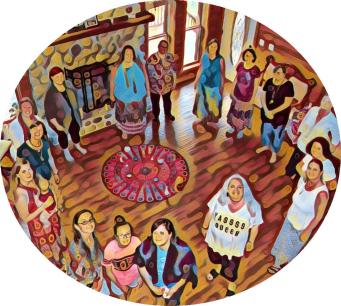
The women have gathered in a large open living room, under high ceilings and banisters draped with goddess tapestries, their faces are turned towards me, waiting expectantly. We are here for our first overnight Red Tent Retreat, our women’s circle’s second only overnight ceremony in ten years. We are preparing to go on a pilgrimage. I tell them a synopsis version of Inanna’s descent into the underworld, her passage through seven gates and the requirement that at each gate she lie down something of herself, to give up or sacrifice something she holds dear, until she arrives naked and shaking in the depths of the underworld, with nothing left to offer, but her life.
Continue reading “From the Archives: Sacred Water by Molly Remer”Lately I’ve been rereading and refreshing myself with important books of the Great Goddess. Three books at a time! I would switch off, chapter by chapter, among When God Was a Woman by Merlin Stone, When the Drummers Were Women by Layne Redmond, and one that had remained overlooked on my shelf, Sanctuaries of the Goddess, The Sacred Landscapes and Objects, by Peg Streep (1994.) I’ve been immersed in the knowledge of 30,000 years of honoring and worship of women’s bodies and the Great Goddess. When I got to Chapter 7 of Peg Streep’s well-researched book, “The Goddess at the Peak: Crete,” I was blown away with the evidence we still have, in art, architecture, religion and culture, of a highly advanced society, full of life and joy, where women were central to all life. With my mind, my heart, my intuition and my sense of past lives, I’ve attempted to place myself there, before any influence of patriarchy.
Continue reading “Ancient Her-Story by Annelinde Metzner” Feminism and Religion