
Patriarchy as Primer of Cruelty by Janet Maika’i Rudolph

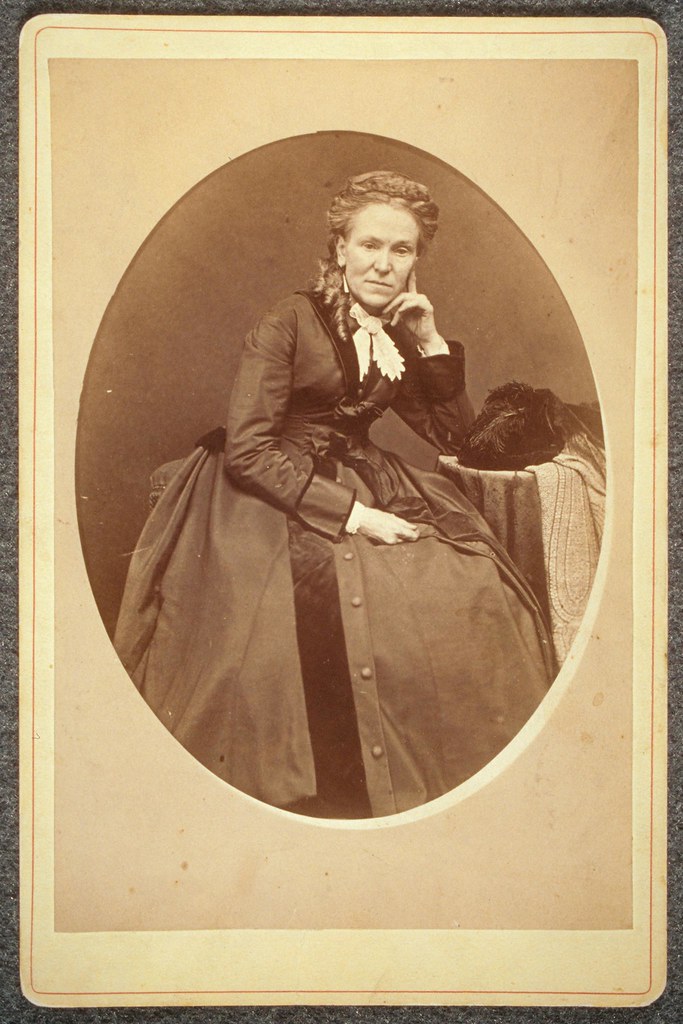
Matilda Joslyn Gage

This was a hard post to write. When I write about my personal trauma, it is not only healing for me but adds to the canon of stories of other women that help all of us navigate trauma. That makes it easier. When writing about the trauma of women in a whole culture, I feel a sense of helplessness, especially here in the United States. We are all experiencing a group trauma and it is digging in deep.

January 5, 2024, will live in the Patriarchal Hall of Infamy. On this date the Supremes agreed to allow the rapist, misogynist, trying-to-be-dictator former President an opportunity to have his rights heard. But this same date, the Supremes also told we women that our lives are insignificant. No that’s not right, less than insignificant, a mere distraction to what they consider to be more important issues. They allowed an Idaho abortion law to go into effect that doesn’t allow an abortion even in the case of a medical emergency when a pregnant woman in life-threatening distress has been rushed to the emergency room. The split screen exhibits patriarchy for what it is. I want to use the word, “culmination” but that means the height. I don’t think we’ve reached a culmination because there seems no end to the cruelty that patriarchy seeks to inflict.

Continue reading “Patriarchy as Primer of Cruelty by Janet Maika’i Rudolph”
Birth Song, Life Song, Death Song by Molly

editMollyNov 083“A woman can spin a primal umbilical rope within her womb through which she passes life-energy to the future.” –Melissa Raphael

“In some indigenous cultures of the Americas there is the practice of finding one’s death song while alive. This song becomes the ally of the person throughout their lives, so that they become very acquainted with what the song means in their lifetime. Death then, is a companion of life, and is never forgotten. In the hour of death, these people would, if they were able to, sing their death song–exiting this world with song on their lips and no doubt feeling the power their ally-song had gathered by being with them in their life. I can see that a death song would provide a connection between the person and the cycles of life, guiding the dying person into the next world and helping to allay fear…” –Leslene della-Madre, Midwifing Death

I was introduced to blessingways, or mother blessing ceremonies, as a girl when my mother’s group of friends hosted them for each other during their pregnancies. I loved attending the ceremonies for my mom during her pregnancies with my younger brother and sister and witnessing the web of love, support, and commitment woven around her. They touched me deeply with their sacred, magical, and mysterious flavor. When I was twelve, the same group of friends had a coming of age blessingway ritual for the daughters of the group, ranging in age from 10-16. It was a mystical, beautiful experience. We wore wreaths of flowers in our hair and were blessed with wisdom and tokens from the wise women of our tribe. At 34 years old now, I still have my folder of prayers, quotes, and messages from that day. For years it smelled faintly of rose petals.

Continue reading “Birth Song, Life Song, Death Song by Molly”

Birth as a Shamanic Experience by Molly

editMollyNov 083Childbirth is a rite of passage so intense physically, psychologically, emotionally, spiritually, that most other events in a woman’s life pale next to it. In our modern lives, there are few remaining rituals of initiation, few events that challenge a person’s mettle down to the very core. Childbirth remains a primary initiatory rite for a woman.” –Maren Hansen (MotherMysteries)

When I was pregnant with my first baby, I read an article with the theme of “Birth as a Shamanic Experience.” I can no longer find the exact article (online or printed), but I distinctly remember my feeling upon reading it: I was entering into a mystery. Giving birth was big. Bigger than anything I’d ever done before and it went beyond the realm of a purely biological process and into something else. Like shamanic experiences, giving birth is often described as involving a sense of connection to the larger forces of the world as well as being in an altered state of consciousness or even a trance state. While shamanic experiences may involve “journeying” to other realms of reality, giving birth requires the most thoroughly embodied rootedness of being that I’ve ever experienced. It, too, is a journey, but it is a journey into one’s own deepest resources and strongest places. The sensation of being in a totally focused, state of trance and on a soul work mission is intense, defining, and pivotal.

Shamanic journeys may be embarked upon for the purpose of soul retrieval and I can’t help but think that this is the purpose of giving birth as well—the birthing woman travels into herself to bring forth the soul of her child.  Continue reading “Birth as a Shamanic Experience by Molly”

Robbed by Monica A. Coleman

“Life is robbery.”

I re-read this Alfred North Whiteheadquotation to my students in the last weeks as we read through Adventures of Ideas. We were taking a welcome break from the philosophically demanding Process and Reality.

I explained that this is one of Whitehead’s more frequently cited sentences because he succinctly and poetically describes his position that life entails loss, and you can’t go back and get what you lose.

I said the same thing to one of my girlfriends as we chatted in my kitchen a couple of weeks ago. I was cooking and catching up with a friend I had not seen in nearly twenty years. As we chronicled our lives from the intervening decades, my friend said: “I have a religious question.”

In moments like these, I curse the fact that even my closest friends think that I have some special kind of knowledge as a minister and professional theologian. I took a deep breath because that phrase usually precedes some difficult, heart-wrenching question that has no satisfying answer.

Continue reading “Robbed by Monica A. Coleman”

The Barren Woman Bible By Monica A. Coleman

As I mourn the loss of my miscarried babies, it’s easy to see that the Bible’s stories of barren women were written by men.

I know that men wrote the Bible. That’s no surprise to anyone who has had a brush with feminism or biblical scholarship. But there are times when one is more aware of this than at other times. As I mourn the loss of my miscarried babies, I think of how the Bible tells the stories of barren women.

When I read about Sarai, Leah, Rachel, Hannah and Elizabeth, the story is always the same. The woman cannot have children.

Like a choose-your-own-adventure novel, the story goes like this:

Option A: You give your husband your maidservant, who then gives him a male child or two or three, and then, later, God opens your womb so you can bear a male child yourself.

Option B: You pray to God about how much you want children, and then, later, God opens you womb so you can bear a male child yourself. Continue reading “The Barren Woman Bible By Monica A. Coleman”

Criminalizing Miscarriages: Latin America’s Zero Tolerance Policy on Abortion By Michele Stopera Freyhauf

Imagine suffering a miscarriage.  All of us have or know someone who has suffered one; I had two.  For me it was a terrible time and I still remember the day of loss and the expected due date.  We all cope differently with this loss, but it is just that – a physical and/or emotional loss.  Statistically 15-25% of women in childbearing years will suffer a miscarriage anywhere from 5 to 20 weeks gestation.  In the United States, when we suffer a miscarriage we go to the hospital.  Often times the visit results in a dilation and curettage (or D&C) to stop bleeding and possible infection.  For me this was also done after the doctors removed the baby girl that was dead inside of my womb.

If this would have occurred in certain Latin American countries, especially in El Salvador, Chile, Colombia, Malta, Nicaragua, and even Mexico, the emergency room doctor would notify the authorities of my miscarriage and I would be arrested and jailed anywhere from 3-50 years for having an “abortion.”  El Salvador even has a prosecutor’s office responsible for crimes against minors and women whose responsibilities are capturing, trying, and incarcerating women who have abortions and miscarriages.  In this office, there are police, investigators, medical spies, and forensic vagina inspectors.  Medical providers have an obligation to report abortions; this is focused more on young uneducated and impoverished women.  For these women, there is no presumption of innocence; they are guilty. Continue reading “Criminalizing Miscarriages: Latin America’s Zero Tolerance Policy on Abortion By Michele Stopera Freyhauf”

I’m Back and Writing About Loss By Monica A. Coleman

The following is a guest post written by Monica A. Coleman, Ph.D., scholar and activist committed to connecting faith and social justice. An ordained elder in the African Methodist Episcopal Church, Coleman has earned degrees at Harvard University, Vanderbilt University and Claremont Graduate University.  Coleman is currently Associate Professor of Constructive Theology and African American Religions and Co-Director of the Center for Process Studies at Claremont School of Theology in southern California. She is also Associate Professor of Religion at Claremont Graduate University.

This post was originally posted on the Beautiful Mind Blog.  Be sure to check in there and follow Monica’s journey.

If you’ve been following my blog, you’ve noticed that I’ve been really quiet lately. Like all summer lately. What’s up with that? Well, part of the challenge of writing about depression is that it’s hard to write when depressed, and, well, depression happens. Continue reading “I’m Back and Writing About Loss By Monica A. Coleman”