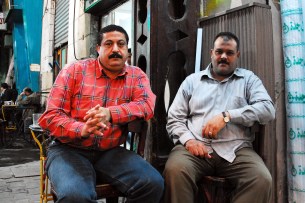
“When You Know for Yourselves” by Oxana Poberejnaia

A female friend recently posted an article by a woman writer about motherhood. The article was entitled “Children are NOT life’s flowers” (referring to a famous Russian saying which means that children are what makes life beautiful).

A number of women contributed comments under this post. The discussion revolved around the image of an ideal mother and how we real mothers should relate to it.
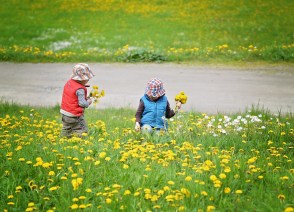
It is amazing that in the current atmosphere of bringing out into the open so many issues, motherhood is not much discussed. Sexuality, gender and abuse are OK to speak about and question. At the same time, it is only within medical profession that such issues as “baby blues” or post-partum depression are valid topics.

Continue reading ““When You Know for Yourselves” by Oxana Poberejnaia”

Who is the Perpetrator? by Oxana Poberejnaia

A poem by Thích Nhất Hạnh, a Vietnamese Buddhist monk and peace activist, “Call Me By My True Names,” lists various situations from natural world and the world of humans, most of them to do with violence and death. He claims in the poem to be both: the victim and the perpetrator of violence.

This poem has always bothered me. I can understand a world perspective where you express solidarity with all the sufferers, but how to come to terms with identifying oneself with the oppressors and murderers?

At my current limited level of understanding of the Buddhist teaching I can only say that perhaps the words: “I am a rapist and a murderer” point to tendencies that are present in all of us. First and foremost it is a tendency to divide, to separate. The most noticeable separation is between the “I” and the “outside” world.

First we counter position ourselves against all the others. Next we start believing that it is possible to achieve happiness just for ourselves, at the expense of the others. So we live egotistically. From here, I suppose, there is only a small step to rape and murder.

Continue reading “Who is the Perpetrator? by Oxana Poberejnaia”

Householders’ Superstitions and the Higher Truth by Oxana Poberejnaia

I watched this short video on facebook about Sisa, an Egyptian woman who spent forty years a man in order provide for her family. There is a longer version on YouTube. Sisa, a widow, decided to work to feed her children, and consequently grandchildren. In Egypt, a woman can only do unpaid jobs within a home. So Sisa had to pretend to be a man by wearing male clothing and head wear. She takes casual jobs, such as shoe shining or brick laying.

Then Sisa made the news and was honoured by governmental officials. There is footage in the report of Egyptian men watching that footage. Apparently, the men were impressed by Sisa’s efforts and they developed respect for her. One man, who knows Sisa personally, says for camera: “I treat her like a man, because she works like a man”.
The implication being, I assume, that Sisa is only worthy of respect because she acts like a man is expected to act. And another implication is that Sisa is an exception. He only prepared to treat her differently, as all the rest of the women in Egypt apparently cannot work as men.

Continue reading “Householders’ Superstitions and the Higher Truth by Oxana Poberejnaia”

Babies and Bathwater by Oxana Poberejnaia

Since patriarchy is atrocious, and capitalism is currently driving the earth to a very real catastrophe, we can get passionate about these issues. We can get angry. We can get self-righteous.

However, as one of the most famous verses of Dhammapada goes:

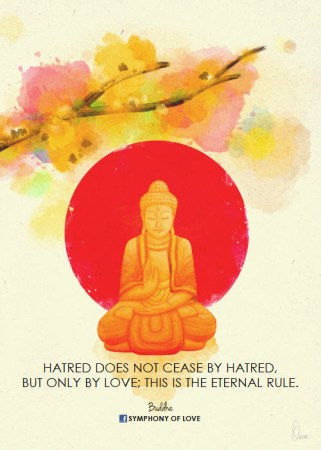
Hatred is never appeased by hatred in this world. By non-hatred alone is hatred appeased. This is a law eternal.

Dhp I:5, translated by Acharya Buddharakkhita

 We may ask: why should we be patient and kind while we are the ones who are being oppressed and wronged? I don’t have an answer for that, only that through history positive change has ever been affected only by people who made more effort than the ones who wanted to keep the status quo.

Abolitionists, Suffragettes, Socialists and Civil Rights activists all had to be more altruistic, better educated, and more open-minded than their contemporaries. Continue reading “Babies and Bathwater by Oxana Poberejnaia”

The Pull of Mara by Oxana Poberejnaia

Recently I need to take a deep breath every time I glance at the news headlines. There are terror attacks and military conflicts. People kill each other and cause each other immense suffering. The worst thing is that so many of these conflicts are between people who have lived side by side for centuries: between related ethnic groups or neighbouring people.

I have found that often, while reading news items about tragedies and injustices, I often take sides. I seem to “naturally” support one warring party. This would depend on ideology, ethnicity, or culture that I share with one of the rivals. This is nothing new. People have been joining their brethren in war for the history of humanity.

However, our time is interesting in that we have access to many opposing views. In my life, every time I take a side, eventually I manage to find information or discover a point of view, which supports the opposite side.

Continue reading “The Pull of Mara by Oxana Poberejnaia”

Internal Strife – External Conflict by Oxana Poberejnaia

As Po said in “Kung Fu Panda”: “I’m gonna get myself some Inner Peace… Inner piece of what?”

This basically lays out a path of spiritual work for most of us. We aim for peace, yet somehow we feel that we must do something in order to achieve it – rather than just be peaceful.

Another joke that captures this paradox perfectly is:
“My son started doing meditation. Well, that’s something. At least he’s not sitting around doing nothing.”

Sitting around doing nothing seems to be the worst sin in our society. Buddhism is quite radical in this regard. The path to Enlightenment leads through sitting around and doing nothing. Anything and everything else that we do to keep ourselves busy is determined by society, hence impermanent, hence not the truth. Continue reading “Internal Strife – External Conflict by Oxana Poberejnaia”

Ending Suffering for the Sake of Others by Oxana Poberejnaia

I have recently noticed an interesting thing: just like the Buddhist goal of ending suffering requires consideration of others, so often feminist change requires thinking about other women.

I often had conversations with people on both these subjects. I heard actual people say: “I do not want to end my suffering, the reason being…” And the reasons can differ. Some consider suffering to be part of genuine human experience, some find a spiritual advantage in having suffered. While some simply say that they are fine with their suffering; they are used to it; change would bring even more suffering. Continue reading “Ending Suffering for the Sake of Others by Oxana Poberejnaia”

Stories vs. What Is by Oxana Poberejnaia

I have recently watched one of these real life entertainment documentaries. This one was on plastic surgery. A woman went under the knife to enlarge her breasts. The female presenter, wearing sterile white, peeped into the operation theatre and, facing the camera, said excitedly: “This operation might be life-changing!”

I thought: “Yes, precisely.” The money that the patient spent on breast implants could have bought – what? A trip to a strange land. A course for her to improve her employment prospects or to broaden her horizons. Art supplies for her to create something. A water pump to provide clean water in a village somewhere in the world where children die from preventable diseases caused by dirty water. Part of a salary for a teacher who works in a school for girls somewhere in the world where girls need extra help getting education.

Life-changing.

What we choose to spend money, or indeed any resources (time, energy) on depends on our story of life. What is life for us: a race to the unattainable ideal of glossy magazine covers or a spiritual journey we share with every other creature on earth? Continue reading “Stories vs. What Is by Oxana Poberejnaia”

The Burden of Shame by Oxana Poberejnaia

I know a man who says to his daughter: “You should be ashamed of yourself” when he wants to imbue some good habits in her. One example would be not putting her dirty socks in the laundry basket. It might seem trivial, but I don’t think it is. I feel that shame is a toxic element of our personalities. I believe shame results in negative consequences, such as sabotaging oneself and health problems.

Many spiritual traditions, including Buddhism, perceive guilt as a trigger for moral development. The rational is, when we feel bad about something we had done, we will change our behaviour for better. The question is: how bad exactly are we supposed to feel, both in terms of quality and quantity of that feeling? Continue reading “The Burden of Shame by Oxana Poberejnaia”

Get Serious: Don’t Die in Character by Oxana Poberejnaia

oxanaRecently I had a few experiences that brought home to me the meaning of a saying by the Buddha:

What’s the laughter, why the joy,

When the world is ever burning?

Plunged into darkness,

Won’t you look for a lamp?

Dhammapada, 146, translated by Valerie J. Roebuck

dhammapada-logo-2This saying is one of those that sound a bit curious to a Western ear. It is almost as if the Buddha was against fun or humour. However, we all are familiar with the Buddha’s depictions where he smiles. The canonical texts also bear witness to the Buddha’s smiling.

It has become clear to me that the Buddha points here at the preciousness of the limited time we have in this human life. In short, he was saying that suffering is not a laughing matter, and life is not a joke.

Time is running out – the message that is even more relevant today, as it relates now not only to each of us individually, but to all of us as a species.

Continue reading “Get Serious: Don’t Die in Character by Oxana Poberejnaia”