Mother of All Buddhas by Oxana Poberejnaia

oxanaQueen Maya, the Mother of the Buddha of our age, who before his Enlightenment was known as Siddhartha Gautama, died shortly after his birth. So the future Buddha was raised by his aunt and stepmother. It is said that the womb of the Buddha’s Mother needed to remain unsullied by further pregnancies. This is similar to the belief that Mary Mother of Christ did not bear any more children after Jesus, which is held by some Christian traditions.

280px-Dream_Queen_Maya_BM_OA_1932.7-9.1In addition, the Buddha’s conception and birth were both miraculous, according to the legend and some Mahayana texts (such as the 44th chapter of the Gandavyuha Sutra). The Buddha was conceived when a white elephant entered Queen Maya’s right side, or, in the Sutra, light entered the Queen’s body. The Buddha was born from his Mother’s right side. The light was emanating from every pore of the body of the Bodhisattva Buddha, while he resided in the Tusita (joyous) heaven before descending to earth. This light reminds us of the golden rain form that Zeus took to reach Danaë in her cell to conceive Perseus, and links these two Indo-European patriarchal discourses. Continue reading “Mother of All Buddhas by Oxana Poberejnaia”
Broken heart, soft heart by Oxana Poberejnaia

oxanaToday my topic is a bit weird – it is about broken heart, but in a good sense.

I’ll start with an example. My best friend and I once went to see “La Bohème” at the Leeds Opera House. It was great: the singing, the modern production. Nevertheless, the story, is, of course, heart-breaking. A working-class woman dies. However, although my friend and I were sad at the end of the opera, we also felt strangely uplifted. My friend commented on that and I said that I recall that in Christian Orthodoxy they say that a broken, shattered heart (сокрушенное сердце) is a way to God.

Open_Heart_by_charcoaledsoulIn Buddhist terms this broken heart could be described as shattered walls of an identity. It can be interpreted as a complete disillusionment with samsara: the world of the conditioned phenomena, where one thing begets another and everything revolves according to the law of conditioned arising. The broken heart may happen from realising that everything is subject to this law, but in particular: your own personality, or identity (which I discuss quite a lot in this blog).

Continue reading “Broken heart, soft heart by Oxana Poberejnaia”

Body through Buddhist Lens by Oxana Poberejnaia

oxana

One of my concerns with the philosophy of contemporary women’s spirituality movement is what I see as uncritical adoption of views about body from patriarchal culture.

I feel that often the seemingly “new” and radical ideas about women’s bodies that originate from contemporary Sacred Feminine movement are simply reversals and counter statements to dominant patriarchal notions.

menstruationTent I myself have been working with my menstrual cycle. However, I also can say that this is one of the classic examples of a “reversal”. While patriarchy says that menstruation is something hidden, dirty and corrupt, the new view is that menstruation is something worthy of open discussion, sacred and a source of spiritual power.

Continue reading “Body through Buddhist Lens by Oxana Poberejnaia”

You Can’t Save Everyone by Oxana Poberejnaia

oxanaIn my previous post here on Feminism and Religion, “Emerging Energy Wisdom” I suggested we should develop new feminist wisdom for young women of the world, which will hopefully allow them to avoid some of the mistakes we have made (some irreparable). The gist of that wisdom would be “conserve your energy!”

Some of these mistakes originated in our being unaware of the limitations in a patriarchal society. I for instance thought that since I knew I was intelligent powerful and energetic I could affect any positive change I wanted. I also believed I could help anyone. I disregarded my own needs, including energy needs, as well as being blind to the objective conditions of patriarchy.

Today I would like to give an example, from fiction, of how this energy wisdom might work. In its application, I believe, this wisdom is related both to the Buddhist teaching of self-reliance and to the idea that each person must find their own connection to Goddess and God from modern paganism.

Continue reading “You Can’t Save Everyone by Oxana Poberejnaia”

Emerging Energy Wisdom by Oxana Poberejnaia

oxanaWe women of this blog, of this movement to bring Feminism to Religion and vice versa, are planting seeds of a better future. One part of this future is educating young people. I do not want my daughter to repeat some of the mistakes I have done in my youth. One thing I would most certainly urge her to do would be:

Conserve Your Energy

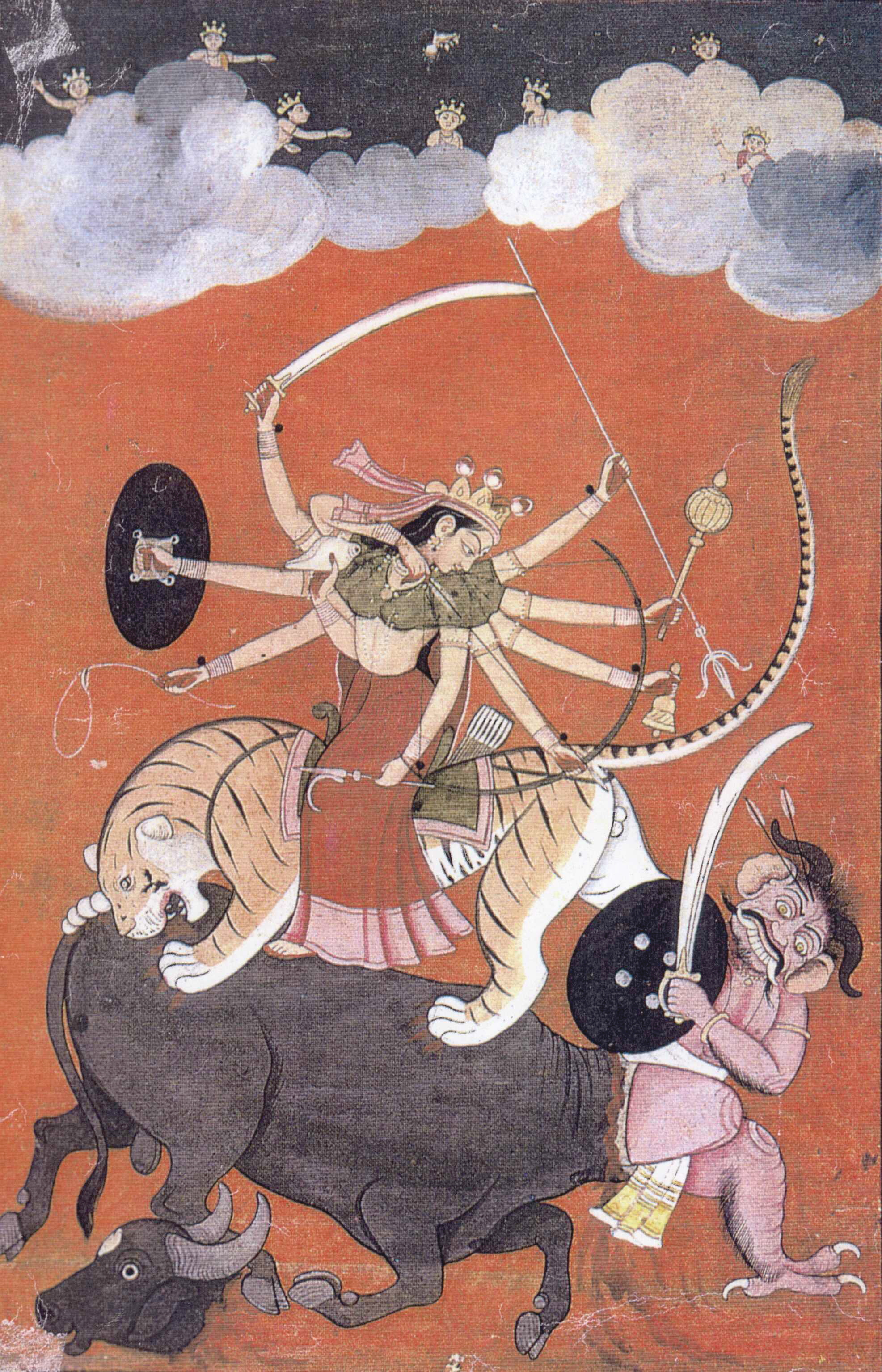
Durga_MahisasuramardiniOne of the Foremothers of the Goddess movement said that it is very easy to observe Goddess in everyday life: just look at teenage girls. They are uninhibited, creative, playfully sexual (I do not promote underage sex here, I am just emphasising that people can be sexual in their life cycle before and after they practice sexual acts with other people). Most of all, teenage girls are bursting with energy.

The question is: where would this energy go? What would it be spent on?

Continue reading “Emerging Energy Wisdom by Oxana Poberejnaia”

Stillness by Oxana Poberejnaia

oxanaI am visiting my home town in Russia for holidays. I have not been home for 3 years and I have not lived there for 12 years. Many things surprise me. One of the features of contemporary life in my home town is the relentless and often destructive onset of capitalism. As I have said already, currently patriarchy has joined forces with capitalism in order to suppress nature and oppress women.

One of the ways capitalism does this is by involving women and men into an endless rat race and by substituting their Wild Nature (as Dr Clarissa Pinkola Estés describes it) with an identity of a consumer. People willingly put on masks of consumers who live to make money and to spend it on entertainment which is sold to them.

Continue reading “Stillness by Oxana Poberejnaia”

Women are like countries: both need to fight hard for independence by Oxana Poberejnaia

oxanaRita M. Gross in her book Buddhism After Patriarchy presents portraits of prominent women from Buddhist history. Some stories are extraordinary for the brutal details they contain. For example, Yeshe Tsogyel was raped, kidnapped and beaten by her suitors to the point that her back was a bloody pulp. She subsequently escaped to meditate in a cave.

In a patriarchal society, religious fervour is not recommended for women. Submission and obedience – yes. The life of an ascetic, a wanderer or a hermit – no. A son is relatively free to pursue religious activities (especially if he is one of the younger children and the issue of inheritance is sorted out). However, all daughters are better off tucked into a marriage. Supporting your husband and sons on their spiritual path – yes. Independent striving away from family life – no. Continue reading “Women are like countries: both need to fight hard for independence by Oxana Poberejnaia”

“Don’t break the bucket” by Oxana Poberejnaia

oxanaVictor Pelevin is a prominent contemporary Russian author, with books translated into a multitude of languages. To me, his novels act as a series of Dhamma talks (Buddhist sermons, if you will).

I have also always thought that Pelevin’s novels can be broadly divided into two groups: “This is how to do it” and “This is how not to do it” groups. For instance, “The Clay Machine Gun” and “The Sacred Book of the Werewolf” are “How to do it” stories, with the protagonists reaching his and her (respectively) destinations. “Babylon”, on the other hand, is the “How not to do it” story, as the protagonist ends up enslaved by the world he has created.

Victor Pelevin
Victor Pelevin

One of my favourite novels by Pelevin is “Life of Insects”, which tells the tales of a number of characters, all of them “How not to do it” stories bar one. One of the most interesting quotes from the positive story for me is “Don’t break the bucket”.

Continue reading ““Don’t break the bucket” by Oxana Poberejnaia”

Meditating on Woman by Oxana Poberejnaia

oxanaI decided to run a little experiment and to explore the notion “woman” from inside meditation. I practice Anapanasati Meditation, or mindfulness of breath. I learnt it from Theravada teachers. However, through my Buddhist career I have studied in various Buddhist centres and from various schools. The latest one with which I went on retreats is the Western Chan Fellowship (Chan is one of the Chinese schools of Buddhism, from which Japanese Zen developed).

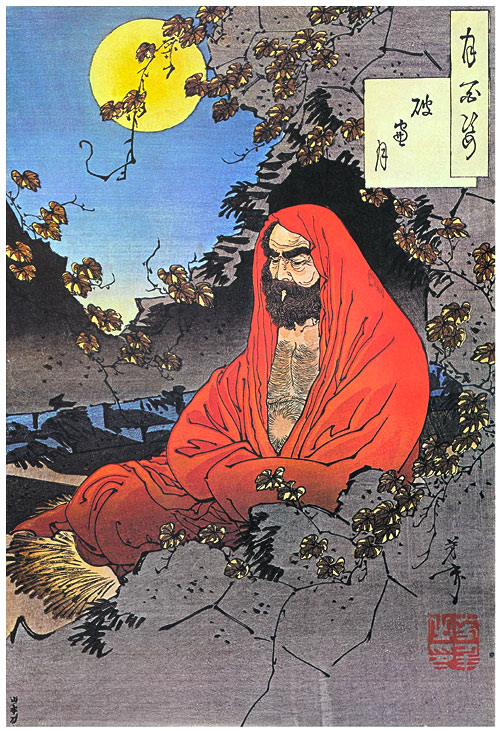
BodhidharmaYoshitoshi1887 Anapanasati meditation involves mindfully staying with your breath and following it as it goes in and out of your body. It is supposed to both quieten the mind and to lead to more clear vision, or insight. In Chan tradition there is also a practice of asking one simple question in meditation, for instance: “What is this?” or “Who am I?” Sometimes exploration of other topics from within the mind which has been quietened and made clearer by meditation is also practiced.

Continue reading “Meditating on Woman by Oxana Poberejnaia”

Identity as an enemy of Feminism by Oxana Poberejnaia

oxanaRita M Gross is her “Buddhism after Patriarchy” says that Buddhism is Feminism. I think I understand what she means.


The goal of Buddhist practice, Enlightenment, is often called Liberation. Liberation can be seen as the goal of Feminism too. In different schools of Buddhism is interpreted differently, but one of the classic explanation is that it is freedom from or absence of anger, lust and ignorance. Enlightenment is also described as a state of ego-lessness.


Rita M. Gross justifiably clarifies the Buddhist understanding of “ego” and “ego-lessness”, which is different from conventional Western notion of ego as “strength” or “scale” of personality. Rita M Gross points out that sometimes feminists say that women need larger egos, not smaller or no egos.

Continue reading “Identity as an enemy of Feminism by Oxana Poberejnaia”