The Lady Be With You – A Closer Look at Liturgical Idolatry by Tallessyn Zawn Grenfell-Lee

Even though I realized at least 17 years ago that it makes no theological sense to limit our symbols of the Divine to male symbols – Lord, God, Father – it took several years for this idea to embed itself into my subconscious. Over time, male language moved from ‘unnoticed’ to ‘noticed’ to ‘distracting’ to, eventually, ‘oppressively violent when used exclusively, without female images to balance out millennia of the idolatry of maleness.’

One of my favorite ways to dislodge this subconscious, internalized patriarchy has involved rewriting favorite old hymns. I usually try to incorporate a combination of images, to represent the incarnate divinity of all genders and all Creation. But let’s be honest: female terms for the Divine remain startling in many religious and secular, cultural contexts. In my own Methodist tradition, even though progressive Methodists sign up on paper to the idea that “God” (there we go again with the male terms) is bigger than any symbol or gender, I’ve as yet only ever been to one Christian church that used balanced gender images of the Divine, and that was a queer welcoming Methodist ministry with intentionally inclusive theology and liturgy.

I think that church saved my life. Some days, I also think it ruined my life. It showed us all what Methodism can be; and then, its time ended, and we alums drifted into the diaspora to try to take the hope and healing we experienced there into our own journeys. Some of us remain within Methodism and continue to work for the vision of welcome, of the kin-dom, that we sought together there. Personally, I love being Methodist. Grace, the journey, grace, the quadrilateral, grace.
Continue reading “The Lady Be With You – A Closer Look at Liturgical Idolatry by Tallessyn Zawn Grenfell-Lee”

Sawbonna: Godde and Another Route to Forgiveness by Margot Van Sluytman

From the day my Father, Theodore, was brutally and callously murdered in Toronto, on Easter Monday, March 27, 1978, I wanted to meet his killer. I wanted to know how it was possible to do such a horrific thing. I wanted to know how he felt about destroying the lives of so many; my family’s, and his own.

We did meet. The meeting occurred in July of 2007. Because of reading about an award I received for my Therapeutic Writing Workshops and the publication of my books about healing, voice, and agency, he emailed me. Our meeting, our reconciliation, even those many years after that dark, dark day, was a rich blessing in my life, and proved helpful for him too.

The word forgiveness, is one that can lead to great suffering for victims and offenders alike. Victims are told that if they do not forgive, they cannot heal. Offenders are told that if they are not forgiven, they cannot move on from the crime they have committed. Forgiveness is a loaded word, with as many understandings, expectations, and definitions as there are experiences of savage loss, savage grief, savage pain.

Continue reading “Sawbonna: Godde and Another Route to Forgiveness by Margot Van Sluytman”

Holly Near’s Music and a Holistic Feminist Perspective of Peace by Elisabeth Schilling

It’s hard for me to be dignified and peaceful sometimes. To produce and sacrifice without rewards, making sure I’m not “sacrificing” in a way that quells my truth and power, making sure I look at dignity in a liberating way. Words continually need to be unpacked, and I do that. I know the work. According to the OED, it means “The quality of being worthy.” For me, ‘dignity’ is just being aware of your self-worth and celebrating that. It feels hopeful and romantic and raw. To sacrifice, to me, in the way I’m using it in this moment, is to be life-giving and co-creator; I think of it in the same way as what the earth does, so that it can continue. Like a leaf fallen to nourish its own soil.

The OED definition of ‘sacrifice’ I like is “The destruction or surrender of something valued or desired for the sake of something regarded as having a higher or more pressing claim.” We can decide what is more pressing. For me it is the ethic of generosity and production in a non-greedy way. I do not sacrifice in this more self-empowered, law-of-the-universe way I’ve recently come to understand much. But I would like to. Sometimes, though, I feel tired in my production, like I need more feedback, even if it is another woman willing to listen to me, which is why posting on FAR is so healing and life-giving because there is all of you.

I’m glad I have wisdom in my body. Even if “I” (my mind?) goes chaotic, feels overwhelmed and lost, my body has this natural intelligence to heal and regain balance if I can listen and get out of its way. That reminds me a lot of the earth—regions harmed by human mindlessness have been known to restore itself, even after radiation or toxic explosions, when humans leave for awhile. But if “I” equate myself with my mind, isn’t that also a part of the body? Wouldn’t the mind (the brain? the processes that help mental consciousness and thoughts arise?) then be wise, seeking balance? It just does not feel like it. So if anyone can weigh in on that. . . why so easy for my body-body but not my mind-body?

Continue reading “Holly Near’s Music and a Holistic Feminist Perspective of Peace by Elisabeth Schilling”

A Precious Gift by Natalie Weaver

This has been another hard month.  I don’t feel it to be hard.  I just know objectively that it is.  The typical challenge of balancing my work with the children’s needs and the management of a household has been intensified by the onset of a serious medical condition in my family.  I now enter that phase of elder care, which I understand is more or less bound to bankrupt the average household.  I have become the much-begrudged adult child, compelled to make decisions for other people’s lives and regarded in the fog of suspicion. My intentions are now under scrutiny; my time is usurped; my efforts are thankless.  I’m not complaining really.  I am just describing.

In the midst of things, I have managed to take my older son to the seeming ends of the earth to visit potential high schools.  I am managing a Destination Imagination team for my fourth grade son’s class.  I am teaching six courses, and my home is relatively clean.  I am running a weekly lecture series, I volunteered at the Church this month, and no one has missed any meals.  I even managed to sew a blanket for a friend’s new baby. There are many more serious family, medical, and economic issues that underlie my day-to-day, but along with everyone else, and perhaps a little more so than some others, I just accept that I am amazingly over-extended.

Continue reading “A Precious Gift by Natalie Weaver”

Gardening through Grief by Marie Cartier

A friend of mine has been in hospice with Alzheimer’s. And she died today. There will be a  day when I write about Barbara… what a great friend she was. How I hate that she is no longer in my life. How I know how hard it is for her spouse to lose her. How hard it is when someone so vibrant leaves your community.

But writing about her was not what I could do today. And today is when I had this blog due.  I decided after I learned that she had passed – to garden. Barbara used to help my wife water the garden. It was something comforting and familiar and useful that she did with us.

Continue reading “Gardening through Grief by Marie Cartier”

The Play of Emotional Insecurity and Pull by Elisabeth Schilling

It is not easy navigating the world with fragile boundaries, self-worth, and a potential history of manipulations. I often seek wisdom in spiritualities and unfamiliar religions because I need a substitute for the childhood traditions I have abandoned as a raft mid-stream. I am attracted to fashioning another raft, this one not pre-fabricated but gathered over some time by reaching for branches and tendrils. I am never confident about my assessments concerning relationships, and I mostly avoid going very deep with people anyhow or keep my head down so as to go unnoticed or divert the interest of others because I don’t yet know how to have healthy relationships that entail elements of balance or stay more-or-less in the middle way. It is awkward and fumbling to do life on one’s own, and I am hardly a victim. I completely admit that healing is within my purview and I simply have not tried hard enough, or that I just need to accept that no relationship is perfect and one cannot exactly have pleasure without pain, and so allow my body to sink into the underwater worlds and be taken by the sensory suctions of sea urchins and stings of jelly fish. Perhaps a relationship can also be one of peace and calm passions where those involved keep their attachments in check. I guess that is possible. 

Continue reading “The Play of Emotional Insecurity and Pull by Elisabeth Schilling”

Forgive Me, Mother, For I Have Sinned: Earth, Ancestors, and the Role of Confession by Tallessyn Zawn Grenfell-Lee

Ah, confession. I admit I never really much understood the Catholic practice of confession to a priest; as a United Methodist growing up, the idea of confession – while challenging – nonetheless seemed to belong squarely between myself and the (supposedly male) God that (apparently) loves and forgives us while still calling us to live into a more perfect vision of our individual selves and of the kin-dom. But to confess things to a minister? In a little booth? The very idea gave me the heebie-jeebies. Probably even more so since my father and/or stepmother were usually said minister. Well, that wasn’t a common Catholic thing either, I suppose.

I took confession very seriously, however. I firmly believed that we have all sinned and fallen short, and that we can and must do better – for our own lives and wellbeing, for our loved ones, for humanity, and for the whole Creation. Confession was like the first step toward healing – like a diagnosis; without admitting what was going wrong – or what was inadequate – how could we take steps toward what was right?

Continue reading “Forgive Me, Mother, For I Have Sinned: Earth, Ancestors, and the Role of Confession by Tallessyn Zawn Grenfell-Lee”

A Feminist Retelling of Noah’s Ark by Trelawney Grenfell-Muir

My daughters came to me after Sunday School one day, concerned about a story they had heard in which God drowned almost everyone on Earth. So I sat down and thought about why a community might want to tell that story, and what valuable wisdom might be lifted from it for my children. Here is what I told them:
God/ess  has  many  faces,  which  help  us  understand  different  things we  need  to  know  at different  times.  Sometimes we think of God/ess  as  Crone,  an  old,  old  woman  crowned  with  silver  hair  as  an  emblem  of  her  wisdom,  who helps  us  learn  to  let  go  of  anything  that  is  holding  back  the  wellness  of  our  community  and ourselves.  Continue reading “A Feminist Retelling of Noah’s Ark by Trelawney Grenfell-Muir”

Reflections on the Theology of Simone Weil by Elisabeth Schilling

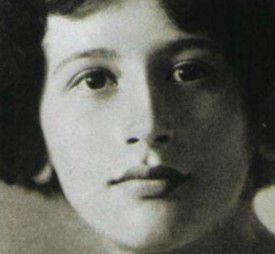
French philosopher and mystic Simone Weil, in Gravity and Grace, says forgiveness is knowing I am other than what I imagine myself to be (9).  For Weil, our true selves seem to be inextricably intertwined with each other, with the universe; knowing this can bring compassion for the self and world.

Upholding the constructed self that needs to be justified, protected, and admired can cause a lot of stress within our bodies and perhaps violence in relationships. Weil says that the cause of war is that we do not know we have access to the universe in our own bodies (86). Sometimes I feel that we avoid each other, looking in to each other’s eyes, because we cannot bear the weight of energy, the collision of spinning vortex that might occur the closer we move. Our DNA might hold memories, shared vibrations with ancient mountains, and the bodies we inhabit feel so intensely. Every cell seems alive with sensation, and most of us want to avoid the pain that cannot always be extracted from the pleasure that is also ready to be encountered.

One of my students asked me, as we discussed Weil in class, why we should improve, try to become better people, what the point was of anything. I don’t always know the answer to these questions or what might prompt them, but what I think for the time being is that we get up off the floor because there are these moments of intimacy where the universe is felt through our veins, and to experience that, even occasionally, might be worth everything. To do what we might be destined to do, to co-create and do that in healing, pleasurable ways, is to align with something beyond, but not excluding, ourselves.

Continue reading “Reflections on the Theology of Simone Weil by Elisabeth Schilling”

Opening Our Hearts Through Armenian Dance by Laura Shannon

The candle represents the light of love, compassion and connection kindled in our hearts as we dance.
In these challenging times, one of the hardest things to do is to keep our hearts open. Grief and despair tend to shut them down. And even among close friends, colleagues, family members, and people with whom we share worship, when we clash over differing political opinions, trust can swiftly erode. These kinds of losses and sorrows can make us just want to close the doors to our hearts.
Yet hardened hearts and minds are not going to help us overcome conflicts and affirm connections. Only if we can open our hearts to one another, holding the fullness of our (and others’) feelings in a compassionate way, can we weather the storms which threaten to divide us further. And only if we are united can we find our way together through those storms.
One of the best ways I know to connect with others and to open my heart is through the joyful experience of traditional circle dance, particularly Armenian dances. I have written previously on this blog (The Dance of MemoryThe Wishing Tree) about Armenian dances and their ancient roots, their links to the pre-Christian Goddess, and how they affirm survival throughout the traumas of history. I have also written about my friend and colleague Shakeh Major Tchilingirian and her inspiring Circle of Life project, which brings Armenians, Turks, Kurds, Assyrians, and other survivors of atrocities and genocide to dance together for reconciliation.

Continue reading “Opening Our Hearts Through Armenian Dance by Laura Shannon”